Skiing Near Stockholm: City Slopes, Cross-Country Tracks and Weekend Resorts
Where to ski in and around Stockholm: the two downhill hills you can reach by public transport, the cross-country tracks locals use, where to hire or borrow skis, and the resorts worth a day trip or a train ride north.
The honest answer on skiing near Stockholm is that there is more of it than you would guess, and less than you might hope. The city has two downhill hills with lifts that you can reach on public transport, a network of cross-country tracks through its forests and sports fields, and a very Swedish habit of clipping on skis the moment the snow settles. What it doesn’t have is mountains. Hammarbybacken has four slopes; the bigger hill at Flottsbro has five runs. For anything you would call a ski holiday, you head north: a couple of hours by road to Kungsberget, or about six and a half hours on the train to Åre.
This guide covers both halves of the story: the city hills and how to reach them on SL, the cross-country tracks Stockholmers actually use (including the artificial-snow ones that keep going through a mild winter), where to hire or borrow skis, and the resorts worth a day trip or a train ride. Details were checked in November 2026 against the operators’ own sites, and prices from last season are marked as such. Snow decides everything here, so check the place’s own site on the morning you go.
Downhill in the city: Hammarbybacken in Hammarby Sjöstad, run by SkiStar, with four lifts and four slopes; bus 74 or the Tvärbanan light rail to Sickla kaj.
Bigger hill: Flottsbro in Huddinge, with five runs and three lifts including a chairlift; just over an hour by commuter train and bus 714.
Cross-country: Hellasgården in the Nacka nature reserve when there is natural snow, about 15 minutes on bus 401 from Slussen; artificial-snow tracks at Ågesta, Gärdet and Lida when there isn’t.
Ski hire: SkiStarshop at the foot of Hammarbybacken; full-day rental at Flottsbro; cross-country skis at Hellasgården, booked online.
Free kit: Fritidsbanken lends sports equipment free of charge for 14 days.
Proper resorts: Kungsberget (two hours from Stockholm, by its own reckoning) and Romme Alpin (two and a half); Åre by SJ’s direct train or the night train to Duved.
Season: whenever it is cold enough. The hills need frost to make snow, and the natural tracks need a real snowfall.
What skiing near Stockholm is really like
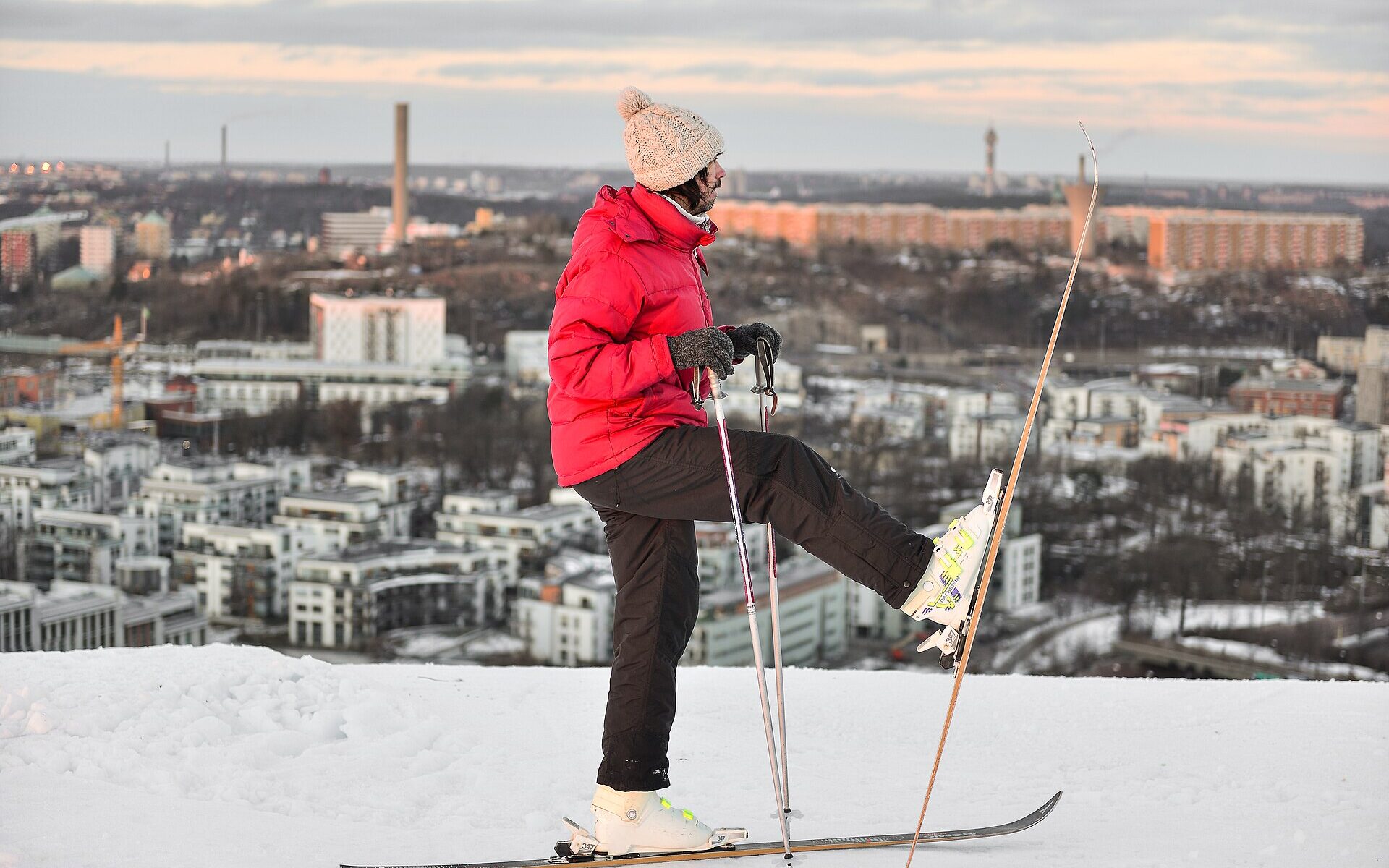
Think about Stockholm’s skiing the way locals do: as something you fit around the rest of winter rather than a reason to travel. An evening on the slope after work, a Sunday loop through the forest, a lesson for the children. The downhill hills are short and busy with families and beginners. They are good fun, and the view from the top of Hammarbybacken across the southern districts is worth the lift ride on its own, but a confident skier will have seen everything there is to see within the hour.
Cross-country is a different matter. This is the winter sport Stockholm does well, because the city is laced with forest and open fields, and when proper snow arrives, tracks appear in parks and nature reserves a short bus ride from the centre. The catch is the word “when”. Snow conditions vary a great deal from one winter to the next. In a good year you can ski from early in the season; in a mild one the natural tracks may barely open, and the artificial-snow tracks are what keep the sport going.
So here is the verdict before the detail. If you are in Stockholm in winter anyway and fancy a ski, go: hire cross-country skis at Hellasgården after a snowfall, or spend an afternoon on Hammarbybacken with the city spread out below you. If you are planning a trip mainly to ski, base it somewhere with mountains and treat Stockholm as the city break at either end. The rest of this guide is about doing the first well and getting to the second easily.
Hammarbybacken: downhill inside the city
Hammarbybacken rises above Hammarby Sjöstad, the waterside district just south of Södermalm, a short ride from the centre on bus or light rail. SkiStar runs it with four lifts, two T-bars and two conveyor belts, and four slopes, and the snow on the runs is made with snow cannons. The conveyor belts are the giveaway about who the hill is for: beginners, small children and anyone who wants to remember how skiing works before a trip north.
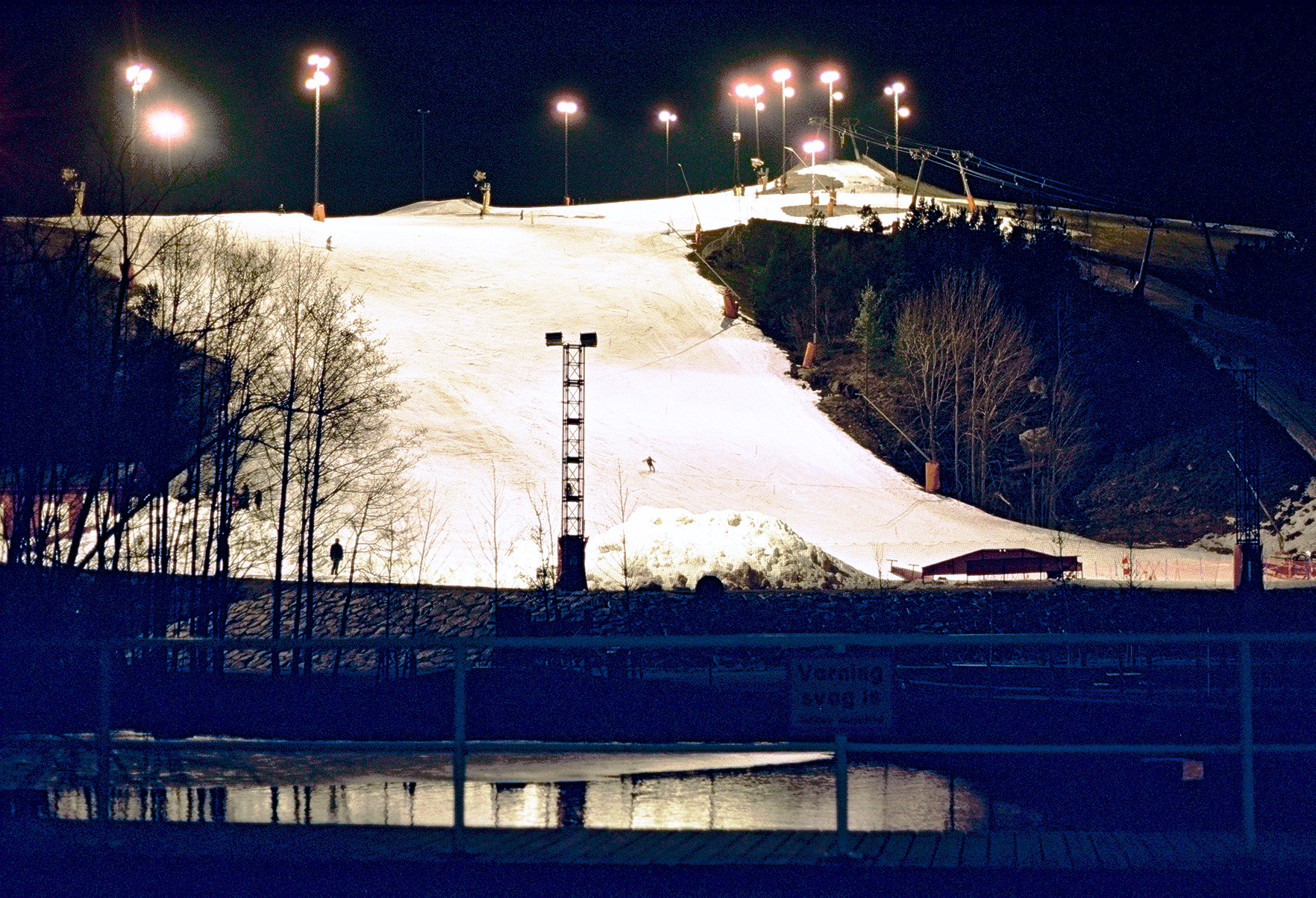
Getting there is simple. Bus 74 runs to Sickla kaj, or you can take the green metro line to Gullmarsplan and change to Tvärbanan, the light rail, for the same stop. From Sickla kaj it is a five- to ten-minute walk to the foot of the hill. An ordinary SL ticket covers every leg.
The SkiStarshop at the foot of the hill rents skis, and SkiStar asks you to book rental online in advance, which is worth doing on a weekend or during the school sports holiday. There is a ski school too. Opening depends on a cold spell long enough for the snow cannons to build a base, so the first day of the season moves from year to year. SkiStar posts the opening date, opening hours and lift-pass prices on its Hammarbybacken pages; check them the day you plan to go rather than relying on last season’s pattern.
Who it suits: first-timers, families, snowboarders working on the basics, and anyone who wants a taste of skiing without losing a day to travel. Who it doesn’t: anyone who has skied in the Alps and is hoping for long, varied runs. You will be riding the T-bar again before you have properly warmed up.
Flottsbro: the bigger hill in Huddinge
Flottsbro, in Huddinge south of the city, is the more serious of the two. It calls itself Stockholm’s biggest ski area and says it has the city’s longest slope, and it is the hill to choose once you are past the snowplough stage. There are five runs, from a race slope and a family slope down to children’s areas, served by three lifts: a four-seat chairlift, a T-bar and a button lift. There is a ski school, and the rental shop hires out skis, snowboards and snowblades.
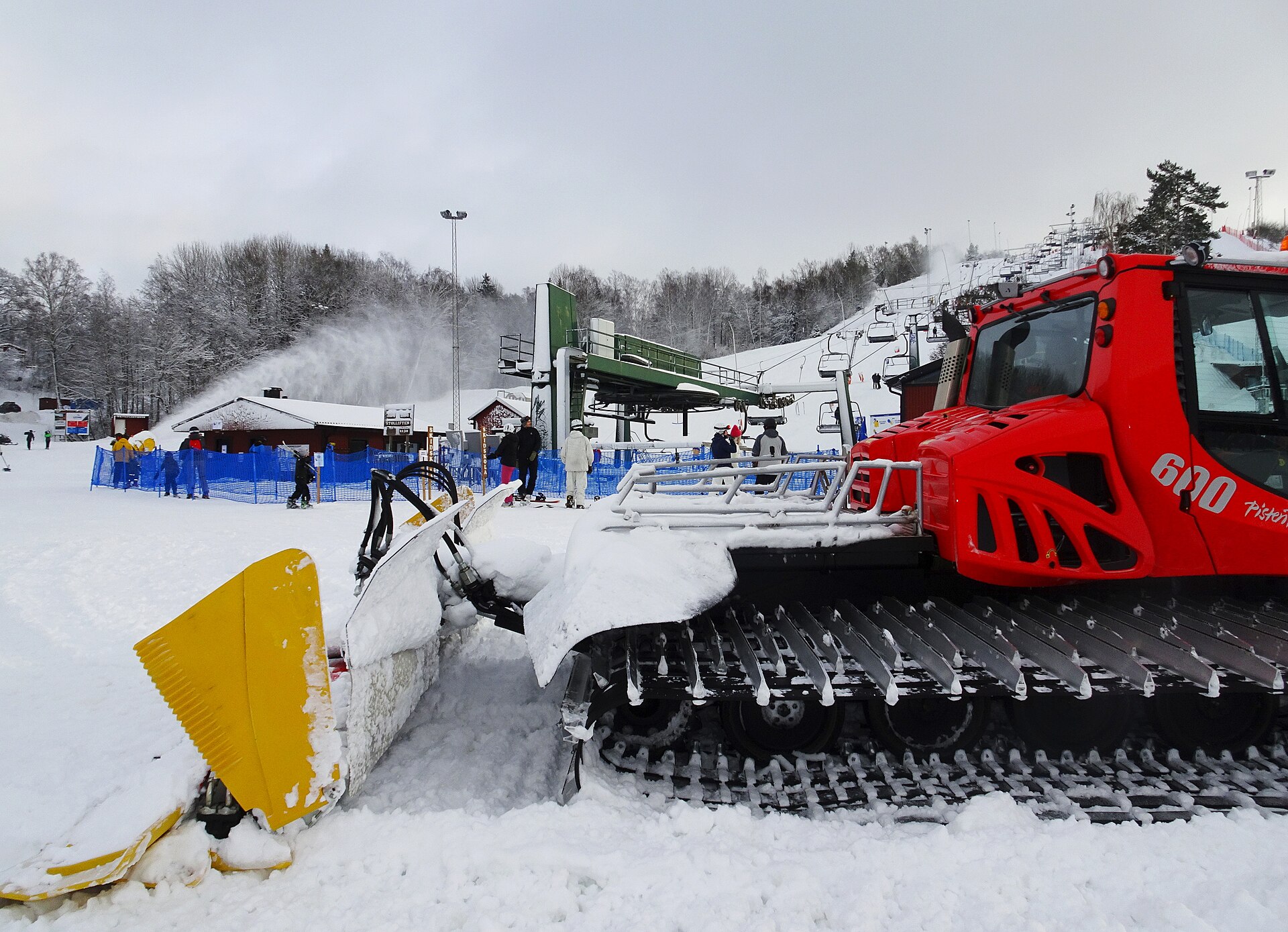
Like Hammarbybacken, Flottsbro depends on frost. In November 2026 its own site said it aimed to open the slopes after Christmas if the weather allowed, because it needs cold weather to make snow first. Check the site before you travel; a mild spell in January can push things back again.
Lift passes come as three hours, six hours, a day, two days, three days or a whole season, and Flottsbro says they are always cheaper bought online than at the hill. Passes go on a KeyCard, and a new KeyCard costs SEK 65, so keep yours if you plan to come back. Equipment is hired by the full day only; there is no hourly or half-day rental, which is worth knowing if you were hoping for a quick hour on the slope.
Without a car, allow time. Flottsbro is about 20 minutes’ drive from the city by its own reckoning, but by public transport the quickest route is the commuter train to Huddinge, then bus 714 from Huddinge centrum, which takes just over an hour in total. The bus doesn’t run often, so check the timetable for the way home before you set off. If you don’t mind a walk, you can also take the commuter train to Tullinge and walk from there, which takes about 50 minutes.
The two city hills compared
| Hammarbybacken | Flottsbro | |
|---|---|---|
| Where | Hammarby Sjöstad, just south of Södermalm | Huddinge, south of the city |
| Lifts | 4: two T-bars, two conveyor belts | 3: four-seat chairlift, T-bar, button lift |
| Runs | 4 slopes | 5 runs |
| Public transport | Bus 74 or Tvärbanan to Sickla kaj, then a 5–10 minute walk | Commuter train to Huddinge and bus 714, just over an hour |
| Rental | SkiStarshop, book online | Full-day rental only |
| Best for | Beginners, children, a quick session | Longer runs and a proper half or full day |
Cross-country skiing in and around Stockholm
For a lot of Stockholmers, skiing means cross-country, and it is easy to see why. It costs little, needs no lift, and gets you into the forest within minutes of a bus stop. Tracks fall into two kinds. Natural-snow tracks are laid in forests, reserves and sports fields once enough snow has fallen, and they can be glorious for a few weeks and then vanish in a thaw. Artificial-snow tracks are shorter loops made with snow cannons, which open in colder spells even when the ground elsewhere is bare.
Hellasgården and the Nacka nature reserve
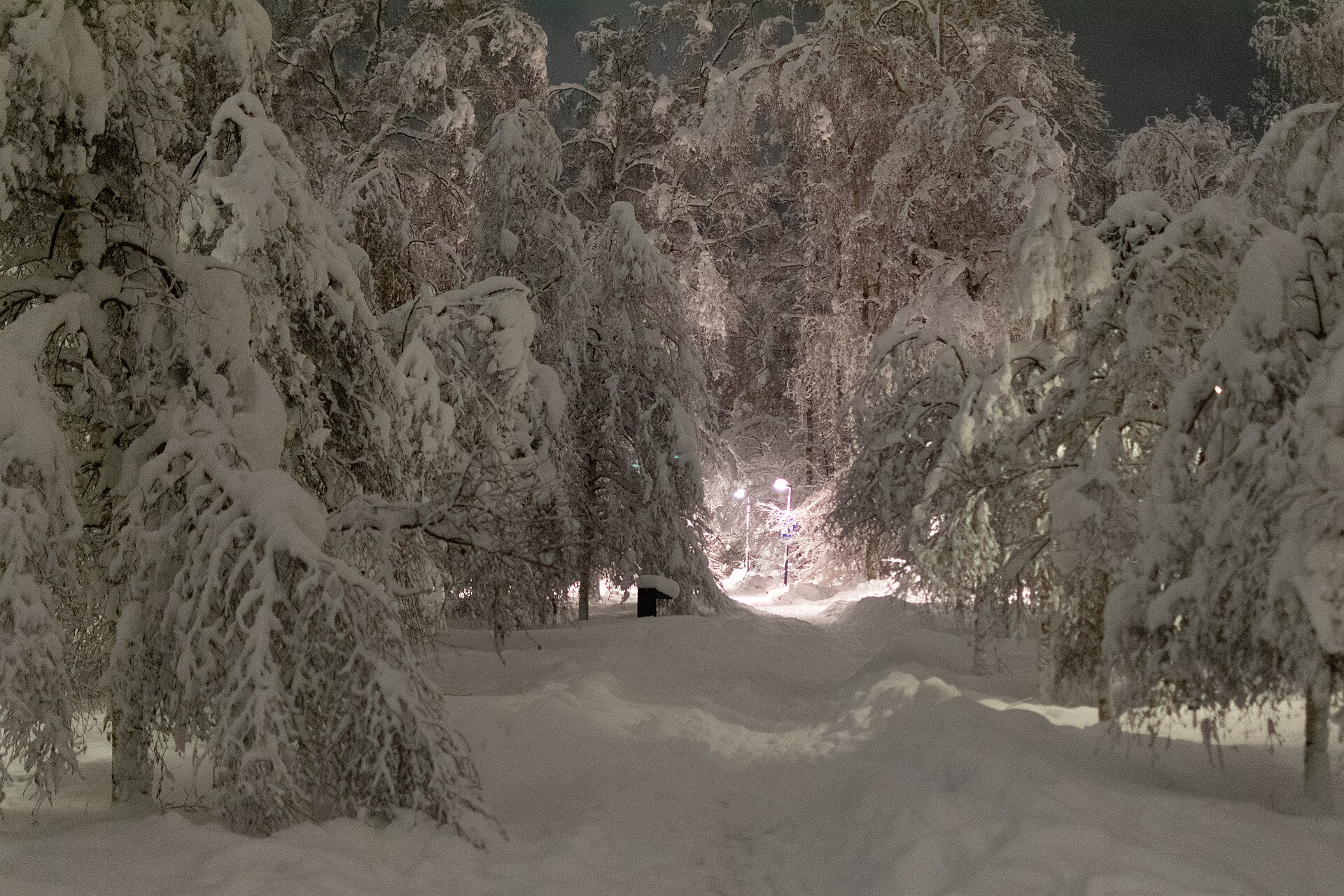
Hellasgården is where most visitors should start. It sits beside the lake Källtorpssjön in the Nacka nature reserve, about 15 minutes on bus 401 from Slussen, and it has everything in one place: tracks into the forest, ski rental, a café and a sauna by the water. The tracks here are laid almost entirely by volunteers from a local orienteering club, and only once there is real snow on the ground.
Last winter the tracks included the lit Järlaspåret, 2.2 km plus a 500-metre link to Hellasgården itself; Ängsspåren, 6 km across the same meadows as the footgolf course; Gula femman, a 5 km track south of Ältavägen; and a 1.3 km children’s track. Hellasgården posts which tracks are prepared on its own ski page, which is the first thing to check after a snowfall.
Hellasgården rents cross-country skis, booked online only, and opens bookings when conditions allow. Last winter (2025/26) adult rental cost SEK 245 for an hour and a half, SEK 435 for three hours, SEK 640 for a day and SEK 1,200 for a week; children up to 12 paid SEK 145, 260, 440 and 720. Check the current prices when booking opens.
Finish the way Stockholmers do, in the sauna. Hellasgården’s sauna costs SEK 110 on weekday daytimes, SEK 130 on weekdays from 14:15 and SEK 150 at weekends (prices checked November 2026), and sauna guests can swim in Källtorpssjön from the jetty all year round. Our guide to saunas in Stockholm has the rest of the city’s public saunas.
Artificial-snow tracks: the safe bet in a mild winter
If the forecast is grey and the ground is bare, look for konstsnöspår, artificial-snow tracks. Visit Stockholm, the city’s tourism organisation, lists artificial snow at Ågesta, south of the city, and at Gärdet’s sports grounds in the city itself, with both artificial and natural snow at Lida, a large outdoor area south-west of Stockholm. The Ågesta loop is 2.1 km and lit, so you can ski it after dark. Natural-snow tracks on the same list include Spånga sports field and the Lövsta tracks.
A two-kilometre loop is not a wilderness experience, and nobody pretends otherwise. Laps on an artificial track are how locals keep skiing through a mild December, and they are a sensible place to find your balance before you head into the forest on narrower, hillier natural tracks.
Check conditions before you go
Track conditions change by the day. Visit Stockholm points skiers to Skidspår.se for track status, and the bigger facilities post their own updates: Hellasgården on its ski page, the downhill hills on their sites. Ten minutes of checking saves a long bus ride to a field of slush.
Track etiquette for visitors
- Don’t walk in the tracks. Footprints in the grooves ruin them for everyone, and many tracks, Hellasgården’s included, are laid by volunteers.
- Know the two styles. Classic skiers use the parallel grooves; skate skiers use the flat, groomed lane beside them where there is one. Keep to the part that matches your skis.
- Follow the arrows. Where a loop is signposted in one direction, ski it that way, especially on lit tracks after dark.
- Let faster skiers by. Step out of the groove when someone comes up behind you, and stop at the side of the track rather than in it.
Hiring or borrowing skis
You don’t need to bring skis to Stockholm, and you don’t need to buy any. For downhill, the SkiStarshop at Hammarbybacken rents equipment and wants bookings made online, and Flottsbro rents skis, snowboards and snowblades by the full day. For cross-country, Hellasgården is the easy option, again booked online.
The local secret is Fritidsbanken, a Swedish lending service for sports and leisure equipment that works like a library. Anyone can borrow, it is free, and the loan period is 14 days. What each branch has on its shelves depends on what has come in, so check with the branch before you count on skis and boots in your size; the Fritidsbanken site lists its locations.
Whatever you borrow, dress for standing still as well as moving. Cross-country skiing is warm work, but the bus stop afterwards is not. Thin layers, a hat, gloves you can ski in and a dry top for the journey home will see you through; our Stockholm packing list has the rest.
When to go: snow, cold and daylight
There is no reliable ski season in Stockholm, only reliable advice: wait for the cold. The hills open when it has been cold enough for long enough to make snow, and the natural tracks open after a proper snowfall. The deep-winter weeks of January and February give the best odds, though some winters bring good snow in December and others very little at all. Our guides to Stockholm in January and Stockholm in February cover what else those months offer, and Stockholm weather by month has the averages.
Daylight is the other constraint. Midwinter days are short, which is why lit tracks matter so much here. Järlaspåret at Hellasgården and the Ågesta loop are both lit, so an after-work or after-sightseeing ski in the dark is a normal Stockholm thing to do, not an eccentric one.
For the bigger picture of the season, from Christmas markets to frozen lakes, see Stockholm in Winter: What It Is Really Like and What to Do, and for everything outdoors through the year, Stockholm Outdoors, Nature & Wellness: A Year-Round Guide.
Day trips and weekends: where the proper skiing starts
Two proper resorts are close enough for a long day or an easy weekend: Kungsberget in Gästrikland and Romme Alpin in Dalarna, both north-west of Stockholm. The big mountain resorts are further still. None of them is a casual afternoon, but none of them needs a flight either.
Kungsberget
Kungsberget describes itself as two hours from Stockholm, half an hour less than Romme gives for its own journey. Its site lists 15 lifts and around two dozen slopes, and it rents out skis on site. It is the obvious choice for a day trip by car: leave early, ski all day and drive back in the dark. Check its site for the season’s opening and lift prices before you go.
Romme Alpin
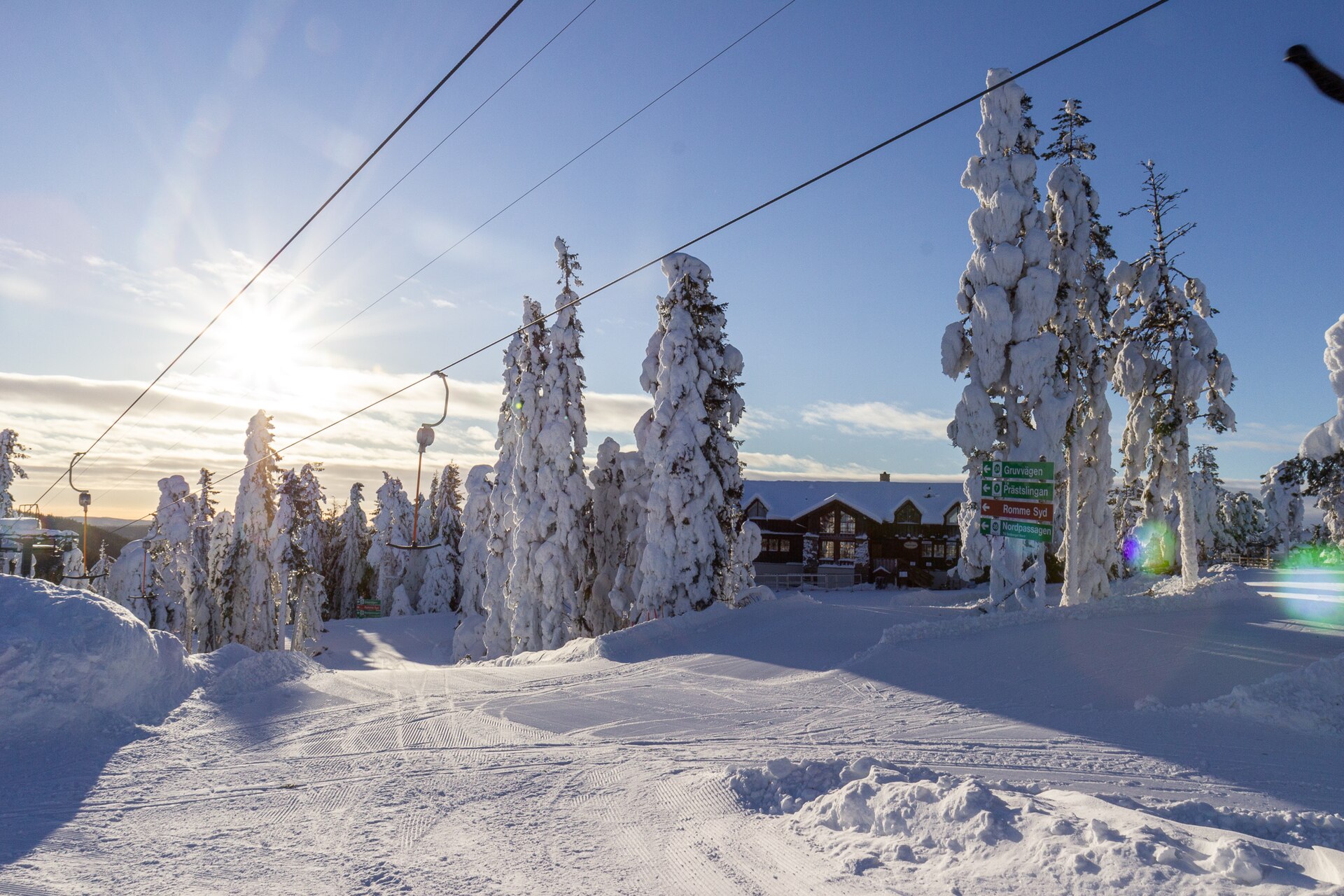
Romme Alpin, 13 km outside Borlänge in Dalarna, has more slopes than Kungsberget, 34 of them, served by 14 lifts. It gives the journey from Stockholm as two and a half hours, so most people treat it as a weekend rather than a day trip, and bookings for the 2026/27 season are open. Its booking menu includes a ski bus, so check where and when that departs if you are travelling without a car.
Åre by train
Åre, in Jämtland, is the big one, and the train makes it surprisingly easy. SJ made its direct high-speed train to Åre and Duved permanent in February 2026; in that timetable it left Stockholm at 16:50 and reached Åre at 23:21, about six and a half hours. Times can change at the December timetable change, so check sj.se for your dates.
The alternative is the night train between Stockholm and Duved, just west of Åre, which Trafikverket has contracted SJ to run with one train in each direction every night from 13 December 2026 to 13 June 2027. It turns most of the journey into a night’s sleep, and saves you a hotel night as well. Book early if you are travelling during the February sports holidays.
Sälen and Vemdalen
Sälen in north-west Dalarna and Vemdalen in Härjedalen are the other big resort areas, but they are a long drive or coach journey from Stockholm and work better as a week’s holiday than a weekend. If you are going that far, compare them with Åre, which has the train.
Vasaloppet, Sweden’s big ski race
If you are in Sweden in early March, Vasaloppet is worth knowing about even if you never intend to race it. The 2027 race is on Sunday 7 March, the classic 90 km route from Sälen to the finish in Mora, and plenty of the skiers on Stockholm’s tracks in January and February are training for it. For 2027 the organisers have extended every time limit by an hour, to help more skiers reach Mora. Unless you have entered, you will be watching rather than skiing, and it makes a good excuse to be in Dalarna in early March. Our guide to Stockholm in March covers the rest of that month.
Is skiing near Stockholm worth it?
For cross-country, yes, when the snow is there. A morning on the tracks at Hellasgården followed by a sauna and a lake dip is one of the best winter days Stockholm can give you, and on a sunny day after fresh snow it is hard to beat. For downhill, it depends what you want. Hammarbybacken is a fun hour or two and a good first lesson; Flottsbro is a proper day out for beginners and improvers. Neither will satisfy a keen skier for long, and they shouldn’t try to.
If skiing is the point of the trip, look north. Kungsberget and Romme are within a long day’s or a weekend’s reach, and the train to Åre turns the mountains into an easy add-on to a Stockholm city break. And if you would rather stay in the city, there is plenty else to do in the cold, from things to do with children to day trips from Stockholm that don’t need skis at all.
Frequently asked questions
Can you ski in Stockholm itself?
Yes. Hammarbybacken in Hammarby Sjöstad, just south of Södermalm, has four lifts and four slopes and is run by SkiStar. It is a small hill best suited to beginners and children. For cross-country, there are tracks at Hellasgården in the Nacka reserve and artificial-snow tracks at Gärdet, Ågesta and Lida.
Is there skiing near Stockholm by public transport?
Yes. Hammarbybacken is reached by bus 74 or the Tvärbanan light rail to Sickla kaj, then a short walk. Flottsbro takes just over an hour by commuter train to Huddinge and bus 714. Hellasgården, for cross-country, is about 15 minutes on bus 401 from Slussen.
When does Hammarbybacken open for the season?
It depends on the weather. The slopes need a cold spell long enough to make snow, so the opening day changes from year to year. SkiStar publishes the opening date, opening hours and lift-pass prices on its Hammarbybacken pages.
Where can I rent cross-country skis in Stockholm?
Hellasgården in the Nacka reserve rents cross-country skis, booked online when conditions allow; last winter an adult day cost SEK 640. Fritidsbanken lends sports equipment free for 14 days, though stock varies by branch.
Which proper ski resorts can you reach from Stockholm in a day?
Kungsberget, which describes itself as two hours from Stockholm and lists 15 lifts and around two dozen slopes, is a realistic day trip by car. Romme Alpin near Borlänge, with 14 lifts and 34 slopes, gives its journey time from Stockholm as two and a half hours, so most people make a weekend of it.
Can I take the train from Stockholm to Åre?
Yes. SJ runs a direct high-speed train, which in the 2026 timetable took about six and a half hours, and from 13 December 2026 a night train between Stockholm and Duved, just west of Åre, runs every night in each direction. Check sj.se for current times.
When is Vasaloppet 2027?
Sunday 7 March 2027. The race runs 90 km from Sälen and finishes in Mora.
More Stockholm guides
- Stockholm Outdoors, Nature & Wellness — the year-round guide.
- Stockholm in Winter — what the cold months are really like.
- Saunas in Stockholm — where to warm up afterwards.
- Stockholm in February — the best month for snow odds.
- Things to Do in Stockholm with Kids — for the days off the slopes.
- Day Trips from Stockholm — more ideas beyond the city.
- SL Card and Tickets — the ticket that gets you to the tracks.
- Stockholm Packing List — what to wear in the cold.
Photo credits
A skier at the top of Hammarbybacken (featured image): Hammarbybacken February 2012 by Arild Vågen, CC BY-SA 3.0, via Wikimedia Commons.
Hammarbybacken under floodlights: Hammarbybacken by oskar karlin from stockholm, sweden, CC BY-SA 2.0, via Wikimedia Commons.
A snow groomer at Flottsbro: Flottsbro, jan 2021b by Holger.Ellgaard, CC BY-SA 4.0, via Wikimedia Commons.
The Nacka nature reserve in snow: Nackareservatet winter2022 by danrah, CC BY-SA 4.0, via Wikimedia Commons.
The top of Solklinten at Romme Alpin: Romme Alpin, Solklintens topp feb 2021 by RommeAlpin, CC BY-SA 4.0, via Wikimedia Commons.