Stockholm in Winter: What It Is Really Like and What to Do
What a Stockholm winter is really like, from November's gloom to February's bright, frosty days, with real temperatures and daylight hours, skating, saunas and ice swims, Christmas markets, museums, what closes and what to pack.
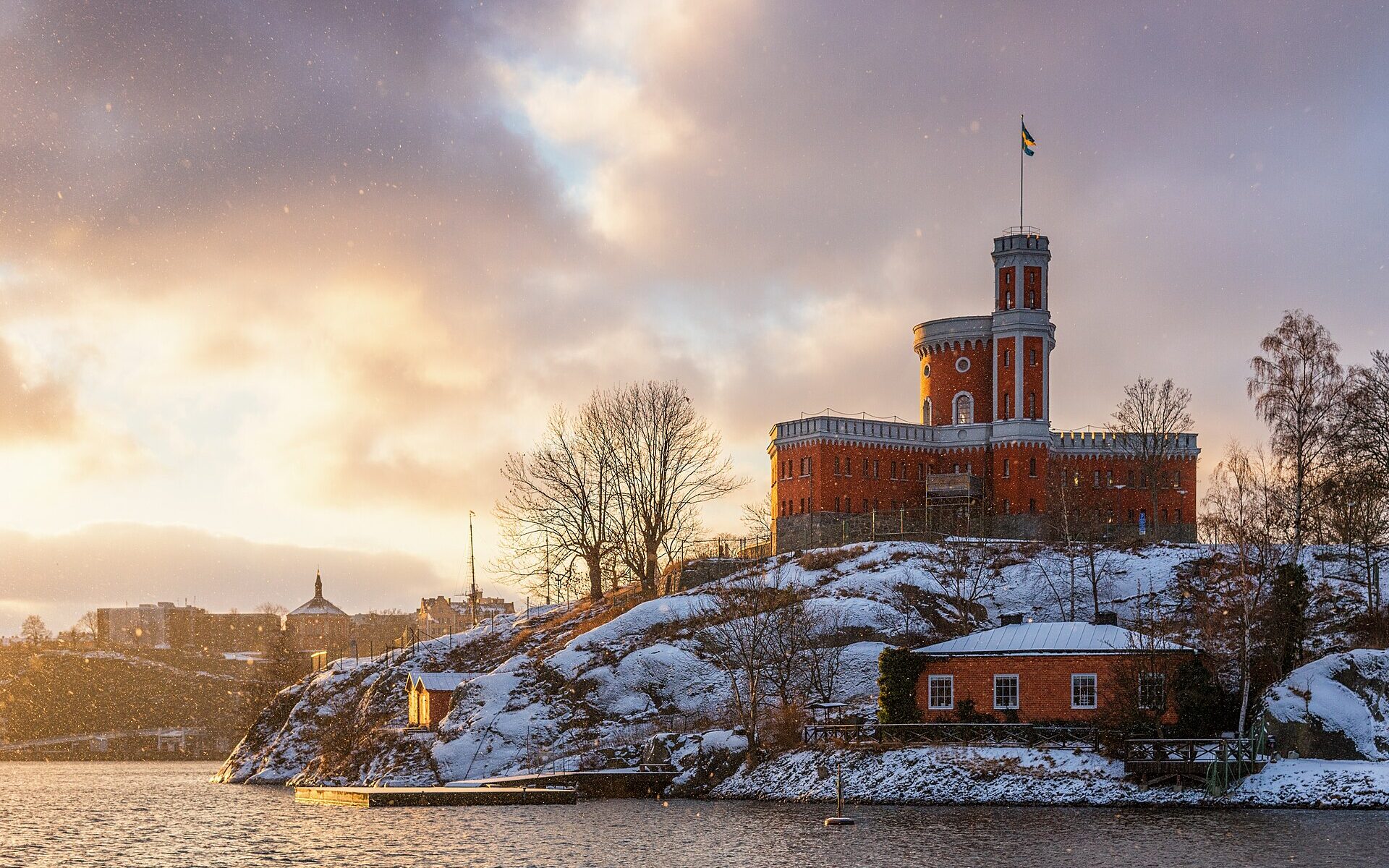
Stockholm in winter is not the snow globe of the postcards, and it’s not the frozen, pitch-black ordeal that people back home imagine either. It’s a Nordic capital in its cosiest season: dark by mid-afternoon in December, often grey, sometimes glittering under snow and blue skies, and lit everywhere by candles, Advent stars and café windows. The cold is rarely extreme, because the Baltic takes the edge off it. The darkness is real, and the city has spent centuries learning to make the most of it. If you come prepared, with the right clothes and the right expectations, winter can be the most atmospheric time of all to be here.
This guide tells you what a Stockholm winter is really like, month by month, from November’s gloom to February’s bright, frosty days, and what to do with it: skating in the city, saunas and ice swims, Christmas markets, museums for dark afternoons, the archipelago under ice, and a winter weekend itinerary. It also covers what closes, what to pack, getting around in snow, and our honest verdict on whether winter is worth it. Prices and dates were checked in September 2026.
Temperatures: average highs around −1 °C in January and February, +1 °C in December. Cold snaps can bring −10 °C to −20 °C.
Daylight: about 6 hours around the solstice in late December, 8 hours by early February and over 10 by early March.
Snow: most likely in January and February, never guaranteed. December is often grey and wet.
Best winter months: December for Christmas, and February for snow, ice and brighter days.
Weakest month: November, dark and damp before the Christmas lights go up.
Skating: the Kungsträdgården rink runs from mid-November to mid-March, free with your own skates, or SEK 100 to rent a pair.
Prices: low season from January to March, apart from Design Week. Christmas and New Year are busy.
What a Stockholm winter is really like
The honest summary is that a Stockholm winter has two faces. On a still February morning after fresh snow, with the sun low over frozen bays and the old town iced like a cake, it’s one of the most beautiful cities in the world. On a wet November afternoon, with a raw wind off the water and darkness falling at three, it can feel like the loneliest. Most winter days fall somewhere between the two, and your experience depends on when you come, how you dress and how you plan your days around the light.
The cold is milder than people expect. Stockholm sits at the same latitude as southern Alaska, but its winters are far gentler, because the sea moderates the climate, and average daytime highs hover around freezing rather than far below it. The damp is what gets to you: at around freezing, with humid air and wind off the water, 0 °C can feel colder than a dry −10 °C inland. Dress for the wind, not the thermometer.
The dark takes more getting used to. In late December the sun rises around 08:45 and sets before 15:00, and on a cloudy day it never climbs high enough to feel like daylight at all. But Stockholm doesn’t sit in the dark. Every window glows with candles or an Advent star, the streets are strung with lights, and cafés and restaurants lean into the cosiness Swedes call mys. The short days also give you something the summer can’t: a long, blue twilight in mid-afternoon that turns the whole city into a stage set.
Month by month
| Month | Average high | Daylight (approx.) | Highlights |
|---|---|---|---|
| November | +4 °C | From about 8½ hours down to 6¾ | Film festival, Christmas markets from late November |
| December | +1 °C | About 6 hours | Advent, Nobel Week Lights, Lucia, julbord, Christmas, New Year’s Eve |
| January | −1 °C | From 6 hours up to 8 | Winter sales, skating, quiet museums, low prices |
| February | −1 °C | From 8 hours up to 10½ | Best chance of snow and ice, Design Week, semla season |
| March | +2 °C | From 10½ hours up to 13 | Spring sun on snow, the last of the skating |
November: the one to avoid, mostly
November is Stockholm’s weakest month. The autumn colours are gone, the snow hasn’t arrived, the days shorten fast and it’s often wet. Locals call it the gloomiest month, and they’re right. It does have compensations: the Stockholm International Film Festival in mid-November, low prices, empty museums, and, from the last week, the first Christmas markets and lights. If you must come in November, come at the end. Our guide to Stockholm in November has more.
December: dark, lit and busy
December is the darkest month and the most festive. From the first Sunday of Advent, the city lights up: Advent stars in the windows, Christmas markets on Stortorget and at Skansen, NK’s Christmas windows, Nobel Week Lights in the second week and Lucia processions on the 13th. Snow is possible but far from certain, and many Decembers are grey and mild. Book restaurants and julbord tables well ahead. See Stockholm in December.
January: quiet, cold and cheap
After the holidays, Stockholm goes quiet. January is cold, the days are slowly lengthening, and the city is at its most local: fewer visitors, winter sales in the shops and the lowest hotel prices of the year. Snow is more likely than in December, and in a cold spell the lakes begin to freeze. It’s a good month for museums, saunas and long lunches. See Stockholm in January.
February: the best of winter
February is, for many, the best winter month. It’s cold, but the days are noticeably longer, and if snow falls it tends to stay. The chance of ice on the lakes and bays is at its highest, and on clear days the low sun on snow is dazzling. Stockholm Design Week brings the design world to town in early February, and bakeries are full of semlor, the cream-filled buns eaten before Lent. See Stockholm in February.
March: winter with sunshine
By March the days are longer than the nights, and the light is back, even though it’s still winter. Snow can fall into April, the lakes may still be frozen early in the month, and the first café terraces open on sunny south-facing walls. It’s a good month for a last skate and your first sight of spring. See Stockholm in March.
For the full year, see Stockholm weather by month and our guide to the best time to visit Stockholm.
Snow, ice and cold: what to expect
Snow in Stockholm is a gamble. Some winters bring weeks of it from December to March; others bring barely a dusting in the city, with rain and slush in between. January and February are the safest bets. If snow matters to you above everything, don’t book in December expecting a white Christmas: it happens, but less often than the films suggest. For guaranteed snow, travel north, where Swedish Lapland is under snow from November to April.
Ice is the other variable. In a cold winter, the lakes around the city freeze thick enough to skate on, and even the bays of the Baltic can freeze over, turning the archipelago into a landscape of white islands in a white sea. In a mild winter, the water stays open. Never walk or skate on natural ice without local knowledge: ice that looks solid can be dangerously thin, especially near reeds, bridges, streams and the sea.
In the streets, the city clears snow quickly and grits pavements with gravel. Surfaces can still be treacherous, especially when a thaw is followed by a freeze, and icy pavements send many Stockholmers to hospital every winter. Good boots with grip are essential, and slip-on shoe spikes (broddar), sold in any shoe shop or pharmacy, are worth buying on arrival if it’s icy.
Living with the dark
Swedes don’t fight the dark; they light it. Candles are lit in cafés, shops, offices and homes at any hour. Electric Advent candlesticks and paper stars glow in almost every window from late November into January. And the evenings are made for mys: cosy dinners, long fikas, saunas and concerts. You’ll enjoy the dark more if you do as they do.
- Plan your days around the light. Put the outdoor sights, the viewpoints and the old town between about 10:00 and 14:00, and save the museums, shopping and cafés for the afternoon dark.
- Catch the blue hour. In midwinter, the city glows blue for an hour or more in mid-afternoon. It’s the best time for photographs from Monteliusvägen or the Djurgården bridge.
- Get outside in the middle of the day. Even on a grey day, a walk at noon lifts the spirits more than you’d expect.
- Embrace the cosiness. Book a restaurant with candles and a fire, take a long fika, and don’t try to cram the day.
Things to do in Stockholm in winter
Skate in the city
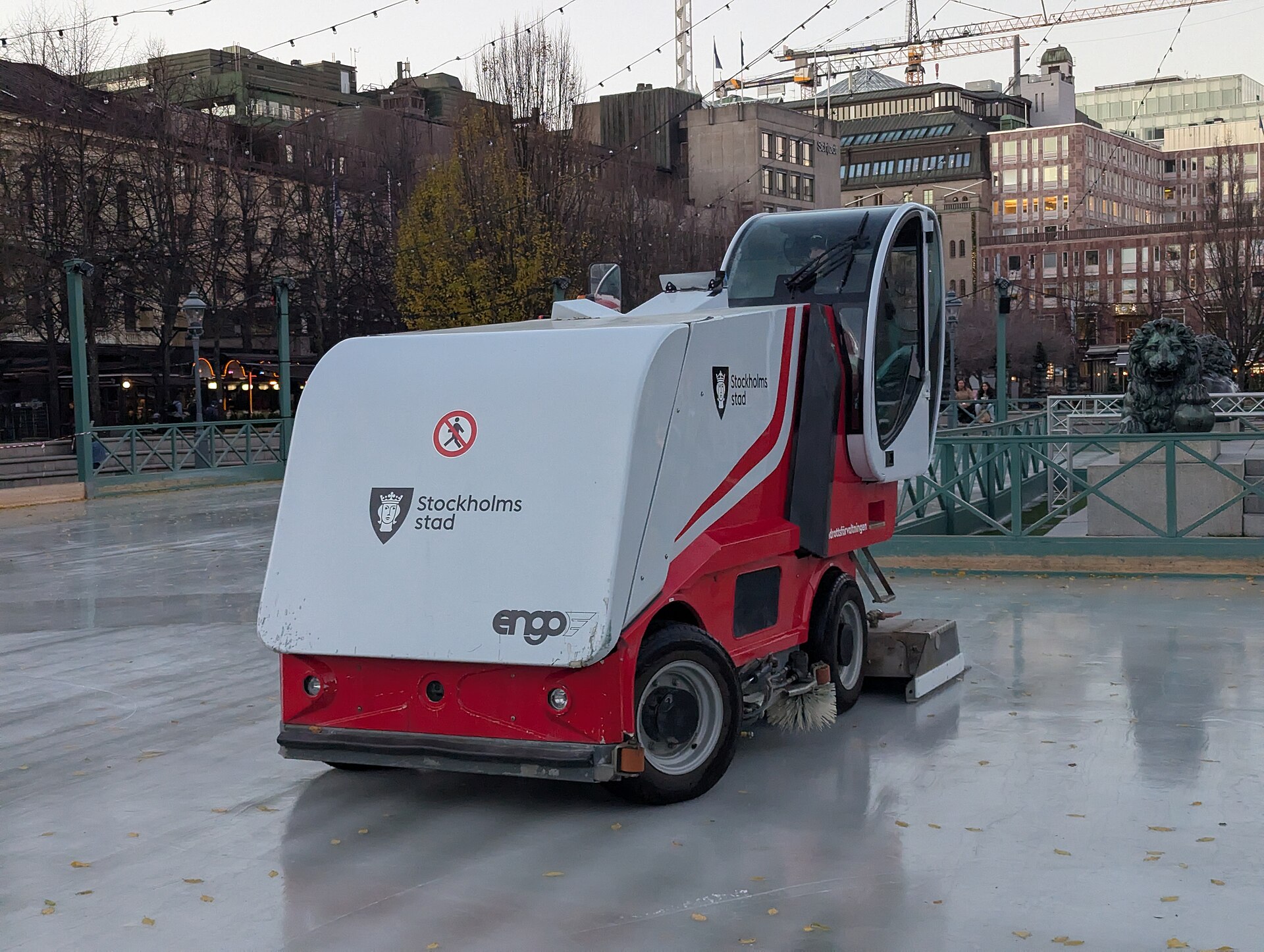
From mid-November to mid-March, an outdoor ice rink fills the middle of Kungsträdgården, the park in the city centre, with the lights of the surrounding cafés and the old bronze lions for company. It’s free with your own skates, and skate hire costs SEK 100 for adults and SEK 50 for under-19s. Under-18s must wear a helmet, and you can borrow one. There’s another popular rink in Vasaparken, in Vasastan.
In a cold winter, the real adventure is long-distance skating (långfärdsskridsko) on natural ice, gliding for kilometres across frozen lakes and bays on long Nordic blades. It’s one of the great Swedish winter experiences, but go with a guided tour unless you have real local experience. Guides check the ice, carry rescue gear and know where to go. Our guide to Stockholm Outdoors, Nature & Wellness: A Year-Round Guide covers skating and the rest of the winter outdoors.
Sauna and an ice swim
Nothing beats the cold like a sauna, and a Stockholm winter is the best time to try the Nordic ritual of heat followed by a plunge into icy water. At Hellasgården, in the Nacka nature reserve about 20 minutes by bus 401 from Slussen, a lakeside sauna comes with a hole cut in the ice of Källtorpssjön, for roughly SEK 110–180. The waterfront saunas on Södermalm, Tanto bastu and Hornstullsbastun, bring the same heat-and-cool-off ritual into the city, and the historic bathhouses, Centralbadet in Norrmalm and Sturebadet in Östermalm, are warmer, more luxurious retreats. The water in winter is 2–5 °C: go in slowly, get out quickly, and don’t do it alone or after drinking.
Christmas markets and Advent
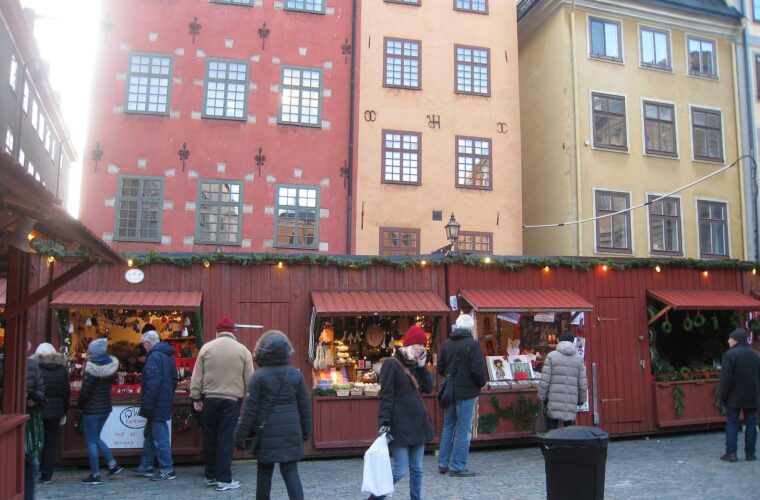
From late November, Christmas takes over. The market on Stortorget in Gamla Stan, held since 1837, runs from about 21 November to 23 December in 2026, with around 40 red stalls selling handicrafts, sweets and hot glögg. The Skansen market, running since 1903, is open on Fridays, Saturdays and Sundays from 27 November to 20 December 2026, spread among the historic buildings of the open-air museum, and it’s included in the Skansen ticket. See our guide to Stockholm’s Christmas markets.
Nobel Week Lights, Lucia and New Year
December’s second week brings Nobel Week Lights, a free festival of light art on buildings and in squares across the city centre and in Tensta, from 5 to 13 December in 2026, around Nobel Day on the 10th. On 13 December, Lucia processions of white-robed singers carrying candles fill churches with song. And on New Year’s Eve, fireworks light up the city at midnight; the heights of Södermalm have the best views. Our Stockholm events and festivals calendar has the details.
Museums for dark afternoons
Stockholm has one of Europe’s best collections of museums, and winter afternoons are made for them. The Vasa Museum, with its salvaged 17th-century warship, is the unmissable one, and far less crowded in winter than in summer. Nationalmuseum, Moderna Museet, the Nobel Prize Museum and Nordiska museet will fill days, and Fotografiska, on the Södermalm waterfront, stays open into the evening, with views over the dark harbour from its restaurant. See Best Museums in Stockholm, and our guide to free museums for the budget options.
Skansen in the snow
Skansen, the open-air museum on Djurgården, is open all year, and it’s at its most magical under snow, with smoke rising from the chimneys of the old farmhouses and the Nordic animals, including elk, reindeer and lynx, in their winter coats. The brown bears sleep through the winter. At weekends in Advent, the Christmas market adds folk dancing, glögg and stalls. See our Skansen guide.
The archipelago in winter
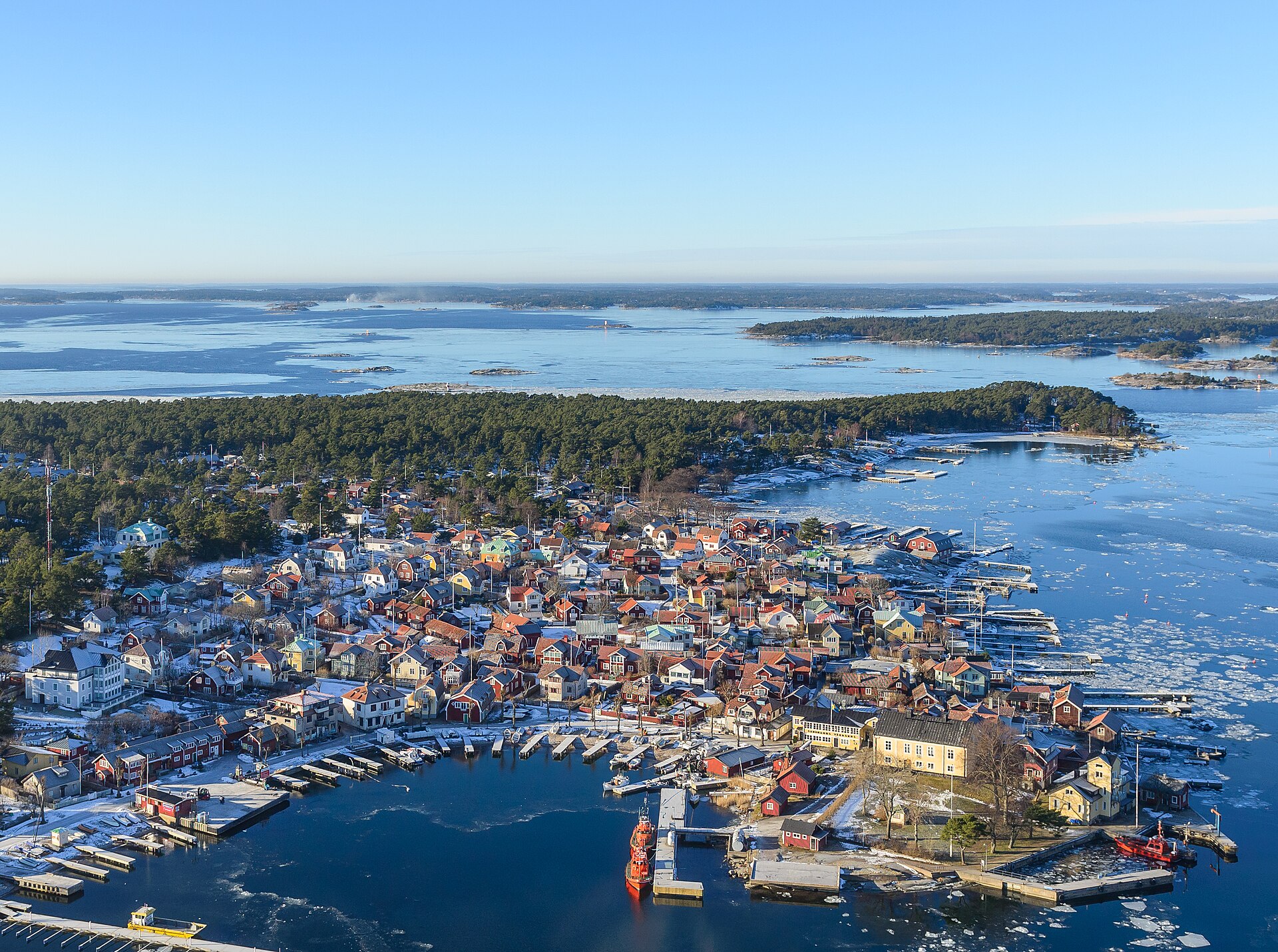
Most visitors think of the archipelago as a summer place, but winter shows you a different, quieter side. Waxholmsbolaget’s boats keep running to some islands all year on reduced timetables, with ice-strengthened ferries pushing through the frozen channels. Vaxholm, an hour away, makes an easy winter day trip, with its fortress, harbour and a few cafés and restaurants open year-round. Further out, islands such as Sandhamn are silent and beautiful, with many summer businesses closed. See the Waxholmsbolaget ferry guide and our Vaxholm guide.
Skiing and sledging
When snow falls, cross-country ski tracks are prepared in parks and nature reserves around the city, including the Nacka reserve, and the small slope at Hammarbybacken offers a little downhill skiing within the city. Every hill in every park fills with children on sledges. For proper downhill skiing, Swedes head north to the mountains, a long train ride away.
Eat for the season
Winter food in Stockholm is hearty and seasonal. December brings the julbord, the great Christmas buffet, served in restaurants from late November, and glögg with raisins and almonds at every market. January brings semlor into the bakeries, and cafés serve soups, stews and cinnamon buns to people coming in from the cold. Our guides to traditional Swedish food, fika and the best bakeries in Stockholm will keep you warm.
Concerts, opera and theatre
Winter is the height of the cultural season. The Royal Swedish Opera, the Concert Hall and the city’s theatres and jazz clubs are in full swing, and churches hold concerts through Advent and Christmas. An evening at the opera or a candlelit church concert is one of the best ways to spend a long winter evening. See live music in Stockholm.
The northern lights
Stockholm is too far south, and too brightly lit, to see the aurora often. On rare nights of strong activity, it can appear low in the northern sky away from the city lights. If seeing the northern lights is the point of your trip, take a night train or a flight north to Abisko or Kiruna, where your chances are far better. See our guide to the northern lights near Stockholm and getting to and from Stockholm.
What’s closed or different in winter
- The City Hall tower is open only in the warmer months, roughly May to September. The guided tours of the building run all year.
- Gröna Lund, the amusement park, closes for the winter.
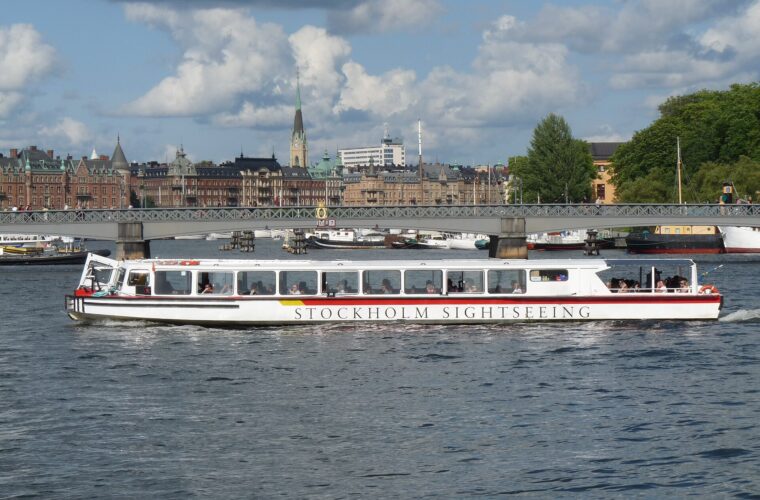
- Sightseeing boats and the hop-on hop-off bus scale back or stop. Some winter boat trips run, especially around Christmas; our guide to Stockholm tours explains what’s worth booking.
- The archipelago runs on reduced timetables, and many island restaurants, cafés and hotels close for the season.
- Opening hours at some attractions are shorter in winter; check before you go.
- Christmas Eve, Christmas Day and New Year’s Eve close many restaurants. Systembolaget shuts on Christmas Eve and Christmas Day and closes at 15:00 on New Year’s Eve, so book ahead and buy drinks early.
What to wear and pack
Dressing for a Stockholm winter is about layers and your feet. Swedes say there’s no such thing as bad weather, only bad clothing, and they dress accordingly.
- A warm, windproof coat: an insulated parka or a wool coat with a windproof layer, long enough to cover your hips.
- Layers underneath: a thermal or merino base layer and a fleece or wool mid-layer. Indoors, shops, museums and the metro are warm, so you’ll want to peel layers off.
- Waterproof boots with grip: the most important item. Slush, ice and gravel grit will ruin smooth-soled city shoes. Buy broddar, slip-on spikes, if it’s icy.
- Hat, gloves and scarf: a warm hat that covers your ears, gloves or mittens (touchscreen-friendly liners help), and a scarf or neck gaiter for the wind off the water.
- Swimwear, for the sauna and, if you’re brave, the ice hole.
- Reflectors: Swedes wear small reflectors on their coats and bags in the dark months, so drivers can see them. You’ll find them at any pharmacy.
Our Stockholm packing list has the full checklist.
Getting around in winter
Stockholm handles winter well, but snow still causes disruption. The metro, which runs mostly underground, is the most reliable option. The commuter trains are more vulnerable to heavy snow and cold, and delays are common after a big snowfall, so allow extra time for a train to the airport. Buses slow down in snow, and the tram to Djurgården keeps running in all but the worst weather. Arlanda is used to snow and rarely closes, but de-icing can delay flights.
On foot, take care on pavements and steps, especially in Gamla Stan’s cobbled lanes and on Södermalm’s hills, where ice builds up. Taxis are easy to find, and a short ride on a freezing night is money well spent. See our guide to Stockholm public transport.
What a winter trip costs
Winter, outside the festive season, is Stockholm’s low season. Hotel prices fall from January to March, apart from Design Week in February, and there are fewer visitors at the museums and in the restaurants. December is different: the run-up to Christmas is popular, julbord tables book up, and hotels fill for New Year. If you’re after value, come in January or February. Our guides to the cost of a trip to Stockholm and cheap hotels in Stockholm will help you budget.
A winter weekend in Stockholm
This itinerary makes the most of the light and the dark over three days in December, January or February.
Day one: the old town and the lights
Spend the morning in Gamla Stan while the light is best: the Royal Palace, the lanes and Stortorget, with a visit to the Nobel Prize Museum. Break for a long fika in one of the old town’s vaulted cafés. As the light fades in mid-afternoon, walk out to the Riddarholmen quay for the blue hour over the water, then skate at Kungsträdgården or, in December, browse the Christmas market on Stortorget. Dinner by candlelight in the old town.
Day two: Djurgården and a sauna
Take tram 7 to the Vasa Museum at opening, then walk on to Skansen to see the Nordic animals in the snow and the old farmhouses with smoke rising from their chimneys. Lunch on Djurgården. In the afternoon, head to Hellasgården or one of the floating saunas for heat and an ice-cold plunge, and finish the day with a hearty dinner in Södermalm.
Day three: Södermalm and the views
Browse the vintage shops and cafés of Södermalm in the morning, then walk to Monteliusvägen for the view over Riddarfjärden and City Hall. Spend the afternoon dark at Fotografiska, and stay for dinner in its restaurant with the lights of the harbour below. For more ideas, see our Stockholm weekend itinerary and our guide to Stockholm on a rainy day.
Is Stockholm worth visiting in winter?
Yes, if you know what you’re getting. Winter suits travellers who love culture, food, cosy evenings, Christmas and the magic of snow and ice when it comes. It doesn’t suit anyone who needs long sunny days, outdoor café life or the archipelago at its best; for that, come between June and August. Our choice for a winter trip is December for Christmas or February for snow, light and low prices, and we’d avoid November unless you’re coming for the film festival or the very start of the Christmas season. For the wider question, see Is Stockholm worth visiting?
Frequently asked questions
How cold is Stockholm in winter?
Colder than western Europe, milder than many expect. Average highs are around −1 °C in January and February and +1 °C in December. Cold snaps can bring −10 °C to −20 °C, and damp air and wind off the water can make it feel colder than the thermometer says.
How many hours of daylight does Stockholm have in winter?
About six hours around the winter solstice in late December, with sunrise around 08:45 and sunset before 15:00. By early February there are about eight hours of daylight, and by early March over ten.
Does it snow in Stockholm in winter?
Usually, but it’s not guaranteed. January and February are the snowiest months, while December is often grey and wet. Some winters bring weeks of snow, and others very little in the city.
What is there to do in Stockholm in winter?
Skate at Kungsträdgården’s outdoor rink, try a sauna and an ice plunge at Hellasgården, visit the Christmas markets, see Nobel Week Lights and Lucia in December, explore the museums, see Skansen in the snow and take a winter boat to Vaxholm.
Is ice skating free in Stockholm?
Yes, with your own skates. The outdoor rink in Kungsträdgården is free to use from mid-November to mid-March, and skate hire costs SEK 100 for adults and SEK 50 for under-19s. Under-18s must wear a helmet, which can be borrowed.
Can you see the northern lights in Stockholm?
Only rarely, on nights of strong activity, low in the northern sky away from the city lights. For a good chance, travel north to Abisko or Kiruna by night train or plane.
What should I wear in Stockholm in winter?
Layers: a thermal base layer, a warm mid-layer and a windproof, insulated coat, plus a hat, gloves and scarf. Waterproof boots with good grip matter most, and slip-on spikes help on icy pavements.
Is Stockholm worth visiting in winter?
Yes, for culture, food, Christmas and snow. December is best for Christmas and February for snow, ice and brighter days, while November is the dreariest month. For sunshine and the archipelago, come in summer instead.
For the full list of places to sweat and plunge, from Hornstullsbastun and Tanto bastu on Södermalm to Centralbadet, Sturebadet and the spas of the archipelago, see our guide to saunas in Stockholm.
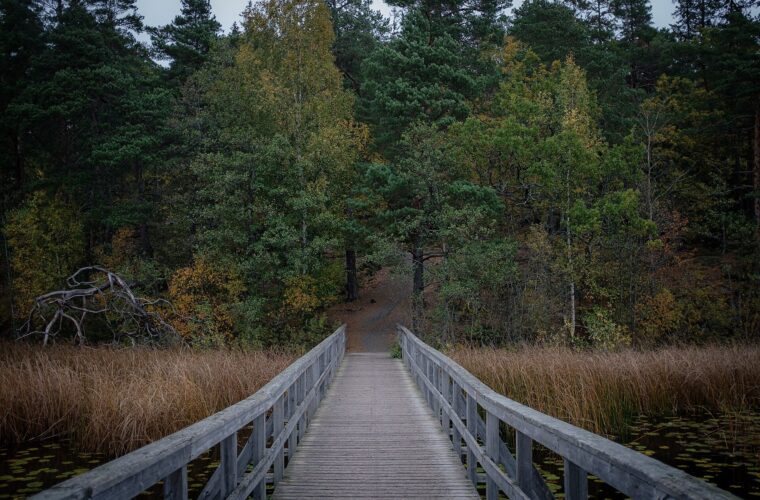
Winter is a fine time for a walk in the forest, as long as you keep it short and start early. Our guide to hiking near Stockholm picks trails that work in the cold months, including the Nacka reserve and Hellasgården, where a sauna and a cold plunge wait at the end.
More Stockholm guides
- Stockholm Outdoors, Nature & Wellness — skating, saunas and the wild side.
- Stockholm in December — the Christmas month.
- Stockholm in January — quiet, cold and cheap.
- Stockholm in February — snow, ice and light.
- Stockholm Christmas Markets — every market, with dates.
- Stockholm Events & Festivals — the year’s calendar.
- Northern Lights near Stockholm — the honest odds.
- Stockholm Packing List — what to bring in every season.
Photo credits
Kastellet on Kastellholmen in falling snow (featured image): Kastellet citadel on Kastellholmen Stockholm 2016 02 by Julian Herzog, CC BY 4.0, via Wikimedia Commons.
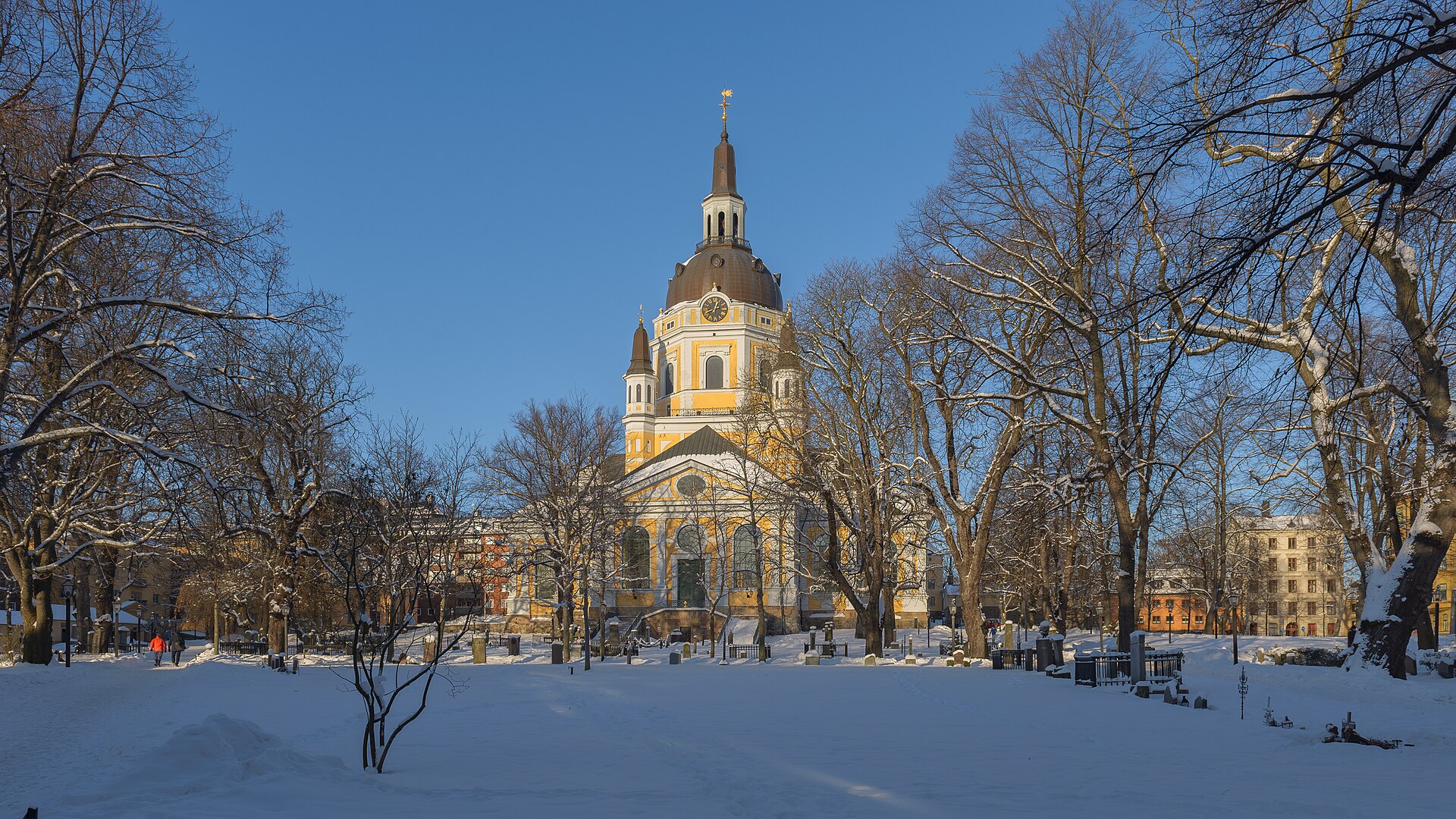
Katarina Church in the snow: Katarina kyrka och kyrkogård January 2013 by Arild Vågen, CC BY-SA 3.0, via Wikimedia Commons.
The Kungsträdgården ice rink: Kungsträdgården Isbana – 20241116 – 47 by AleWi, CC BY-SA 4.0, via Wikimedia Commons.
Sandhamn in February: Sandhamn February 2013 04 by Arild Vågen, CC BY-SA 3.0, via Wikimedia Commons.