Getting to Stockholm: Airports, Ports & Long-Distance Travel
How to get to Stockholm by air, rail, sea and road: all four airports and their transfers, trains from Gothenburg, Copenhagen and Oslo, the overnight Baltic ferries, the cruise terminals, coaches and driving, with times, costs and honest verdicts.
Most visitors fly into Arlanda and are in the city centre 18 minutes after they reach the platform. But the choice is wider than that, and how you arrive can shape the whole trip. Stockholm has four airports, only one of them close to the centre; direct trains from Copenhagen, Oslo and Gothenburg; overnight ferries from Helsinki, Tallinn and Turku that are an experience in themselves; and cruise ships that tie up within walking distance of the old town. This guide explains how to get to Stockholm by air, rail, sea and road, with real journey times, what each option costs, and our honest verdict on which to pick.
We cover all four airports and their transfers, Stockholm Central and the long-distance trains, the Baltic ferries and their terminals, the cruise ports, coaches and driving routes, and what to do in your first hour. Prices and timetables were checked in September 2026, with the operators where possible; treat prices as the right order of magnitude, as fares change with the season and how early you book.
Main airport: Arlanda (ARN), 40 km north. The Arlanda Express takes 18 minutes to Stockholm Central and costs about SEK 340 for an adult.
Cheapest airport transfer: the Flygbussarna coach from Arlanda, about 45 minutes, about SEK 129 online.
City airport: Bromma (BMA), about 8 km from the centre, with domestic and short-haul flights. Its long-term future is under review.
Budget airports: Skavsta and Västerås, both about 100 km away and 75–80 minutes by coach.
By train: roughly 3 hours from Gothenburg, 5 to 5½ from Copenhagen and 5½ to 6 from Oslo.
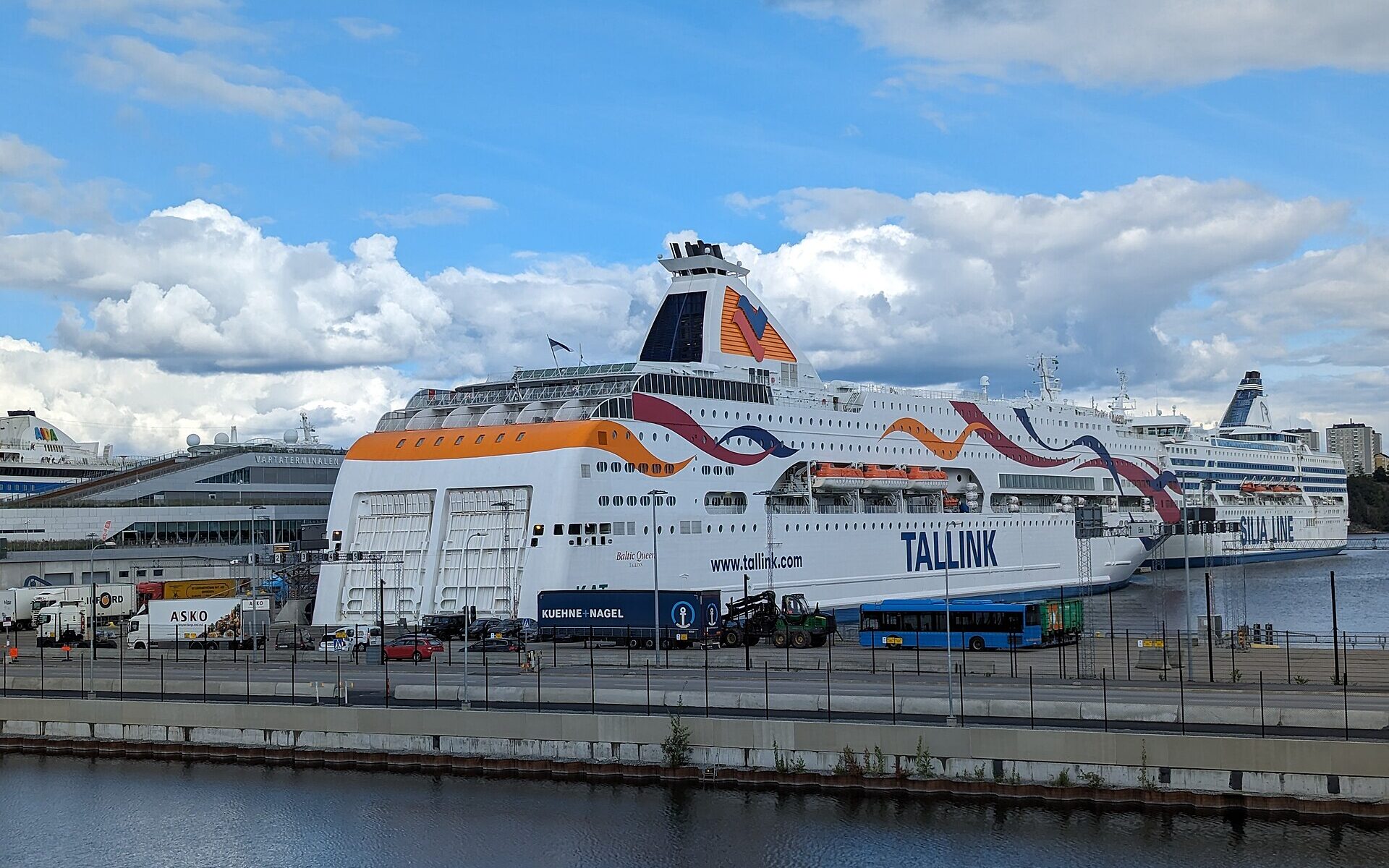
By ferry: overnight from Helsinki and Tallinn, about 17 hours. The ships arrive at Värtahamnen or Stadsgården.
Cruise ships: Frihamnen, Stadsgården and Värtahamnen in the city; the largest ships dock at Nynäshamn.
Which way in? The options compared
The table sets out the realistic routes into central Stockholm, with door-to-centre times and typical costs for one adult.
| Route | Time to central Stockholm | Typical cost | Best for |
|---|---|---|---|
| Arlanda + Arlanda Express | 18 minutes | About SEK 340 | Speed, and families on a family ticket |
| Arlanda + commuter train | About 38 minutes | About SEK 200 including the airport fee | Avoiding rush-hour traffic |
| Arlanda + Flygbussarna coach | About 45 minutes, longer at rush hour | About SEK 129 online | Budget travellers, with or without an SL travelcard |
| Arlanda + taxi | 35–50 minutes | Fixed prices of roughly SEK 500–750 | Groups, heavy luggage, late nights |
| Bromma + coach or taxi | About 20 minutes | Coach fare or a short taxi ride | Domestic and short-haul flights |
| Skavsta + Flygbussarna | 1 hour 15–20 minutes | Roughly SEK 100–170 | Low-cost flights, if the saving is big |
| Västerås + Flygbussarna | About 80 minutes | Coach fare, timed to flights | Ryanair’s few routes |
| Train from Gothenburg | About 3 hours | Varies with how early you book | Centre-to-centre travel in Sweden |
| Train from Copenhagen | About 5–5½ hours | Varies with how early you book | A Scandinavian rail trip |
| Train from Oslo | About 5½–6 hours | Varies with how early you book | A scenic alternative to flying |
| Ferry from Helsinki or Tallinn | About 17 hours overnight | Depends on the cabin | Combining capitals, a night at sea |
By air: Stockholm’s four airports
Stockholm’s airport situation confuses people, partly because three airports far from the city have “Stockholm” in their name. Here’s how they compare.
Arlanda (ARN): the main airport
Almost all long-haul and most European flights land at Arlanda, Sweden’s biggest airport, 40 km north of the city. Most flights use Terminal 5, home to SAS and Norwegian, and since October 2025 it also handles check-in and security for the Terminal 4 gates, used mainly by Ryanair and Wizz Air; SkyCity, a small hub of shops and restaurants, sits between the two. Terminal 2, with its own check-in, serves Air France, KLM and several low-cost airlines. Arlanda is modern, easy to navigate and step-free, and the transfer choices are good.
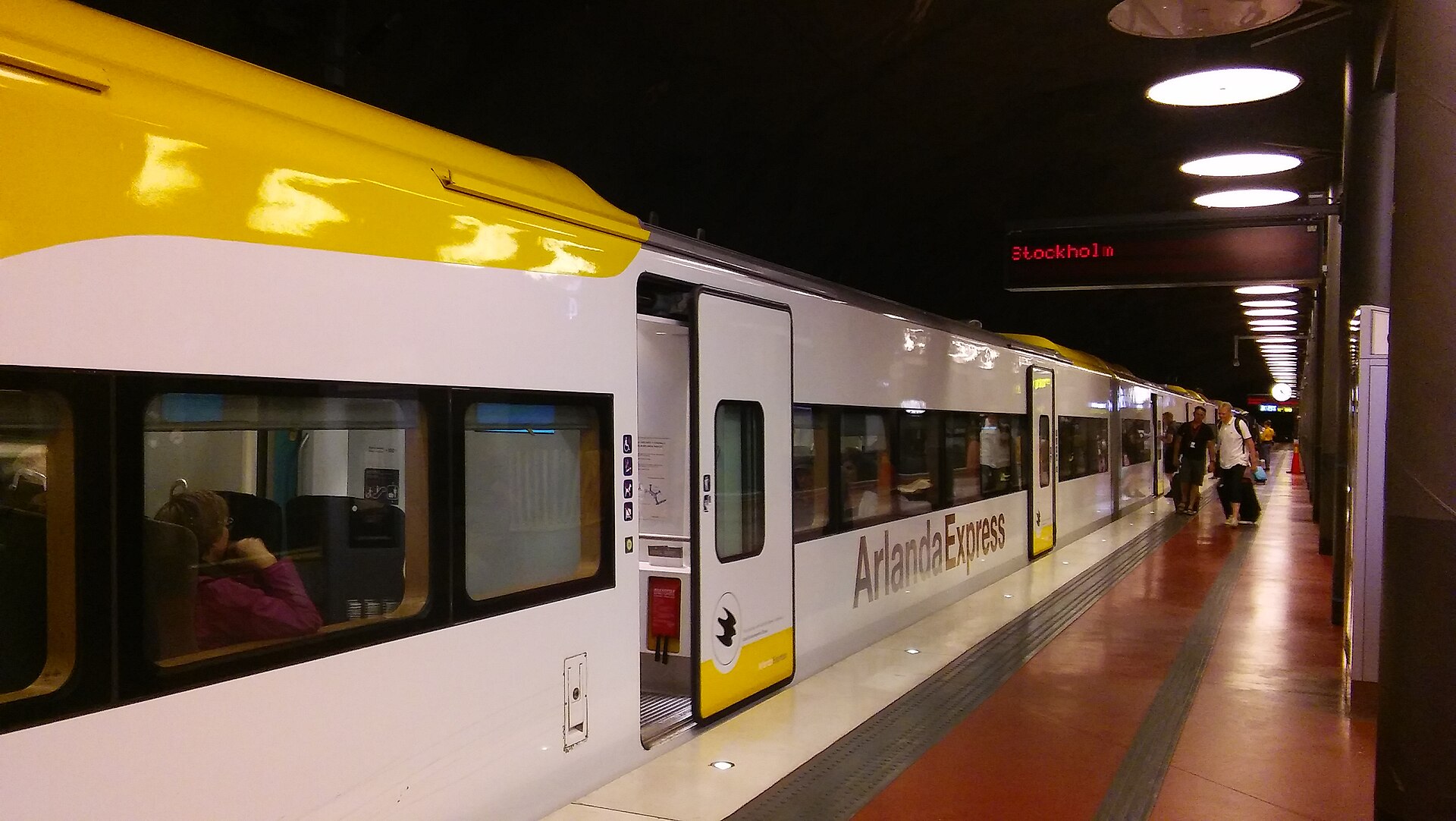
- Arlanda Express: the dedicated airport train runs non-stop to Stockholm Central in 18 minutes, usually every 15 minutes, from two stations: Arlanda South for Terminals 2 to 4 and Arlanda North for Terminal 5. An adult single costs about SEK 340 in 2026, and there are lower fares for young people, students and seniors, and group deals that make it very good value for families. Buy online, in the app or at the station, and book ahead for the lowest fares.
- Commuter train (pendeltåg): SL’s commuter trains run from Arlanda Central station to Stockholm City in about 38 minutes, usually every half-hour. You need an ordinary SL ticket plus an airport access fee, which together come to around SEK 200 (the fee is about SEK 157 for adults; under-18s don’t pay it). If you’ve already bought an SL travelcard, you pay only the fee, which is still more than the coach.
- Flygbussarna coach: airport coaches run to Cityterminalen, the bus station beside Stockholm Central, in about 45 minutes, for about SEK 129 when bought online. It’s the cheapest option for one person, but rush-hour traffic can stretch the journey past an hour.
- Taxi: use the official rank outside the terminal, where a rank officer calls a contracted car, and agree the fixed price before you set off; expect roughly SEK 500–750 into the city for up to four people. Never accept a ride from someone offering one inside the arrivals hall. Uber also operates.
Our guides to getting from Arlanda to Stockholm and Arlanda Express vs the bus go into every option in detail, and Uber and taxis in Stockholm explains how to avoid being overcharged. For an early flight, see hotels near Arlanda Airport. Leaving Sweden with shopping? The tax-free refund desks are in Terminal 5; our tax-free shopping guide explains the process.
Arriving at Arlanda, step by step
Arlanda is easy to navigate, and the signs are in Swedish and English. After you land, the order of events is simple.
- Passport control. If you’re arriving from outside the Schengen area, you’ll queue at border control; from a Schengen country, you walk straight through. Allow extra time on busy summer mornings.
- Baggage and customs. Collect your bags, then walk through the green channel if you have nothing to declare, or the red one if you do. Travellers from outside the EU should check the duty-free allowances, especially for alcohol and tobacco, which are strictly enforced.
- Onward travel. Follow the signs for trains (the Arlanda Express and the commuter trains are signposted separately), the signs for coaches, which leave from outside the terminal, or the taxi signs to the official rank. You won’t need cash for any of them.
- Getting connected. Arlanda has free Wi-Fi, which is enough to buy a train ticket in an app or check your route.
If your bag doesn’t arrive, report it at your airline’s baggage desk before you leave the hall, and get a written reference. It’s much harder to sort out afterwards.
Bromma (BMA): the city airport
Bromma is the airport most visitors never use and many wish they could. It’s about 8 km west of the centre, close enough that the coach to Cityterminalen takes around 20 minutes and a taxi is a short ride. It handles a limited number of domestic and short-haul routes, above all to Gothenburg, Malmö and Visby on Gotland. It’s small, quick and friendly, and if your flight uses it, you’ll be in the city in less time than it takes to reach the Arlanda Express platform.
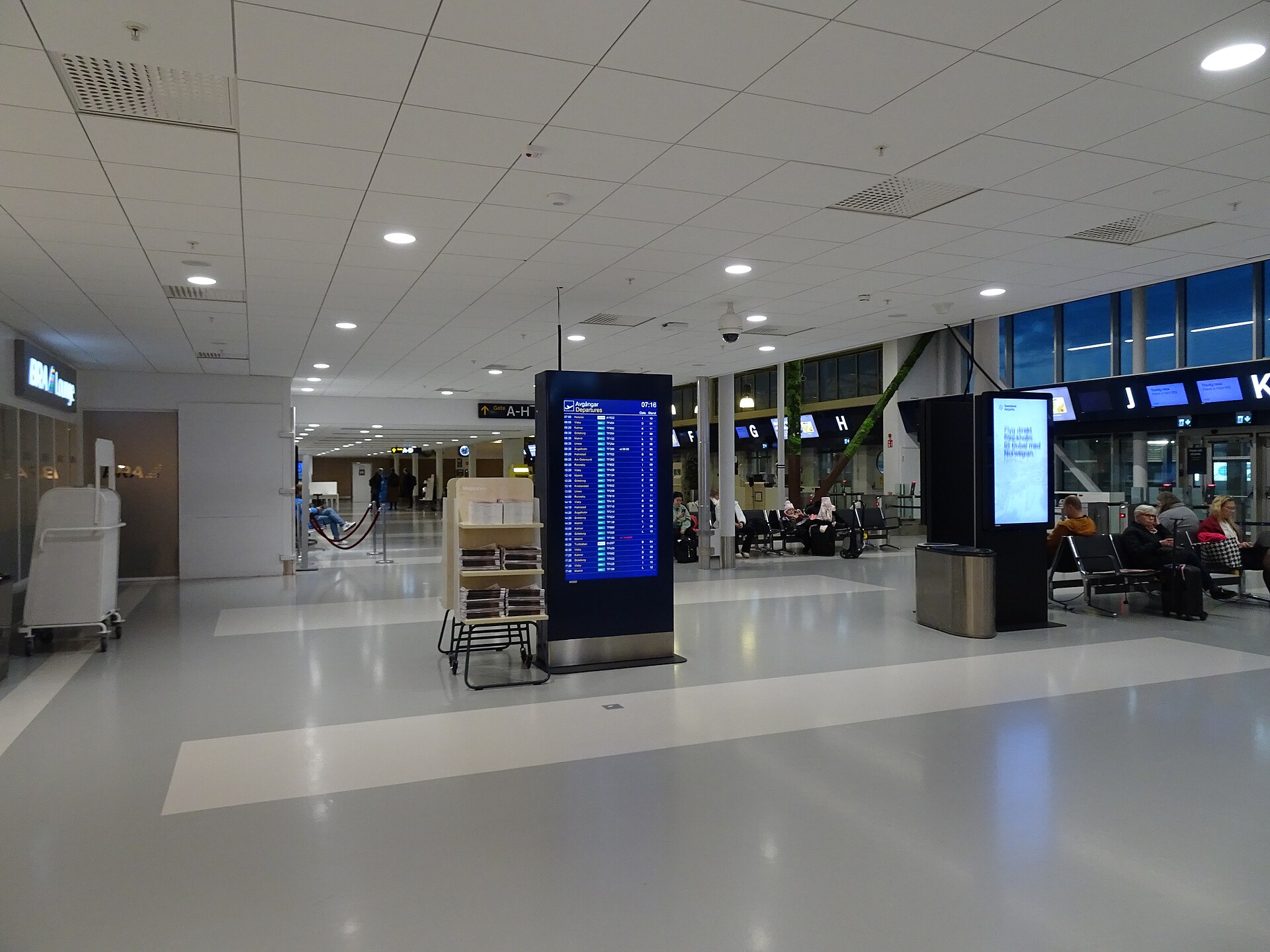
The catch is that Bromma’s future is uncertain. Its cost and its location on valuable land have made it a political argument for decades, and a state inquiry into Sweden’s airports, including Bromma’s role, was due to report by the end of September 2026. For now it’s open, but the routes it serves have been shrinking. Check who flies there before you plan around it.
Skavsta (NYO): the budget airport
Stockholm Skavsta is near Nyköping, about 100 km south-west of the city, and is now used by a handful of Wizz Air routes; Ryanair moved its Stockholm flights to Arlanda in 2021. Flygbussarna coaches are timed to meet the flights and take about 1 hour 15 to 1 hour 20 minutes to Cityterminalen, with fares from roughly SEK 100–170 when booked online. A taxi costs several times as much.
The honest verdict: Skavsta is worth it only when the fare saving is large. Add the coach fares in both directions and about two and a half hours of extra travel, and a cheap flight into Skavsta can cost more than a slightly dearer one into Arlanda. Early departures are another trap, since the first coaches may not get you there in time.
Västerås (VST): the other budget airport
Stockholm Västerås, about 100 km west of the city, is even smaller. In 2026, Ryanair is its only airline, with a handful of routes to London Stansted, Alicante and Málaga, some only a couple of times a week. Flygbussarna runs coaches from Cityterminalen timed to every flight, taking about 80 minutes. If one of those routes happens to suit you, it works well; if not, Arlanda almost certainly does.
Which airport should you choose?
- Arlanda for almost everyone: the most routes, the best transfers, and 18 minutes to the centre.
- Bromma if your domestic or short-haul flight uses it; it’s the most convenient of all.
- Skavsta or Västerås only when the fare saving clearly outweighs about SEK 250–350 in return coach fares and two to three extra hours of travel.
Getting between the airports
There’s no direct link between Stockholm’s airports, so a connection from one to another means travelling into the city and out again. From Arlanda to Bromma, allow at least an hour and a half door to door; to Skavsta or Västerås, allow three hours or more. If you’re booking separate flights, avoid itineraries that depend on a tight transfer between airports: a delayed flight or a slow coach can easily cost you the connection, and with separate tickets the second airline owes you nothing.
Flying from further afield
Arlanda has direct flights to most European capitals and major cities, with SAS, the main Scandinavian airline, and a long list of others. From North America, there are a few nonstop routes, some of them seasonal; otherwise, you’ll connect through a European hub such as Copenhagen, Helsinki, Amsterdam, Frankfurt or London. From Asia, connections through Helsinki, the Gulf or major European hubs are the norm.
By train
Arriving by train is the most civilised way into Stockholm: centre to centre, with no security queues and a view of forests, lakes and red wooden houses on the way in.
Stockholm Central
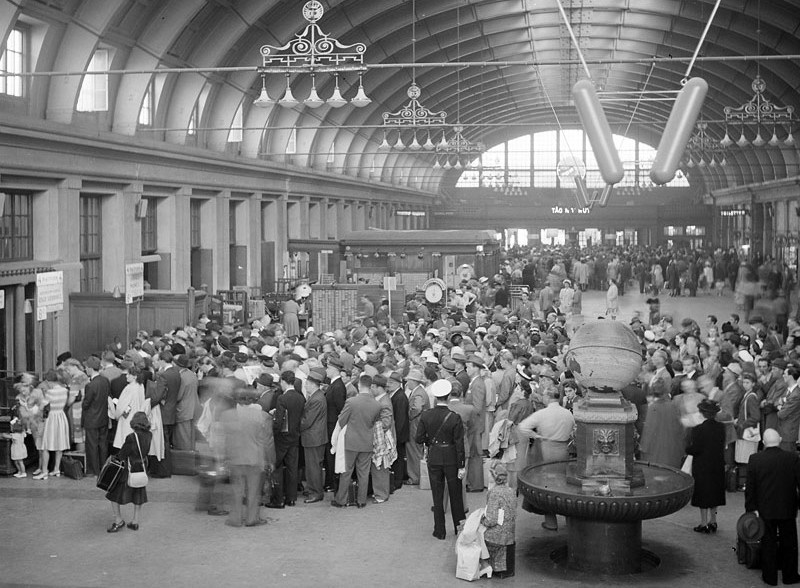
Long-distance trains arrive at Stockholm Central (Stockholms centralstation), the city’s main station since 1871, on the edge of Norrmalm and a short walk from Gamla Stan. The metro’s main interchange, T-Centralen, is directly beneath it, Cityterminalen, the main long-distance bus station, is joined to it, and the Arlanda Express leaves from its own platforms. One point confuses newcomers: since 2017, SL’s commuter trains no longer use Central’s main platforms but run through a tunnel to Stockholm City station, underneath and alongside it, which is linked to both Central and T-Centralen.
If you’re arriving late or leaving early, our guide to hotels near Stockholm Central lists the closest options.
From elsewhere in Sweden
SJ, the state rail company, runs high-speed trains to Stockholm from Gothenburg in about 3 hours and from Malmö in about 4½, and other operators compete on the Gothenburg line. Regional trains connect the towns around Lake Mälaren, and Uppsala is about 40 minutes away. Fares vary a lot: booking early and travelling off-peak can cut the price dramatically, while a last-minute ticket on a Friday afternoon can cost more than a flight.
From Copenhagen, Oslo and the continent
Direct trains run from Copenhagen in about 5 to 5½ hours, crossing the Øresund Bridge and running up through southern Sweden, and from Oslo in about 5½ to 6 hours, through the lakes and forests of Värmland. Both compare well with flying once you count the airport transfers and security at each end, and both deliver you to the city centre. Our comparison of Stockholm, Copenhagen and Oslo will help if you’re combining the three.
From Germany, night trains link Stockholm with Hamburg and Berlin on some or all days of the week, depending on the season, and it’s possible to travel from London to Stockholm by train in a long day and a night, changing in Brussels or Paris and Hamburg or Copenhagen. Interrail and Eurail passes are valid on Swedish trains, though SJ’s high-speed and night trains need a seat or berth reservation.
From the north
Overnight trains connect Stockholm with northern Sweden, including Luleå, Kiruna, Abisko and Narvik on the Norwegian coast, for the Arctic, the midnight sun and the northern lights. They leave in the evening and arrive the next morning or midday, in sleeper or couchette compartments. In winter, there are also ski trains to the mountains of Jämtland. For day trips by rail from the city, see our guide to day trips from Stockholm by train.
Booking tips
- Book on the operators’ own sites and apps; SJ sells tickets up to several months ahead, and the cheapest fares go first.
- Book night-train berths early, especially for the Arctic routes in winter and summer.
- Check which station you’ll arrive at: most long-distance trains use Stockholm Central, but some regional trains also stop at Stockholm Södra on Södermalm.
Rail or air: the greener choice
Sweden is where the word flygskam, “flight shame”, was coined, and many Swedes now take the train for journeys they once flew. The case is strong within Scandinavia. Swedish trains run largely on renewable electricity, so a trip from Gothenburg, Copenhagen or Oslo by rail has a fraction of the carbon footprint of a flight. Once you count getting to the airport, security and the transfer into Stockholm, it often takes little more time. For longer distances, the night trains from Germany turn a travel day into a night’s sleep. If you’re weighing up the options, the train is usually the better experience as well as the better choice for the climate.
By sea: the Baltic ferries
The overnight ferries across the Baltic are one of the great ways to arrive. You board in the late afternoon, eat a buffet as the ship threads through thousands of islands, sleep in a cabin, and wake up in another country. The big ships are floating hotels, with restaurants, bars, nightclubs, spas and duty-free shops: because the routes call at the Åland Islands, which sit outside the EU’s tax area, they can sell tax-free goods.
- From Helsinki: overnight crossings of about 17 hours with Tallink Silja, arriving at Värtahamnen, or Viking Line, calling at Mariehamn on Åland and arriving at Stadsgården. See our Stockholm–Helsinki ferry guide.
- From Tallinn: Tallink’s overnight ferries take about 17 hours, arriving at Värtahamnen in the morning. See our Stockholm–Tallinn ferry guide.
- From Turku: daytime and overnight crossings of around 11 hours, through the Finnish and Åland archipelagos, which is one of the most beautiful sea journeys in Europe.
- From Gotland: Destination Gotland’s ferries run from Visby to Nynäshamn, south of Stockholm, in about 3¼–3½ hours, with a commuter train or coach on to the city. See our guide to getting from Stockholm to Gotland.
Getting from the ferry terminals
Värtahamnen is in the north-east of the city, near Gärdet and Ropsten on the red metro line, with buses too. Stadsgården, where Viking Line docks, is on the Södermalm waterfront, a flat 10-minute walk from Slussen and its metro station, or a short bus ride. Both are around 25 minutes from Stockholm Central. Taxis wait at both when the big ships arrive, though the queue moves slowly.
Is the ferry worth it?
If you’re combining Stockholm with Helsinki or Tallinn, yes. The ferry saves a night’s hotel, delivers you to the city centre, and the evening passage through the archipelago is spectacular in summer. Book a cabin with a window, avoid the cheapest inside cabins if you’re claustrophobic, and be aware that weekend sailings can be lively, as groups come for the tax-free drink and the party.
By cruise ship
Stockholm is one of the Baltic’s major cruise ports, and most ships tie up close to the city. Stadsgården, on the Södermalm waterfront, is the most central, a 10-minute walk from Slussen and a short stroll across to Gamla Stan. Frihamnen, about 4 km north-east of the centre, is 15–25 minutes away by city bus (lines 1, 76 and 91) or on a paid shuttle to the Royal Palace, which costs around EUR 12. Värtahamnen, next door, takes some ships too. The largest ships dock at Nynäshamn, about an hour south of the city, and connect by coach or commuter train, which makes a Stockholm day much shorter.
Arriving by sea through the archipelago, with the city rising ahead on its islands, is one of the most beautiful approaches to any European capital, so be on deck for the last hour. If you only have a day, our one-day Stockholm itinerary and layover itinerary show how to make the most of it.
By coach
Long-distance coaches are the cheapest way to reach Stockholm from elsewhere in Scandinavia, if not the fastest. Several operators, FlixBus among them, run services from Oslo, Copenhagen, Gothenburg, Malmö and other cities, arriving at Cityterminalen, the bus station beside Stockholm Central. Journeys take longer than the train, but fares booked in advance can be very low, and the coaches have Wi-Fi and toilets. It’s a sensible choice on a tight budget or for routes the trains don’t serve directly.
By car
Driving to Stockholm is straightforward on good roads. The E4 motorway runs north from Helsingborg and southern Sweden, about 6 hours from Helsingborg, and is the route from Copenhagen via the Øresund Bridge, which has a toll. The E18 comes from Oslo, about 6 hours, and the E20 from Gothenburg, about 5 hours. Car ferries from Finland and Estonia make it easy to arrive with a car from the east.
Once you’re there, though, a car is more burden than help. Stockholm charges a congestion tax on weekdays for driving into and out of the centre, which is recorded automatically by number-plate cameras, and foreign-registered cars are billed for it too. Parking in the centre is scarce and expensive. Most visitors are better off leaving the car at the hotel or a park-and-ride and using public transport. Our guide to driving in Stockholm has the details.
Travelling on from Stockholm
Stockholm is a good hub for the rest of Sweden and the Baltic. Trains run north to Uppsala and the Arctic, west to Gothenburg and Oslo, and south to Malmö and Copenhagen. Domestic flights from Arlanda, and Bromma while it lasts, serve the far north, including Kiruna and Luleå for the northern lights and the Icehotel. The overnight ferries carry on to Helsinki, Tallinn and Turku, and Destination Gotland’s ferries leave from Nynäshamn for Visby. Closer to home, the archipelago boats leave from the city centre for the islands. Our guides to day trips from Stockholm and the Stockholm archipelago are the place to start.
Arriving late at night or very early
Night arrivals are straightforward in Stockholm, with a little planning. The Arlanda Express and the airport coaches run from early morning until late evening, and if your flight lands close to midnight, check the time of the last departure before you travel; after that, a taxi is the answer. In the city, the metro runs all night on Friday and Saturday nights, and night buses cover the main routes on the other nights, so you can usually get from Stockholm Central to your hotel on public transport at any hour.
For very early flights, the first Arlanda Express trains leave the city in the early morning, but for a dawn departure a night at one of the hotels near Arlanda is often less stressful. The ferries arrive at civilised hours, usually between breakfast and mid-morning, and the overnight trains from the north reach Stockholm Central in the morning. Stockholm is a safe city at night, but take the usual precautions around the stations after dark; our guide to safety in Stockholm has the details.
Your first hour in Stockholm
- Tickets: public transport in Stockholm is run by SL. The simplest option is to tap a contactless bank card at the barrier for a single journey, or buy a travelcard for longer stays. Our SL card guide explains which to buy, and the Stockholm Public Transport: Complete 2026 Guide covers the network.
- Money: Sweden is almost cashless. You won’t need kronor in cash to get from the airport or station; cards work everywhere. See our Stockholm currency guide.
- Getting online: our guide to Wi-Fi and SIM cards explains your options, including the registration rules for Swedish SIMs.
- Getting your bearings: from Stockholm Central, Gamla Stan is a 10-minute walk south, and the main shopping streets are right on your doorstep. The Stockholm metro guide will get you anywhere else.
- Left luggage: if you’re arriving early, leaving late or passing through on a cruise or ferry day, Stockholm Central has left-luggage lockers, so you can explore without your bags. Many hotels will also hold luggage before check-in or after check-out.
- Where to stay: see our guide to where to stay in Stockholm, neighbourhood by neighbourhood.
How to save money getting here
- Book the train early. SJ’s cheapest fares sell out weeks ahead, and the difference between an early and a last-minute ticket can be several times the price.
- Buy airport tickets online. Coach and airport-train tickets are usually cheaper booked online or in the app than bought on the day.
- Count the whole journey. A cheap flight into Skavsta or Västerås isn’t cheap once you add two coach fares and several hours. Compare door to door.
- Share a taxi. A fixed-price taxi from Arlanda costs the same for one person as for four, so for a group it can undercut the train.
- Use a travelcard. If you’re buying an SL travelcard anyway, the commuter train from Arlanda only costs you the airport fee on top.
- Travel off-peak. Midweek trains and ferries are cheaper and quieter than Friday and Sunday departures, and ferry cabins cost less outside the summer holidays.
- Leave the car behind. Between congestion tax and parking, a car in central Stockholm can cost more per day than the hotel breakfast.
For the bigger picture on what a trip costs, see our guide to the cost of a trip to Stockholm.
Arriving with children or access needs
Families have it easy. The Arlanda Express family and group fares make the train cheaper than several coach tickets, children travel at reduced fares on public transport, and taxis will provide child seats if you ask when booking. Prams and buggies are welcome on the airport trains, the metro and the buses; on city buses, board through the middle doors with a buggy. The ferries from Finland and Estonia have family cabins, children’s play areas and early-evening entertainment.
If you have a disability or reduced mobility, request assistance through your airline at least 48 hours before you fly, and through the train or ferry company in advance too. Arlanda, Stockholm Central and the main ferry terminals have lifts and step-free routes, and staff can meet you at the platform or gate if you’ve booked help. Our Stockholm accessibility guide covers assistance, transport and the city’s terrain in detail.
Our verdict: which route to choose
- Short city break from Europe: fly to Arlanda and take the Arlanda Express, or the coach if you’re on a budget.
- Family of four: the Arlanda Express family and group fares, or a fixed-price taxi, beat four separate coach tickets for convenience.
- Scandinavian tour: take the train between Copenhagen, Oslo and Stockholm, and the overnight ferry on to Helsinki or Tallinn.
- Budget traveller: a low-cost flight into Skavsta can work, but only if the saving beats the coach fares and the extra hours. A coach from elsewhere in Scandinavia is often cheapest of all.
- Cruise passenger: check which terminal your ship uses before the day. From Stadsgården you can walk; from Frihamnen, take the city bus rather than a pricey shuttle; from Nynäshamn, allow two hours for the round trip.
- Slow traveller: take the train from Hamburg or Berlin, or combine the Baltic ferries, and arrive through the islands.
Frequently asked questions
What is the best way to get to Stockholm from the airport?
From Arlanda, the Arlanda Express is the fastest, taking 18 minutes to Stockholm Central for about SEK 340. The Flygbussarna coach is the cheapest, at about 45 minutes and about SEK 129 online, even if you already have an SL travelcard, since the commuter train’s airport fee alone is about SEK 157.
How many airports does Stockholm have?
Four use the Stockholm name: Arlanda, the main airport, 40 km north; Bromma, the city airport, about 8 km from the centre; and Skavsta and Västerås, low-cost airports about 100 km away. Most international visitors use Arlanda.
Is Skavsta far from Stockholm?
Yes. Skavsta is about 100 km south-west of Stockholm, near Nyköping. The Flygbussarna coach takes about 1 hour 15 to 1 hour 20 minutes to Cityterminalen, with fares from roughly SEK 100–170 booked online.
Can you get to Stockholm by train from Copenhagen or Oslo?
Yes. Direct trains take about 5 to 5½ hours from Copenhagen and about 5½ to 6 hours from Oslo, arriving at Stockholm Central in the city centre. Book early for the best fares.
Where do the ferries from Helsinki and Tallinn arrive in Stockholm?
Tallink Silja’s ships from Helsinki and Tallinn arrive at Värtahamnen, in the north-east of the city near Gärdet and Ropsten metro stations. Viking Line’s ships from Helsinki arrive at Stadsgården, a 10-minute walk from Slussen. The overnight crossings take about 17 hours.
Where do cruise ships dock in Stockholm?
At Stadsgården on the Södermalm waterfront, the most central; at Frihamnen and Värtahamnen, a few kilometres north-east of the centre; and, for the largest ships, at Nynäshamn, about an hour south of the city.
Is Bromma Airport closing?
Not yet. Bromma is open, with a limited number of domestic and short-haul routes, but its long-term future is under review; a state inquiry into Sweden’s airports, including Bromma, was due to report by the end of September 2026. Check current routes before booking.
Do I need cash when I arrive in Stockholm?
No. Sweden is almost cashless, and cards are accepted for airport trains, coaches, taxis and public transport. You can tap a contactless card to pay for a single SL journey.
Arlanda itself changed shape in October 2025, when Terminal 4 lost its check-in desks and security control and everything moved into Terminal 5; Ryanair and Wizz Air passengers now check in there and walk through to the Terminal 4 gates. Our Arlanda airport guide explains all four terminals, security, lounges, the airport hotels and where to claim a tax refund.
Whichever way you arrive, you will probably pass through Stockholm Central, and it is really four stations in one: the main platforms for long-distance trains and the Arlanda Express, Stockholm City for the SL commuter trains, T-Centralen for the metro, and Cityterminalen for the airport coaches. Our Stockholm Central Station guide explains the layout, the luggage lockers and every onward connection.
If your ticket says Skavsta, plan for the distance: the airport is about 100 kilometres from the city, the Flygbussarna coach takes about 80 minutes, and with only a handful of Wizz Air flights a day the coaches run to the flight schedule rather than every half hour. Our Skavsta to Stockholm guide compares the coach, the train via Nyköping and taxis, with real journey times.
Arriving by cruise ship is a different business again: depending on the ship, you could tie up at Frihamnen, four kilometres out, beneath Södermalm at Stadsgården, beside the Royal Palace at Skeppsbron, or an hour south at Nynäshamn. Our Stockholm cruise port guide explains each quay and how to get into the city from it.
More Stockholm guides
- Arlanda to Stockholm — every transfer option in detail.
- Arlanda Express vs the Bus — which one to take.
- Stockholm Public Transport — the metro, buses, trams and ferries.
- Stockholm to Helsinki Ferry — the overnight crossing.
- Stockholm to Tallinn Ferry — Estonia by sea.
- Hotels near Stockholm Central — for late arrivals and early trains.
- Hotels near Arlanda — for early flights.
- Stockholm Layover Itinerary — a few hours in the city.
- Stockholm Travel Guide — everything else.
Photo credits
Tallink and Silja Line ferries at Värtahamnen (featured image): Baltic Queen, Silja Symphony – Stockholm – 20230831 – 01 by AleWi, CC BY-SA 4.0, via Wikimedia Commons.
Arlanda Express at Stockholm Central: Arlanda Express, centralstation, 2016 – 2 by Kevin.B, CC BY-SA 4.0, via Wikimedia Commons.
Departure hall at Bromma Airport: 2024-11-15 5081 Gate-området på Bromma flygplats by G och J, CC BY 4.0, via Wikimedia Commons.
Stockholm Central station hall in the 1940s: Centralstation vänthall 1940-tal by Lennart af Petersens, public domain, via Wikimedia Commons.