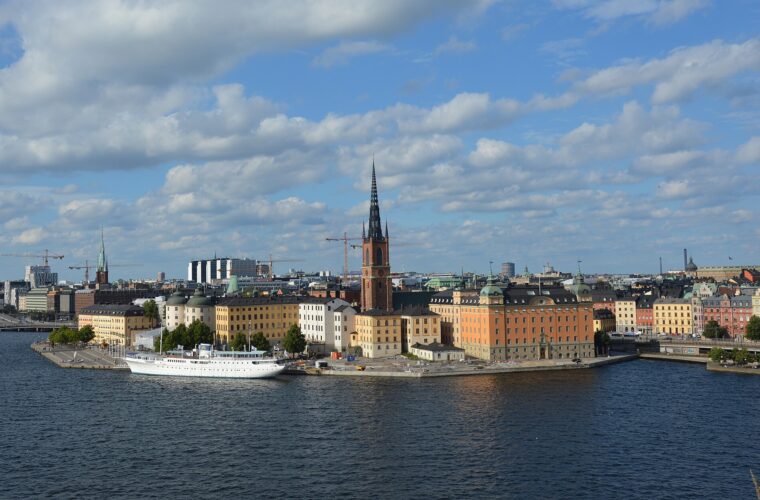
Stockholm Accessibility Guide for Travelers
How accessible Stockholm really is: the terrain district by district, step-free transport and SL's assistance line, which museums are fully accessible, where to stay, toilets and a step-free first day.
The honest summary of Stockholm accessibility is that the city does modern things very well and old things less so. City buses kneel and fold out ramps, the tram to the museum island is low-floor, kerbs are dropped at crossings, and most of the big museums have been built or rebuilt with lifts and step-free entrances. But Stockholm is also a city more than 750 years old, spread across fourteen islands, with a medieval core paved in cobbles and a southern island that begins with a steep climb. Where you stay, and which districts you give which days to, will shape your trip more than any single ramp or lift.
This guide is for wheelchair and scooter users, people who walk with a stick or tire quickly, blind and low-vision visitors, deaf and hard-of-hearing travellers, and anyone pushing a pram who wants to know the lie of the land. It covers the terrain district by district, public transport and how to get help, taxis, arriving by air, rail and sea, which sights are fully accessible and which only partly, toilets, hotels, day trips and a step-free first day. Details were checked in September 2026 against Visit Stockholm’s accessibility guide (last updated in May 2026) and the transport operators. Lifts break and ferries swap vessels, so confirm anything your day depends on the evening before.
Overall: good by European capital standards. Transport and museums are strong; historic streets and palaces are the weak spots.
Easiest areas: Norrmalm, Östermalm, the Djurgården museum strip, Skeppsholmen and the Kungsholmen waterfront.
Hardest areas: the cobbled lanes of Gamla Stan and the hills of Södermalm.
Best transport: the low-floor tram 7 and the kneeling city buses. The metro works well where the lifts are running.
SL accessibility line: +46 20 120 20 22, around the clock, for journey advice and free assistance at stations.
Standout sight: the Vasa Museum is accessible throughout, and a companion or personal assistant gets in free.
Best season: late May to early September, when pavements are dry and the days are long.
Emergencies: 112. Medical advice: 1177.
How accessible is Stockholm, really?
Compared with Rome, Prague or Paris, Stockholm is easy. Compared with Copenhagen or Amsterdam, both of them flat, it is harder. The city’s infrastructure is recent and well maintained, and Swedish planning has treated accessibility (tillgänglighet, a word you will see on every official website) as a normal part of public building for decades. Staff at museums, stations and hotels tend to be matter-of-fact about access needs. They won’t make a fuss, and they will usually know the answer.
Where it falls down is age and geology. Stockholm sits on granite, and the rock shows: Södermalm rises in cliffs from the water, parts of Norrmalm sit on a ridge, and Gamla Stan climbs from its quays to a crown of cobbled squares. Old buildings, including the royal palaces and many of the hotels and flats in the historic centre, were never designed for wheels. The other weak point is maintenance. A step-free metro route is only step-free while its lift is working, and in winter a smooth pavement can turn to packed snow and grit overnight.
Most visitors with access needs find that Stockholm works well once they plan around those weak spots rather than into them. That means a hotel in a flat district near good transport, the tram and buses rather than the metro for short hops, the big museums rather than the old palaces for your heaviest sightseeing days, and Gamla Stan in short, deliberate doses.
Swedish words worth knowing
Most Stockholmers speak excellent English, and most official sites have an English version. But the detailed access pages are sometimes only in Swedish, and signs in stations use Swedish first. These are the words to look for.
| Swedish | English | Where you’ll see it |
|---|---|---|
| tillgänglighet | accessibility | The access page on any Swedish website |
| hiss / hiss ur funktion | lift / lift out of service | Stations, the SL app, museums |
| rulltrappa | escalator | Station signage |
| rullstol / rollator | wheelchair / rollator | Venue information, taxi bookings |
| RWC | wheelchair-accessible toilet | Venue listings and floor plans |
| ledsagare | companion or assistant | Ticket desks and concession rules |
| ledarhund / assistanshund | guide dog / assistance dog | Museum and transport rules |
| hörslinga | hearing loop | Ticket counters, theatres, churches |
| syntolkning | audio description | Guided tours, theatre and film listings |
| teckenspråk | sign language | Guided tours |
| kullersten | cobblestones | Descriptions of old streets |
The terrain, district by district
Stockholm’s districts differ more in their surfaces and gradients than in anything else that matters for access. This is the short version, and the choice of where to stay follows from it.
| District | Surfaces and gradients | Verdict |
|---|---|---|
| Norrmalm (city centre) | Mostly flat, wide pavements, a long pedestrian street in Drottninggatan. A ridge rises to the east of it. | Easy |
| Östermalm | Flat boulevards and the broad Strandvägen waterfront. | Easy |
| Djurgården | Well-kept paths, museums close together on the tram line. Skansen sits on a steep hill. | Easy, except Skansen |
| Skeppsholmen | Small, flat, quiet island with Moderna Museet. | Easy |
| Kungsholmen | Flat waterfront by City Hall and along Norr Mälarstrand. Some rocky outcrops inland. | Mostly easy |
| Vasastan | A regular street grid, largely level. | Easy |
| Gamla Stan | Cobbles almost everywhere, narrow or missing pavements, slopes from the quays up to Stortorget and the palace. | Hard |
| Södermalm | A steep climb from Slussen and the waterfront; gentler once you’re on top of the island. | Moderate to hard |
Gamla Stan: bumpy, charming, doable in parts
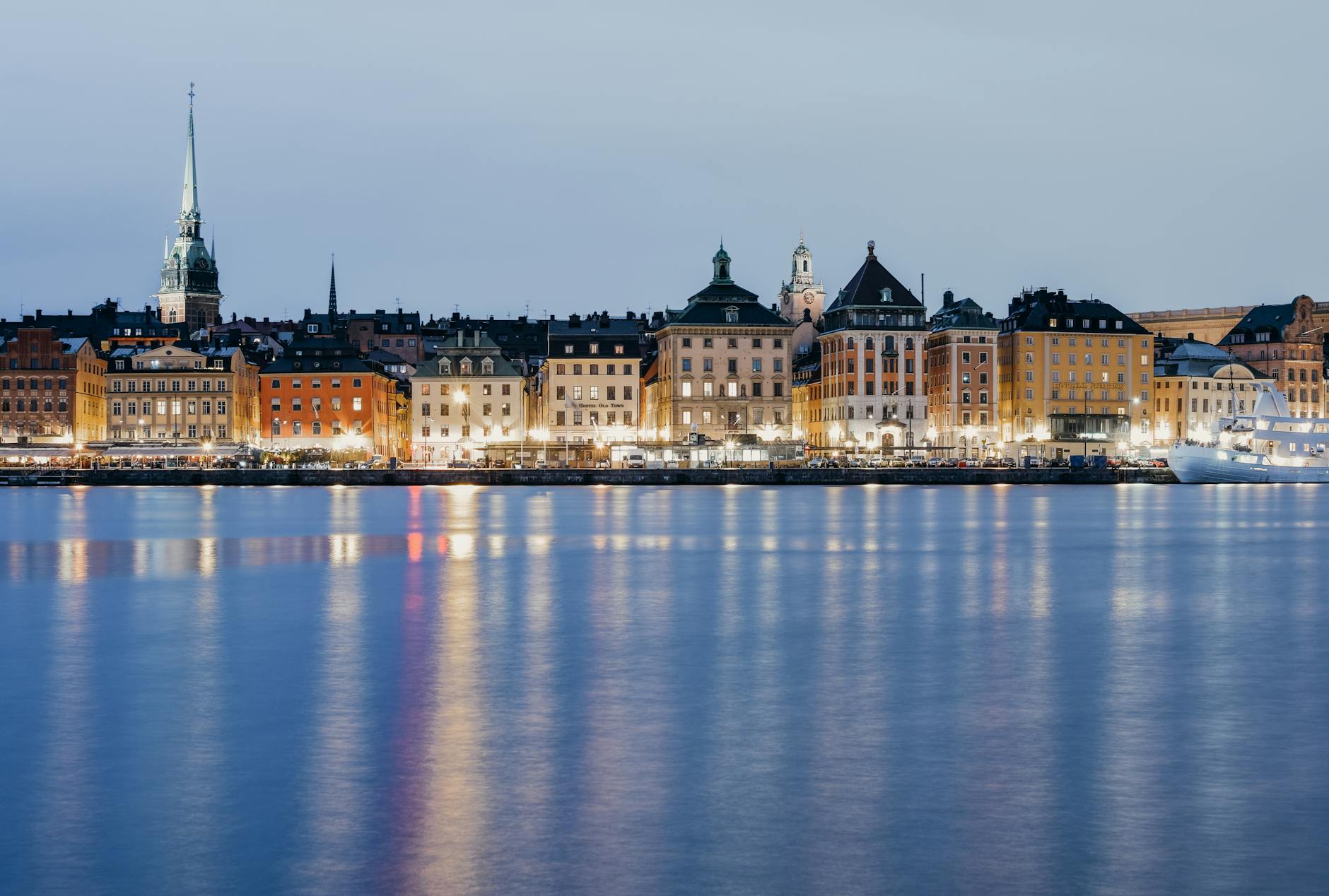
The old town is the place most visitors most want to see, and it’s the hardest part of central Stockholm to get around. The lanes are cobbled, often with no separate pavement, and they rise from the waterfront towards the Royal Palace and Stortorget, the main square. Cobbles vary from smooth, worn setts to rough, gappy stones that jar a manual chair and can catch a front castor or the tip of a stick.
Visit Stockholm singles out Västerlånggatan and Stortorget as the more navigable parts, and that matches experience: the main shopping lane and the square are the most even, and the square is worth the effort because the Nobel Prize Museum on its north side is wheelchair accessible. The quays are easier still. Skeppsbron, along the eastern waterfront, is wide and flat, and makes a good base for short forays up into the lanes rather than a long loop through them. Mårten Trotzigs gränd, the famous alley barely 90 centimetres wide at its narrowest, is a flight of steps: admire it from the bottom, on Västerlånggatan.
Go early in the day. At midday in summer, and on days when several cruise ships are in, the lanes are packed, and weaving a wheelchair or a rollator through a slow-moving crowd on cobbles is nobody’s idea of fun. Our Gamla Stan guide covers what to see there; this page is about getting to it.
Södermalm’s hills
Södermalm is the island of cafés, vintage shops and the best views of the city, and it starts with a climb. From Slussen and the waterfront, the land rises steeply, and the famous viewpoints, Monteliusvägen and Fjällgatan among them, are up on the cliffs, with steps on some of the approaches. The good news is that the top of the island, around Medborgarplatsen, SoFo and the streets towards Skanstull, is much gentler.
So let transport do the climbing. The green-line metro stops at Medborgarplatsen and Skanstull on the top of the island (check the lift status before you rely on either), and the city buses that serve Södermalm are all low-floor. Fotografiska, the photography museum, is down on the flat Stadsgården quay rather than on the heights, and is wheelchair accessible, though some of its entrance areas may need assistance. For everything else on the island, see our Södermalm guide.
Winter changes everything
From roughly late November to March, surfaces become the main issue. Stockholm clears snow efficiently, but pavements are gritted with gravel rather than simply salted. That’s excellent for boots and miserable for small front castors, and it tracks into every doorway. Ploughed snow piles up at kerbs and crossings, dropped kerbs can disappear under a ridge of slush, and a surface that looks wet can be ice. Daylight is short too: in mid-December the sun sets before three in the afternoon.
None of this makes a winter trip a bad idea, and the big museums are as accessible in January as in July. But if mobility is the main factor in your planning, the easiest window runs from late May to early September, with dry pavements, long evenings and the archipelago boats on their full timetables. The Stockholm weather by month page has the numbers, and our guide to the best time to visit Stockholm weighs them against crowds and prices.
Public transport
SL (Storstockholms Lokaltrafik) runs the metro, buses, trams, commuter trains and inner-city ferries on one ticket system. You can buy a single ticket by tapping a contactless card, or use a travelcard for longer stays. Our guide to the SL card and tickets explains which to buy, and the full network is covered in Stockholm Public Transport: Complete 2026 Guide. What follows is the access layer on top.
The metro (tunnelbana)
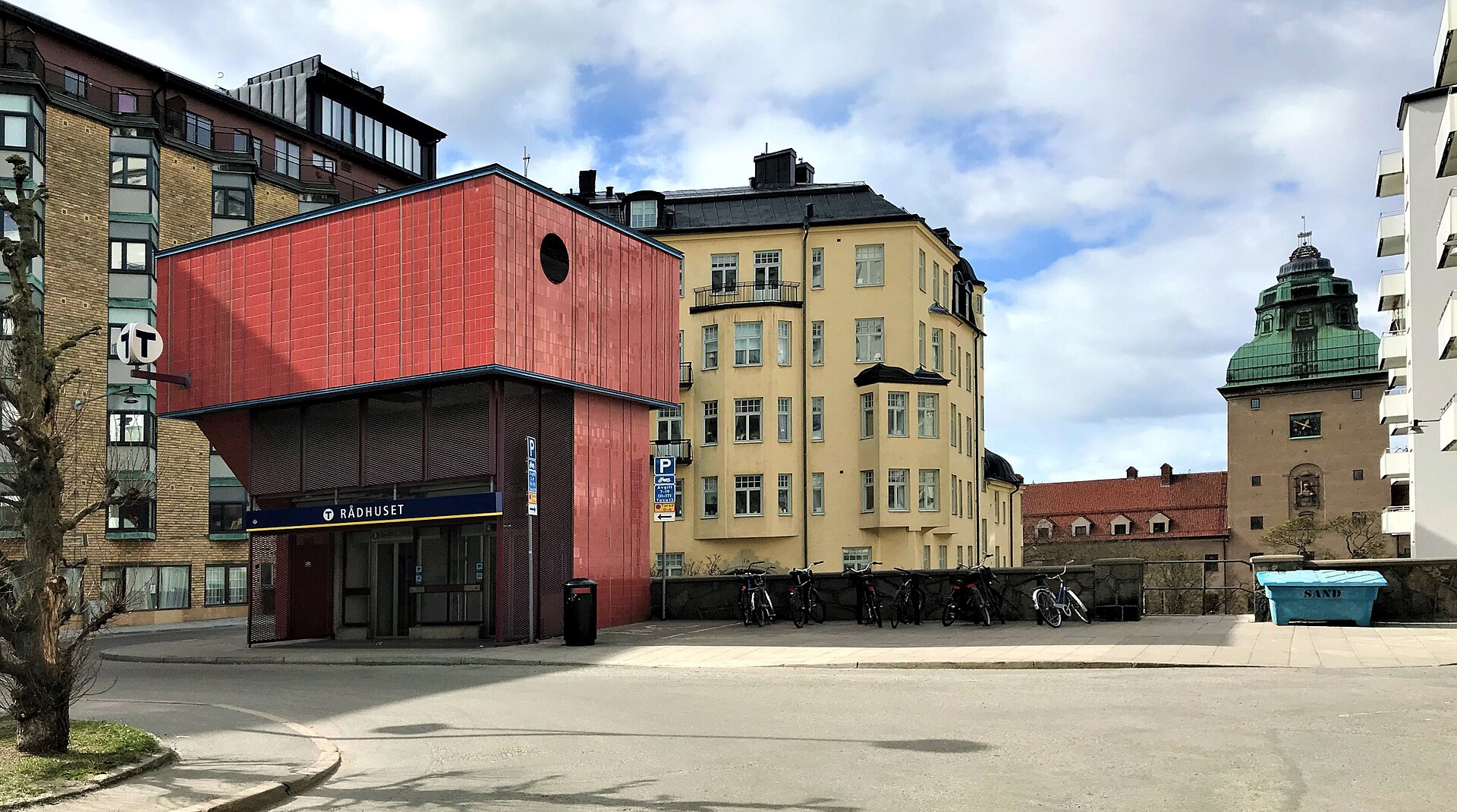
The metro is fast, clean and easy to navigate, with three colour-coded lines (green, red and blue) and around a hundred stations. It’s also the part of the network where access is least predictable. In Visit Stockholm’s own words it is “partly accessible”: many stations have lifts, some suburban ones are at street level, and far from all are step-free. The deep central stations on the blue line, Kungsträdgården and the lower platforms at T-Centralen among them, depend entirely on lifts and long escalators.
The practical rule is to check before you travel, not when you arrive. The SL app shows lifts that are out of service (hiss ur funktion), and it’s worth checking both ends of your journey. If the lift at your destination is down, ride one stop further and come back by bus, or switch to the bus for the whole trip. Stations are announced aloud and on screens in the trains, and the gap between train and platform varies, widening where the platform curves.
Buses
Stockholm’s buses are the unsung heroes of step-free travel. The city buses have low floors, kneel at stops, and carry a ramp and a wheelchair space. The ramp and the space are at the middle doors; if the driver hasn’t seen you, a wave does the job. Next-stop information appears on screens and is announced. The blue trunk buses on routes 1 to 6 run most often and have the most room, and they criss-cross the central islands in a way the metro doesn’t. For Djurgården, bus 69 is the alternative to the tram, stopping at Djurgårdsbron by the Vrak and Vasa museums.
Buses also avoid the problem of broken lifts. For short journeys across the centre, they are often quicker door to door than the metro once you count the lifts and corridors. Our guide to Stockholm’s buses and trams has the useful routes.
Tram 7 to Djurgården
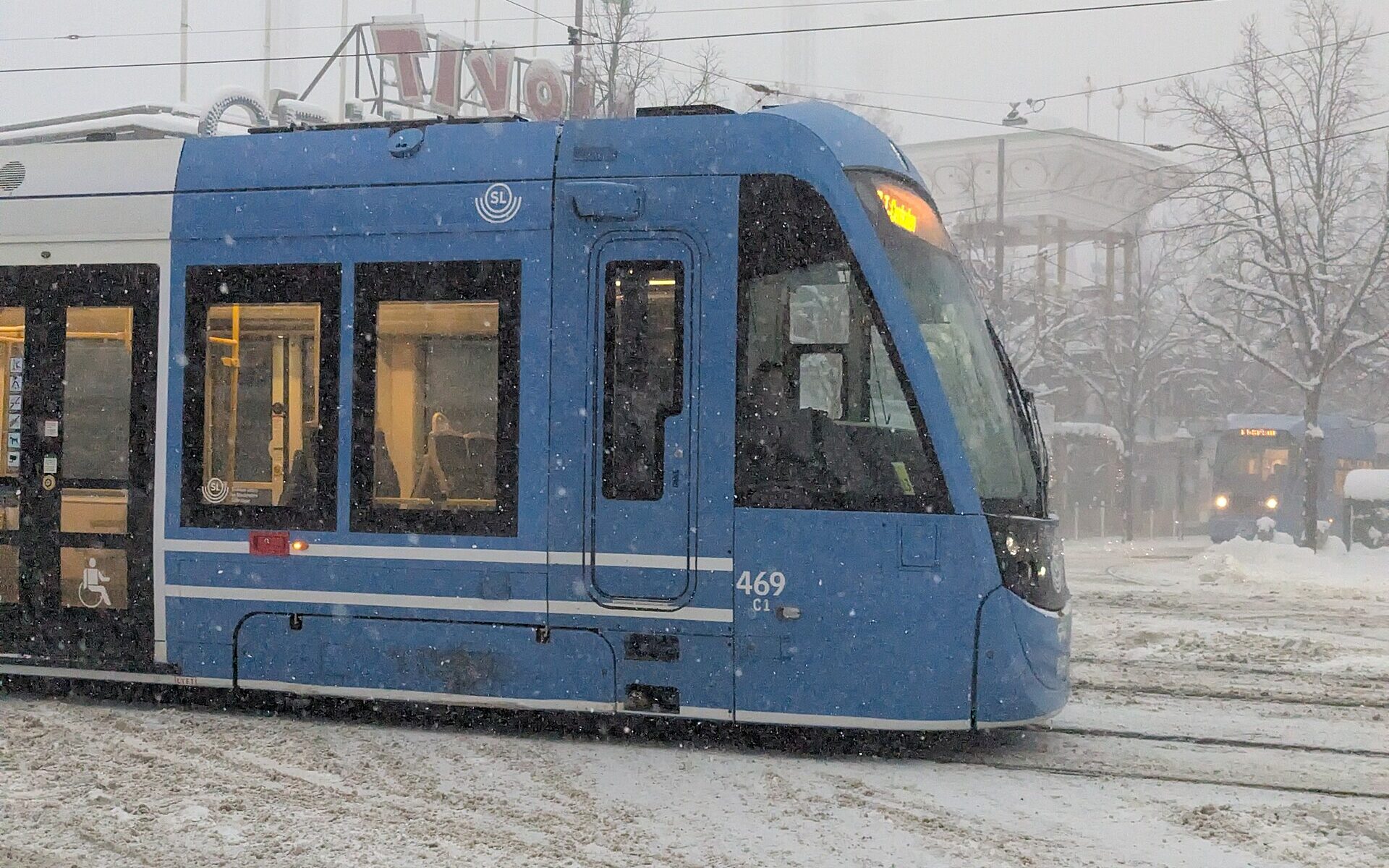
If one line was designed for visitors with access needs, it’s tram 7, Spårväg City. The modern trams are low-floor, with wheelchair spaces marked on the doors, and the route runs from Sergels torg by T-Centralen along Hamngatan to Kungsträdgården, then out along the Strandvägen waterfront to Djurgården. It stops by the Vasa Museum and Nordiska museet, at Gröna Lund and at Skansen, which puts most of Stockholm’s headline museums within a few flat metres of a step-free ride.
One trap: on some days, mostly in summer, heritage trams also run to Djurgården on line 7N. They’re lovely, wood-panelled and entirely unsuited to wheels, with steep steps at every door. If one pulls up, let it go and wait for the modern tram behind.
Commuter trains and Stockholm Central
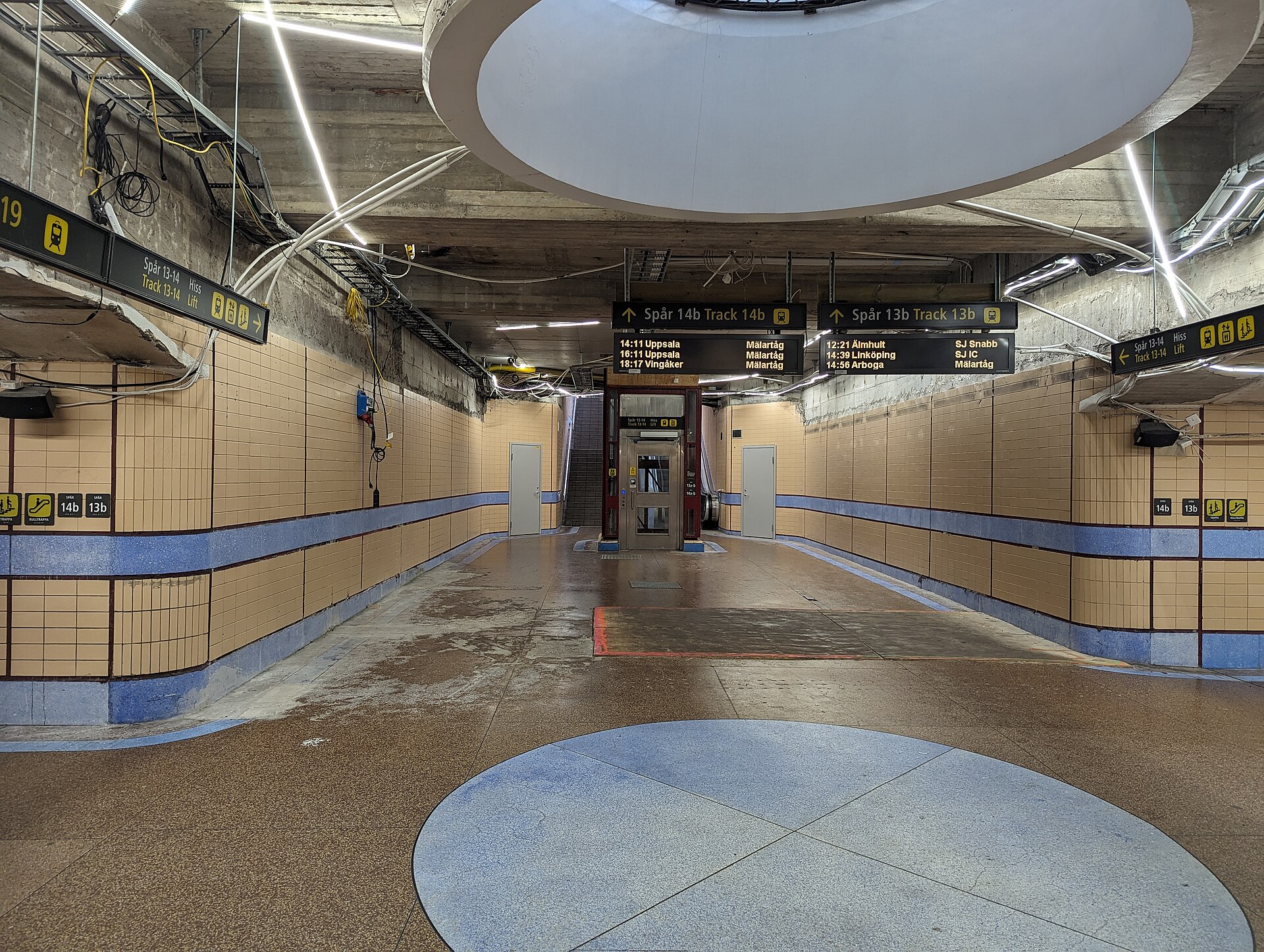
The commuter trains (pendeltåg) are useful for Arlanda, the Mall of Scandinavia and a few day trips. The two newest stations in the centre, Stockholm City and Stockholm Odenplan, opened in 2017 with the Citybanan tunnel and were built with lifts from street to platform. Stockholm Central, the main-line station, is older and larger, but its long-distance tracks are served by lifts from the underground passages. Allow time: distances inside the station are longer than they look on a plan.
Ferries
Travelling by water is one of the pleasures of Stockholm, and much of it is open to wheelchair users. SL’s inner-city ferry lines (80 to 89) are, in Visit Stockholm’s phrase, largely accessible, though it depends on the vessel and the quay. The Djurgården ferry, which crosses from Slussen to Allmänna gränd by Gröna Lund, is adapted for wheelchairs and walkers. The Slussen end is still a building site in 2026, so the route to the quay can change from month to month.
Out in the archipelago, Waxholmsbolaget says manual wheelchair users and people with minor mobility impairments can use most of its vessels. The historic steamships are the exception, with high thresholds and steep stairs between decks. One advantage of the Baltic: it has almost no tide, so gangways don’t swing from gentle to vertical between morning and evening as they do on the Atlantic coast. The Waxholmsbolaget ferry guide and our overview of Stockholm’s ferries have routes and timetables.
Getting help from SL
SL runs a dedicated accessibility line, +46 20 120 20 22, open 24 hours a day. Ring it to plan a specific journey, or to book free assistance at interchanges and stations, which is especially useful for blind and low-vision travellers and at the big, confusing stations. General customer service is on 08-600 10 00, and there’s a staffed SL Center at T-Centralen if you’d rather ask in person.
Taxis and adapted vehicles
For door-to-door trips, especially at night or in snow, a taxi is often the best answer. The big companies, including Taxi Stockholm, Sverigetaxi and Taxi Kurir, have ramp-equipped vehicles in their fleets. Book ahead rather than hailing, say that you need a wheelchair-accessible car (rullstolstaxi), and say whether you will stay in your chair or transfer to a seat. Samtrans offers private wheelchair transport that anyone can book, not just residents.
Stockholm’s taxi market is deregulated, and fares vary widely between companies. Check the yellow comparison-price sticker in the rear window before you get in, and stick to the established names. Our guide to Uber and taxis in Stockholm explains how to read the sticker and what a fair fare looks like.
If you’re driving, an EU disabled parking permit is recognised in designated disabled bays. Rules on time limits and fees in ordinary spaces are set locally, so read the sign each time. The driving in Stockholm guide covers congestion charges and parking.
Arriving by air, rail and sea
By air. Under EU rules, request assistance through your airline at least 48 hours before you fly; the airport provides it free of charge. At Arlanda and Bromma that’s Swedavia, the state airport company. Arlanda’s terminals are modern and step-free, and assistance staff can take you to the Arlanda Express, the commuter train, a coach or a taxi. The Arlanda to Stockholm guide compares the options, and Arlanda Express vs the bus goes into detail on the two most popular. If you’re flying into Skavsta or Västerås, which are much further out, arrange assistance through the airline in the same way and check the coach connection before you travel.
By train. For trains from elsewhere in Sweden, Norway or Denmark, EU rail rules let you book assistance up to 24 hours before departure through the train company. Staff will meet you on the platform at Stockholm Central.
By ferry. The overnight ferries from Helsinki, Tallinn and Turku carry a small number of adapted cabins, and they go early in summer. Assistance is requested through the ferry line, again with 48 hours’ notice. Tallink Silja docks at Värtahamnen and Viking Line at Stadsgården on Södermalm, a ten-minute walk along the flat quay from Slussen. See the Stockholm–Helsinki ferry and Stockholm–Tallinn ferry guides.
By cruise ship. Cruise ships use Frihamnen, about 4 km out, or Stadsgården in the centre. Shuttle buses vary in accessibility from line to line, so ask your cruise company what it will use in Stockholm before you book a shore day.
Museums and sights: who does it well
This is the good news. Stockholm’s big museums are among the most accessible in Europe, and several go beyond ramps and lifts to offer sign-language tours, audio description and tactile material. The historic royal buildings are where it gets patchy. This is how the main sights compare, based on what they and Visit Stockholm say.
| Sight | Access | Worth knowing |
|---|---|---|
| Vasa Museum | Fully accessible for wheelchairs and mobility scooters | Companions and on-duty personal assistants get in free |
| Nationalmuseum | Lifts to every floor | Tactile map at the entrance; guide dogs welcome |
| Moderna Museet | Wheelchair accessible | Sign-language tours and audio-described guided tours |
| Nobel Prize Museum | Wheelchair accessible | Audio guides, sign-language tours and tactile tours |
| Royal Armoury | Lifts to all floors | Audio guides and sign-language tours |
| Fotografiska | Wheelchair accessible | Some entrance areas may need assistance |
| City Hall (Stadshuset) | Ramp in the courtyard, lifts inside | The tower is only partly accessible |
| Royal Palace | Ramp at the entrance, lifts to some areas | Full access can’t be guaranteed |
| Skansen | Hilly, open-air site | Manual wheelchairs to borrow free of charge |
The Vasa Museum
If you only do one museum, the Vasa Museum is the one, and it is accessible throughout for wheelchairs and scooters. The 17th-century warship stands in a hall built around it, with the viewing levels served by lifts, so you can look at the hull from the keel to the upper deck rails. Companions and personal assistants on duty get in free. It gets very busy from late morning in summer, so arrive at opening or come back in the late afternoon.
Skansen
Skansen, the open-air museum and zoo, is the one Djurgården headliner that fights back. It sits on a hill, the climb from the main entrance is steep, and the site is laid out over slopes and gravel paths between historic houses, many of which have steps at the door. It is still very doable with help and a plan: Skansen lends manual wheelchairs free of charge, and staff at the entrance can point you to the gentlest routes. Pick a handful of areas rather than trying to cover the whole site.
City Hall and the palaces
Stockholm City Hall is visited on guided tours, and the building itself works well, with a ramp from the courtyard and lifts inside. The tower is another matter. It’s only partly accessible, and there’s no step-free way to the viewing gallery at the top. The Royal Palace has a ramp at its entrance and lifts to some areas, but the palace itself warns that full access cannot be guaranteed: this is a working 18th-century building with ceremonial staircases, and some rooms and museums within it are harder to reach than others. Drottningholm Palace, out on Lovön, is similar, and its baroque garden has gravel paths that are firm but tiring in a manual chair.
Djurgården’s other museums
Beyond the Vasa and Skansen, Djurgården’s big draws are in modern or rebuilt buildings, all on or near the tram line, and the island’s paths are well kept. That makes it the best single area for an accessible day. Each museum publishes its access details, usually under tillgänglighet on the Swedish site, and it’s worth a quick look for lift sizes and step-free entrances. Our Djurgården guide has the full list, and Best Museums in Stockholm ranks the rest of the city’s collections.
Companion and assistant tickets
Free entry for a companion or personal assistant is common but not universal. The Vasa Museum offers it, and many other institutions do too. Sweden’s companion cards are issued locally, so there’s no national card a visitor can apply for. Bring whatever you use at home, a companion card, a disability card or a letter, and ask at the desk. Staff are usually flexible when it’s clear that the companion is there to assist.
Blind and low-vision travellers
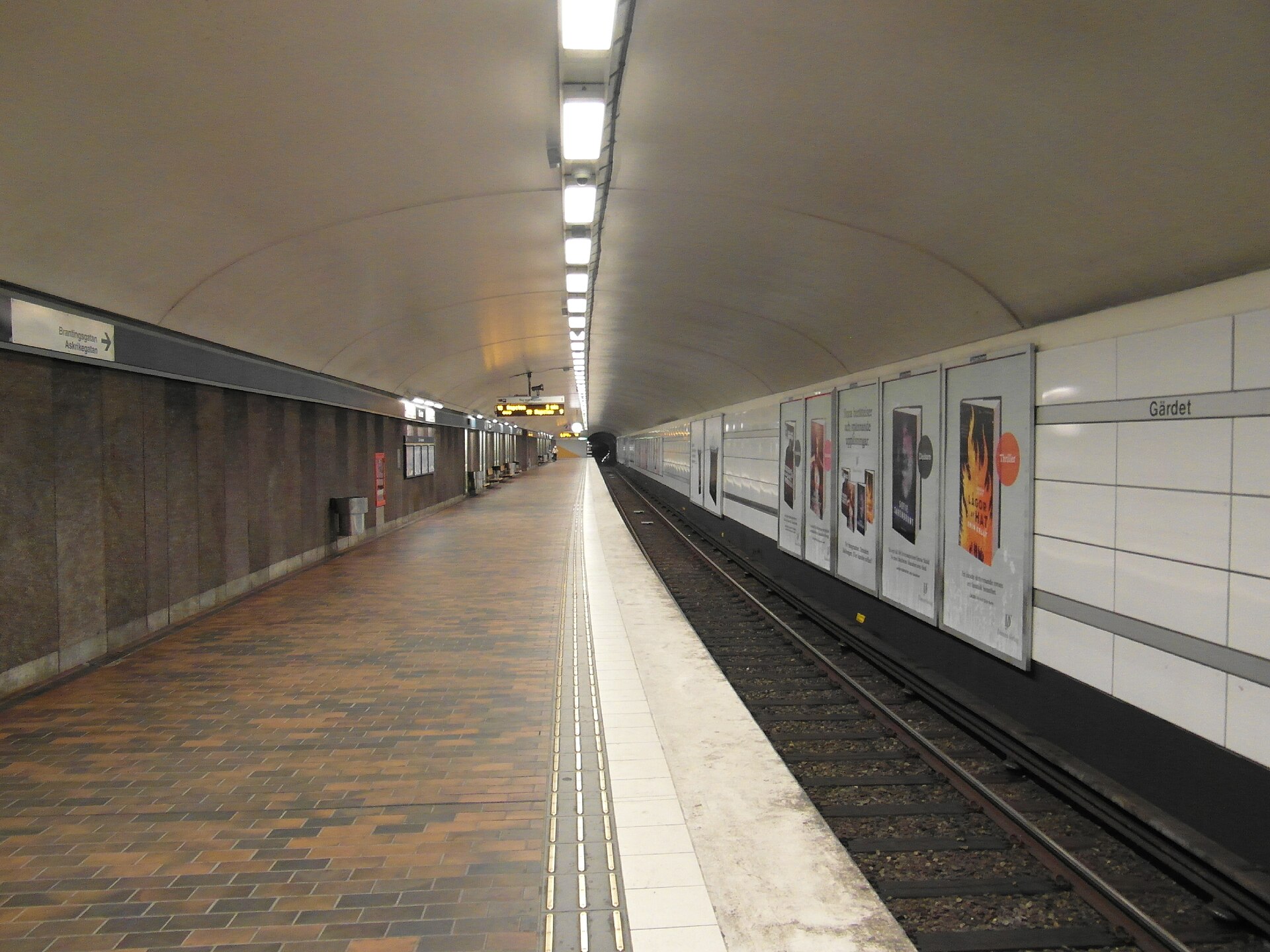
Stockholm’s transport has the basics covered: tactile guide strips run along metro platforms and through many stations, stops are announced aloud on trains, buses and trams, and SL’s accessibility line can book someone to meet you and guide you through an interchange. Guide dogs are welcome on public transport and, among others, at Nationalmuseum.
At pedestrian crossings, Swedish signals tick. A slow tick means wait, and a rapid tick means cross, and most buttons carry a raised arrow showing the direction of the crossing. The bigger hazard is bikes. Stockholm has cycle lanes at pavement level on many main streets, sometimes separated from the footway by nothing more than a painted line, and the cyclists are fast and silent. Stepping into one is the most common near miss for visitors of every kind. Our cycling in Stockholm guide explains how the lanes work.
For museums, three stand out. Nationalmuseum has a tactile map at its entrance, the Nobel Prize Museum runs tactile tours, and Moderna Museet offers guided tours with audio description (syntolkning). Book these ahead; they aren’t daily.
Deaf and hard-of-hearing travellers
The sign language here is Swedish Sign Language (svenskt teckenspråk), which is its own language and not closely related to ASL or BSL. Sign-language tours are offered at Moderna Museet, the Nobel Prize Museum and the Royal Armoury, and are usually booked in advance.
Day to day, Stockholm is easy to navigate without hearing. Metro trains and buses show the next stop and disruption notices on screens, departure boards are everywhere, and hearing loops (hörslinga, marked with an ear symbol) are common at ticket counters, in theatres and in churches. Swedes are generally comfortable switching to writing or typing on a phone, and most read and write English well. When you check in, ask whether the hotel has a flashing or vibrating fire alarm for your room. Many hotels keep one, but you usually have to ask.
Neurodivergent travellers and hidden conditions
Stockholm suits many people who find cities overwhelming. Public life is quiet: people speak softly on the metro, don’t crowd each other at crossings and rarely strike up conversations with strangers. Queues are orderly. Signage is clear and consistent, and the transport runs to the minute, which takes a lot of uncertainty out of a day.
The pressure points are predictable. Gamla Stan at midday in July, the Vasa Museum from late morning in summer, and the city centre on days when several cruise ships are in are all loud and crowded. Gröna Lund, the amusement park, is noisy by design, with screams from the rides carrying across the water, and big concerts there and in Kungsträdgården change the mood of whole neighbourhoods. Go early, go late, and keep a quiet refuge in mind. Parks, churches and libraries are free and calm, and the rainy-day guide lists plenty of indoor places to sit. Being able to say tack, det är bra (thanks, I’m fine) politely ends most unwanted help.
Bring prescriptions and a letter for any medication, and know where to turn if something goes wrong. Apoteket C.W. Scheele at Klarabergsgatan 64 is open 24 hours, and the Stockholm emergency numbers and medical care guide explains the 1177 advice line and the urgent-care clinics.
Where to stay
Location matters more than the hotel. The best base is a flat district near transport that doesn’t depend on a single lift: Norrmalm near Central Station, lower Östermalm, Vasastan and Kungsholmen all work well. Staying near a tram 7 stop or a blue bus route is a particularly good choice, and our guide to hotels near Stockholm Central is a good starting list. For an overview of the districts, see Where to Stay in Stockholm.
Be careful with Gamla Stan. The hotels there are in old buildings, the approaches are cobbled, and even hotels that describe themselves as accessible may have small lifts or a step at the door. Some are fine, but ask for specifics before you book; our list of hotels in Gamla Stan is a starting point, not a guarantee. The hotel boats moored around the centre are romantic and almost always mean a gangway and steep stairs.
Scandic, the largest hotel chain in the Nordics, has worked to its own detailed accessibility standard since the early 2000s and publishes access information for each hotel. Whoever you book with, ask for measurements rather than labels: door widths, the turning space beside the bed, bed height, whether the shower is a level roll-in, where the grab rails are and whether there’s a shower seat. “Accessible room” means different things in different buildings.
Apartment rentals need the most care. Many Stockholm flats are in blocks built before 1930, often with small cage lifts that won’t take a wheelchair, or with half a flight of stairs before the lift. Ask for photos of the entrance and the lift. The Stockholm apartment rentals guide covers the rest.
Accessible toilets
The dependable accessible toilets are in museums, department stores such as NK and Åhléns City, big stations, libraries and shopping centres, and in most restaurants in newer buildings. In Swedish listings, look for RWC. If you need an adult changing bench, the Swedish word is vuxenskötbord. They exist but aren’t common, so ask ahead.
On-street public toilets are in flux in 2026. The old free, ad-funded network closed over the winter of 2025–26, and a new operator has been opening replacement toilets since March 2026, at SEK 10 a visit, a couple of new sites a week. Don’t count on finding one at any particular square yet. Our guide to public restrooms in Stockholm tracks the changeover.
Wheelchairs, scooters and repairs
If you only need a wheelchair for longer stretches, you may not need to bring or hire one for every sight: Skansen lends manual wheelchairs free of charge, and other large museums often keep a chair or two at the cloakroom, so ask when you arrive. For anything longer, arrange the hire before you travel and have it delivered to your hotel, confirming with the hotel that they will take delivery.
If you’re bringing a powered chair or scooter by air, the battery rules are the airline’s, so settle them well before you fly. It’s worth packing a puncture kit or a spare inner tube for a manual chair: gravel grit, glass and cobbles are all hard on tyres. In a pinch, a bicycle repair shop can often fix a pneumatic tyre on a chair.
Day trips and the archipelago
Some of the best days out from Stockholm are on the water, and a lot of them are open to you. How easy they are varies a great deal.
- Vaxholm is the easiest archipelago trip. Waxholmsbolaget’s boats run from the city centre in about an hour, and the harbour front and main street are manageable. The fortress is on its own islet, reached by a small ferry, so check before you set out. See our Vaxholm day trip guide.
- Fjäderholmarna is only about 25 minutes by boat, and a good half-day taste of island life. The Fjäderholmarna guide has the details.
- Drottningholm can be reached by boat or by metro and bus. The palace is partly accessible, and the gardens are gravel.
- Uppsala is 40 minutes by train, and the centre is compact, though the cathedral stands on a slope above the river. The Uppsala day trip guide has the train details.
- Birka, the Viking-age island, is the hard one: a boat landing, grassy and uneven paths, and a hill to climb for the views. Read the Birka day trip guide before you commit to it.
For the wider picture, the Stockholm archipelago guide and 15 Best Day Trips from Stockholm cover the options. For any boat trip, ring the operator the day before and ask which vessel is on the route. The answer can change your day.
A step-free first day
This route strings together Stockholm’s most accessible headline sights with the smoothest transport. It works for wheelchair users, rollators and prams alike.
- Morning: Vasa Museum. Take tram 7 from Sergels torg by T-Centralen to the Nordiska museet/Vasamuseet stop and be at the door when the museum opens, ahead of the crowds.
- Late morning: Djurgården by the water. Follow the flat paths along the shore, or take in a second museum on the tram line.
- Lunch on Djurgården, or back towards Strandvägen on the tram.
- Afternoon: Nationalmuseum. Ride tram 7 back to Kungsträdgården, then follow the flat waterfront past the Grand Hôtel to Nationalmuseum on Blasieholmen, which has lifts to every floor.
- Evening: Kungsträdgården. The park’s walkways are paved, there are cafés on its edges, and Norrmalm’s restaurants are close by.
On a second day, swap in Moderna Museet on flat Skeppsholmen and a short, early visit to Stortorget in Gamla Stan for the Nobel Prize Museum. Our one-day Stockholm itinerary has the classic version of the day, most of which can be adapted.
Planning checklist
- Book a hotel in a flat district near tram 7, a blue bus route or a station with a reliable lift, and ask for room measurements rather than a label.
- Request airline assistance at least 48 hours before you fly, and rail assistance at least 24 hours ahead.
- Save the SL accessibility line, +46 20 120 20 22, and download the SL app to check lift status.
- Plan Gamla Stan for early mornings, and stay on the quays and the smoother main lanes.
- Let the metro or a bus do the climb up to Södermalm.
- Bring your companion card, disability card or a letter. Some sights, including the Vasa Museum, let a companion in free.
- Book sign-language, tactile and audio-described tours in advance.
- Pre-book wheelchair-accessible taxis rather than hailing one.
- Ring boat operators the day before to find out which vessel is on your route.
- Travel between late May and early September if surfaces and daylight matter most to you.
For everything else, from money to phrases, see Stockholm Travel Tips: 50 Things to Know Before You Go.
Frequently asked questions
Is Stockholm wheelchair accessible?
Largely, yes. City buses are low-floor with ramps, tram 7 to Djurgården is low-floor, and the major museums are accessible, with the Vasa Museum accessible throughout. The difficult areas are Gamla Stan, with its cobbles and slopes, and the hills of Södermalm. Not every metro station has a lift, so check lift status in the SL app before you travel.
Are all Stockholm metro stations accessible?
No. Many stations have lifts and some are at street level, but far from all are step-free, and lifts go out of service. Check the SL app before you travel, or call SL’s accessibility line on +46 20 120 20 22. The buses and tram 7 are often the easier choice for short journeys.
Which Stockholm museums are fully wheelchair accessible?
The Vasa Museum is accessible throughout, and Nationalmuseum and the Royal Armoury have lifts to every floor. Moderna Museet, the Nobel Prize Museum and Fotografiska are wheelchair accessible. The Royal Palace can’t guarantee full access, the City Hall tower is only partly accessible, and Skansen is hilly but lends manual wheelchairs free.
Is Gamla Stan wheelchair friendly?
Only in parts. The old town is cobbled almost everywhere, with narrow or missing pavements and slopes up from the waterfront. Västerlånggatan and Stortorget are the most manageable, and the Skeppsbron quay is wide and flat. Go early in the day to avoid crowds, and approach the lanes in short trips from the quays.
How do I book assistance at Arlanda Airport?
Request it through your airline at least 48 hours before your flight. Swedavia, which runs Arlanda, provides the assistance free of charge, and staff can take you from the aircraft to the Arlanda Express, the commuter train, a coach or a taxi.
Do companions get free entry to Stockholm museums?
Often. At the Vasa Museum, companions and personal assistants on duty get in free, and many other institutions have similar rules. There’s no national companion card for visitors, so bring whatever card or letter you use at home and ask at the desk.
Can I get a wheelchair-accessible taxi in Stockholm?
Yes. Taxi Stockholm, Sverigetaxi and Taxi Kurir all have ramp-equipped vehicles. Book in advance, ask for a wheelchair-accessible car, and say whether you will stay in your chair. Samtrans also offers private wheelchair transport to anyone.
When is the best time of year for an accessible trip to Stockholm?
Late May to early September. Pavements are dry, the days are long, and the archipelago boats run full timetables. In winter, snow, ice and gravel grit make the pavements harder going, and daylight is short, though the museums are just as accessible.
More Stockholm guides
- Stockholm Travel Tips — 50 things to know before you go.
- Stockholm Public Transport — the full network, explained.
- SL Card and Tickets — which ticket to buy.
- Vasa Museum Guide — the most accessible headline sight.
- Djurgården Guide — the museum island on the tram line.
- Public Restrooms in Stockholm — the 2026 changeover.
- Stockholm with a Baby — pram routes that work for wheels of every kind.
- Hotels near Stockholm Central — flat, central and well connected.
- Stockholm Emergency Numbers & Medical Care — 112, 1177 and the clinics.
Photo credits
Tram 7 passing Gröna Lund in the snow (featured image): SL A32, Spårväg City – 20260106 – 11 by AleWi, CC BY-SA 4.0, via Wikimedia Commons.
Lift entrance to Rådhuset station on Kungsklippan: Kungsklippan Stockholm elevator to Rådhuset subway station 01 by Sinikka Halme, CC BY-SA 4.0, via Wikimedia Commons.
Lift to the platforms at Stockholm Central: Stockholm Central, 20240120 – 03 by AleWi, CC BY-SA 4.0, via Wikimedia Commons.
Tactile guide strip at Gärdet metro station: Stockholm – Tunnelbana – Gärdet (11092941413) by Ingolf from Berlin, Deutschland, CC BY-SA 2.0, via Wikimedia Commons.