LGBTQ+ Travel Guide to Stockholm
LGBTQ+ Stockholm by daylight: queer history and the City Museum walk, the neighbourhoods, where to stay, what changed at Stockholm Pride in 2026, advice for trans travellers, sexual health services and an honest word on safety.
Plenty of cities call themselves welcoming. LGBTQ Stockholm mostly just gets on with it. Same-sex couples hold hands on the metro without anyone looking up, rainbow flags fly from government buildings in Pride week, and the question “is it safe to book a double room?” doesn’t really arise. Sweden decriminalised homosexuality in 1944, was the first country in the world to allow a legal change of gender, in 1972, and has had equal marriage since 2009. For most LGBTQ+ visitors, Stockholm is one of the easiest capitals in the world to be yourself in.
This is the travel side of that story: queer history and where to find it, the neighbourhoods, where to stay, what has changed at Stockholm Pride for 2026, advice for trans and non-binary travellers, sexual health services, and an honest word on safety. The bars and clubs have their own page, our guide to LGBTQ+ nightlife in Stockholm, so this one spends its time in daylight. Details were checked in September 2026 with Visit Stockholm, Stockholm Pride, the City Museum and RFSL, the Swedish LGBTQ rights organisation.
How welcoming? Very. Legal protections are comprehensive, and public attitudes are relaxed.
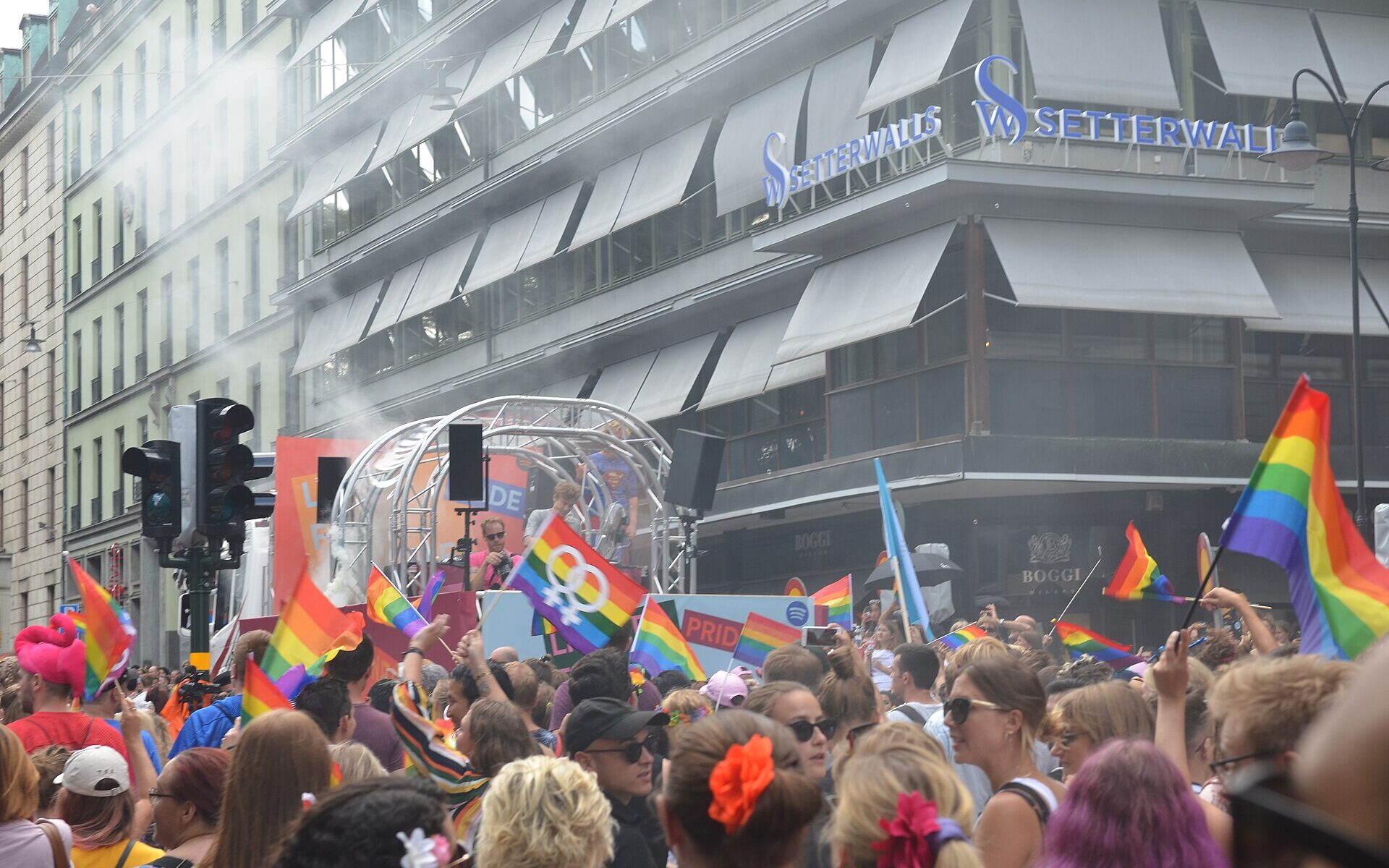
Stockholm Pride 2026: 27 July – 1 August. The parade is on Saturday 1 August at 13:00, on a new route from Norr Mälarstrand to Slussen.
New for 2026: the festival site has moved from Östermalms IP to Slakthusområdet and is now called Pride District.
Queer history: the City Museum’s “Queer Stockholm” walk, 90 minutes through Östermalm, in English or Swedish.
Most visibly queer neighbourhood: Södermalm. The scene is woven through the city rather than walled off.
Trans travellers: strong legal protection, a new gender-recognition law since July 2025, and gender-neutral toilets widely available.
Sexual health: specialist clinics and RFSL testing in the city. 1177 for advice.
Why Stockholm feels different
The easiest way to explain LGBTQ+ Stockholm is to say what you won’t notice. You won’t notice people noticing you. Swedish reserve works in your favour here: Stockholmers don’t stare, don’t comment, and don’t treat a same-sex couple as remarkable. You will see rainbow flags outside embassies, churches, banks and ministries in Pride week, and you’ll see them on the city buses. The rest of the year, the city’s queer life is less about a district or a strip and more about a baseline of acceptance that runs through everything.
That has its flip side. Stockholm has a smaller, quieter dedicated scene than Berlin, London or Madrid, precisely because it has less need of one. Many LGBTQ+ Stockholmers socialise in mixed bars and cafés as a matter of course. If you come expecting a Castro or a Soho, you may find it underwhelming. If you come expecting to be comfortable everywhere, you won’t be disappointed.
A short history
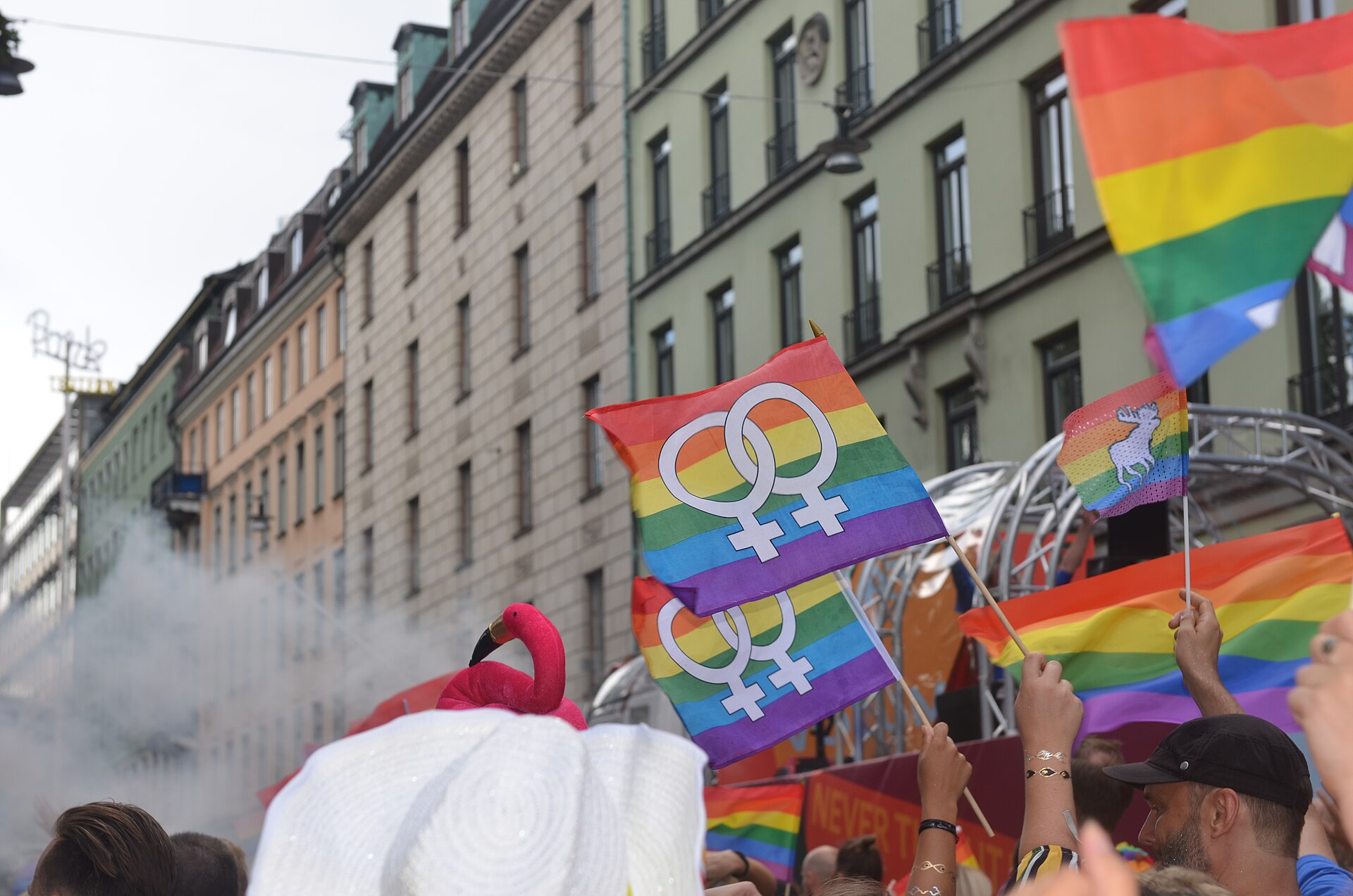
Sweden’s record looks effortless now, but it was won, often by protest. A short timeline helps when you are walking the city.
| Year | Milestone |
|---|---|
| 1944 | Homosexuality decriminalised. |
| 1950 | RFSL, the Swedish federation for LGBTQ rights, founded. |
| 1972 | Sweden becomes the first country to allow a legal change of gender. |
| 1979 | After activists occupy the National Board of Health and Welfare, homosexuality is removed from Sweden’s list of illnesses. |
| 1995 | Registered partnerships for same-sex couples. |
| 1998 | The first Stockholm Pride, the same year the city hosts EuroPride for the first time. |
| 2003 | Same-sex couples may adopt. |
| 2009 | Gender-neutral marriage law. The Church of Sweden begins marrying same-sex couples the same year. |
| 2013 | The requirement for sterilisation before legal gender change is abolished. |
| 2025 | A new Legal Gender Recognition Act takes effect, separating legal gender change from medical treatment. |
Figures to look out for
- Queen Kristina (1626–1689) refused to marry, dressed as she pleased, abdicated the throne in 1654 and left for Rome. She has been claimed as a queer icon for centuries. Greta Garbo, herself born on Södermalm, played her on screen in 1933. You can stand in the Royal Palace on the site of the castle she grew up in.
- Selma Lagerlöf, the first woman to win the Nobel Prize in Literature, in 1909. Letters published long after her death revealed the depth of her relationships with women. The Nobel Prize Museum in Gamla Stan tells the laureates’ stories.
- Greta Garbo grew up on Södermalm, and the city still claims her. Her private life has been the subject of speculation for a century, and she liked it that way.
Queer history on foot: the City Museum walk
The best single thing to do in LGBTQ+ Stockholm by daylight is the Queer Stockholm walk from Stadsmuseet, the Stockholm City Museum. It traces the city’s queer history from the late 1800s to today through the places that shaped it: nightclubs and bathhouses, cruising parks, private homes and public toilets. Along the way it covers what those places made possible and what they constrained.
- Where: Östermalm, central Stockholm.
- How long: about 90 minutes and 2 km.
- Language: English or Swedish.
- Access: step-free, suitable for wheelchairs and pushchairs.
- When: bookable for groups year-round, with public dates in the museum’s calendar, especially around Pride. The museum also offers a digital version centred on Humlegården that you can do on your own.
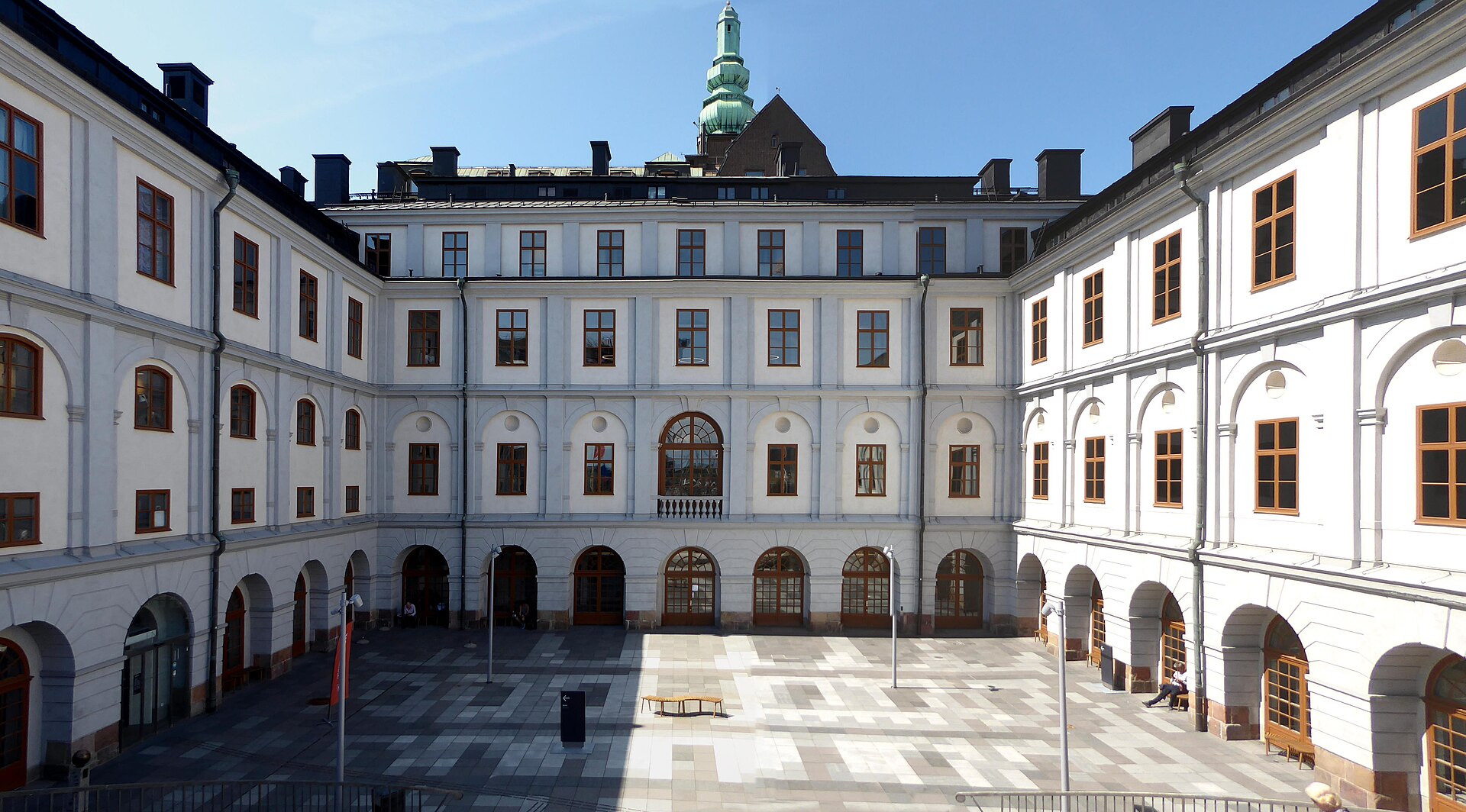
The museum itself, in a seventeenth-century palace at Slussen, is free to enter and worth an hour on the wider history of the city. Around Pride week, other city museums also run queer-themed tours and talks. Check their calendars when you plan your dates. Our free museums guide covers the rest.
Neighbourhoods
Södermalm
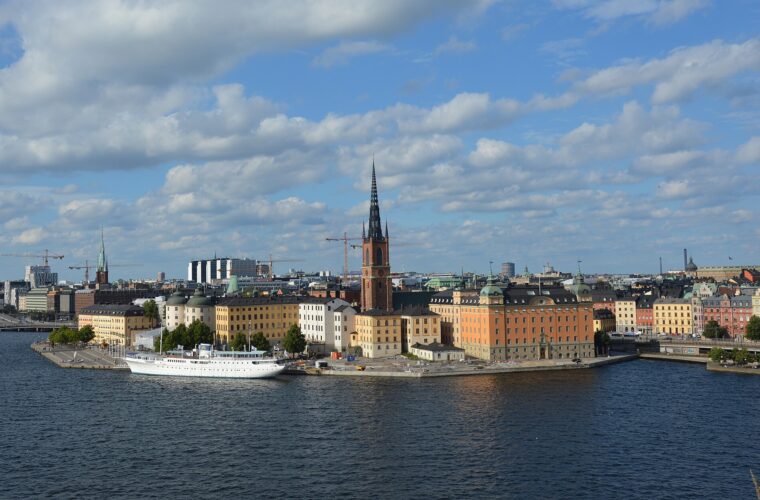
Södermalm, the big island south of Gamla Stan, is the most visibly queer part of the city and the one most LGBTQ+ visitors gravitate to. It has independent cafés, vintage shops, bookshops, galleries and a relaxed, creative crowd. Several of the city’s LGBTQ+ bars and club nights have long been here. The SoFo area around Nytorget, the Hornsgatan strip and the streets round Mariatorget are the heart of it, and the Pride parade finishes near Slussen, on Södermalm’s doorstep.
Gamla Stan
The old town is beautiful and touristy in equal measure. Walk it by day for the history, including the Royal Palace, the Nobel Prize Museum and the lanes Queen Kristina would have known. In the evening, cross back to Södermalm, a five-minute walk over Slussen.
Östermalm
Grand, wealthy and formal, with the big nightclubs of Stureplan. The Queer Stockholm walk takes place here, and it adds a layer of history to streets you would otherwise pass for their shop windows. Our Östermalm guide covers the rest.
Norrmalm and Vasastan
Central, practical and full of hotels. Pride House sits here during Pride week, at Norra Bantorget. The waterfront at Norr Mälarstrand, across the water on Kungsholmen, is where the parade gathers.
Stockholm Pride 2026: what’s new
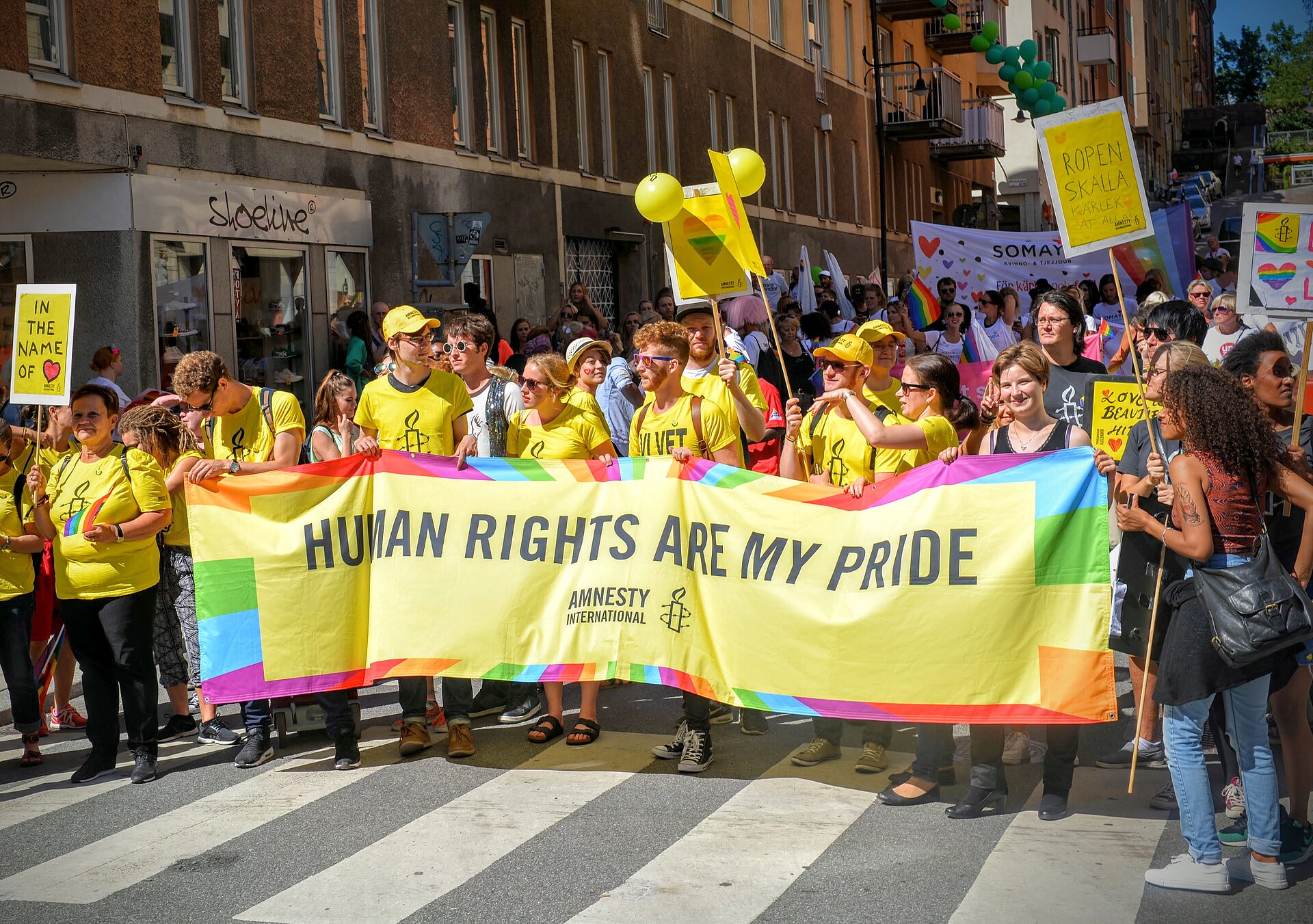
Stockholm Pride is the biggest Pride in the Nordics and one of the city’s biggest events of the year. It is a whole week of talks, parties, culture and family events, ending in a parade that draws huge crowds. For 2026, two things changed that anyone who has been before should know about.
The dates
- Festival week: Monday 27 July to Saturday 1 August 2026.
- The parade: Saturday 1 August 2026, starting at 13:00.
Pride is always around the end of July and the start of August, but the exact week moves each year. Check the official programme before you book flights for 2027.
The new parade route
The parade now starts on the waterfront boulevard of Norr Mälarstrand, at Kungsholmstorg on Kungsholmen, runs through central Stockholm, with Sergels torg newly added to the route, and finishes near Slussen with music and celebrations. The best viewing is anywhere along the central section. Arrive early for a front-row spot, bring water and sunscreen, and expect the metro and buses around the route to be packed or diverted.
Pride District replaces Pride Park
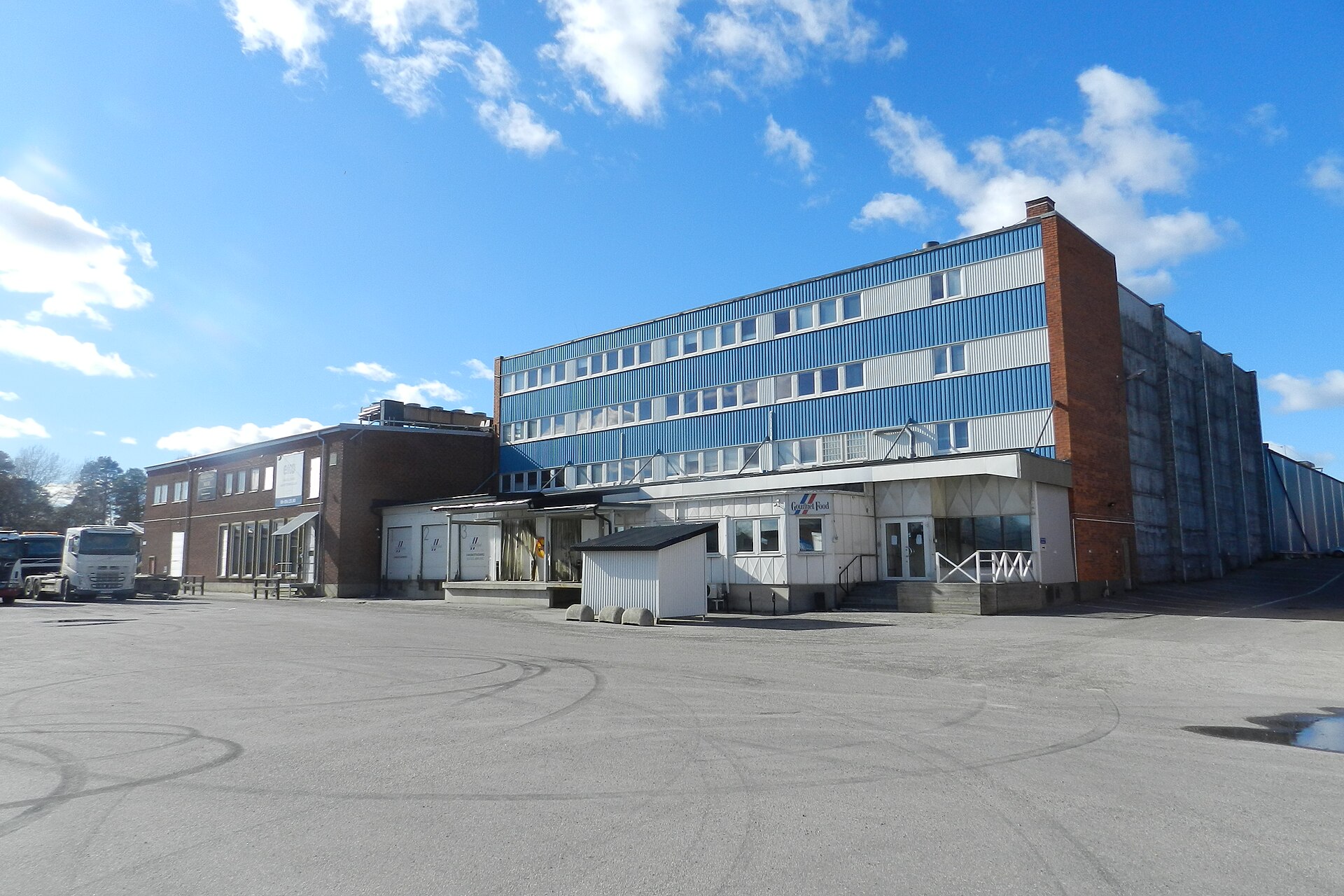
For years the festival’s heart was Pride Park at Östermalms IP. In 2026 it moved to Slakthusområdet, the old slaughterhouse district south of Södermalm, beside the Globe arenas, and was renamed Pride District. It hosts concerts, club nights, food, bars and activities. Slakthusområdet is being redeveloped into a food, culture and nightlife quarter, and the move fits the direction of the area. It is a short ride from the centre on the green metro line; Globen is the nearest station. Check the official Pride site for ticket and wristband details, which vary by event.
Pride House
Pride House, the festival’s programme of seminars, debates and cultural events, is held at the Clarion Hotel Sign by Norra Bantorget. It is the thoughtful half of Pride week and well worth a look if you want to understand Swedish queer politics as well as celebrate. Some sessions are in English. Check the programme.
Planning for Pride week
- Book accommodation early. Pride coincides with peak summer, and the city fills up. Our where to stay guide covers the areas.
- Combine it with summer. Late July is the best of the Swedish summer: long evenings, warm water and the archipelago at its best. Our Stockholm in July and August guides cover what else is on.
- The parties are covered in our LGBTQ+ nightlife guide.
The rest of the year
Pride week is the peak, but it isn’t the only time to come. The club nights and bars run year-round, with a busier calendar in autumn and winter, when Stockholmers move indoors. Sweden’s other big Prides are worth knowing if you are travelling further: West Pride in Gothenburg is held earlier in the summer. And in any month, the things that make Stockholm easy for LGBTQ+ visitors, its acceptance, safety and relaxed social life, don’t depend on a festival.
Winter has its own appeal for couples. Candlelit cafés, Christmas markets, saunas and cold plunges, and the long blue twilight. Our guide to romantic things to do in Stockholm is written for any couple, and it means it.
Where to stay
Any hotel. Swedish anti-discrimination law covers sexual orientation and gender identity in the provision of services, and in practice nobody at a Stockholm reception desk will blink at a same-sex couple asking for a double bed. The questions that matter are the usual ones: which neighbourhood suits you, and what you want to spend.
- Södermalm: the closest to the city’s queer social life, with independent hotels and a creative feel.
- Norrmalm: the most practical, close to Central Station, the Arlanda Express, and Pride House in Pride week.
- Gamla Stan: the most atmospheric, and quiet at night.
- Östermalm: the grandest, with the city’s luxury hotels.
Our guides to boutique hotels and luxury hotels in Stockholm name specific places.
Getting married in Stockholm
Sweden’s marriage law has been gender-neutral since 2009, and Stockholm is a popular place for couples from abroad to marry or renew vows. Civil ceremonies at the City Hall, the building that hosts the Nobel banquet, are short, simple and famously photogenic. The Church of Sweden also marries same-sex couples.
The paperwork is the part to plan. Before any wedding in Sweden, the Swedish Tax Agency (Skatteverket) carries out an impediment investigation (hindersprövning) to confirm that both partners are free to marry. Couples who don’t live in Sweden need documents from home, sometimes translated and certified, and processing takes weeks. Start with Skatteverket’s English-language guidance and book the ceremony only once the investigation is under way. Check too that your home country will recognise a Swedish marriage.
If a legal wedding isn’t the point, the city is made for the celebration: a dinner in Gamla Stan, a boat into the archipelago at sunset, a night in a boutique hotel. Our archipelago boat tours guide has the options on the water.
Trans and non-binary travellers
Sweden has among the strongest legal protections for trans people in Europe, and the everyday experience in Stockholm matches that.
- The law: a new Legal Gender Recognition Act took effect on 1 July 2025. It lets people change their legal gender from the age of 16, with parental consent under 18, and no longer requires a diagnosis of gender dysphoria. It also separates the legal process from medical treatment. It applies to Swedish residents, but it reflects the general climate.
- Toilets: single-occupancy, gender-neutral toilets are the norm in Swedish cafés, restaurants and many public buildings. Our guide to public toilets in Stockholm covers where to find them.
- Documents: travel on a passport whose details match your ticket. Swedish border and airport staff are professional, and a passport that doesn’t match your presentation is not a problem in itself.
- Saunas and bathhouses: many public baths and saunas have separate men’s and women’s facilities. Some now offer mixed or all-gender sessions. Check with the venue.
- Healthcare: if you travel with hormones or other medication, bring enough for the trip in original packaging with a copy of the prescription. Our emergency numbers and medical care guide explains how to reach a doctor or pharmacy.
Sexual health
Stockholm has good sexual-health services, and visitors can use them.
- Venhälsan at Södersjukhuset is a long-established clinic specialising in the sexual health of gay and bisexual men and trans people.
- RFSL runs HIV and STI testing and counselling in Stockholm, alongside its advocacy work, and has information in English.
- PEP (post-exposure prophylaxis) after a possible HIV exposure is time-critical. Call 1177 straight away, and they will direct you. Out of hours, go to a hospital emergency department.
- Condoms are sold at supermarkets, pharmacies and convenience stores everywhere.
Costs for visitors depend on where you are from. EU/EEA residents with an EHIC pay local fees, and others may pay the full cost, so check your travel insurance. The emergency numbers guide linked above has the details.
Safety: the honest picture
Stockholm is a very safe city for LGBTQ+ visitors, and the risks are the ordinary urban ones. Homophobic and transphobic hate crime does exist in Sweden, as it does everywhere, and it is reported and prosecuted as a hate crime. It is rare in the central areas where visitors spend their time. Public affection in the centre draws no attention at all.
- Late at night, take the same care you would in any city: stay with friends, use licensed taxis or apps, and keep your phone out of sight on the night bus. Our tourist scams guide covers the taxi and pickpocket basics.
- Dating apps work as they do anywhere, and Swedish police have warned about robberies set up through them. Meet first in a public place, tell a friend where you’re going, and trust your instincts.
- In an emergency, call 112. For non-urgent reports, call the police on 114 14. Hate crimes can be reported to the police, and RFSL can offer support.
Our full Stockholm safety guide covers the city neighbourhood by neighbourhood.
A queer weekend in Stockholm
Day one
- Morning: Gamla Stan, the Royal Palace and the Nobel Prize Museum. Queen Kristina and Selma Lagerlöf, in one short walk.
- Lunch: cross to Södermalm and eat around Mariatorget.
- Afternoon: Stadsmuseet at Slussen, then the vintage shops of Hornsgatan and SoFo. Our vintage shops guide maps the route.
- Evening: dinner on Södermalm, then the bars in our nightlife guide.
Day two
- Morning: the Queer Stockholm walk in Östermalm, if you have booked it or it is a public date. If not, do the museum’s digital walk around Humlegården.
- Lunch: Östermalms Saluhall.
- Afternoon: Djurgården: the ABBA Museum, because some clichés are earned, or Fotografiska for photography with a view.
- Evening: a sunset drink on the water, then wherever the night takes you.
Frequently asked questions
Is Stockholm LGBTQ-friendly?
Yes, among the most welcoming cities in the world. Sweden decriminalised homosexuality in 1944, allowed legal gender change in 1972, and has had equal marriage since 2009. Public attitudes are relaxed, and same-sex couples attract no attention.
When is Stockholm Pride 2026?
From 27 July to 1 August 2026. The parade is on Saturday 1 August at 13:00, starting at Norr Mälarstrand and finishing near Slussen.
Where is Pride Park in 2026?
Pride Park no longer exists under that name. In 2026 the festival site moved from Östermalms IP to Slakthusområdet, south of Södermalm, and was renamed Pride District. Pride House is at the Clarion Hotel Sign by Norra Bantorget.
What is the gay area of Stockholm?
Stockholm has no single gay district. Södermalm is the most visibly queer neighbourhood, with many LGBTQ+ venues, independent cafés and a creative crowd, but LGBTQ+ life is integrated across the city.
Is Stockholm safe for trans travellers?
Yes. Sweden has strong legal protections, a new gender-recognition law in force since July 2025, and widespread gender-neutral toilets. Take the ordinary city precautions late at night, and call 112 in an emergency.
Is there an LGBTQ history tour in Stockholm?
Yes. The Stockholm City Museum’s Queer Stockholm walk covers the city’s queer history from the late 1800s to today. It takes about 90 minutes over 2 km in Östermalm, in English or Swedish. There is also a self-guided digital version around Humlegården.
Can same-sex couples marry in Stockholm?
Yes. Sweden’s marriage law has been gender-neutral since 2009, and the Church of Sweden has married same-sex couples since the same year. Visitors should check the residency and paperwork rules for marrying in Sweden well in advance.
Where can I get sexual health advice in Stockholm?
Call 1177 for advice at any hour. Venhälsan at Södersjukhuset specialises in the sexual health of gay and bisexual men and trans people, and RFSL offers HIV and STI testing and counselling. For PEP after a possible HIV exposure, call 1177 straight away.
For the festival itself, our Stockholm Pride guide has the full detail: the dates, the 2026 parade route from Kungsholmstorg to Slussen and the best places to watch it, Pride District tickets and what you can’t bring in, Pride House, and a plan for the week.
More Stockholm guides
- LGBTQ+ Nightlife in Stockholm — the bars, clubs and Pride parties.
- Is Stockholm Safe? — the full safety picture.
- Södermalm Guide — the city’s most visibly queer island.
- Stockholm in July — Pride week and the height of summer.
- Romantic Things to Do in Stockholm — for any couple.
- Where to Stay in Stockholm — choosing a neighbourhood.
- Stockholm Travel Tips — the practical rest.
- Stockholm Nightlife — the wider night out.
Photo credits
EuroPride parade crowd, 2018 (featured image): Europride parade Stockholm 2018 722 by Sparrow (麻雀), CC BY-SA 4.0, via Wikimedia Commons.
Rainbow flags at EuroPride 2018: Europride parade Stockholm 2018 718 by Sparrow (麻雀), CC BY-SA 4.0, via Wikimedia Commons.
Stockholm City Museum courtyard: Stockholms stadsmuseum, gården, juli 2019 by Holger.Ellgaard, CC BY-SA 4.0, via Wikimedia Commons.
Stockholm Pride parade, 2015: Stockholm Pride 2015 Parade by Jonatan Svensson Glad 40 by Jonatan Svensson Glad, CC BY-SA 4.0, via Wikimedia Commons.
Slakthusområdet: Slakthusområdet 2019 (DSCN5678) by Zquid, CC BY-SA 4.0, via Wikimedia Commons.