Stockholm Emergency Numbers & Medical Care
112, 114 14 and 1177: every number worth saving before a Stockholm trip, how Swedish healthcare expects you to phone first, where the urgent-care clinics and 24-hour pharmacy are, and what treatment costs visitors from inside and outside the EU.
The emergency numbers Stockholm visitors need fit on the back of a hand. It’s 112 for anything urgent, 114 14 for the police when it isn’t urgent, and 1177 for medical advice at any hour. Knowing the numbers is the easy part. The part that trips visitors up is how Swedish healthcare works around them. The system expects you to phone before you walk in, the urgent-care clinics close at 22:00, and visitors from outside the EU pay the full cost of their treatment. A few minutes with this page before your trip saves a great deal of stress if you ever need it.
This guide covers every number worth saving, what happens when you call them, where to go for medical care from a sprained ankle to a real emergency, what it costs, where to find a pharmacy at 03:00, and the Swedish words that help. Numbers, hours and fees were checked in September 2026 with Region Stockholm and 1177, the public healthcare service. This is practical information, not medical advice. If in doubt, call.
Emergency (police, ambulance, fire, sea rescue): 112.
Police, non-urgent: 114 14.
Medical advice, 24/7: 1177. Nurses tell you where to go.
Urgent care for injuries and sudden illness: a närakut, open daily 08:00–22:00.
Serious or life-threatening: a hospital emergency department (akutmottagning), or call 112.
24-hour pharmacy: Apoteket C.W. Scheele, Klarabergsgatan 64, by Stockholm Central.
Cost: EU/EEA visitors with an EHIC card pay the local fee. Visitors from elsewhere pay the full cost. Travel insurance matters.
All the numbers, in one place
| Number | What for | Notes |
|---|---|---|
| 112 | Emergency: police, ambulance, fire, sea and air rescue | Free from any phone, with or without a SIM or credit. English spoken. |
| 114 14 | Police, non-urgent | For reporting a theft after the fact, lost passports and general police questions. |
| 1177 | Healthcare advice line | Nurses, 24/7. They assess your symptoms and tell you where to go. |
| 90101 | Suicide and crisis line (Självmordslinjen, run by Mind) | Phone and chat support in a crisis. In immediate danger, call 112. |
| Your bank’s emergency number | Blocking a lost or stolen card | Save it before you travel. Most banking apps let you freeze a card instantly. |
| Your embassy in Stockholm | Lost or stolen passport, serious trouble | Most embassies are in Östermalm and on Djurgården. Save the number before you go. |
Save 112, 1177 and your embassy’s number in your phone before you leave home. Emergency calls to 112 work from any mobile, including one with a foreign SIM, no Swedish SIM at all, or no credit. Our guide to Wi-Fi and SIM cards in Stockholm covers staying connected for everything else.
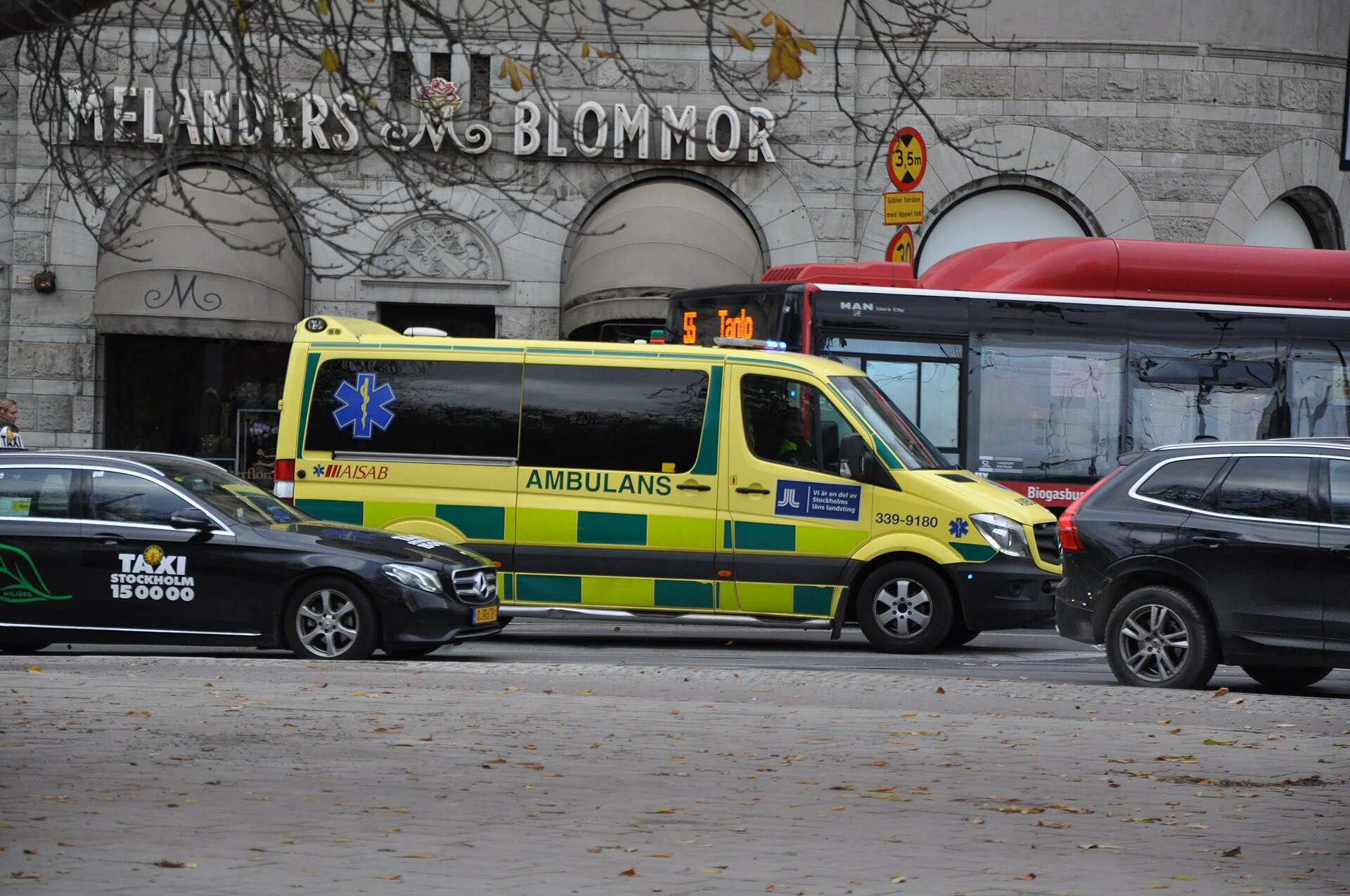
Calling 112
112 is answered by SOS Alarm, the national emergency centre, which dispatches police, ambulances, the fire service and sea rescue. Operators speak English, and interpreters are available for other languages.
- Say what has happened, and whether anyone is injured or in danger.
- Say where you are. Give the street name and number if you can see a sign, or the nearest landmark, metro station, square or shop. On a boat or an island, give the island’s name and what you can see.
- Answer the questions. The operator will ask several before dispatching. That is triage, not delay, and help can already be on its way while you talk.
- Keep your phone on so they can call back.
Use 112 for fire, crimes in progress, violence, serious injury, chest pain, breathing difficulty, signs of stroke, unconsciousness, serious allergic reactions, someone in the water and any other situation where life or health is at risk. If you are unsure whether something is an emergency and it might be, call 112.
The police: 114 14
For anything that isn’t happening right now, such as a phone stolen yesterday, a lost passport or a question, call 114 14. Simple crimes like theft can also be reported online through the Swedish Police website, which is faster than waiting at a station. Your insurer will want the report reference.
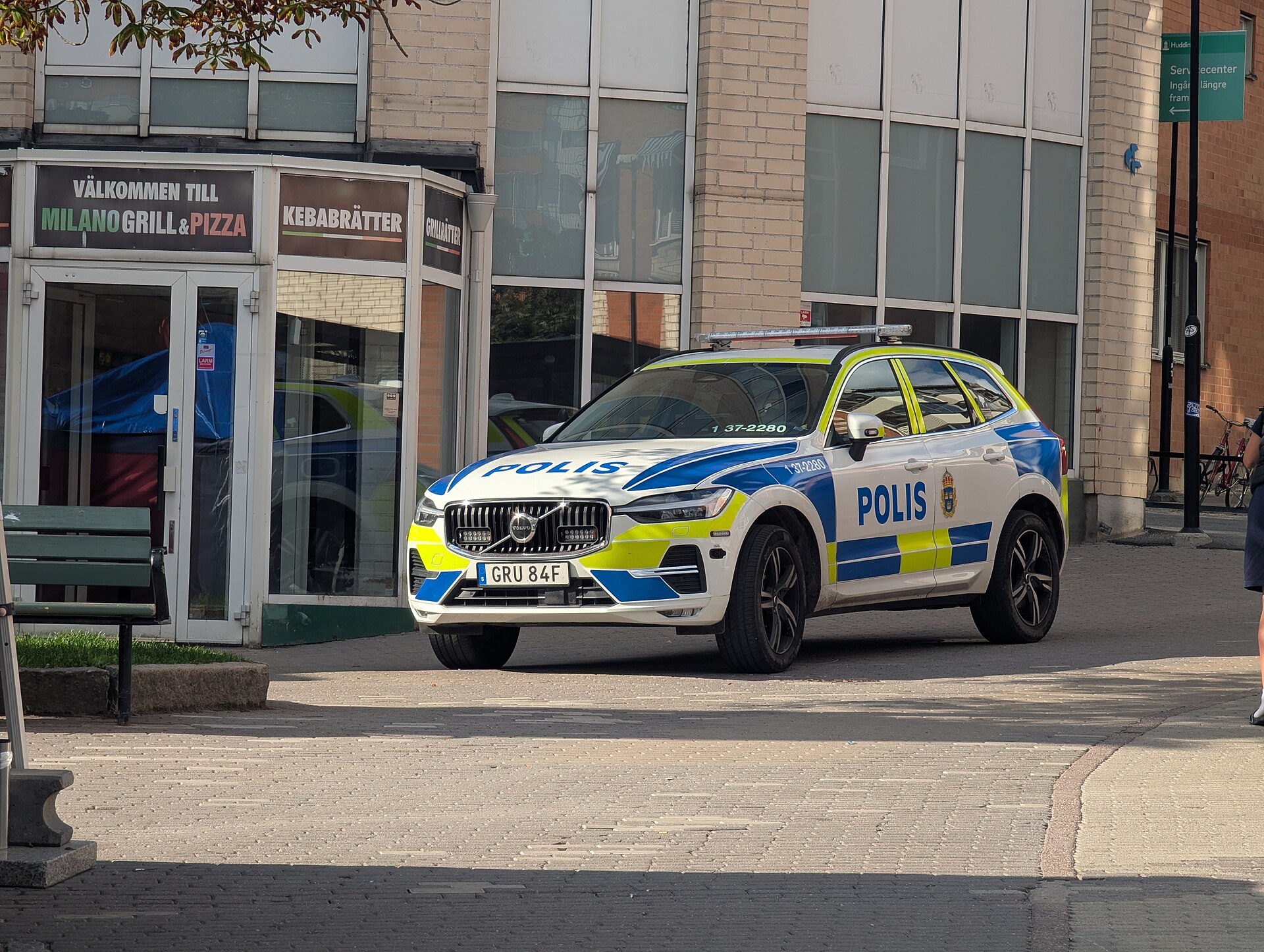
Swedish police don’t stop tourists to inspect wallets or ask for PINs. Anyone who does is not a police officer. Our guide to Stockholm tourist scams explains that one, and the Stockholm safety guide puts the risks in proportion. For most visitors the city is very safe.
Medical care: how the Swedish system works
Swedish healthcare is excellent, and it is organised around one principle that surprises many visitors: phone first. In Stockholm, as elsewhere in Sweden, you are expected to call 1177 before turning up anywhere except in a real emergency. A nurse assesses your symptoms and directs you to the right place, which may be self-care advice, a local health centre, an urgent-care clinic or a hospital emergency department. Walking straight into a hospital emergency department with a minor problem means a very long wait behind the people who needed to be there.
1177: the healthcare advice line
1177 is staffed by nurses around the clock. They speak Swedish and English, and interpreters can be arranged for other languages. Tell them your symptoms, how long you have had them and where you are, and they will tell you what to do and where to go. Some foreign phones struggle to connect to three- and four-digit Swedish service numbers. If yours does, the national line is also reachable at +46 771 11 77 00.
Närakut: urgent care, 08:00–22:00
A närakut is an urgent-care clinic for injuries and sudden illness that can’t wait until tomorrow but don’t need a hospital. Region Stockholm runs ten across the county. The two most central are Närakut Rosenlund on Södermalm and Närakut Haga in Hagastaden, north of the city centre. Others include Danderyd, Nacka, Huddinge and Järva. All are open 08:00–22:00 every day, year round, and have X-ray and blood testing.
Go to a närakut for:
- a suspected fracture, a bad sprain or a fall on the ice;
- a suspected concussion;
- cuts and wounds that need stitches;
- sudden stomach pain;
- acute allergic reactions that aren’t life-threatening;
- a suspected blood clot.
They don’t deal with long-term problems, prescriptions for chronic conditions or sick notes. After 22:00, it’s 1177 for advice or a hospital emergency department if it can’t wait.
Hospital emergency departments (akutmottagning)
For serious illness and injury, Stockholm’s main emergency departments are at:
- Södersjukhuset, Södermalm: the city’s big central emergency hospital. Sachsska children’s hospital is on the same site.
- Karolinska University Hospital, at Solna, just north of the city, and at Huddinge, to the south.
- S:t Görans sjukhus, Kungsholmen.
- Danderyds sjukhus, north of the city on the red metro line.
- Astrid Lindgrens barnsjukhus, at Karolinska Solna, for children.
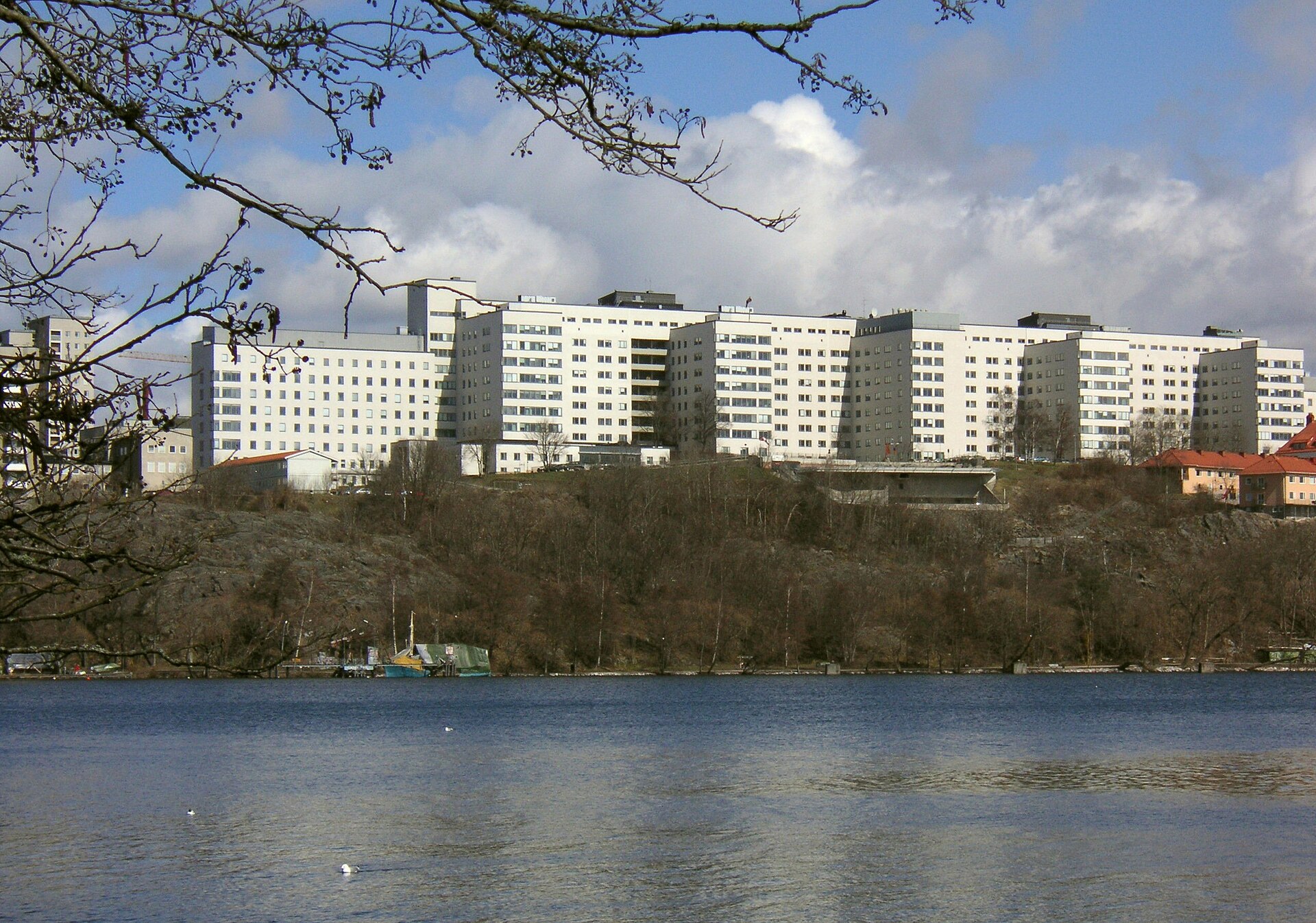
Emergency departments triage strictly by need. With a problem that is painful but not dangerous, expect to wait hours. That is the system working as intended, and it is why 1177 and the närakuter exist. If someone’s condition is serious, call 112 for an ambulance instead of taking a taxi.
Children
The same system applies. Call 1177 first, go to a närakut for injuries and sudden illness in the daytime and evening, and go to a children’s emergency department (Astrid Lindgren or Sachsska) or call 112 for anything serious. Healthcare for under-18s is free for Swedish residents and EHIC holders. Our Stockholm with kids and Stockholm with a baby guides cover the rest of family travel.
What it costs
This is the part to read before you travel.
- EU, EEA and Swiss visitors with a European Health Insurance Card (EHIC) get necessary care at the same fees as Swedish residents. In Stockholm in 2026, that is SEK 375 for a närakut visit and SEK 400 for a hospital emergency department. Children under 18 are free. Bring the physical card. Without it, you may be asked to pay the full cost and claim it back later.
- UK visitors: the UK Global Health Insurance Card (GHIC), or a valid UK EHIC, covers necessary state healthcare in EU countries, including Sweden, on the same terms.
- Visitors from outside the EU/EEA, including Americans, Canadians, Australians and most of the world, pay the full cost of both emergency and planned care, apart from a few countries with specific agreements with Sweden. An emergency department visit with tests, imaging or an overnight stay can run to many thousands of kronor.
The practical conclusion: take out travel insurance with medical cover before you come, carry the policy number and the insurer’s emergency line, and keep every receipt. Pay by card; you will pay first and claim later. Our Stockholm currency guide covers the payment side.
Pharmacies (apotek)
Pharmacies are called apotek. The main chains are Apoteket, Apotek Hjärtat and Kronans Apotek, and they are easy to find in the city centre, in shopping centres and at larger metro and commuter stations. Pharmacists are well trained and often the quickest source of advice for minor problems.
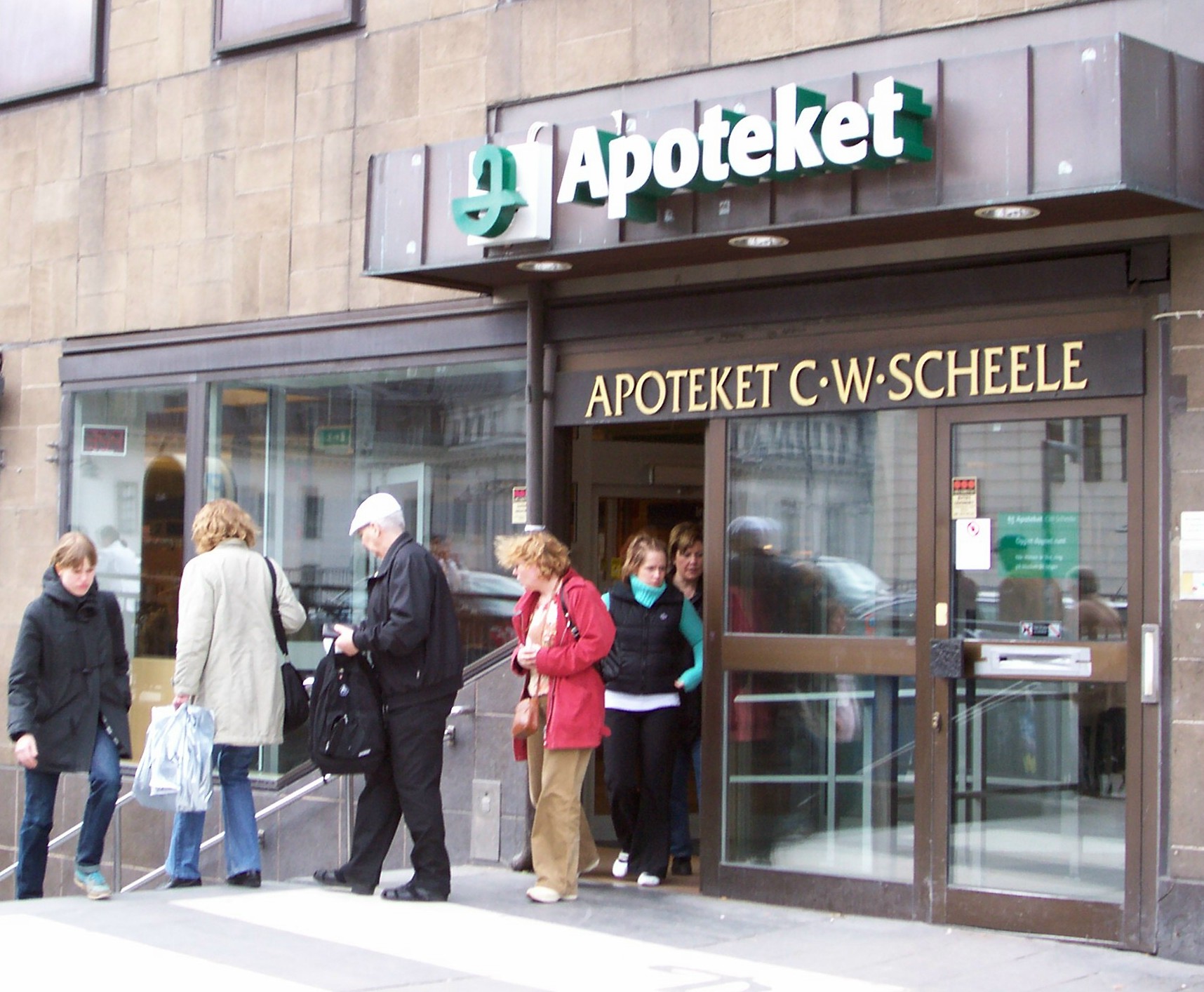
- 24 hours: Apoteket C.W. Scheele, Klarabergsgatan 64, a short walk from Stockholm Central and T-Centralen, is open around the clock, every day.
- Over-the-counter medicines: basic painkillers, allergy tablets and cold remedies are sold at pharmacies, and some are also sold in supermarkets and convenience stores in small packs. Paracetamol tablets have been sold only in pharmacies since 2015.
- Prescriptions: Swedish pharmacies can dispense prescriptions issued in another EU/EEA country. Prescriptions from outside the EU are generally not valid. Bring enough of any regular medication for the whole trip, in its original packaging, with a copy of the prescription or a doctor’s letter.
- Brand names differ: know the active ingredient of anything you take regularly. Paracetamol is sold as Alvedon, for example, and ibuprofen as Ipren.
Dentists
For dental emergencies such as severe toothache, swelling or a broken tooth, call 1177, which can direct you to an emergency dentist (akut tandvård). Dental care in Sweden is largely private and paid in full, even for residents, and EHIC doesn’t make it free. Your travel insurance may cover emergency pain relief. Check your policy.
Mental health
If you or someone with you is in crisis, Självmordslinjen (the suicide line, run by the charity Mind) answers on 90101 and by chat on its website. In immediate danger, call 112. Hospital emergency departments also treat psychiatric emergencies, and Stockholm has dedicated psychiatric emergency units. 1177 can direct you to the nearest one.
Outdoors, water and ice
- At sea or in the archipelago: call 112 and ask for sea rescue (sjöräddning). The volunteer Swedish Sea Rescue Society works alongside the coastguard. Give the island’s name, and what you can see if you are on the water. Our kayaking guide and archipelago guide cover staying safe out there.
- On ice: skating on natural ice is a Stockholm winter pleasure, and every winter people fall through. Go with others and carry ice claws (isdubbar) around your neck. If someone falls in, call 112 immediately. Our Stockholm in January guide covers winter conditions.
- On pavements in winter: slipping on ice is the single most common way for visitors to end up at a närakut. Wear shoes with grip, or buy slip-on spikes (broddar) at any hardware or shoe shop.
Public warnings and the Monday siren
Sweden’s outdoor warning system, nicknamed Hesa Fredrik (“hoarse Fredrik”), is tested at 15:00 on the first non-holiday Monday of March, June, September and December. It’s a short signal, followed by an all-clear. If you hear it at that time, it is a test. At any other time, the signal means go indoors, close windows and doors, and listen to Sveriges Radio P4 or check the authorities’ websites for an Important message to the public (VMA). Weather warnings are issued by SMHI, the national weather service.
Useful Swedish
| Swedish | English |
|---|---|
| Hjälp! | Help! |
| Ring 112! | Call 112! |
| Akutmottagning | Hospital emergency department |
| Närakut | Urgent-care clinic |
| Apotek | Pharmacy |
| Tandläkare | Dentist |
| Jag är allergisk mot… | I am allergic to… |
| Det gör ont här | It hurts here |
| Polis, ambulans, brandkår | Police, ambulance, fire brigade |
Almost everyone you deal with, from dispatchers and nurses to pharmacists and police, will speak English. Our Swedish phrases for tourists covers the everyday rest.
Before you travel: a five-minute checklist
- Save 112, 1177, 114 14 and your embassy’s number in your phone.
- Pack your EHIC or GHIC if you have one. If you don’t, buy travel insurance with medical cover.
- Bring enough of any regular medication, in its original packaging, with a copy of the prescription.
- Note the active ingredients of your medicines and any allergies, in English.
- Photograph your passport and keep the original in the hotel safe.
- Save your bank’s card-blocking number, or check you can freeze your card in its app.
Our Stockholm travel tips collect the rest of the practical advice in one place.
Frequently asked questions
What is the emergency number in Stockholm?
112, for police, ambulance, fire and sea rescue. It is free from any phone, works without a Swedish SIM or credit, and the operators speak English.
What is the non-emergency police number in Sweden?
114 14. Use it to report crimes that have already happened, such as theft, and for lost passports and general police questions. Simple crimes can also be reported online through the Swedish Police website.
What is 1177 in Sweden?
The national healthcare advice line, staffed by nurses 24/7. They assess your symptoms and tell you whether to use self-care, see a health centre, go to an urgent-care clinic (närakut) or go to a hospital emergency department. From a foreign phone, you can also call +46 771 11 77 00.
Where do I go for a minor injury in Stockholm?
To a närakut, an urgent-care clinic, open daily 08:00–22:00. The most central are Närakut Rosenlund on Södermalm and Närakut Haga in Hagastaden. Call 1177 first to check it is the right place.
How much does a doctor cost in Stockholm for a tourist?
EU/EEA and Swiss visitors with an EHIC, and UK visitors with a GHIC, pay the local fee: SEK 375 at a närakut and SEK 400 at a hospital emergency department in 2026. Visitors from outside the EU/EEA pay the full cost, so travel insurance with medical cover is essential.
Is there a 24-hour pharmacy in Stockholm?
Yes. Apoteket C.W. Scheele at Klarabergsgatan 64, near Stockholm Central, is open 24 hours a day, every day.
Which hospitals in Stockholm have emergency departments?
Södersjukhuset on Södermalm, Karolinska University Hospital in Solna and Huddinge, S:t Görans sjukhus on Kungsholmen and Danderyds sjukhus. The children’s emergency departments are Astrid Lindgrens barnsjukhus in Solna and Sachsska barnsjukhuset at Södersjukhuset.
Why is there a siren in Stockholm on Monday afternoon?
It’s the quarterly test of Sweden’s public warning system, Hesa Fredrik, at 15:00 on the first non-holiday Monday of March, June, September and December. At any other time, go indoors and check Sveriges Radio or the authorities’ websites.
More Stockholm guides
- Is Stockholm Safe? — the full safety picture.
- Common Stockholm Tourist Scams — the petty risks, and how to dodge them.
- Stockholm Travel Tips — the rest of the practical advice.
- Stockholm Wi-Fi and SIM Cards — staying reachable.
- Stockholm with Kids — family travel, including when something goes wrong.
- Stockholm in January — ice, cold and winter safety.
- Stockholm Archipelago — safe days on the water.
- Swedish Phrases for Tourists — the words that help.
Photo credits
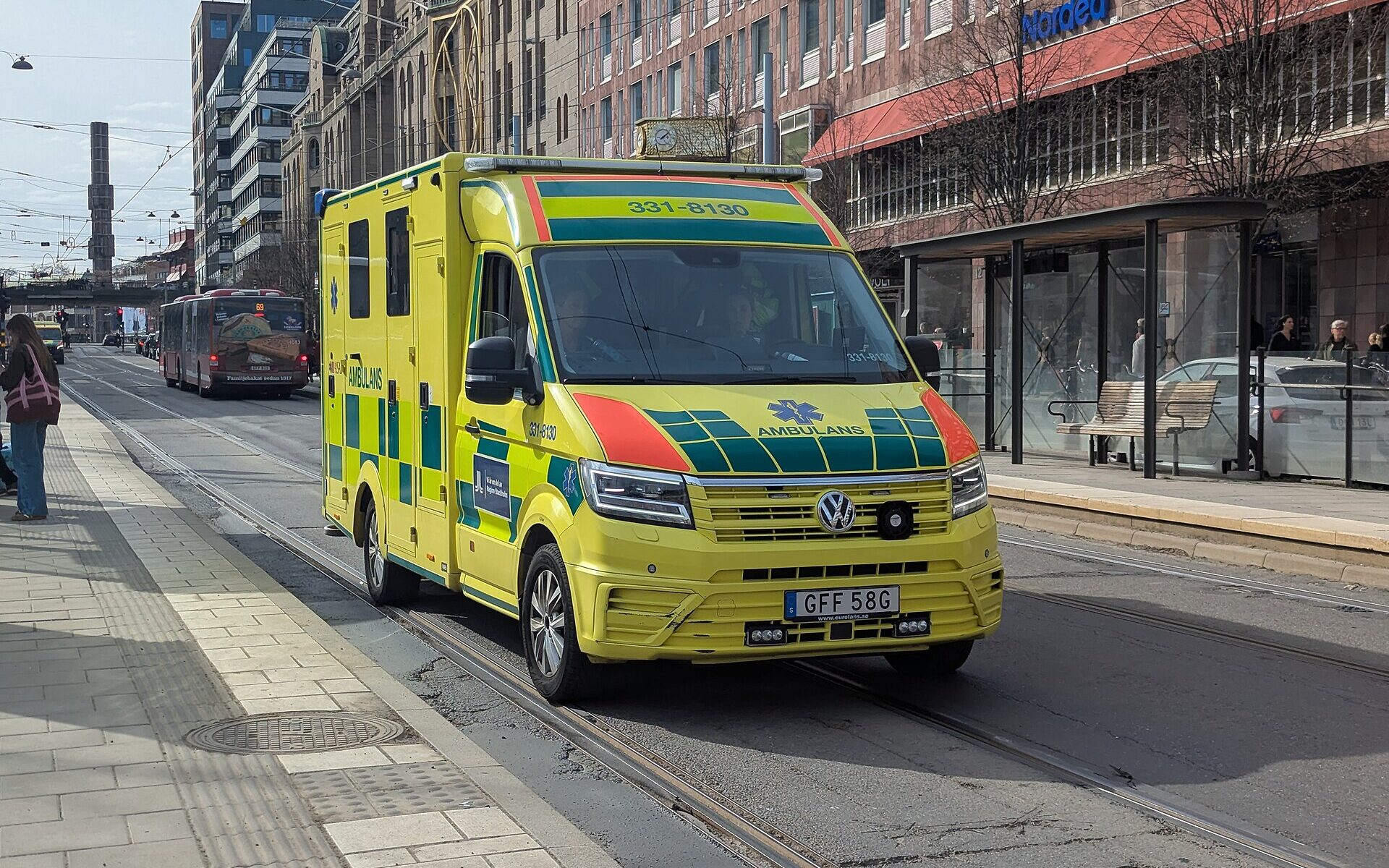
Ambulance at Kungsträdgården (featured image): Kungsträdgården, ambulans – 20260418 – 05 by AleWi, CC BY-SA 4.0, via Wikimedia Commons.
Ambulance in traffic: Ambulans by Wille Öhgren, CC BY-SA 4.0, via Wikimedia Commons.
Swedish police car: Polis, Huddinge, – 20250907 – 04 by AleWi, CC BY-SA 4.0, via Wikimedia Commons.
Södersjukhuset: Soedersjukhuset 1 by Holger Ellgaard, CC BY-SA 3.0, via Wikimedia Commons.
Apoteket C.W. Scheele: Apoteket CW Scheele by Oden, Public domain, via Wikimedia Commons.