Common Stockholm Tourist Scams to Avoid
Stockholm is one of Europe's least scam-prone capitals, but a few traps catch visitors every week. The taxi price sticker, the pickpocket hotspots, the card-machine currency trick and the fake rental listing, and how to avoid each one.
Stockholm is one of the least scam-prone capitals in Europe. The Stockholm scams visitors actually run into are few, predictable and easy to avoid once you know them. There are no gem shops, no taxi mafias, no “friendly local” who happens to own a carpet warehouse. What there is: taxis that charge whatever their window sticker says, pickpockets working the busiest few hundred metres of the city, a card-machine trick that is entirely legal, and an online rental market with far more demand than supply. That last one attracts fraudsters for the same reason it frustrates everyone else.
This guide covers each of them: where it happens, what it looks like, and the one or two habits that make you a poor target. It also explains what to do if something goes wrong. Details were checked in September 2026, including Swedavia’s own taxi advice for Arlanda. Stockholm’s broader safety picture, including neighbourhoods and the news headlines, is covered separately in our guide to whether Stockholm is safe.
The big one: taxis with high prices. Always read the yellow price sticker before you get in.
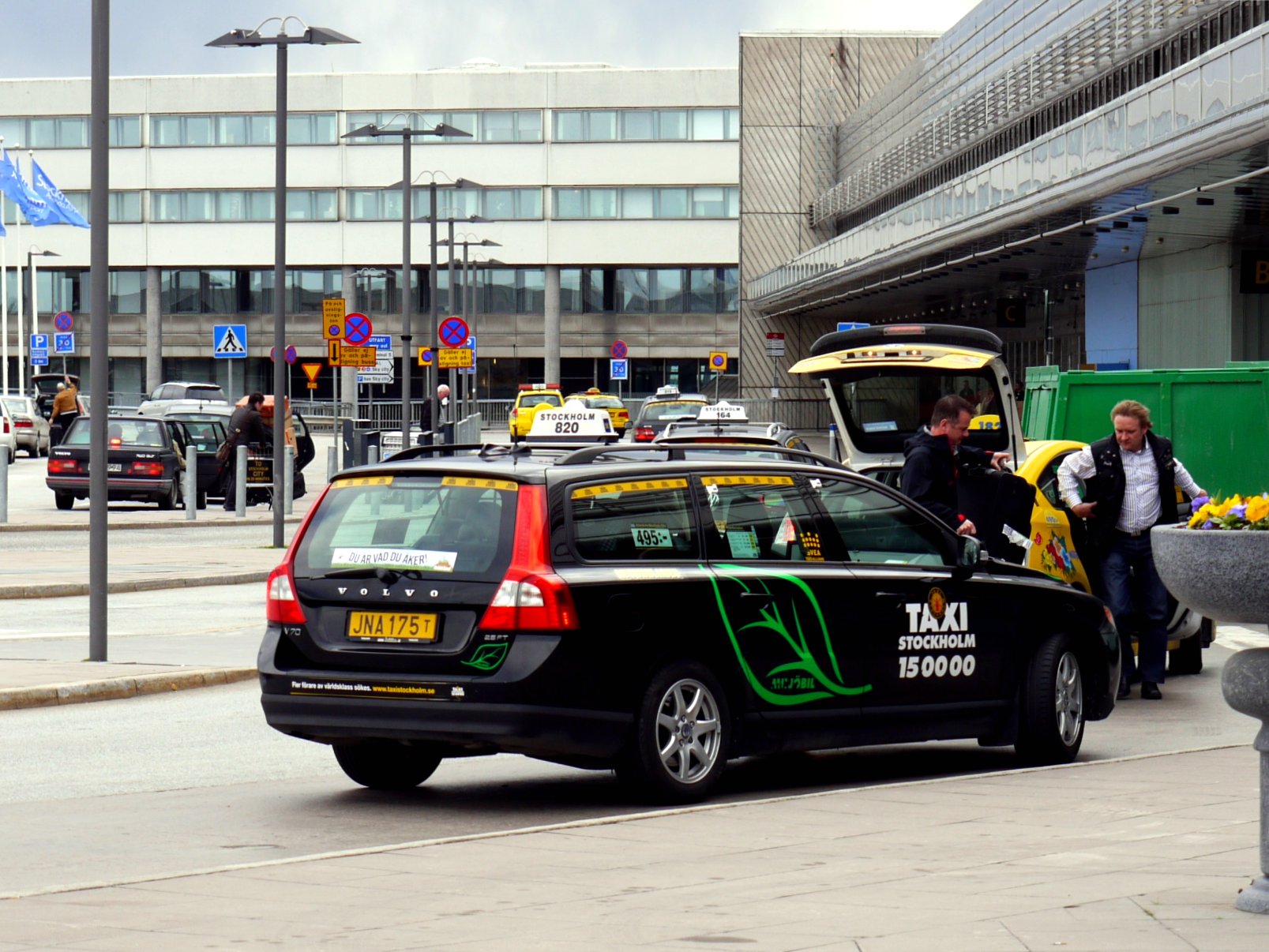
At Arlanda: never accept a ride offered inside the arrivals hall. Use the taxi rank outside, where a rank officer calls a contracted car.
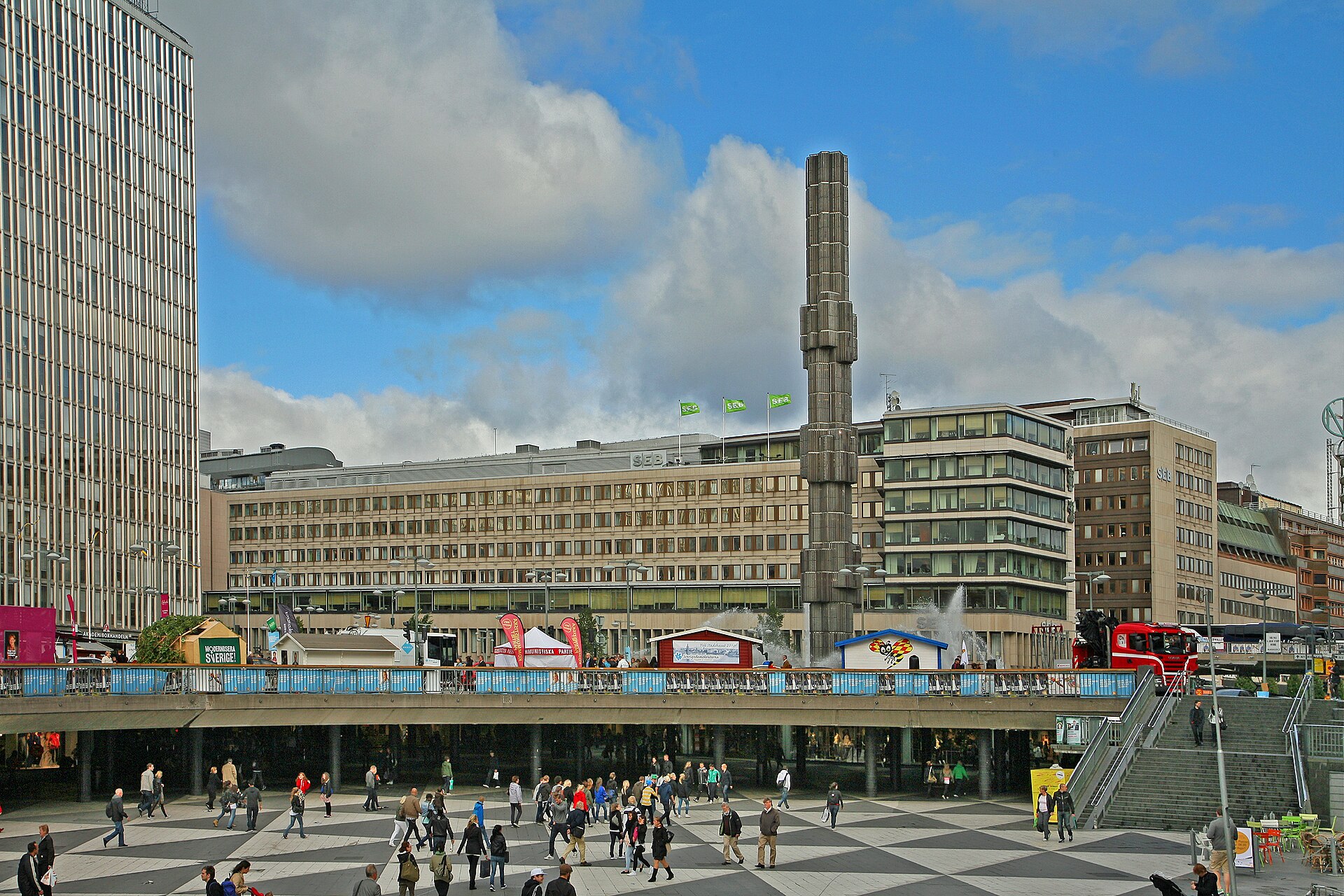
Pickpocket hotspots: T-Centralen, Sergels torg, Drottninggatan, Gamla Stan’s main squares, the food halls and summer festivals.
At the card machine: always pay in kronor, never in your home currency.
Online: never pay a deposit for a flat outside a booking platform.
Emergency: 112. Non-urgent police: 114 14.
Taxis: the one real trap
Swedish taxis were deregulated in 1990. Since then, any licensed company has been free to set its own prices, as long as it displays them. Most people ride with the big firms at reasonable fares. A small minority of operators set prices several times higher, and they rely on visitors not knowing that the prices are legal and on display. The result is the most common money complaint from tourists in Stockholm: a short ride that costs as much as a good dinner.
The yellow sticker
Every licensed taxi has a yellow price sticker in the rear side window. The large black number on it is the jämförpris, the comparison price. It is the cost of a standard reference trip, so you can compare companies at a glance. The highest comparison price the car can charge also has to be shown, in extra-large digits.
The habit is simple: read the sticker before you open the door. If the comparison price is much higher than those on the cars around it, walk to the next one. There is no obligation to take the first taxi in a rank, and no Stockholm driver will be offended if you choose another.
At Arlanda
Swedavia, the airport operator, is blunt about this. Never go with a driver who approaches you inside the arrivals hall. Go out to the taxi rank outside your terminal, where a taxi rank officer orders a car from a company with an agreement with the airport. If you agree a fixed price, which the big companies offer between Arlanda and the city, the price must be entered into the meter and visible before you set off. Look for it.
The simplest way to avoid the Arlanda taxi question altogether is not to take a taxi. The Arlanda Express train and the airport coaches are fixed-price and quick. Our Arlanda Express vs bus comparison covers the options.
Late at night
The other taxi risk is at closing time around Stureplan and the nightlife districts, when the queues are long and unmarked cars pull up offering rides. These are svarttaxi, illegal taxis. They are uninsured for passengers and set their prices however they like. Licensed Swedish taxis carry a yellow registration plate ending in a T, a roof sign and the price sticker. If a car has none of those, it is not a taxi. Book through a taxi company’s app, or use Uber or Bolt, which show the fare before you accept. Our Uber and taxi guide lists the regulated operators.
Pickpockets and distraction theft
Stockholm has pickpockets for the same reason every European capital does: lots of distracted visitors carrying expensive phones in a few crowded places. The good news is that the problem is concentrated. Almost all of it happens within a few hundred metres of each other, in the busiest parts of the centre.
Where it happens
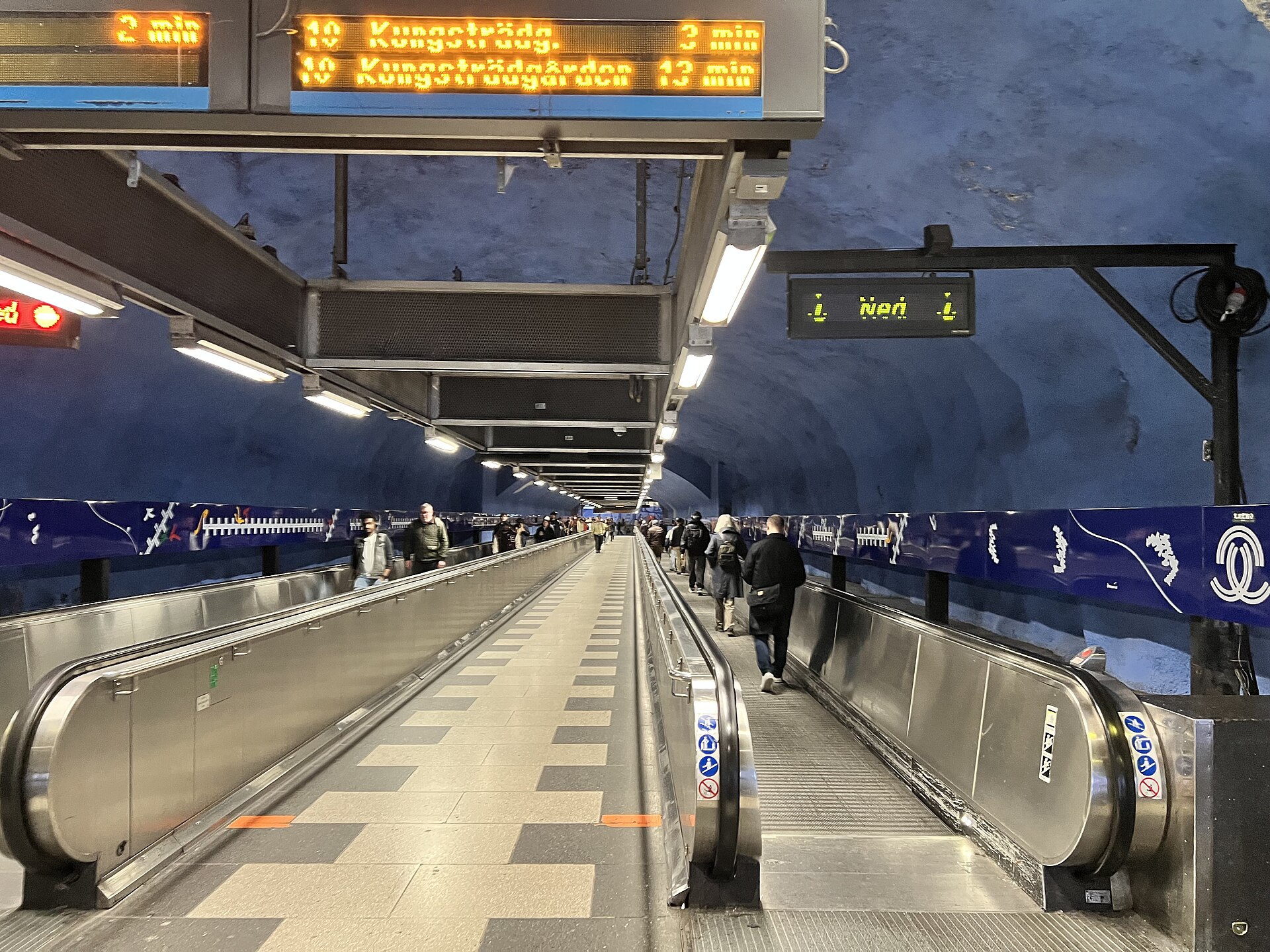
- T-Centralen, the central metro station, especially on the escalators and the long walkway to the blue line, and in the crush at the ticket barriers.
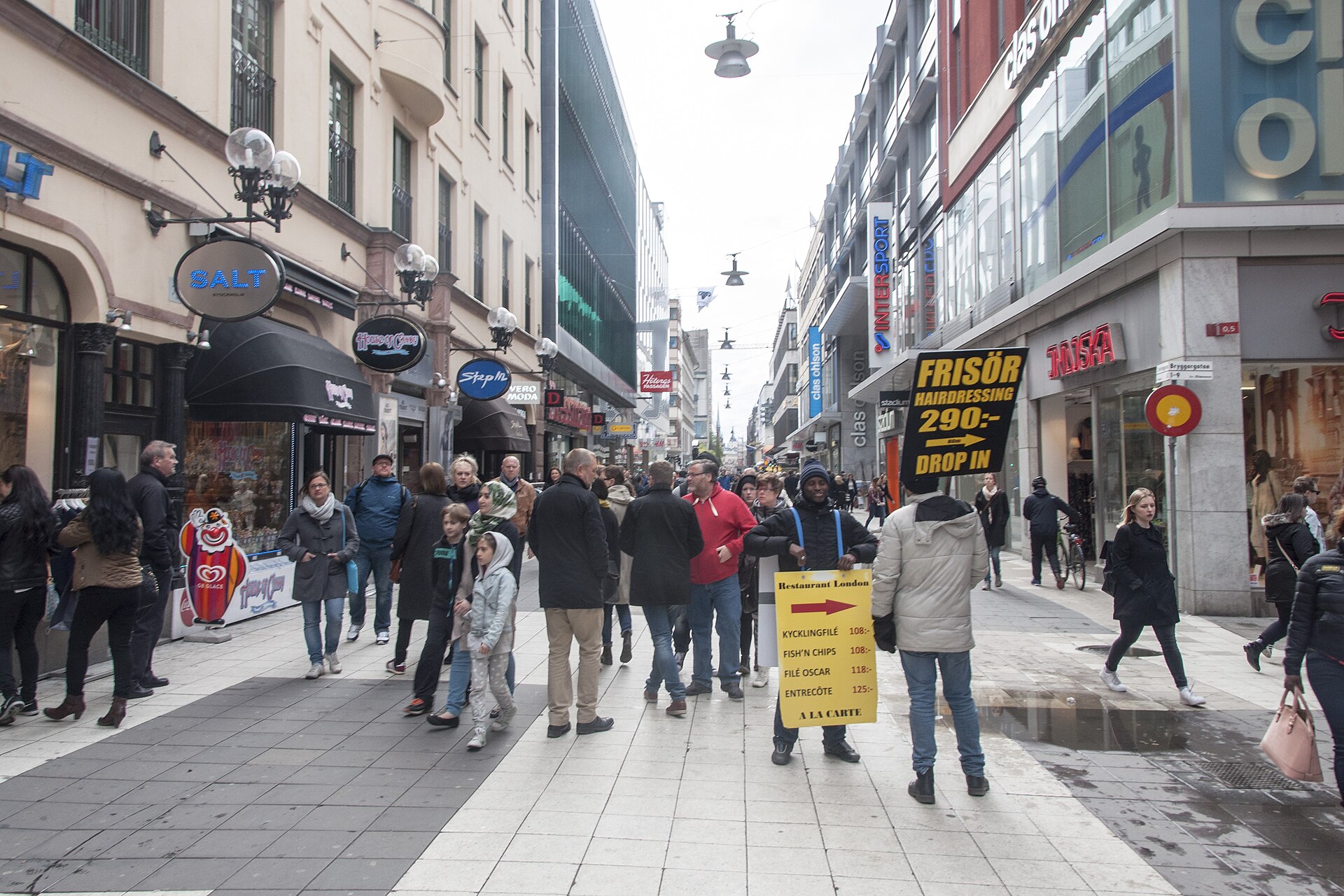
- Sergels torg and the Drottninggatan shopping street, particularly around the big chain stores on busy weekend afternoons.
- Gamla Stan, on Stortorget and Västerlånggatan in high summer and during the Christmas market.
- The food halls, where people put their phones down to pay or photograph a plate.
- Summer festivals and events, such as Pride, the Culture Festival and big concerts.
- The Arlanda Express and the airport coaches, where bags sit on luggage racks away from their owners.
The distraction tricks
- The clipboard petition. Someone, often a young woman, approaches with a clipboard asking for a signature for a charity for the deaf or a similar cause. While you read and sign, a partner works your bag or pocket, or the clipboard itself covers a hand reaching for your phone on a café table. Real Swedish charities do fundraise on the street, but they wear branded jackets and ask for monthly direct debits, not signatures and cash.
- The shell game. A crowd around a man moving three cups or boxes on a cardboard stand, with players apparently winning. The “winners” are part of the act. The game is rigged, and the crowd around it is where the pickpockets are. Walk past.
- The helpful stranger at the ticket machine. Someone offers to help you buy a metro ticket and watches your PIN, or “helps” with a card that never comes back. SL’s own staff are in uniform at the gates. Ask them, or tap your contactless card straight on the reader, which is all you need anyway. Our SL card guide explains how.
- The phone on the table. A newspaper, map or menu is laid over a phone on an outdoor café table, and picked up along with it. Keep the phone in a pocket, not on the table.
- The bag on the chair back. A classic in restaurants and cafés. Put the strap round a chair leg or keep the bag on your lap.
Habits that make you a poor target
- Front pockets for phones and wallets, and a zipped bag worn in front of you on the metro.
- One card in your wallet and another kept separately, so a stolen wallet isn’t the end of the trip.
- No passport in your day bag. A photo on your phone and the original in the hotel safe is plenty.
- Say no and keep walking. Anyone who needs something from you in the street will usually ask a second time. Nobody genuine will follow you.
The fake police officer
This one is rarer, but worth knowing. A person, sometimes after a “tourist” has asked you for directions, shows a badge and asks to check your wallet for counterfeit notes or to see your cards and PIN. Swedish police do not do this. They will never ask for your PIN, never inspect your cash on the street and never ask you to hand over bank cards. If it happens, say you will go to the nearest police station with them, and call 112 if they persist.
The legal one: dynamic currency conversion
Technically this is not a scam, because it is legal and disclosed on the screen. In practice it is the most expensive trick in this guide. When you pay by card or take cash from an ATM, the machine may offer to charge you in your home currency: “Pay in USD?” or “Charge in GBP?” It looks helpful. It is not. The conversion rate the machine uses is typically several percent worse than your own bank’s.
Always choose to pay in SEK (kronor). On a week of card payments, that one habit saves more than any other in this guide. The same applies to independent ATMs, the colourful ones in the tourist areas that aren’t run by a Swedish bank. They tend to add their own fees on top of DCC. Swedish bank ATMs, branded Bankomat, are the safer bet. Better still, you barely need cash at all. Our Stockholm currency guide explains why.
Accommodation and rental scams
Stockholm has a severe housing shortage. Decades of rent control and waiting lists mean a first-hand rental contract can take years to get. That pushes a lot of short-term renting into private listings on classified sites and social media, and that is where the fraudsters operate. The pattern is always similar:
- A central flat, beautifully photographed, at a price just a little too good.
- A landlord who is “abroad at the moment” and cannot show it.
- A request for a deposit or the first month’s rent by bank transfer, money-transfer service or crypto, “to secure it” before you have seen it.
- Photos lifted from real listings elsewhere.
The rule for visitors is simple: book short stays through an established platform and never pay outside it. If a host asks you to move the conversation or the payment off the platform, report them and leave. For longer stays, meet the landlord, see the flat and check the contract before any money moves. Our Stockholm apartment rentals guide covers the legitimate options.
Online and phone scams
Sweden’s digital economy is a target for the same text-message and QR-code fraud as everywhere else. As a visitor you will mainly see three kinds.
- Parcel texts: an SMS claiming a delivery is waiting and asking for a small “customs fee” through a link. You are not expecting a Swedish parcel. Delete it.
- QR codes on parking machines and posters: a sticker placed over the real code leads to a fake payment page. Pay for parking through the official parking apps named on the machine, or the machine itself. Don’t scan a sticker.
- Fake tickets: for sold-out concerts, football derbies and Gröna Lund’s summer shows, resale offers on social media are a common trap. Buy from the venue’s or the official ticket seller’s own site, or its official resale service.
Things that are not scams
Some things confuse visitors but are entirely above board.
- The tip prompt on the card machine. It is standard software, not a trick, and pressing 0% is normal. Our guide to tipping in Stockholm explains the local habit.
- Cloakroom fees at clubs and bars. They are fixed, posted and usually compulsory in winter.
- Ticket inspectors on the metro and buses. They are real, they wear SL uniforms and carry ID, and the fine for travelling without a valid ticket is real too.
- Toilet charges. Some public toilets charge a fee, payable by card or app.
- People asking for money outside supermarkets. They are not running a scam. Giving or not giving is entirely your choice.
- High prices. A SEK 180 cocktail or a SEK 70 coffee in Östermalm is expensive, but it is not a rip-off. It is Stockholm.
Restaurants: poor value, not fraud
Stockholm’s restaurants are honest to a fault. Prices on the menu include VAT and service, bills are itemised and there is no cover charge. Tap water is free, and you can ask for kranvatten without anyone raising an eyebrow. What does exist is the tourist-menu restaurant in the busiest parts of Gamla Stan, serving mediocre meatballs at inflated prices beside a laminated menu in six languages. That is a disappointment, not a scam. Walk two streets further for better food at a better price. Our guide to the best Swedish meatballs in Stockholm names the places that do them properly.
Quick reference
| Scam | Where | How to avoid it |
|---|---|---|
| High-priced taxi | Ranks, Arlanda, late at night | Read the yellow sticker. Use the official Arlanda rank or an app. |
| Illegal taxi | Stureplan at closing time | No yellow T plate, roof sign or sticker means it is not a taxi. |
| Pickpockets | T-Centralen, Sergels torg, Drottninggatan, Gamla Stan | Front pockets, zipped bag, phone off the table. |
| Clipboard petition | Central shopping streets | Don’t stop. Keep walking. |
| Shell game | Gamla Stan, Drottninggatan | Don’t watch. Don’t play. |
| Fake police | Anywhere central | Real police never ask for your PIN or cash. |
| Dynamic currency conversion | Card machines and ATMs | Always choose SEK. |
| Fake rental listing | Classified sites, social media | Never pay outside a booking platform. |
| QR and SMS fraud | Parking machines, your phone | Official apps only. Delete parcel texts. |
| Fake tickets | Social-media resale | Official sellers only. |
If something goes wrong
- Emergency, including a crime in progress, violence, a medical emergency or fire: call 112.
- Non-urgent police, such as reporting a theft after the fact: call 114 14, or report online through the Swedish Police website. Your insurer will want the report reference.
- Stolen card: block it at once through your bank’s app or its emergency number. Contactless fraud starts within minutes.
- Stolen passport: report it to the police, then contact your embassy in Stockholm for an emergency travel document.
- Taxi overcharge: ask for a receipt (the driver is required to give one), note the car’s registration, and complain to the taxi company. Paying by card leaves a record.
The safest neighbourhoods guide covers where to stay if you want the quietest possible base, and our Stockholm travel tips collects the rest of the practical advice.
The honest bottom line
Most visitors to Stockholm experience no scams at all. If you read the taxi sticker, keep your phone in your pocket in the centre, press SEK at every card machine and keep your bookings on the platform, you have covered nearly everything the city’s opportunists can try. The rest of the time you can relax. Swedes are reserved, not predatory. The stranger who doesn’t smile back on the metro is not about to rob you; they just don’t know you yet.
Frequently asked questions
What are the most common scams in Stockholm?
Overpriced taxis, distraction pickpocketing in the crowded centre (clipboard petitions and shell games), dynamic currency conversion at card machines and ATMs, and fake rental listings online. Violent or elaborate tourist scams are rare.
How do I avoid taxi scams in Stockholm?
Read the yellow price sticker in the rear side window before you get in and compare the large comparison price with the cars around it. At Arlanda, use the rank outside the terminal, where a rank officer calls a contracted car. Never accept a ride offered inside the arrivals hall. At night, book through an app.
Where are pickpockets in Stockholm?
Mostly in the busiest places: T-Centralen metro station, Sergels torg, Drottninggatan, Stortorget and Västerlånggatan in Gamla Stan, the food halls, summer festivals, and the airport trains and coaches.
Is the shell game in Gamla Stan a scam?
Yes. The game is rigged, the apparent winners are part of the act, and the crowd it draws is a cover for pickpockets. Don’t watch and don’t play.
Should I pay in my home currency or kronor in Sweden?
Always in kronor (SEK). When a card machine or ATM offers your home currency, that is dynamic currency conversion, which typically uses a rate several percent worse than your own bank’s.
How can I tell a licensed taxi in Stockholm?
A licensed taxi has a yellow registration plate ending in the letter T, a roof sign and a yellow price sticker in the rear side window. A car without them is an illegal taxi.
How do I report a crime in Stockholm as a tourist?
Call 112 in an emergency. For non-urgent crimes such as theft, call the police on 114 14 or report online through the Swedish Police website, and keep the reference for your insurer.
Are apartment rental scams common in Stockholm?
Yes, because housing is scarce and demand is high. Never pay a deposit by bank transfer, money-transfer service or crypto for a flat you have not seen, and never move a booking or payment off an established platform.
More Stockholm guides
- Is Stockholm Safe? — the full safety picture, neighbourhood by neighbourhood.
- Uber and Taxis in Stockholm — regulated operators and fair fares.
- Arlanda to Stockholm — every way into the city from the airport.
- Stockholm Currency and Payment — cards, ATMs and paying in kronor.
- Stockholm Metro Guide — getting around the busiest stations.
- Stockholm Apartment Rentals — booking a flat safely.
- Stockholm Travel Tips — the rest of the practical advice.
- Stockholm Nightlife — getting home safely after a night out.
Photo credits
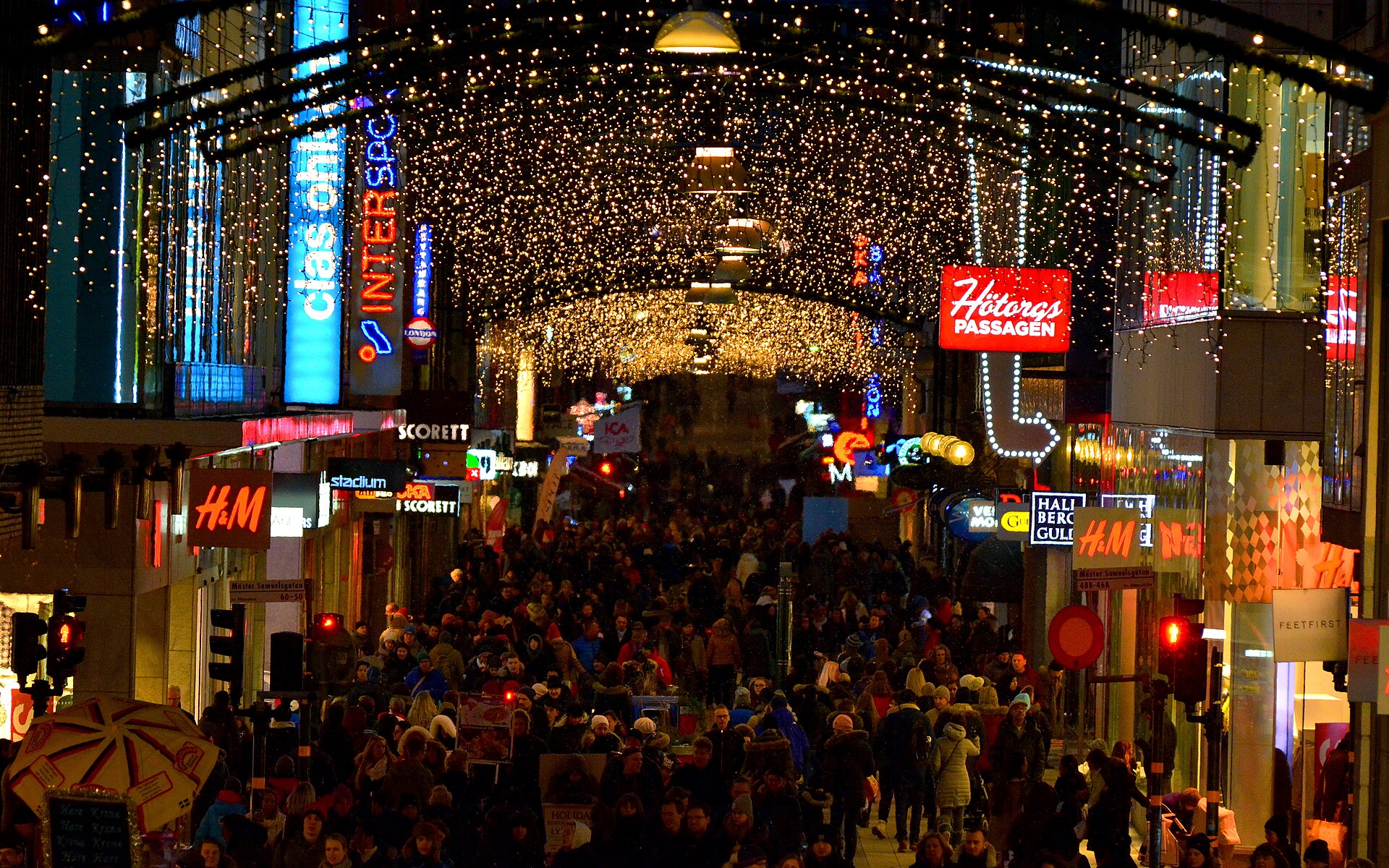
Drottninggatan at Christmas (featured image): Drottninggatan, Christmas lights by Esquilo, CC BY-SA 3.0, via Wikimedia Commons.
Taxi rank at Arlanda: Arlanda Airport – Stockholm, Sweden (4617050400) by Mic from Reading – Berkshire, United Kingdom, CC BY 2.0, via Wikimedia Commons.
Sergels torg: 00 5329 Stockholm – Sergels torg (T-centralen) by W. Bulach, CC BY-SA 4.0, via Wikimedia Commons.
T-Centralen passage: Inter-platform passage at T-Centralen by HartOve, CC BY-SA 4.0, via Wikimedia Commons.
Drottninggatan crowds: Drottninggatan, Stockholm 2015 -2 by I99pema, CC BY-SA 4.0, via Wikimedia Commons.