Best Museums in Stockholm: 20 Must-See Attractions
The complete guide to Stockholm's museums — Vasa, Skansen, ABBA, Fotografiska, Nationalmuseum, Moderna and more — with picks, prices, timings and practical tips.
The classic mistake with the museums in Stockholm is trying to cram five into one day: by dinner, they have blurred together. The Stockholm museums worth your time reward slowing down, not sprinting. The city has dozens of them, spanning a 17th-century warship raised whole from the seabed, ABBA’s complete archive, an open-air village of rural Swedish life, a national art palace, and a waterfront photography gallery. Plan two or three a day, no more.
This guide is for anyone with three to five days who wants to know which museums actually earn a visit, how to sequence them without burning out, roughly what each one costs, and how to dodge the two mistakes I see travelers make over and over: cramming too many into a day, and skipping the specialty collections that quietly beat the famous ones. I’ll point you to fuller deep-dive guides for the big names as we go — treat this as the map, and those as the close-ups.
TL;DR — the Stockholm museums to know first
If you have three or four days and just want the short list, here are the ones I’d send a friend to, in rough priority order:
- Vasa Museum — a 17th-century warship raised whole from the harbor. The single most impressive museum object in Scandinavia. Allow about 2 hours.
- Skansen — the world’s first open-air museum (1891). 190 museum buildings, traditional crafts, and a zoo of Nordic wildlife. Half a day.
- ABBA The Museum — far better than the concept suggests. Interactive, archival, and a genuine treat for music fans. Plan on about 90 minutes.
- Fotografiska — contemporary photography in a converted customs building. Open till 23:00, so it doubles as a late-evening plan. Give it an hour and a half or so, longer with a meal.
- Nationalmuseum — Sweden’s national collection of art and design, with painting and sculpture from the late Middle Ages to the early 20th century. Reopened 2018 after renovation. Two hours is a good allowance.
- Moderna Museet — modern and contemporary art, including a landmark Picasso collection. Allow a couple of hours.
- Nordiska Museet — the cultural history of Sweden in an enormous castle-like building. Set aside 1.5–2 hours.
- Royal Palace — five separate museums in one building, including the Treasury and the Royal Apartments. Budget around 2 hours.
- Nobel Prize Museum — small, sharply designed, an easy Gamla Stan pop-in between other stops.
Most sit on Djurgården island or around Gamla Stan and Norrmalm. The density is the whole trick: if three serious museums are adjacent, you can knock them out before lunch.
Why Stockholm’s museums are unusually good
Two things set this city apart from most European capitals its size. First, the collections are specific. The Vasa is an exceptionally complete 17th-century warship, with over 98% of her original structure surviving. Skansen is the original open-air museum, invented right here. ABBA’s archive is complete because the band chose to keep it in one place. Fotografiska keeps a changing programme of around 15 photography exhibitions a year. These aren’t just good museums; in their own categories they’re often the best anywhere.
Second, the curation is calm. Swedish museum design leans on restraint, good lighting, long reading benches, and galleries that never feel like a scrum. Even the Vasa, which lands on every first-timer’s list, doesn’t overwhelm you the way the Louvre does. You can sit down. You can stand close to the objects. You can take your time. Honestly, the experience beats the equivalent in Paris, Rome, or London.
For the wider picture of how the city fits together, our Things to Do in Stockholm guide and our Stockholm Itinerary playbook show how to build days around these stops. If cost is your first question, our rundown of free museums in Stockholm and our Stockholm Pass vs Go City comparison do the maths for you.
How much do Stockholm museums cost?
Individual tickets usually run around SEK 120–220 (€11–19), though prices drift, so confirm the current rate before you go. A few museums are free entry, and most of the big paid ones let children in free, while Vasa, Skansen, ABBA and Fotografiska charge adults the full ticket price.
Free museums: Historiska Museet, Naturhistoriska Riksmuseet, Armémuseum, and several smaller institutions. Just show up. Nationalmuseum is free for visitors under 20 and for everyone on Thursdays 17:00–20:00, and Moderna Museet is free for those 18 and under and on Fridays 18:00–20:00. If you want the full list, see our guide to free museums in Stockholm.
Paid museums (adult prices — always check the current figure): Vasa SEK 195 in January–April and October–December and SEK 240 in May–September, Skansen SEK 325 at present (the price varies by season and is lowest online; children 0–15 free), ABBA SEK 269–349 depending on the date and time, Fotografiska around SEK 195, the Royal Palace SEK 220 in October–April and SEK 240 in May–September, and the Nobel Prize Museum SEK 160.
Two passes can cut costs sharply if you’re doing a lot:
Go City Stockholm All-Inclusive Pass — covers a long list of attractions, including Vasa, Skansen, Fotografiska, and the Royal Palace; the line-up changes, so check the current list on Go City’s site before you buy. Prices start around SEK 719 for 1 day, SEK 999 for 2 days, SEK 1,299 for 3 days, and SEK 1,499 for 5 days. It pays off if you’re hitting two or more paid museums a day.
Stockholm Museum Card — a municipal card covering most city museums for around SEK 495 a year (a full year, not a set number of days). Superb value if you live here; usually overkill for a short trip.
If your plan is a handful of free museums plus one or two paid ones, individual tickets almost always beat the pass. We break the numbers down further in Stockholm Pass vs Go City.
Vasa Museum — the one everyone should visit
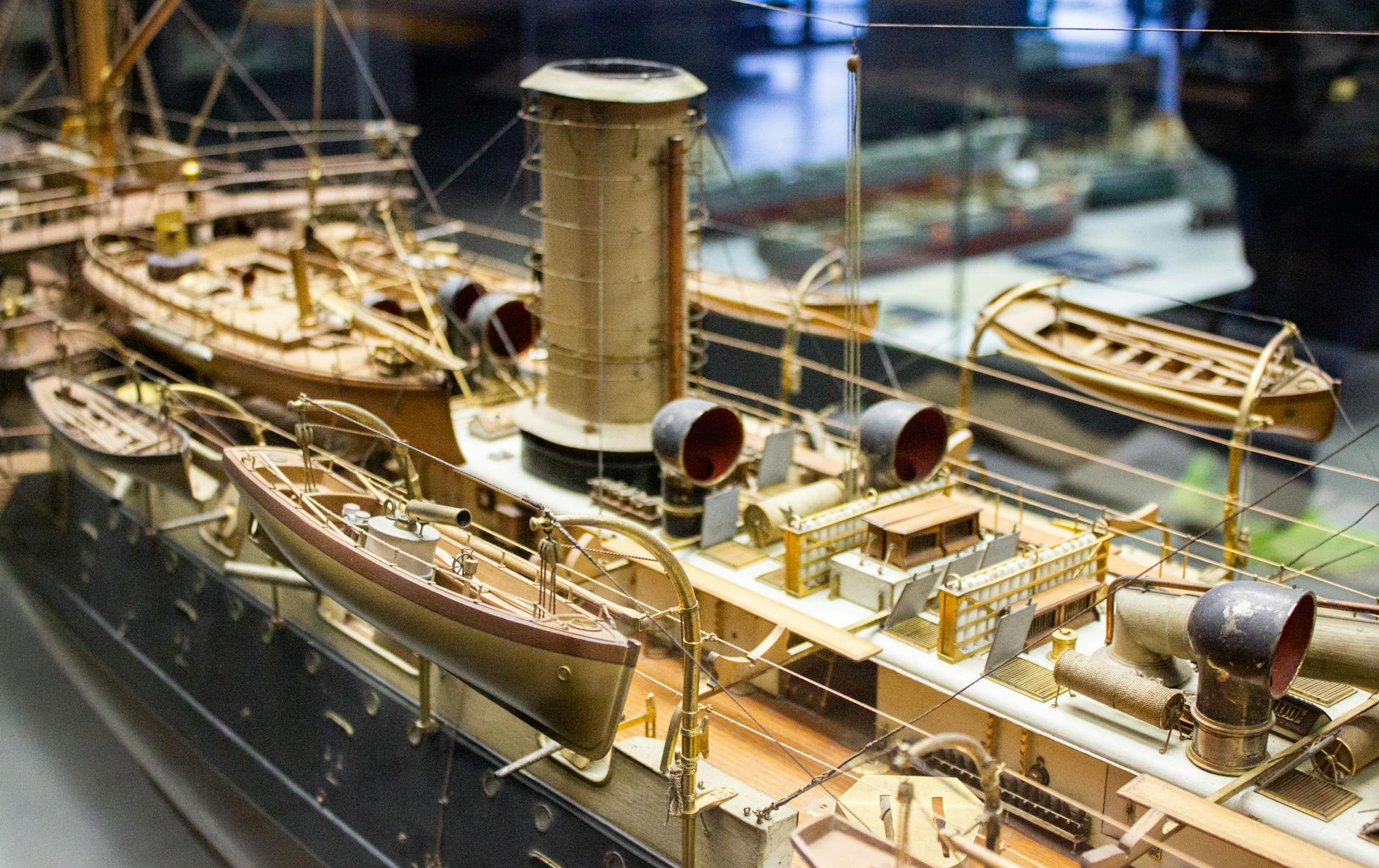
The Vasa is a 17th-century Swedish warship that sank on her maiden voyage in 1628, barely 1,300 metres from the harbor she launched from. She lay on the seabed in remarkable condition for 333 years, saved by Stockholm’s brackish water from the ship-eating worms that would have destroyed her in the open ocean. In 1961 she was raised with 98% of her original timbers intact, and the Vasa Museum — built specifically to house her — opened in 1990.
It’s the most impressive museum object in Northern Europe and, to my mind, the most remarkable single museum visit anywhere in Scandinavia. You step into a purpose-built, cathedral-like hall and a nearly complete 69-metre warship towers over you; her mainmast once rose more than 50 metres above the keel. The carvings that cover her were originally brightly painted and partly gilded. Six galleries circle the ship at different heights, so you see the stern sculpture, the gun decks, and the construction from the waterline up.
The secondary exhibits are just as good — 17th-century warfare, the daily lives of the crew (whose skeletons came up with the ship), the painstaking conservation process, and the accident itself. Our full Vasa Museum Stockholm guide covers timed tickets and the quietest hours in more detail.
Practical: Open daily 10:00–17:00 from September to May (Wednesdays until 20:00) and 08:30–18:00 from June to August; closed 24 and 25 December. Free audio guide in 19 languages. Price: SEK 195 adult in January–April and October–December, SEK 240 in May–September; 18 and under free. Time needed: 90 minutes to 2 hours. Book ahead in summer; a winter walk-in is fine. Location: Djurgården, via tram 7, or take ferry line 80 from Nybroplan to Allmänna gränd, about 8 minutes’ walk away. Confirm current hours and prices before you go.
Skansen — the world’s first open-air museum
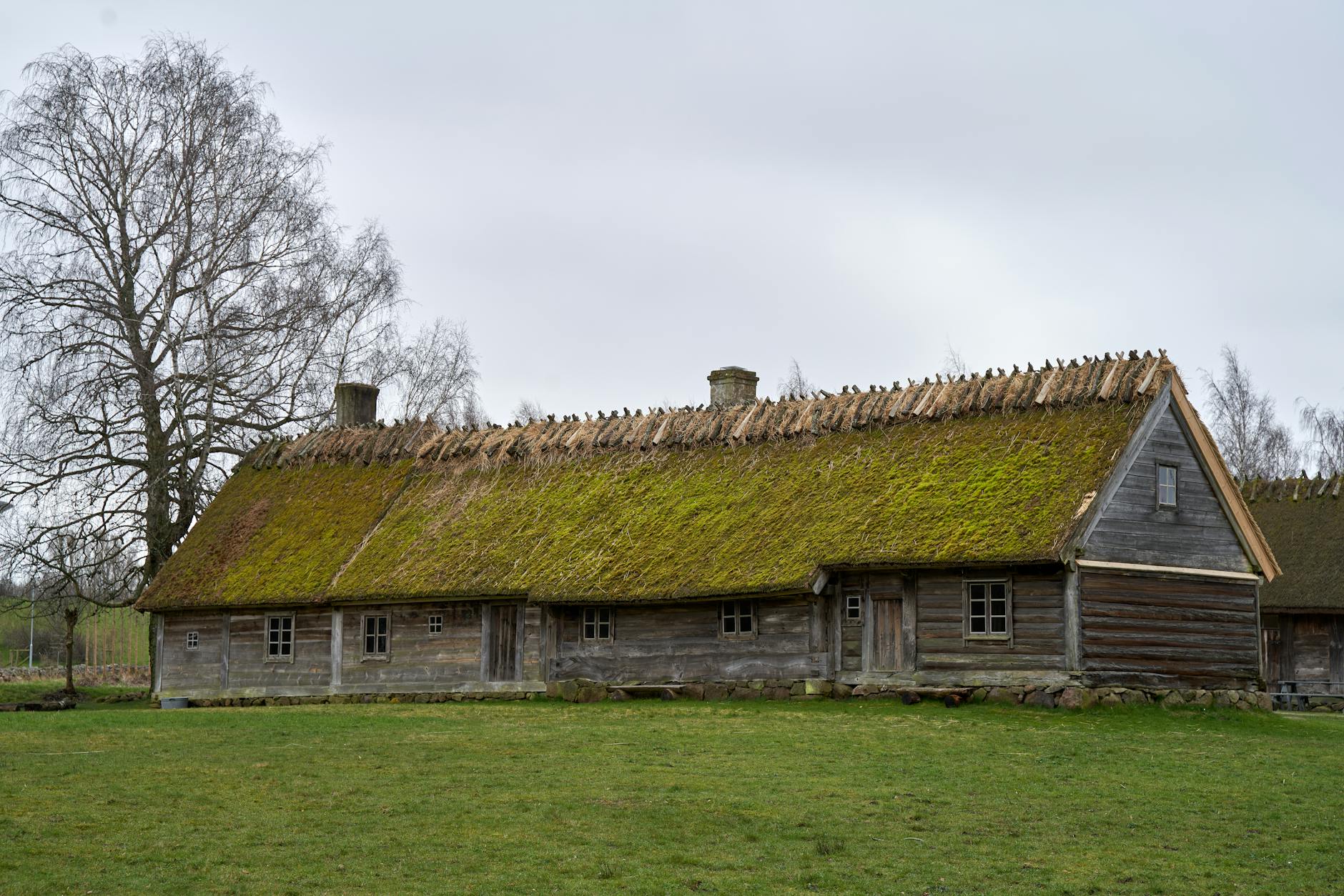
Skansen opened in 1891 as the world’s first open-air museum — a refuge for the rural Swedish buildings, trades, animals, and traditions that urbanization was wiping out. Around 150 historic buildings were taken apart across the country and rebuilt on this 75-acre site atop the Djurgården hilltop: a glass-blowing workshop, a bakery, a printing press, a farmstead, a church, a manor house, all staffed by craftspeople and interpreters in period dress.
There’s also a small but well-run zoo focused on Nordic animals — brown bears, moose, wolves, lynx, wolverines, reindeer, seals. The bears live in a proper enclosure, not a concrete pit.
What matters most is that Skansen is a living museum, not a diorama. Summer brings folk dancing on Tuesdays, traditional markets, Midsummer celebrations (the best place in Stockholm to experience Midsummer, full stop), and a famous Christmas market from late November into December. Travelling with kids? This is the single most important museum stop in the city, and it’s a fine adult visit too if Swedish rural history interests you. Our Skansen Open-Air Museum guide has a full seasonal calendar.
Practical: Open year-round, hours vary by season: in winter generally 10:00–15:00 on weekdays and 10:00–16:00 at weekends, and from 31 May to 29 August 2027 10:00–18:00, with longer hours for some events. Price: SEK 325 adult at present; the price varies by season and is lowest online, a little higher at the gate. Children 0–15 free. Time needed: plan on 3–5 hours, or make a full day of it with kids. Location: top of Djurgården, reachable by tram 7 or on foot from the Vasa Museum. Check current opening times before you set out.
ABBA The Museum
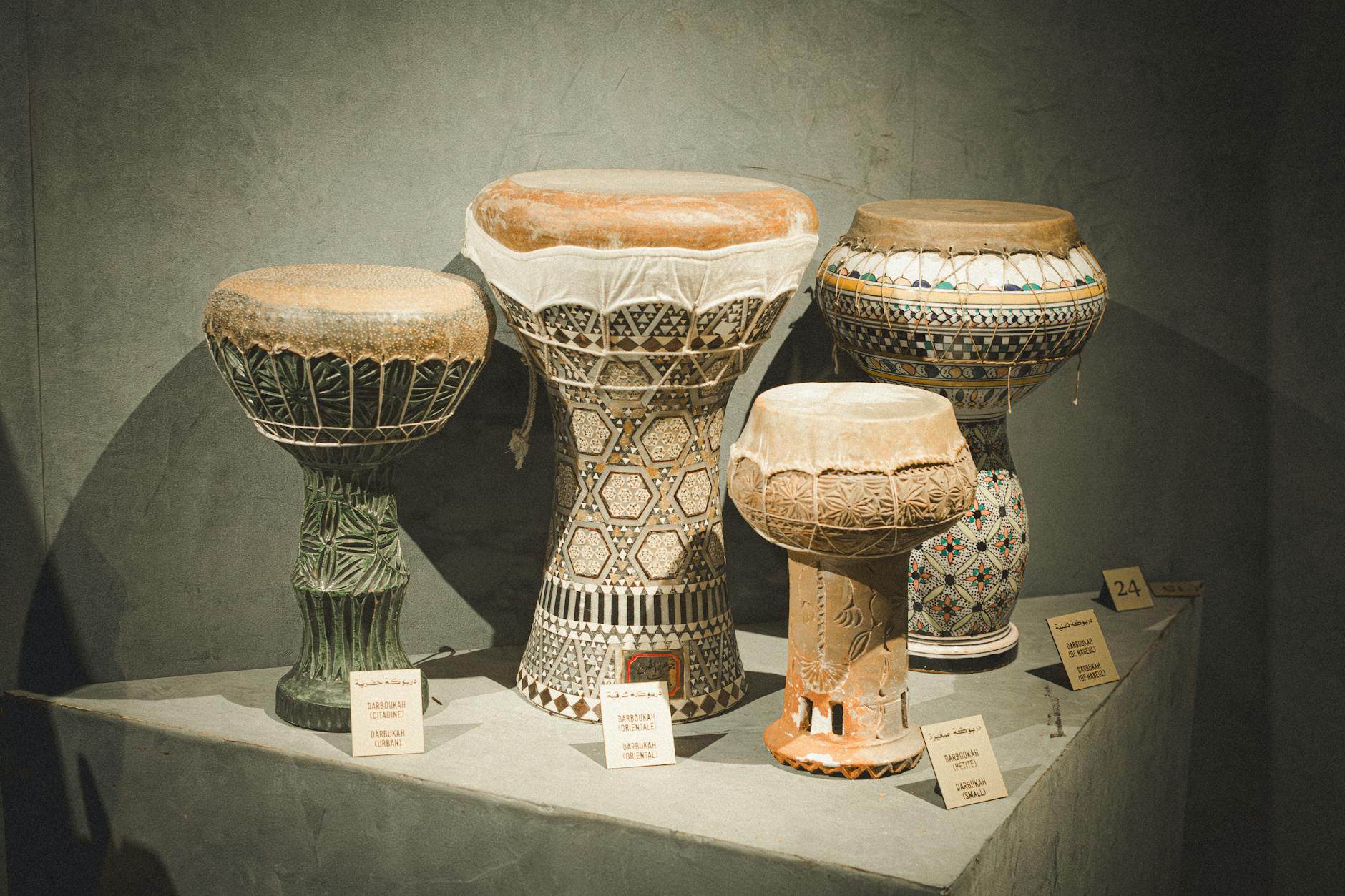
Whatever you think of the concept, the ABBA museum earns its place among Stockholm’s ten best. Opened in 2013, it pairs a full archive of the band’s career — costumes, gold records, studio gear, handwritten lyric sheets — with a genuinely inventive interactive design. You can sing along, appear as a fifth member via hologram on the performance stage, and walk through a faithful reconstruction of their Polar Studios recording booth.
The curation is warm without being worshipful. It takes on the breakup, the Eurovision moment, and the years of cultural dismissal before the critical rehabilitation. And the music is everywhere, which sounds cloying and somehow isn’t. Even sceptics tend to walk out grinning. For a deeper look at booking and what to skip, see our ABBA Museum Stockholm guide.
Practical: Open daily 10:00–18:00 from 1 September to 23 December 2026; check the museum’s calendar for other seasons and holidays. Price: SEK 269–349 adult in 2026, depending on the date and time — buy online to skip a possible queue. Time needed: allow about 90 minutes. Location: Djurgården, within walking distance of the Vasa Museum. Confirm current hours and prices.
Fotografiska — the contemporary photography powerhouse
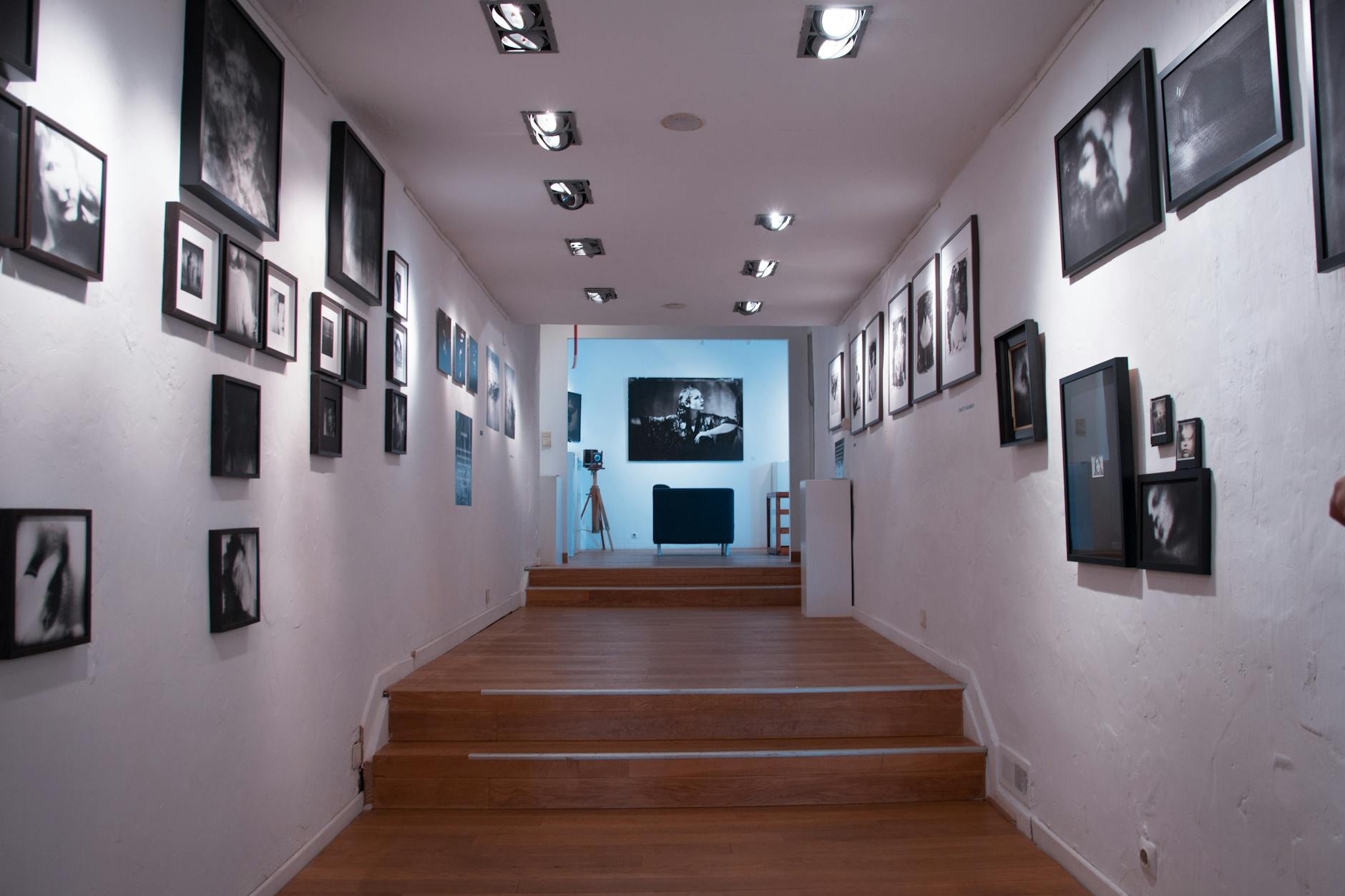
Fotografiska opened in 2010 inside a converted Art Nouveau customs building on the Södermalm waterfront. Around 15 exhibitions open there every year, featuring established photographers alongside emerging image makers.
Past shows have featured Annie Leibovitz, Irving Penn, Sebastião Salgado, Nick Brandt, Sally Mann, Platon, Tim Walker, and plenty of younger photographers Fotografiska has made famous simply by exhibiting them. The consistency is the remarkable part.
The setting seals it. The building faces the harbor, the top-floor restaurant has waterfront views, and the museum stays open until 23:00. A Fotografiska visit followed by dinner upstairs is one of the best evenings you can have in Stockholm. Our Fotografiska Stockholm guide covers the current shows and the restaurant.
Practical: Open daily 10:00–23:00. Price: around SEK 195 adult. Time needed: plan on 1.5–2 hours, plus time for a meal. Location: Stadsgårdshamnen 22 on Södermalm, an 800-metre walk along the water from Slussen. Check current hours before visiting.
Nationalmuseum — Sweden’s national art gallery
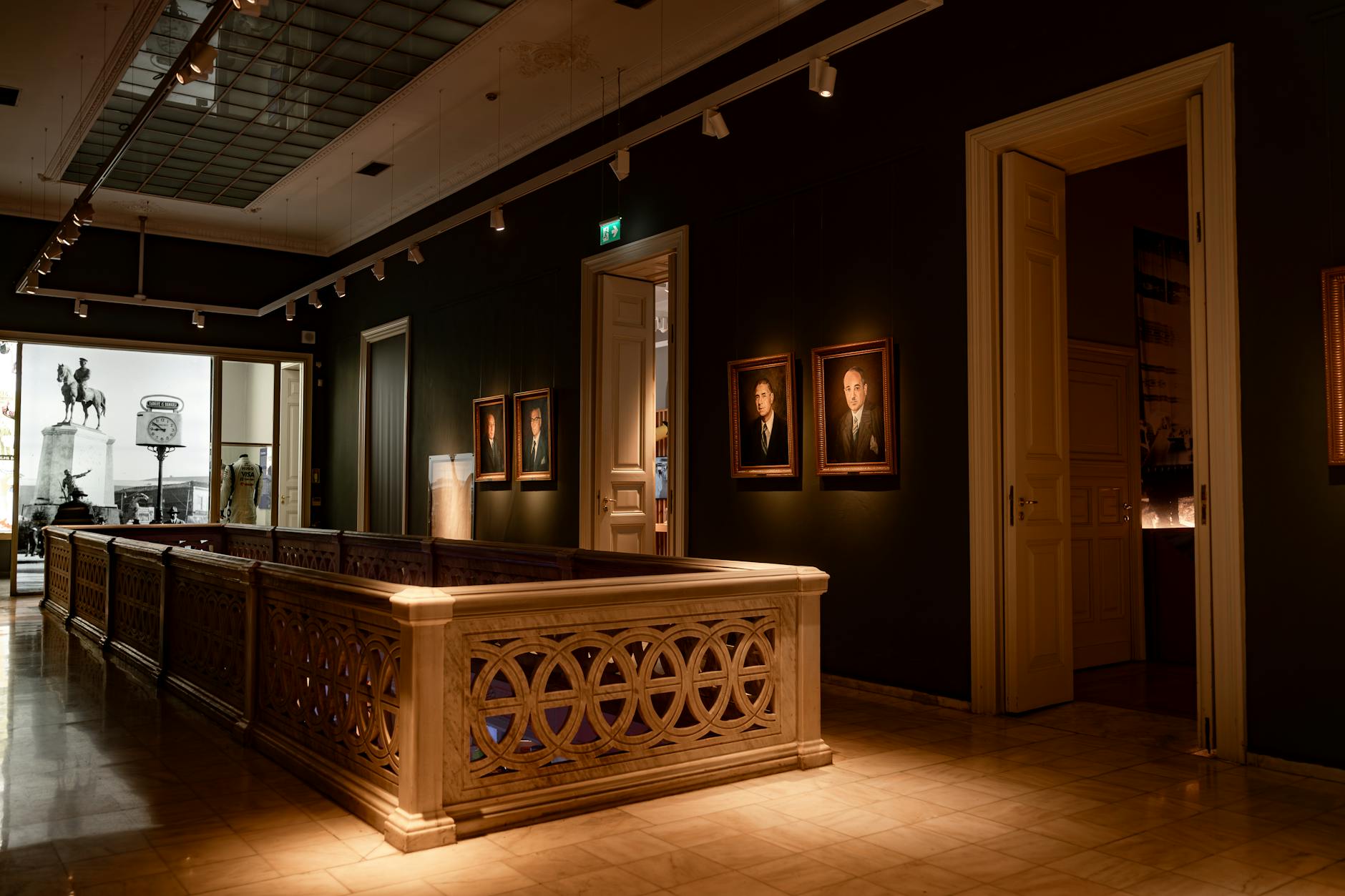
Sweden’s national collection of art and design runs to more than 700,000 objects: painting and sculpture from the late Middle Ages to the early 20th century, and applied arts and design from the 14th century to today. It is housed in a purpose-built museum on Blasieholmen, right across the water from the Royal Palace, designed by Friedrich August Stüler and inspired by northern Italian Renaissance architecture. It reopened in 2018 after a renovation that restored its windows and brought back a colour scheme inspired by the 1860s.
The strengths are deep: 18th-century Swedish portraiture (Alexander Roslin, Carl Gustaf Pilo), a serious Dutch and Flemish holding (Rembrandt’s Conspiracy of the Batavians is the centrepiece), 19th-century Swedish and Nordic painting (Anders Zorn, Carl Larsson, Ernst Josephson), and an excellent design department covering 20th-century Scandinavian furniture and applied arts.
The Dining Room on the ground floor is one of the best museum restaurants in Scandinavia, and a fine lunch stop even if you skip the galleries. For a room-by-room plan, see our Nationalmuseum Stockholm guide.
Practical: Open Tuesday–Sunday 11:00–17:00 (Thursday until 20:00); closed Monday. Price: SEK 160 adult; under-20s free, and free for everyone on Thursdays 17:00–20:00. Time needed: give it 2 hours, or 3+ if you love fine art. Location: Blasieholmen, close to Kungsträdgården metro (blue line).
Moderna Museet — 20th-century and contemporary art
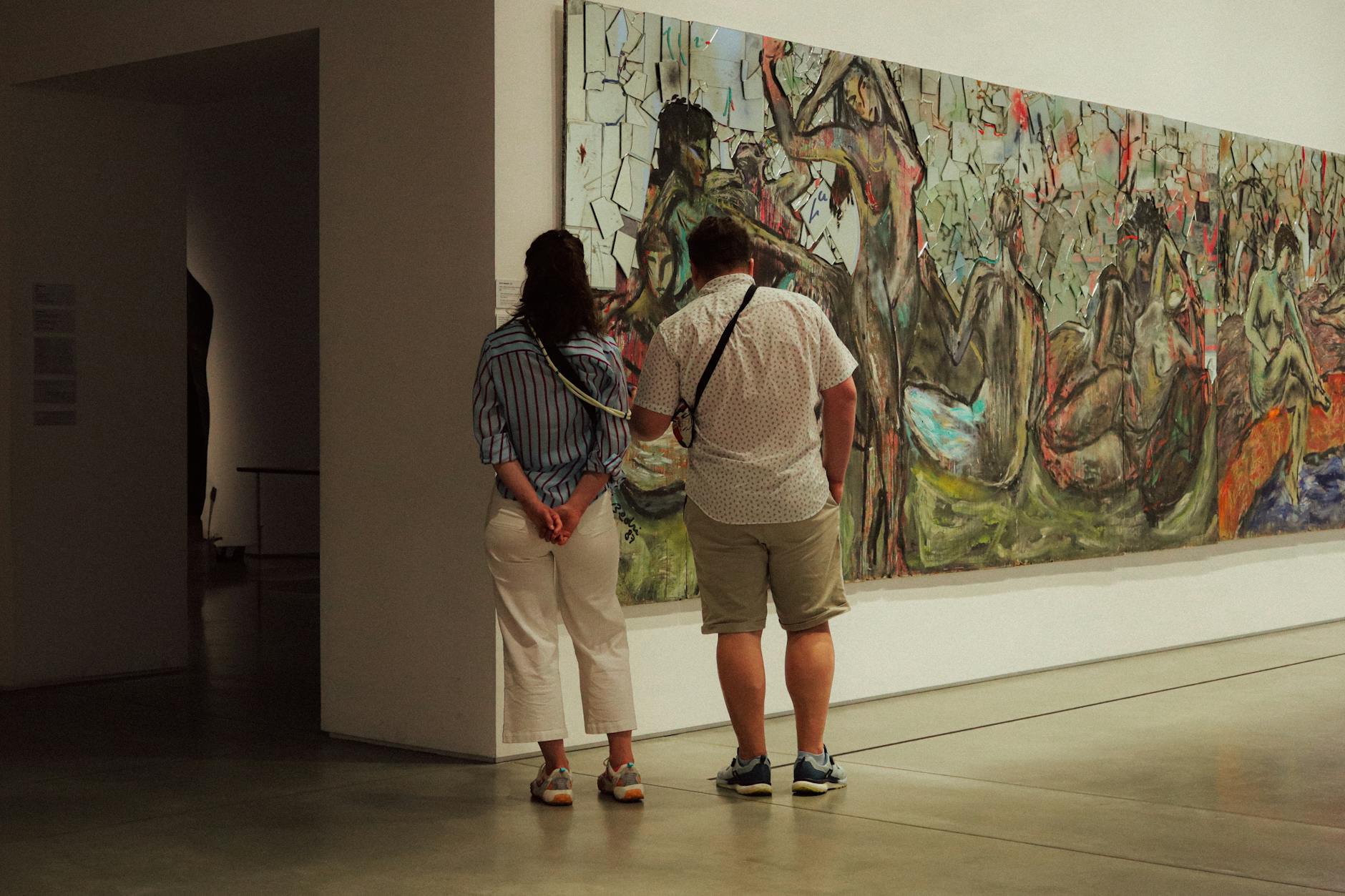
Moderna Museet on Skeppsholmen is Sweden’s national museum of modern and contemporary art, holding one of the best collections of 20th-century European and American work north of Berlin. Its collection includes works by Picasso, Dalí and Rauschenberg, alongside a strong Scandinavian contemporary section, though individual pieces are sometimes out on loan.
The museum opened in 1958; its present building, designed by Rafael Moneo, was inaugurated in 1998. The Skeppsholmen setting — crushed-granite paths, sculptures in the garden, views of Gamla Stan and the Djurgården skyline — matches any museum campus in Europe. Our Moderna Museet Stockholm guide maps the highlights.
Practical: Open Tuesday–Sunday 10:00–18:00 (Tuesday and Friday until 20:00); closed Monday, with exceptions on public holidays. Price: SEK 170 adult at the museum, SEK 160 online; 18 and under free, and entry is free for everyone on Fridays 18:00–20:00 outside the summer break. Time needed: about 2 hours is a fair allowance. Location: Skeppsholmen island. The separate ArkDes (Swedish Museum of Architecture and Design) sits next door.
Nordiska Museet — the cultural history of Sweden
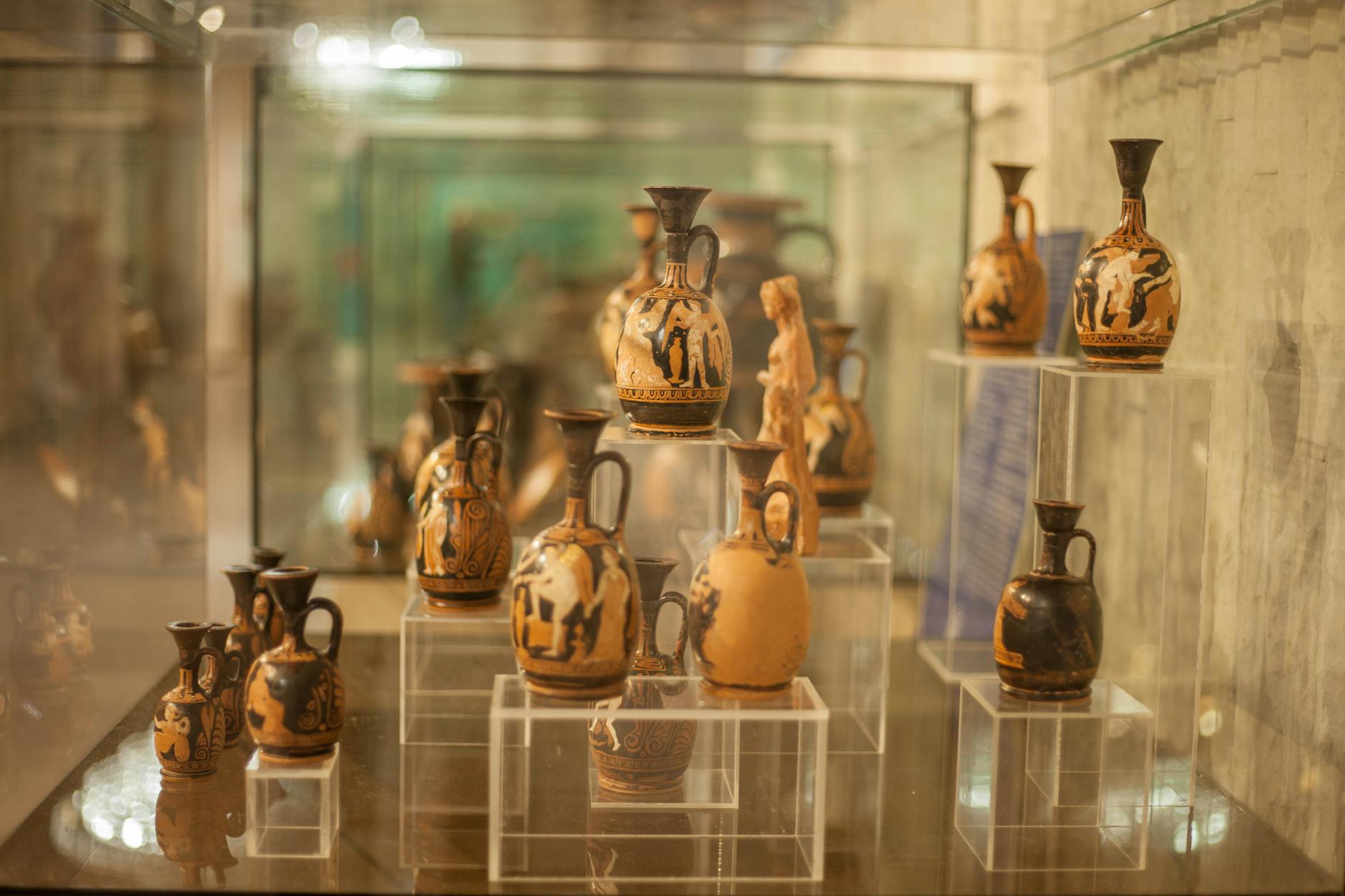
Artur Hazelius — the same man behind Skansen — founded Nordiska Museet in 1873 to document the culture of the Nordic region. The building, opened in 1907, looks like a Danish Renaissance palace set down on Djurgården. Inside is Nordic cultural history from the 16th century to the present: costumes, furniture, tools, textiles, table settings, toys, Sami objects, and a central hall dominated by that statue of Gustav Vasa.
Think of it as the quiet counterpart to Skansen — the same idea, indoors, more scholarly, far less theme-park. If cultural-history museums are your thing (this is Stockholm’s answer to the Victoria & Albert), it’s the best in the country.
Practical: Open daily 10:00–17:00, and Wednesdays until 20:00 from September to May; holiday hours differ, so check before you go. Price: SEK 170 adult; children’s tickets SEK 0–75. Time needed: set aside 1.5–2 hours. Location: Djurgårdsvägen, close to both the Vasa Museum and ABBA.
Royal Palace — five museums in one
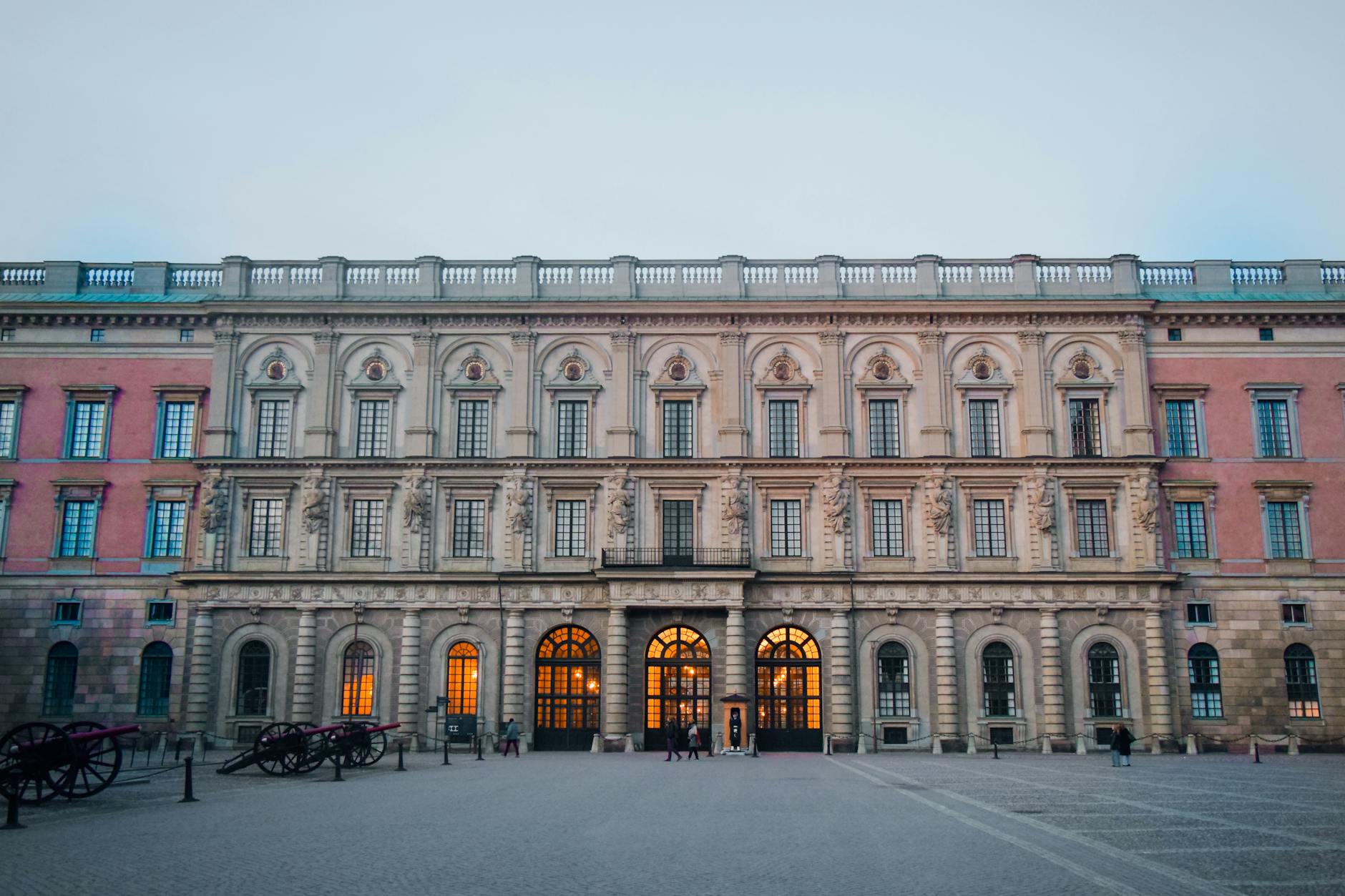
The Royal Palace in Gamla Stan is one of the largest royal palaces in Europe — over 600 rooms — and still the official residence of the Swedish royal family, though they actually live out at Drottningholm. The public complex holds five museums, though the Royal Armoury has its own ticket and Gustav III’s Museum of Antiquities is for pre-booked groups in 2026:
The Royal Apartments — state rooms used for receptions and ceremonies. Grander than most, smaller than Buckingham Palace.
The Treasury — the Swedish crown jewels. Smaller than the Tower of London’s, but more calmly presented.
The Three Crowns Museum — beneath the palace, showing the medieval castle foundations (the original burned in 1697, and the current baroque palace rose over the ruins).
Gustav III’s Museum of Antiquities — sculptures Gustav III acquired on his Italian travels, put on show in two of the palace’s stone galleries in 1794, after his death. During 2026 it opens only to pre-booked group tours.
The Royal Armoury (Livrustkammaren) — Sweden’s oldest museum, founded in 1628, holding 500 years of royal ceremonial costume, coronation robes, and the bullet-holed, bloodstained suit Gustav III wore when he was assassinated in 1792. Separate ticket.
Don’t miss the Changing of the Guard in the outer courtyard, one of the best-staged royal ceremonies in Europe. It starts at 12:15 Monday to Saturday and 13:15 on Sundays and public holidays; the schedule can change, so check the Swedish Armed Forces’ Royal Guard page on the day. Our Royal Palace Stockholm guide breaks down which of the five to prioritise if you’re short on time.
Practical: Royal Palace ticket SEK 220 in October–April, SEK 240 in May–September; the Royal Armoury needs its own ticket, SEK 180 for adults, with ages 0–18 free. Time needed: allow about 2 hours, or 3+ if you’re thorough. Location: Gamla Stan. Confirm current hours and ceremony days before you visit.
Specialty and underrated museums
Historiska Museet (Swedish History Museum)
The comprehensive Swedish history museum, with a major permanent exhibition on the Viking world — weapons, ships, jewellery, runestones, grave finds. The Gold Room is extraordinary: prehistoric gold and silver treasures alongside medieval reliquaries. Free.
Hallwyl Museum
A turn-of-the-century private home preserved exactly as Count and Countess Walther and Wilhelmina von Hallwyl left it — right down to the countess’s obsessive cataloguing of every object in their 40-room palace (some 50,000 items). It feels less like a museum and more like a ghost-house of Gilded Age Stockholm. Intimate, odd, and one of my favourites.
Spritmuseum (Spirits Museum)
The museum of Swedish drinking culture — akvavit, vodka, punsch, and the Systembolaget monopoly. A tasting is included in the ticket. Better than it sounds.
Tekniska Museet (Technical Museum)
Swedish science and technology history, with excellent hands-on exhibits for kids, plus CinoX (a 4D cinema) and the Mega Mind interactive tech hall. A sensible rainy-day pick if you’re travelling with children.
Naturhistoriska Riksmuseet (Natural History Museum)
Natural history, geology and palaeontology, plus Cosmonova, an IMAX dome theatre with 262 seats. Free. A short metro ride north of the centre in Frescati.
Armémuseum (Swedish Army Museum)
The dull name hides one of the best-designed modern museums in Stockholm — Swedish military history from the 16th century to the present day, told through outstanding set-piece displays. Free.
Nobel Prize Museum
On Gamla Stan’s Stortorget square. Small but beautifully curated, telling the stories of Nobel laureates through objects they donated — the café chairs are autographed underneath by past winners. A good hour if you’re already in Gamla Stan; our Nobel Prize Museum Stockholm guide has the details.
Östasiatiska Museet (Museum of Far Eastern Antiquities)
The best collection of Chinese art and archaeology outside Asia — Shang dynasty bronzes, Han tomb figures, Song ceramics. Less known than it deserves. On Skeppsholmen near Moderna Museet, free, and rarely crowded.
Strindberg Museum
The last apartment of August Strindberg — Sweden’s most important playwright — where he lived from 1908 to 1912, reconstructed with mostly original furniture and copies of the wallpaper and textiles. Tiny and emotional, and really only meaningful if you know his work; for his readers, though, it’s a genuinely moving pilgrimage.
Junibacken
A museum devoted to Swedish children’s literature — Astrid Lindgren (Pippi Longstocking, Emil of Lönneberga), Sven Nordqvist, Elsa Beskow — including a famous train ride through the world of Lindgren’s stories. Essential with young kids, skippable without them. It also features in our roundup of the best museums in Stockholm for kids.
Gröna Lund (adjacent — not technically a museum)
An 1883 amusement park on Djurgården, beside ABBA The Museum. Roller coasters, a classic carousel, summer concerts. Open in summer, and again for Halloween in autumn and for Barnens Jul on 19 selected days between 21 November and 30 December 2026.
Stockholm museums by neighborhood
Here’s how you actually plan a museum day. The museums cluster into a few tight groups:
Djurgården cluster (the island): Vasa Museum, Skansen, ABBA The Museum, Nordiska Museet, Junibacken, Spritmuseum, Vikingaliv, Gröna Lund. Walk them all. One full day covers three or four.
Skeppsholmen cluster: Moderna Museet, ArkDes, Östasiatiska Museet. All three share one small island, so they pair easily in an afternoon.
Gamla Stan cluster: Royal Palace (five museums in one), Royal Armoury, Nobel Prize Museum, Postmuseum. Walk them.
Norrmalm/city cluster: Nationalmuseum, Hallwyl Museum, Strindberg Museum, Armémuseum, Dansmuseet. Spread across the neighbourhood.
Södermalm cluster: Fotografiska, Stadsmuseum (Stockholm City Museum).
Outside the centre: Naturhistoriska Riksmuseet (north, free), Tekniska Museet (Gärdet), Sven-Harry’s Art Museum (Vasastan, a private collection worth knowing about).
Sample museum itineraries
The highlight day (first-time visitor, one day for museums)
Start at the Vasa Museum at 10:00 with a booked 10:00 slot, 90 minutes. Walk 10 minutes to ABBA The Museum at 12:00, another 90 minutes. Lunch at Oaxen Slip or somewhere in the Djurgården area. Then walk 10 minutes uphill to Skansen for 2–3 hours. That’s three of the city’s five best museums in one ambitious day.
The art day
Nationalmuseum 10:00–12:30. Cross the bridge to Moderna Museet 13:30–15:30. Walk back to Fotografiska 16:30–18:30, and finish with dinner at Fotografiska’s top-floor restaurant.
The history day
Royal Palace 10:00–12:00, catching the Changing of the Guard at 12:15, then lunch and an unhurried wander through Gamla Stan’s lanes. Historiska Museet 15:30–17:30 (metro to Karlaplan, then walk).
The rainy-day family
Junibacken 10:00–12:00. Lunch. Tekniska Museet 13:30–16:00. Maybe an evening at Fotografiska, which has a kids’ area. Our best museums in Stockholm for kids guide has more wet-weather options.
The quiet day (for the museum sceptic)
Dodge the crowds entirely: Hallwyl Museum (an hour in a bizarre preserved Gilded-Age mansion) and Strindberg Museum (30 minutes). Lunch in between at any of Stockholm’s good cafés.
Practical tips for museum visits
Mondays are tricky. Nationalmuseum, Moderna Museet, ArkDes, and Historiska Museet all close on Mondays. Plan around it.
Buy Vasa and ABBA tickets online. Summer queues at the door can be slow, and an online ticket lets you skip them.
Several museums are free. Historiska, Armémuseum and the Riksmuseum cost nothing to enter. Nationalmuseum (SEK 160) and Moderna (SEK 170) charge adults, though Nationalmuseum lets everyone under 20 in free, and everyone on Thursday evenings, while Moderna is free for those 18 and under and on Friday evenings. Budget accordingly, and lean on our free museums in Stockholm guide.
Free coat check. Every major museum has a supervised coat check, either free or around SEK 5–10. Use it — hauling winter gear through galleries is miserable.
Most museums have very good cafés. Nationalmuseum’s Dining Room, Moderna Museet’s restaurant, Fotografiska’s top-floor spot, and Skansen’s several traditional lunch stops are all destinations in their own right.
Children are welcome everywhere. Strollers are fine in every museum listed here, and most have family routes and activity sheets in English.
Photography is allowed without flash. It’s near-universal — even special exhibitions usually permit it.
English labels are everywhere. Every major Stockholm museum is bilingual (Swedish and English) as a matter of policy. You won’t need a translation app.
Three mistakes to avoid
Don’t try to do five museums in a day. It’s exhausting, and the later ones blur together. Two serious museums plus one small one is the right pace.
Don’t ignore the free museums. Historiska Museet ranks among the best in the city and costs nothing, and Nationalmuseum and Moderna Museet both have free evening hours. Some travelers skip the free ones precisely because they cost nothing, assuming the paid ones must be better. Often they are — but not always.
Don’t buy a multi-day pass unless you’re doing 3+ paid museums. Plenty of visitors grab a three-day Go City pass and then visit only two paid attractions, ending up paying more than single tickets would have cost.
Where to stay for easy museum access
Every museum cluster is easy to reach on foot or by tram from the six central neighborhoods in our Where to Stay in Stockholm guide. Östermalm (walkable to Nationalmuseum, Historiska, and Hallwyl), Norrmalm (central, with an easy tram to Djurgården), and Gamla Stan (on foot to the Royal Palace cluster) are the strongest for museum access. For specific hotels in each, see our Best Hotels in Stockholm shortlist.
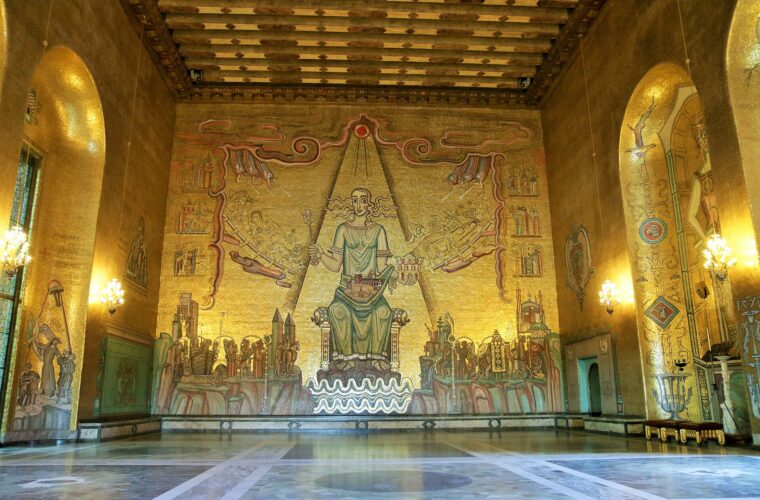
One of the city’s finest interiors is not a museum at all. Stockholm City Hall, where the Nobel banquet is held, can only be seen on a 45-minute guided tour, taking in the brick-walled Blue Hall, the Council Chamber and the Golden Hall’s 18 million mosaic pieces. Our Stockholm City Hall guide has the 2026 tour times and prices.
Some of the best art in the city is underground. Almost every one of the metro’s 100 stations has been decorated by an artist, and a dozen of them, from the blue vines at T-Centralen to the red sky at Solna Centrum and the rainbow at Stadion, are as memorable as anything in the galleries. Our Stockholm metro art guide is a self-guided tour with three routes and the 2026 guided tours.
Not every essential sight in Stockholm has a ticket desk. Skogskyrkogården, the Woodland Cemetery, is one of the city’s three UNESCO World Heritage Sites: a landscape of pines, chapels and open lawns designed by Gunnar Asplund and Sigurd Lewerentz between 1915 and 1940, free to visit and 15 minutes from the centre on the green line. Our Skogskyrkogården guide has a walking route, the 2026 visitor centre hours and the guided tours that are the only way into the chapels.
Final thoughts
Stockholm rewards the traveler who treats museums as destinations, not checklist items. The Vasa, Skansen, ABBA, Fotografiska, Nationalmuseum, and Moderna are all genuinely world-class and deserve your full attention. Fold in a day or two of city wandering, good food, and a couple of the smaller specialty collections, and you’ve got the backbone of a rich four- or five-day visit.
If you take one thing from all this: don’t overdo it. Three museums a day is a hard ceiling; two is saner. Stockholm’s culture lives in its streets, its cafés, and its waterside walks. The museums are the centre of the trip, not the whole of it.
For the wider picture, our Things to Do in Stockholm guide connects the museums to everything else worth doing, and our Stockholm Itinerary shows how to thread them into a 3, 5, or 7-day trip.
Frequently asked questions
What is the best museum in Stockholm?
The Vasa Museum. A 17th-century warship raised whole from the harbor and housed in a purpose-built, cathedral-like hall on Djurgården, it’s the most remarkable single museum object in Scandinavia and the answer almost every local and traveler gives.
How many museums should I visit in Stockholm?
Plan one or two serious museums a day, with a third small one if you still have the energy. Most travelers burn out trying to do four; the later ones blur and none of them stick. Stockholm simply has too many good museums to rush.
Are Stockholm museums free?
Some are. Historiska Museet, Armémuseum and Naturhistoriska Riksmuseet are free to enter. Nationalmuseum and Moderna Museet charge adults but let young visitors in free and have free evening hours (Thursdays 17:00–20:00 and Fridays 18:00–20:00). The main paid ones are Vasa, Skansen, ABBA, Fotografiska, and the Royal Palace complex.
Is the Stockholm Pass worth it?
Only if you’re hitting two or more paid museums a day. The Go City All-Inclusive Pass covers Vasa, Skansen, Fotografiska, and the Royal Palace, among others. Visitors doing two or three big paid museums daily usually break even or save; those mixing free and paid museums usually save more with individual tickets.
How long do I need at the Vasa Museum?
Ninety minutes to two hours. About 30 minutes goes to walking around the ship and reading the 17th-century crew biographies; the rest covers the secondary exhibits on warfare, conservation, and the accident itself. The free audio guide is worth using.
Which Stockholm museums are best for kids?
Skansen, the open-air museum with a zoo, is the single best for kids in the city. Junibacken (Swedish children’s literature) is magical for ages 3–10, and Tekniska Museet suits curious older kids. The Vasa Museum tends to surprise most children with its sheer scale.
Are Stockholm museums open on Mondays?
Most national museums (Nationalmuseum, Moderna Museet, ArkDes, Historiska Museet) close on Mondays. Vasa, Skansen, ABBA, Fotografiska, and the Royal Palace normally open every day, so build any Monday itinerary around them. Check the date first: the Vasa Museum closes on 24 and 25 December, Fotografiska on Midsummer Eve, and the Royal Palace can close in whole or in part for official receptions.
What is the cheapest way to visit Stockholm museums?
Plan around the museums that are free to enter and the free evening hours at Nationalmuseum and Moderna Museet, buy individual tickets for the one or two paid museums you really want, and skip multi-day passes unless you’ll hit 3+ paid sites a day. A typical visitor doing three free and two paid museums over a long weekend spends around SEK 400–450 — less than half a multi-day pass.
Can I visit Stockholm museums in the evening?
Fotografiska normally stays open until 23:00, which makes it an easy evening museum plan. Nationalmuseum and Moderna Museet extend hours on certain weekdays (Thursday at Nationalmuseum, Tuesday and Friday at Moderna). The Vasa Museum and Nordiska Museet close at 17:00 on most days outside summer.
Is the ABBA museum worth visiting if I’m not a fan?
Surprisingly, yes. The interactive design and archival depth make it genuinely engaging even for sceptics. Ninety minutes is about right.