Can You See the Northern Lights from Stockholm? (2026)
Northern Lights Stockholm — rare Stockholm aurora sightings, when to visit, Lapland alternatives.
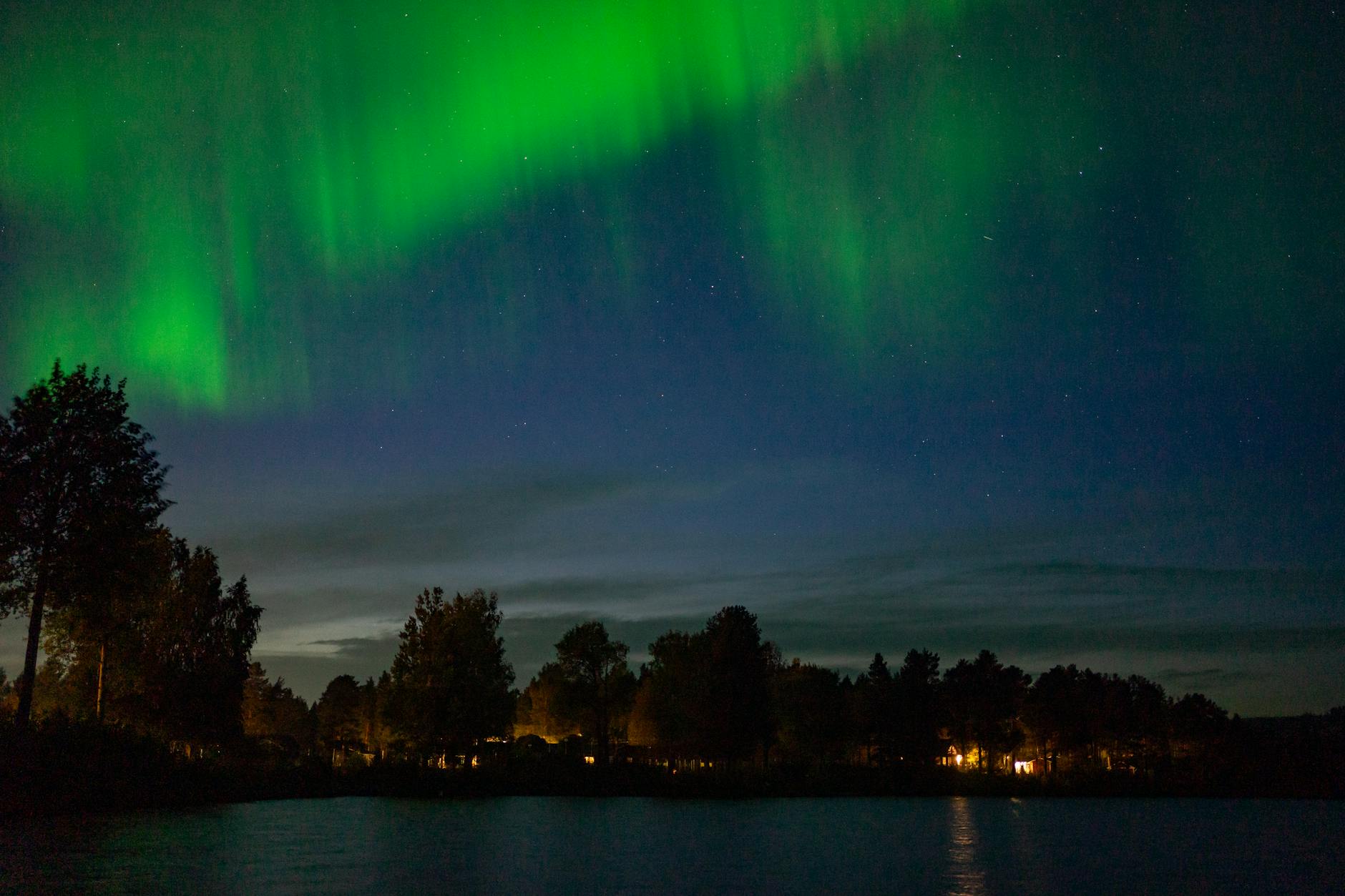
Northern Lights Stockholm — can you actually see them? Stockholm sits at 59° N, far south of the Arctic Circle and outside the auroral oval where Northern Lights (aurora borealis) reliably appear. Stockholm aurora sightings are rare and require strong solar storm conditions. For reliable Northern Lights viewing, travel to Swedish Lapland (Kiruna, Abisko at 67°+ N). This guide covers Stockholm’s actual Northern Lights potential, when occasional sightings happen, and recommended Lapland alternatives for reliable aurora viewing trips.
Northern Lights Stockholm essentials
Stockholm latitude: 59° N — far south of Arctic Circle (66.5° N).
Stockholm aurora sightings: Rare, requires strong solar storm.
Best season for any Stockholm aurora chance: October-March (dark nights).
For reliable Northern Lights: Lapland — Kiruna (67.85° N) or Abisko (68.35° N).
Best Lapland aurora season: September-March.
Can you see Northern Lights in Stockholm?
Rarely. Stockholm at 59° N is far south of the auroral oval where Northern Lights reliably appear. The oval is a ring centred on the geomagnetic pole, not a fixed band of geographic latitude, and its southern edge moves towards the equator as magnetic activity rises.
However, during strong geomagnetic storms the auroral oval expands south and Stockholm can see aurora. These storms are hard to predict, so keep an eye on solar activity forecasts.
For travelers wanting to see Northern Lights, Stockholm should not be the destination — Lapland (Sweden’s far north) is the right answer.
When can Stockholm see aurora?
Solar cycle: Solar Cycle 25 peaked in 2024 and 2025, and in 2026 the Sun is in its declining phase. Strong auroral events remain possible as activity falls, and the next cycle is expected to begin some time between January 2029 and December 2032.
Time of year: October-March only — Stockholm summer (April-September) has too much daylight for aurora visibility even during strong storms.
Time of day: 22:00–02:00 typically, though aurora can appear outside that window. Peak around midnight.
Forecast indicators: the higher the Kp index, the better Stockholm’s chances, but there is no strict cutoff and no level that guarantees a display. Treat Kp as a rough guide.
Best monitoring: NOAA Space Weather Prediction Center, SpaceWeatherLive, Aurora Forecast apps.
How to maximize Stockholm aurora chances
Get away from city lights
Stockholm city lights make aurora viewing difficult. Head out of town to a spot away from artificial light, with a clear view of the northern horizon.
Best Stockholm-area dark sky locations:
- Tyresta National Park, south of the city
- Lake Ekoln area, north of the city near Uppsala
- Vaxholm and outer archipelago (less light pollution)
- Bogesundslandet nature reserve
Monitor aurora forecasts
Apps like My Aurora Forecast Pro, Aurora Alert, SpaceWeatherLive provide alerts for Kp index spikes. Some allow location-based alerts.
Be prepared
If forecasts show a jump in Kp, be ready to drive to a dark spot away from the city’s lights with a clear northern view. Bring warm clothing, camera with manual settings, tripod.
Camera settings for any sighting
Manual mode, ISO 1600-3200, aperture f/2.8 or wider, shutter 5-15 seconds. Tripod essential. Smartphone night mode can capture aurora if visible.
Northern Lights in Lapland — for reliable viewing
For reliable Northern Lights, travel to Swedish Lapland.
Abisko (best aurora destination in Sweden)
Latitude: 68.35° N.
Why best: Abisko’s microclimate creates “blue hole” — clear skies even when surrounding areas cloudy. Low precipitation and a position near the auroral oval both favour aurora viewing.
Aurora season: late August to mid-April, with October–March the recommended months.
Aurora Sky Station: Chairlift-accessed mountain station at about 900 m altitude. Premium aurora viewing experience.
From Stockholm: until 12 December 2026, SJ’s night train runs as far as Boden, where you change to a daytime train for Abisko. Through Stockholm–Narvik night trains resume on 13 December 2026; check SJ’s timetable for journey times. Or fly Stockholm to Kiruna and take the Abisko Transfers airport transfer (about 1.5 hours).
Kiruna
Latitude: 67.85° N.
Aurora season: roughly September–March, with sightings also possible in late August and April when it’s dark enough.
From Stockholm: SAS or Norwegian flight 1.5 hours. By rail, take the SJ night train to Boden and a daytime train on to Kiruna until 12 December 2026; through night trains return from 13 December.
Best for: Mining heritage, Icehotel base, aurora hunting.
Jukkasjärvi (near Kiruna)
Famous for: Original Icehotel. Aurora viewing combined with ice-room sleeping.
Stockholm to Lapland aurora trip
Weekend aurora trip from Stockholm
Day 1: SAS flight Stockholm Arlanda to Kiruna (1.5 hours). Abisko Transfers from Kiruna Airport to Abisko (about 1.5 hours). Aurora Sky Station evening tour. Day 2: Day Sami village or dog sled tour. Aurora hunting evening. Day 3: Aurora hunting + return travel. Best for: Time-pressed aurora hunters.
Long weekend Lapland (4–5 days)
Add: Multiple aurora hunting nights (better odds), Icehotel experience, Sami culture, dog sled, snowshoeing, Aurora Sky Station.
Best time to visit Lapland for aurora
September–October: aurora season starting as darkness returns, and in Kiruna these are among the strongest aurora months. Clear skies are still essential.
November–February: shortest days, longest darkness and potentially severe cold, though temperatures vary across Lapland. Aurora is possible all winter, but Kiruna often sees its strongest displays in September, October and March.
March–April: March is a good aurora month and the weather starts warming; sightings can continue into April while the skies stay dark enough.
Avoid the midnight sun: summer brightness rules out aurora, and the dates depend on where you are. STF lists 25 May–17 July for Abisko and 28 May–14 July for Kiruna.
Northern Lights Stockholm photography
Equipment: DSLR or mirrorless with manual mode, fast wide lens (f/2.8 or wider), tripod, headlamp with red light.
Settings: ISO 1600-3200, aperture wide open (f/2.8), shutter 5-15 seconds, manual focus to infinity.
Stockholm aurora photography conditions: strong geomagnetic activity (a high Kp helps, but it’s no hard cutoff); dark location outside city with a northern view; clear sky; ~22:00-02:00 timing, though activity can come outside that window.
Lapland aurora photography: Same equipment but reliable conditions during aurora season.
Aurora forecasting
Kp index: 0-9 scale measuring geomagnetic activity. Higher = more aurora and further south visibility.
Kp 0-2: Aurora generally far to the north and relatively faint.
Kp 3-5: Aurora can be seen in Northern Sweden (Lapland) with clear, dark skies.
Kp 6: Aurora generally expands farther from the poles and grows brighter.
Kp 7: Brighter aurora reaching farther south, which improves Stockholm’s chances; darkness, cloud and where the aurora sits decide what you see.
Kp 8-9: Strong displays that can extend farther south still, giving Stockholm its best chance.
Keep your batteries warm. Lithium cells lose charge fast below freezing, and a camera that dies halfway through an aurora display is the most common complaint of a cold night out. Keep a spare battery and a power bank in an inside pocket. Our guide to power plugs in Sweden covers adapters, voltage and charging in the cold.
The aurora is a long shot this far south, but a Stockholm winter has plenty more to offer: outdoor skating in the city, saunas with an ice plunge, Christmas markets and museums for the dark afternoons. See our guide to Stockholm in winter.
For a Lapland trip from Stockholm, note that the night train north currently ends at Boden: until 12 December 2026, passengers for Kiruna, Abisko and Narvik change there to a daytime train, and through Stockholm–Narvik night trains resume on 13 December 2026. Our Sweden itinerary guide has a winter route combining the city with Kiruna, Abisko and the ICEHOTEL.
Frequently asked questions
Can you see Northern Lights from Stockholm?
Rarely — Stockholm is far south of the auroral oval. Aurora can sometimes be seen from Stockholm during increased geomagnetic activity, but darkness, clouds and light pollution all play a part. Not reliable for visitors planning aurora trips.
What’s the best time to see Northern Lights from Stockholm?
October-March (dark nights required). Activity usually peaks within an hour or two of midnight, roughly 22:00–02:00. Monitor Kp index forecasts: a higher Kp improves Stockholm’s chances, but there’s no strict cutoff.
Where can I see Northern Lights near Stockholm?
Get away from the city’s lights to a spot with a clear northern horizon. Tyresta National Park, Bogesundslandet, outer archipelago. Still requires strong solar storm for visibility.
Where in Sweden can I reliably see Northern Lights?
Lapland — Abisko (68.35° N), Kiruna (67.85° N), Jukkasjärvi. The main season runs roughly September–March, with sightings possible in late August and April. Abisko’s dry microclimate and position near the auroral oval favour clear viewing.
How do I get from Stockholm to Lapland for Northern Lights?
SAS or Norwegian flight Stockholm Arlanda to Kiruna (1.5 hours). Or, until 12 December 2026, the SJ night train to Boden and a daytime train on to Kiruna or Abisko; through night trains run again from 13 December 2026.
What’s the best place to see Northern Lights in Sweden?
Abisko — its low-precipitation microclimate brings clear skies, and it sits near the auroral oval. Aurora Sky Station provides premium mountain viewing.
How long do I need in Lapland to see aurora?
Plan at least 3 nights: a single night depends too much on weather and aurora activity. The more nights you give it, the better your chances, but no length of stay guarantees a sighting.
Can I see aurora in Stockholm in summer?
No — summer days too long (18+ hours daylight in June). Aurora requires dark skies. Stockholm aurora season October-March only.
What’s Kp index?
0-9 scale measuring geomagnetic activity. Higher Kp = aurora visible further south. It’s a rough guide rather than a threshold: in Kiruna aurora can show at Kp 2–3 under clear, dark skies, and Stockholm’s chances improve as Kp rises.
Is Stockholm worth visiting for Northern Lights?
Not specifically — Stockholm aurora viewing is unreliable. For reliable Northern Lights, travel to Lapland. Stockholm worth visiting for many other reasons.
For Stockholm best time guide, see our best time to visit Stockholm. For midnight sun, see midnight sun in Stockholm. For Stockholm winter, see Stockholm in January.