Stockholm Power Plugs & Adapters: What You Need
Sweden uses two-pin Type C and F plugs at 230 volts. Which plugs fit, which devices need a voltage check, the adapter worth packing, where to buy one in Stockholm if you forget, and why your phone dies in a Swedish winter.
The power plugs Sweden uses are the standard continental European kind: two round pins, 230 volts, 50 hertz. If you are coming from most of mainland Europe, your chargers simply plug in and there is nothing more to read. If you are coming from the UK, Ireland, North America, Australia, Japan or anywhere else with a different plug, you need an adapter. And if you are coming from a 110–120 volt country, you also need to check one number printed on each of your devices before you plug it in.
This guide covers what Swedish sockets look like, which plugs fit and which don’t, the voltage question that catches out hair dryers, what kind of adapter to buy, where to buy one in Stockholm if you forget, and a handful of practical things about hotel rooms, winter batteries and charging on the move that are specific to Sweden. Electrical standards don’t change year to year. The shop details were checked in September 2026.
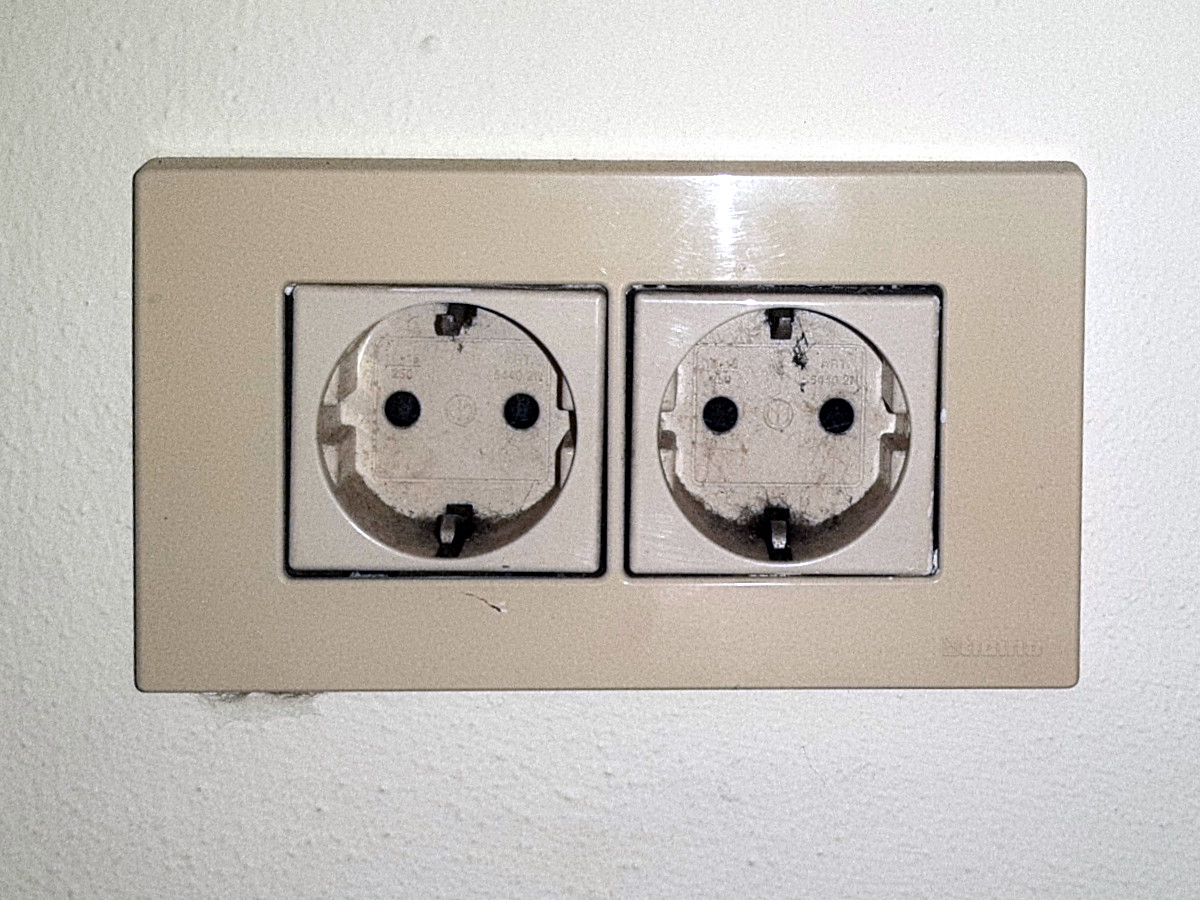
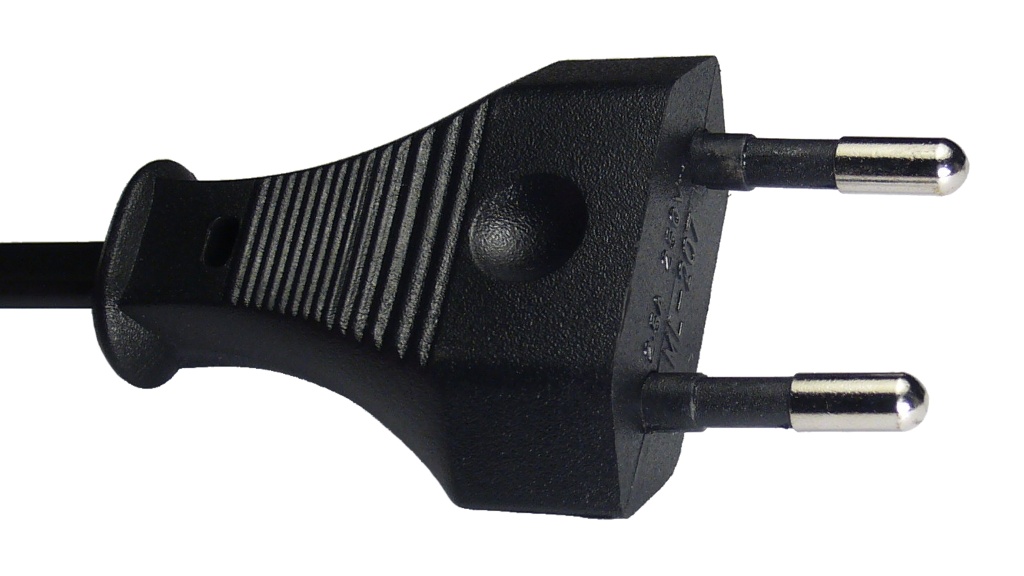
Plug types: Type F (Schuko, two round pins with side earth clips) and Type C (Europlug, two round pins).
Voltage: 230 V. Frequency: 50 Hz.
Plugs that just work: those from Germany, France, Spain, the Netherlands, Norway, Finland, Poland, most of Europe and anything with a Europlug.
You need an adapter from: the UK, Ireland, the US, Canada, Australia, New Zealand, Japan, Switzerland (three-pin plugs) and Italy (three-pin plugs).
Check the voltage if you come from: the US, Canada, Japan or other 100–120 V countries.
Forgot your adapter? Clas Ohlson and Kjell & Company, both Swedish chains, sell them in central Stockholm and at Arlanda.
What Swedish sockets look like
Almost every socket you meet in Sweden is a Type F, known across Europe as Schuko. It is a round recess in the wall with two holes for round pins and two metal clips at the top and bottom edges, which provide the earth connection. In homes and hotels you often see them in pairs.
The plug that goes in it is either a Type F plug, round and chunky, with the earth contacts on its sides, or a Type C “Europlug”, the flat two-pin plug you find on phone chargers, electric toothbrushes and anything small that doesn’t need an earth. The Europlug fits both Type F and the older ungrounded sockets, which is why it is the most useful plug in Europe.
In some older buildings you may also find ungrounded round sockets without the earth clips. They accept Europlugs and most Type F plugs but provide no earth, which is fine for chargers and not ideal for anything with a metal case. Newer hotels also often have USB-A and USB-C sockets beside the bed, which removes the question for phones entirely.
Which plugs fit, country by country
| Where you are from | Your plug | Fits in Sweden? | Voltage OK? |
|---|---|---|---|
| Germany, Austria, Netherlands, Spain, Portugal, Norway, Finland, Poland, most of Europe | F / C | Yes | Yes |
| France, Belgium | E, usually as a hybrid E/F plug | Yes, hybrid plugs fit | Yes |
| Denmark | K, or C/F on most new devices | C and F yes; K three-pin no | Yes |
| Italy | L, or C | C yes; L three-pin no | Yes |
| Switzerland | J, or C | C yes; J three-pin no | Yes |
| UK, Ireland, Malta, Cyprus | G | No: adapter needed | Yes |
| US, Canada, Mexico | A / B | No: adapter needed | Check each device |
| Japan | A / B | No: adapter needed | Check each device |
| Australia, New Zealand | I | No: adapter needed | Yes |
| China | A / C / I | C yes; others need an adapter | Yes |
| India | C / D / M | C yes; D and M need an adapter | Yes |
| South Africa | M / N / C | C yes; others need an adapter | Yes |
The pattern is simple. If your device already has a two-round-pin plug, it almost certainly works in Sweden. Everything else needs an adapter, and anything from a 100–120 volt country needs its label checked.
The voltage question
An adapter changes the shape of the plug. It does not change the voltage. Swedish mains electricity is 230 volts, roughly twice what North America and Japan use. Plug a device built only for 120 volts into a Swedish socket through a simple adapter, and it will run hot, fail or, in the worst case, catch fire.
How to check
Look at the small print on the charger or the device’s power brick. You are looking for something like:
INPUT: 100–240V ~ 50/60Hz
If it says 100–240 V, the device is dual voltage and works anywhere in the world with just a plug adapter. That covers almost all modern phone chargers, laptop chargers, tablets, camera battery chargers, e-readers, headphones and power banks.
If it says only 110 V, 120 V or 110–125 V, the device is single voltage. It will not work safely in Sweden without a voltage converter.
The usual suspects
- Hair dryers, straighteners and curling tongs: the most common single-voltage devices from North America and Japan, and the most likely to be damaged. Some travel models have a voltage switch. Set it to 230 before plugging in.
- Electric shavers and toothbrush chargers: often dual voltage these days, but check. Older models often aren’t.
- Kettles, travel irons, heated rollers: usually single voltage, and not worth bringing.
- Medical devices such as CPAP machines: most modern units are dual voltage, but confirm it with the manual before you fly, and bring the right adapter for the power supply.
Converter or replacement?
Voltage converters exist, but the ones that can handle a hair dryer are heavy, and cheap ones overheat. For almost everyone, the better answer is not to bring the device. Nearly every hotel room in Stockholm has a hair dryer, and a basic one costs little at a Swedish supermarket or electronics shop. For straighteners, buy a dual-voltage model before the trip or a European one on arrival.
What about 50 Hz?
Sweden runs at 50 hertz, while North America runs at 60. For anything with a charger it makes no difference. It matters only for a few older devices with mains-driven motors or clocks, which may run slightly slow. You are very unlikely to travel with one.
Which adapter to buy
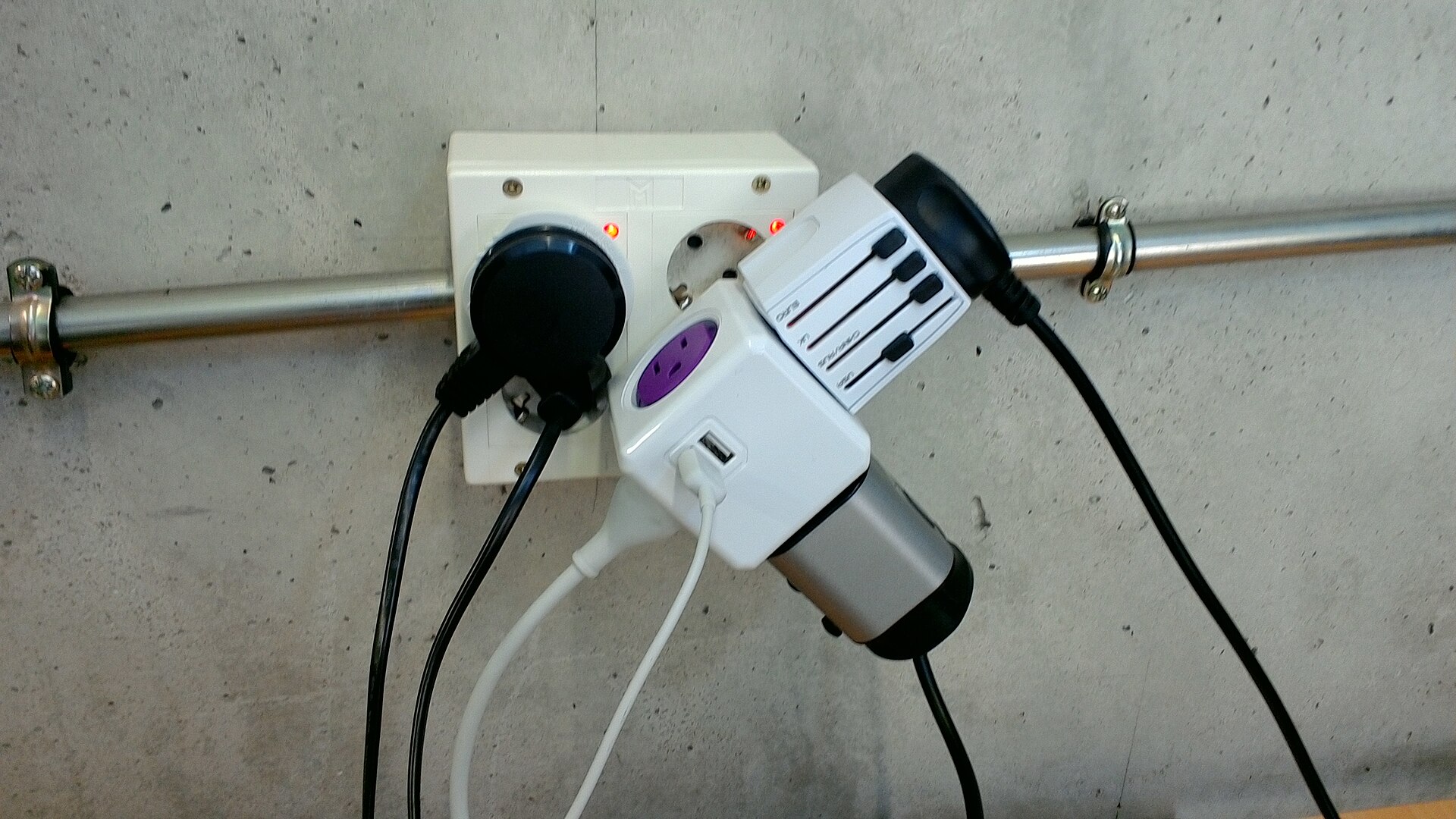
- A simple plug adapter from your country’s plug to Type C/F costs very little and is the lightest option. Buy two if you travel with a partner; the argument over one adapter at midnight is not worth it.
- A universal travel adapter takes most plugs in the world and fits most sockets, and it is the right choice if Sweden is one stop on a longer trip. The good ones include USB-C and USB-A ports.
- A multi-port USB-C charger with a European plug is the neatest solution for a family: one socket, four devices charging. It is also useful in hotel rooms that have only one socket near the bed.
- Earthed or not: if your laptop has a three-pin plug (UK, US), an earthed adapter keeps the earth connection. A two-pin adapter will work, but it drops it.
One warning: don’t plug a power strip from home into a single adapter and then run a hair dryer and a kettle off it. Cheap travel adapters are not rated for that load. One high-power device per adapter is the safe rule.
Forgot it? Where to buy an adapter in Stockholm
You won’t be stuck. Sweden has two electronics chains that stock travel adapters as a matter of course.

- Clas Ohlson, a Swedish hardware and household chain dating back to 1918, has a large store on Drottninggatan and branches across the city. It stocks travel adapters, extension leads, chargers, cables, batteries and torches.
- Kjell & Company, a Swedish electronics chain, has branches in the central shopping streets and most shopping centres. It is good for cables, USB chargers, adapters and power banks, and the staff know the stock.
- Arlanda: the airport shops sell adapters on both sides of security, at airport prices.
- Department stores such as NK and Åhléns carry basic adapters and chargers in their electronics sections.
- Your hotel reception: many keep a box of adapters that guests have left behind, to lend. Ask before you buy.
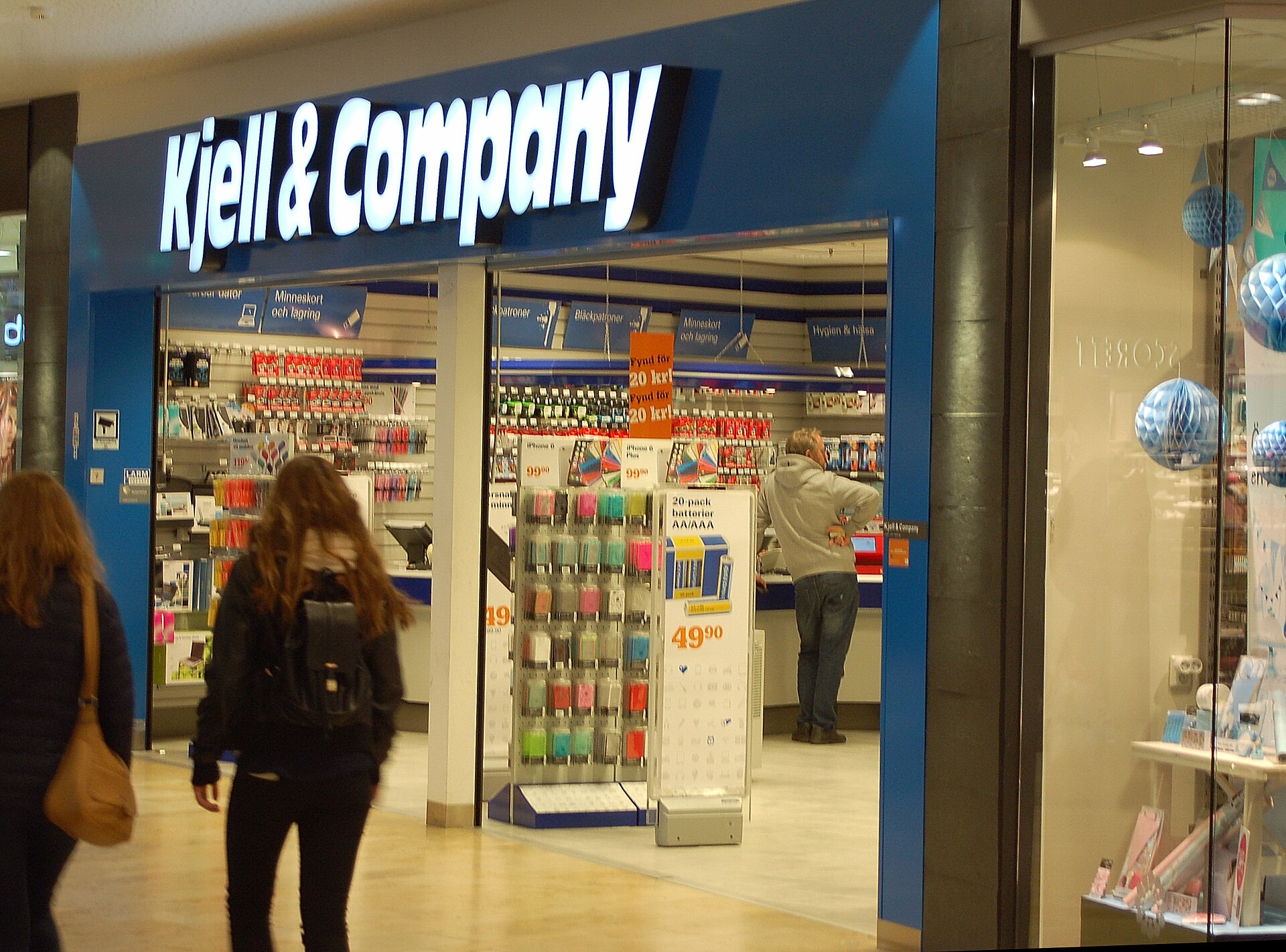
Both chains are on or near the main shopping streets, and both take cards. Our currency guide explains why you won’t need cash.
Hotel rooms: three Swedish quirks
The key-card switch
Many Swedish hotels, like hotels across Europe, have a slot by the door where you put your key card to turn on the room’s power. Take the card out and the power goes off after a few seconds, and so does anything charging. If you want your phone and camera batteries charged when you come back from dinner, check whether the bedside sockets are on the key-card circuit. In many hotels they aren’t, but the desk sockets are.
Sockets in odd places
Older hotels, and some of the city’s characterful historic buildings, can have few sockets, placed where the room’s original owners wanted a lamp in 1905. A short extension cable or a multi-port USB charger saves crawling under the bed. Newer hotels usually have sockets and USB ports on both sides of the bed. Our Stockholm hotels guide covers the options from historic to modern.
Bathroom sockets
Some hotel bathrooms have a special shaver socket, often marked for shavers and toothbrushes only. It is designed for low-power devices and may accept several plug shapes. Don’t plug a hair dryer into it. Use the main room socket, or the hair dryer the hotel provides.
Charging on the move
- Trains: SJ’s long-distance and many regional trains have sockets at the seats. Handy on a day trip by train.
- Arlanda: charging points are spread through the terminals, and there are sockets at many seats by the gates.
- Cafés: many have sockets by the window seats. Ask before plugging in during a busy lunchtime.
- Ferries: the big Baltic ferries have sockets in cabins, of the same Swedish or Finnish type.
- A power bank is the answer for everything else. Pack it in your hand luggage, not in checked bags, which airlines require for lithium batteries.
Winter: the cold drains batteries
This one is specific to a Nordic trip and catches a lot of visitors. From December to February, Stockholm is regularly below freezing and can drop well below that. Lithium batteries lose capacity fast in the cold. A phone at 60% can switch itself off after twenty minutes of photos on a frozen lake, and a camera battery can die halfway through the northern lights.
- Keep your phone in an inside pocket, close to your body, not in an outer jacket pocket or a bag.
- Carry a power bank, also in an inside pocket.
- Bring a spare camera battery and keep it warm.
- A battery that “died” in the cold usually comes back once it warms up. Don’t panic, and don’t put it on a radiator.
Our guides to Stockholm in January and seeing the northern lights from Stockholm cover the rest of the winter kit.
Going on from Stockholm
One adapter covers the whole region. Norway, Finland, Estonia, Latvia and Lithuania all use the same Type C and F sockets at 230 volts. Denmark’s sockets accept Type C and, in newer buildings, Type F. So a trip that takes in the ferry to Helsinki, the boat to Tallinn or a train to Oslo needs nothing new. The same applies to Germany and most of central Europe if Stockholm is the first stop of a longer rail trip.
Safety notes
- Child-safety shutters. Many Swedish sockets have shutters that open only when both pins go in together. If a plug won’t go in, push it straight and evenly. Don’t force it or insert the pins one at a time.
- Loose adapters. A heavy charger on a cheap adapter can sag out of the socket and lose contact. If an adapter wobbles, use a different socket or support the charger.
- Summer cottages and cabins. In an older archipelago cottage, the wiring may be older too. Don’t overload a single socket with heaters and kettles, and follow the owner’s instructions on fuses.
- Outdoor sockets. On campsites and at marinas, hook-ups use the round blue CEE industrial connector, not a household plug. If you are hiring a campervan or a boat, the rental company supplies the right lead.
- Damaged kit. A charger with a split cable or a scorched pin is cheap to replace at Clas Ohlson and expensive to ignore.
Packing checklist
- One plug adapter per person, or one universal adapter with USB ports.
- A multi-port USB-C charger with a European plug if you travel with several devices.
- A power bank in your hand luggage.
- A short extension lead from home, if your country’s plugs need an adapter: one adapter, several sockets. Not for hair dryers.
- The voltage checked on every device from a 100–120 V country.
- Leave the hair dryer at home. The hotel will have one.
The full list, from clothing to documents, is in our Stockholm packing list, and our guide to Wi-Fi and SIM cards in Stockholm covers staying connected once your phone is charged.
Frequently asked questions
What power plugs does Sweden use?
Type F (Schuko) and Type C (Europlug), both with two round pins. The voltage is 230 V and the frequency 50 Hz, the same as most of continental Europe.
Do I need an adapter for Sweden from the UK?
Yes. UK three-pin (Type G) plugs don’t fit Swedish sockets. You need a UK-to-European adapter. The voltage is the same, so no converter is needed.
Do I need an adapter for Sweden from the US?
Yes, a plug adapter from Type A/B to Type C/F. Also check each device’s label. Items marked 100–240 V work with just the adapter. Items marked only 110–120 V, often hair dryers and straighteners, need a voltage converter or should be left at home.
Will my phone charger work in Sweden?
Almost certainly. Nearly all modern phone and laptop chargers are rated 100–240 V, so they only need a plug adapter if your plug is not a two-round-pin European type.
Can I use my American hair dryer in Stockholm?
Only if it is dual voltage or has a voltage switch set to 230 V. Most standard American hair dryers are 120 V only, and would be damaged. Almost every Stockholm hotel provides a hair dryer.
Where can I buy a travel adapter in Stockholm?
At Clas Ohlson, which has a large store on Drottninggatan, and Kjell & Company, which has branches in the central shopping streets and malls. Also at the Arlanda airport shops and in department stores. Hotel receptions often lend them.
Do Swedish plugs fit in Norway, Denmark and Finland?
Norway and Finland use the same Type C and F sockets. Denmark’s sockets accept Type C and, in newer installations, Type F plugs, so Swedish plugs work there too.
Why did my phone die in the cold in Stockholm?
Lithium batteries lose capacity quickly below freezing. Keep your phone and a power bank in an inside pocket in winter. The battery usually recovers once it warms up.
More Stockholm guides
- Stockholm Packing List — everything else that goes in the suitcase.
- Stockholm Wi-Fi and SIM Cards — staying connected once you are charged.
- Stockholm Travel Tips — the rest of the practical advice.
- Stockholm Hotels — from historic rooms to the newest openings.
- Best Shopping Streets in Stockholm — where the electronics chains are.
- Stockholm in January — cold-weather kit, batteries included.
- Arlanda to Stockholm — the airport shops and the journey in.
- Stockholm Currency and Payment — paying for the adapter you forgot.
Photo credits
Schuko double socket (featured image): BTicino CEE 7-3 Schuko socket by Carnby, CC BY-SA 4.0, via Wikimedia Commons.
Europlug: Euro-Flachstecker 2 by SomnusDe, Public domain, via Wikimedia Commons.
Travel adapter in a Schuko socket: Power plugs with a socket splitter at the Wikimedia Hackathon 2018 by Matma Rex, CC BY-SA 4.0, via Wikimedia Commons.
Clas Ohlson on Drottninggatan: Kvarteret Blåmannen, Drottninggatan, jan 2021b by Holger.Ellgaard, CC BY-SA 4.0, via Wikimedia Commons.
Kjell & Company store: Kjell & CompanyMic by Janee, CC BY-SA 3.0, via Wikimedia Commons.