Best Shopping Streets in Stockholm
Drottninggatan, Biblioteksgatan, Götgatan and SoFo compared street by street — what each is good for, opening hours, tax-free rules, and which streets are still building sites in 2026.
There are roughly eight shopping streets Stockholm actually rewards you for walking, and about forty that guidebooks list because they have shops on them. The difference matters here more than in most cities, because Stockholm’s retail is unusually segregated: one street is nothing but Swedish high-street chains, the next is luxury flagships, and a third — fifteen minutes south — is vintage and independent design with almost no overlap. Walk the wrong one and you will conclude the city is expensive and generic. Walk the right one and you will find things you genuinely cannot buy at home.
This guide takes the streets one by one: what each is actually good for, which end to start from, what you will pay, and which ones to skip. Prices and hours were checked in September 2026 and are in Swedish kronor; treat them as the right order of magnitude rather than a promise.
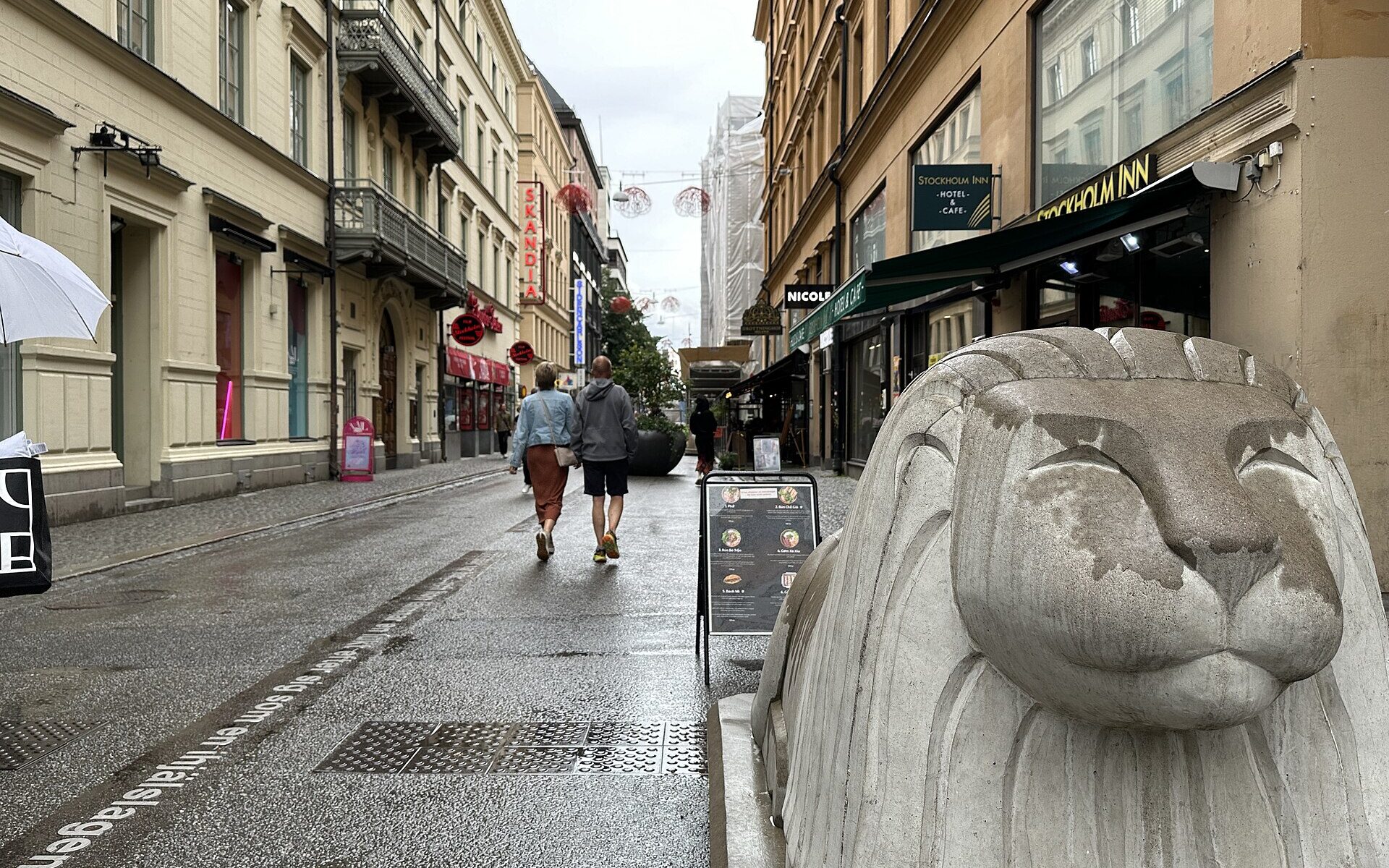
The main event: Drottninggatan — one kilometre of pedestrianised Swedish high street.
For luxury: Biblioteksgatan, between Hamngatan and Stureplan.
For vintage and independent: Södermalm — Götgatan, then the SoFo grid east of it.
Standard hours: Mon–Fri 10:00–19:00, Sat 10:00–17:00 or 18:00, Sun 11:00 or 12:00–17:00.
Department stores run later: NK and Åhléns City both to 20:00 on weekdays.
Tax-free: 25% VAT, minimum SEK 200 per shop, non-EU residents only.
Currently a building site: Sturekvarteret and its Sturegallerian arcade, finishing Q4 2026.
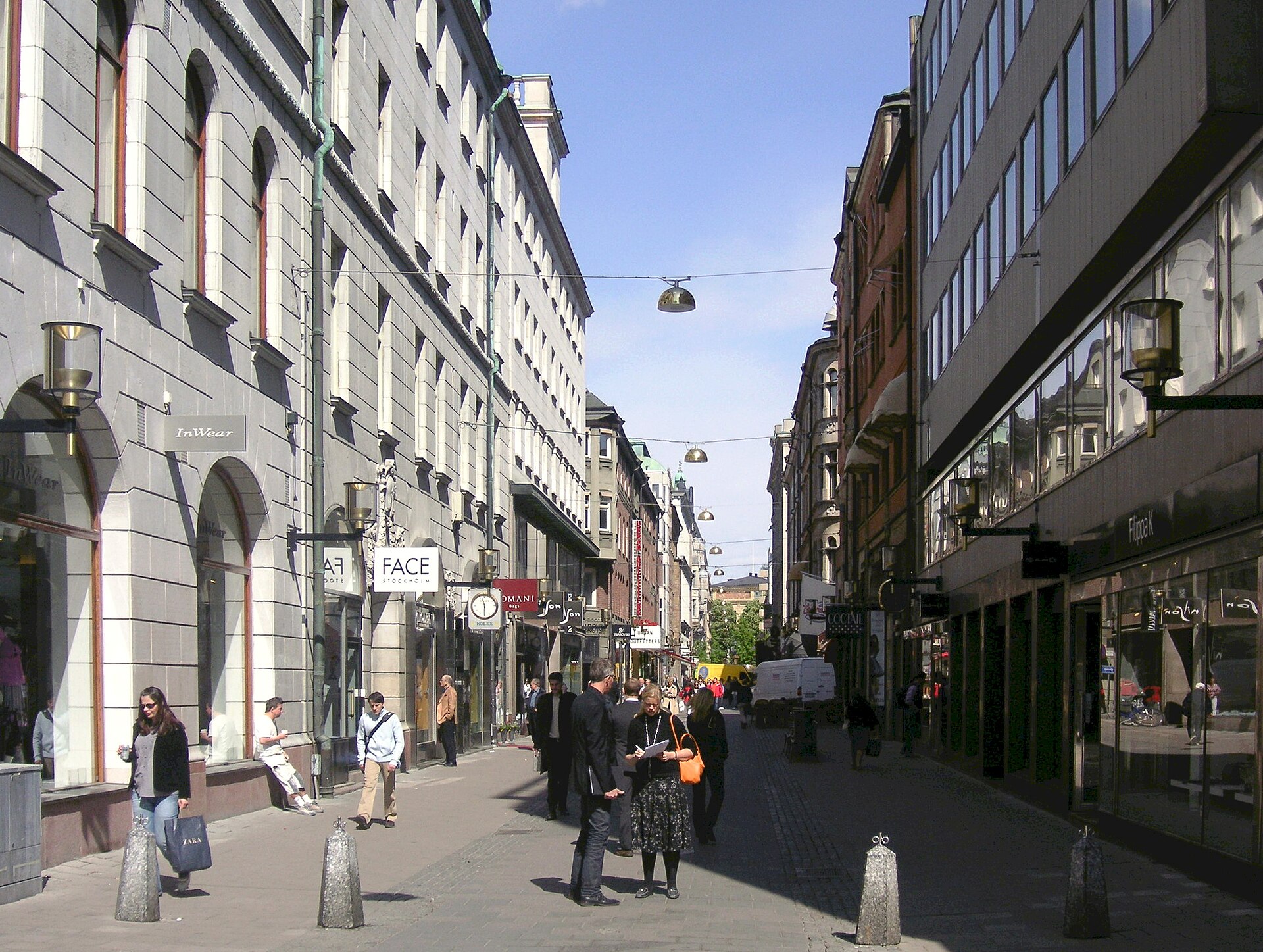
How Stockholm’s shopping geography works
Three clusters, ten minutes apart, with very little bleed between them.
Norrmalm is the high street: Drottninggatan, Hamngatan, Sergelgatan and the two big department stores. This is where the Swedish chains you already know — H&M, COS, Weekday, Monki, & Other Stories — sit next to each other in flagship form. Efficient, crowded, not especially interesting, and completely unavoidable if you want volume.
Stureplan and Östermalm are the money: Biblioteksgatan for international luxury and Swedish flagships, Nybrogatan and Sibyllegatan for quieter, older, more local shops. Prices here are genuinely high and the stock is genuinely good.
Södermalm is where the interesting shopping is: Götgatan as the spine, then the SoFo grid east of it for vintage, independent labels, records and small design studios. Cheaper, weirder, and the only part of the city where you will find something nobody at home has.
The full picture, including markets, malls and what to buy, is in the Stockholm shopping guide. This page is about the streets themselves.
Drottninggatan — the one everyone walks
A kilometre of pedestrianised street running north from Klarabergsgatan by the central station, past Sergels Torg, up towards Vasastan. It is Stockholm’s busiest shopping street and the closest thing the city has to a Regent Street or a Kalverstraat.
What is on it: the Swedish high-street empire in flagship form — H&M and its stablemates COS, Weekday, Monki and & Other Stories, all owned by the same Stockholm company and all cheaper here than abroad — plus Rituals, Lush, Sephora, Foot Locker, a couple of Apple Stores, and a long tail of phone-case shops and souvenir stands that thicken as you get closer to the station.
Where to start: the northern end, around Kungsgatan, and walk south. The street gets progressively more touristy and more chaotic as it approaches the station, so walking downhill in quality is less demoralising than walking up.
What it costs: this is the cheapest serious shopping in central Stockholm. A COS shirt runs SEK 600–900, Weekday jeans SEK 500–700, and the Swedish chains price roughly 10–20% below what the same item costs in London or Berlin once you account for tax-free.
The honest verdict: if you have one afternoon and want to come home with clothes, Drottninggatan is the correct answer and nobody should be snobbish about it. If you want to come home with something interesting, it is the wrong street entirely.
Practical note: the concrete lion sculptures along the street are anti-vehicle barriers, installed after the 2017 attack. They have become an oddly beloved piece of Stockholm street furniture and children climb on them constantly.
Hamngatan — the department stores
Short, busy, and running east from Sergels Torg towards Nybroplan. Hamngatan is where Stockholm’s two department stores face off, and both are worth an hour.
NK (Nordiska Kompaniet), at Hamngatan 18–20, is the grand one — 1915 building, the famous rotating clock sign on the roof, six floors of luxury brands, Swedish design, a good food hall in the basement and a beauty floor that is a genuine destination. Open Monday to Friday 10:00–20:00, Saturday 10:00–18:00, Sunday 11:00–17:00. Expensive, but the ground floor and the design departments are free to browse and worth the visit regardless.
Åhléns City, at Klarabergsgatan 50 on the corner where Drottninggatan meets the station traffic, is the democratic one. Same opening hours as NK. Fashion, homewares, books, cosmetics, a supermarket in the basement — this is where Stockholmers actually shop, and it is far better value than NK for anything practical.
Gallerian, the covered arcade off Hamngatan, links the two and is useful mainly when it is raining, which the rainy-day guide covers in more detail.
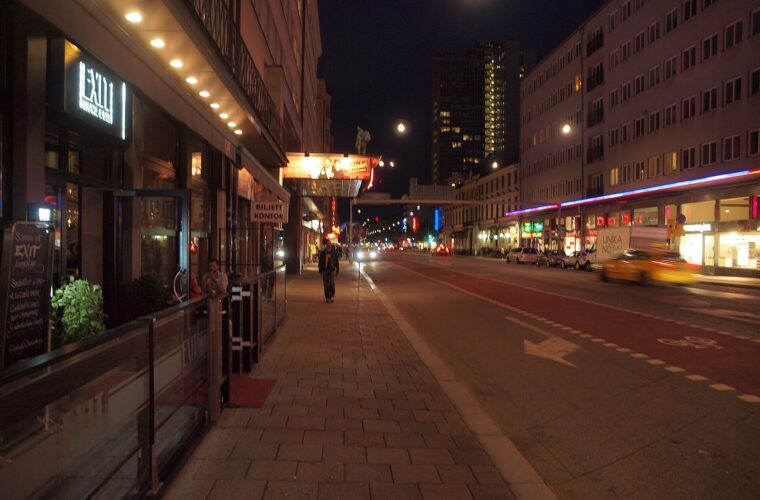
Biblioteksgatan — the luxury strip
Two short pedestrianised blocks between Hamngatan and Stureplan, and the densest concentration of expensive retail in Sweden. Acne Studios has its flagship here; so do Filippa K, Tiger of Sweden and J.Lindeberg, alongside Burberry, Hermès, Louis Vuitton and Prada.
The Swedish names are the reason to come. Acne Studios is a Stockholm label with genuinely better stock and pricing at home than abroad, and the flagship carries pieces that never reach the international stockists. Filippa K and Tiger of Sweden are the more wearable, less expensive version of the same idea.
Biblioteksgatan takes twenty minutes to walk end to end including window-shopping, which makes it an easy addition to a Norrmalm afternoon rather than a destination in itself. Note that it is one of the few streets in Stockholm where the sale seasons genuinely matter — January and late June are when the Swedish labels discount properly.
Kungsgatan and Sveavägen — the working streets
Kungsgatan runs east–west across Norrmalm, crossing Drottninggatan and ending at Stureplan. It is less a shopping street than a busy commercial artery with shops on it — cinemas, chains, offices — but it is the natural connector between the high street and the luxury strip, and the stretch near Hötorget has some of the better mid-price stores.
Sveavägen is longer, wider and more local, running north from Sergels Torg past the Stadsbiblioteket up into Vasastan. The shopping thins out quickly but the street is a pleasant walk and it is the spine connecting the centre to the Vasastan neighbourhoods, which the Vasastan guide covers.
Götgatan and Södermalm — the interesting half
Cross the water to Södermalm and the character changes completely. Götgatan is the island’s spine, running south from Slussen up over the hill to Medborgarplatsen and beyond, and the upper stretch — Götgatsbacken — is where the independent shops concentrate.
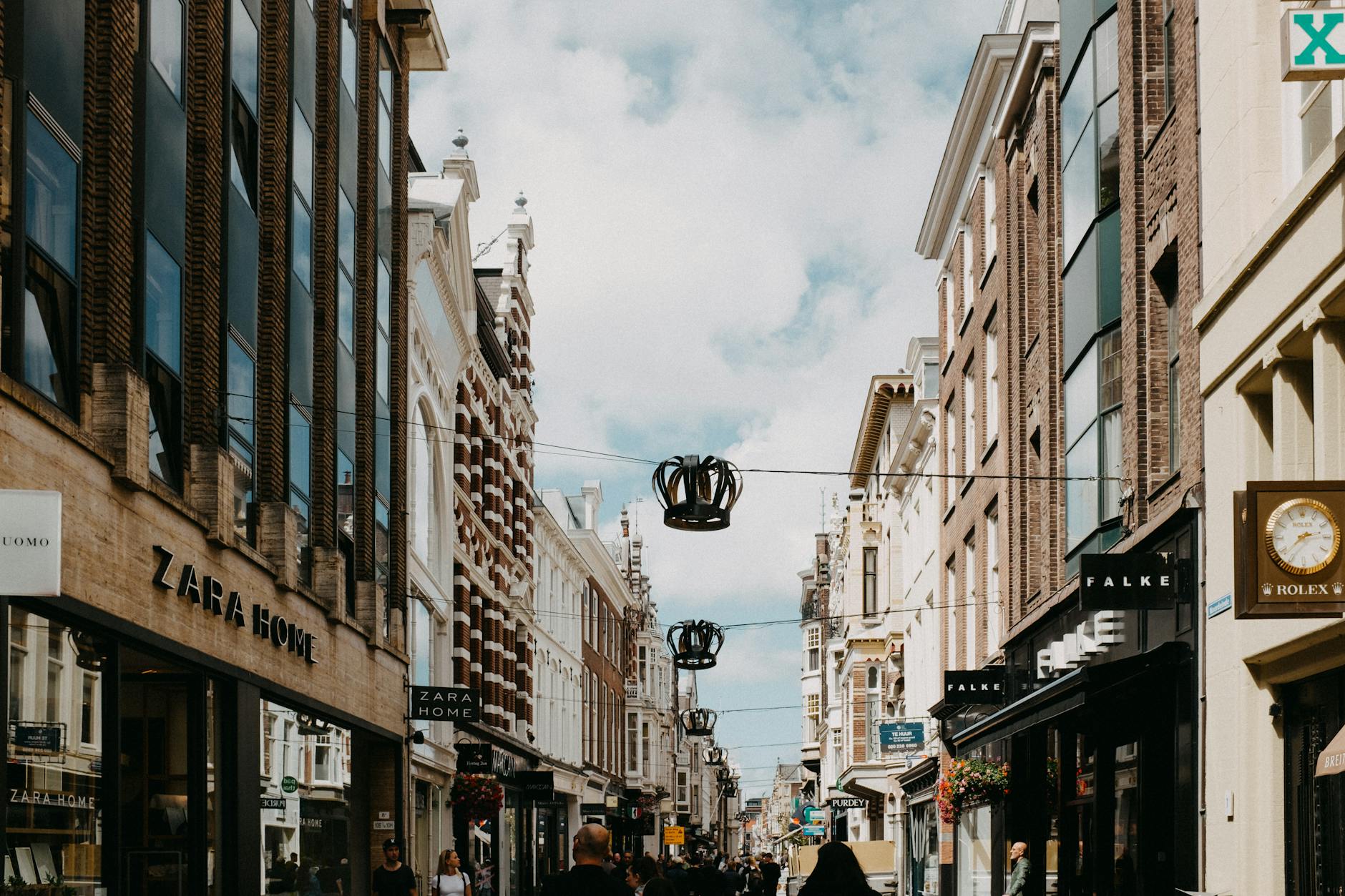
What you find here: Swedish independent labels, streetwear, second-hand and vintage, record shops, skate shops, small galleries, and design studios selling their own work. Prices are meaningfully lower than Norrmalm for comparable quality, and the staff usually made or chose the stock themselves.
Söderhallarna at Medborgarplatsen is the local market hall — smaller and less polished than Östermalmshallen, which is covered in the food markets guide — and a useful lunch stop mid-shop.
SoFo — the grid east of Götgatan
Skånegatan, Bondegatan, Nytorgsgatan and Åsögatan, roughly bounded by Folkungagatan and Ringvägen. SoFo — south of Folkungagatan, and yes, the name is borrowed — is the best few hours of shopping in Stockholm if what you want is something specific and slightly odd.
The area runs on vintage and secondhand, and Sweden’s circular-fashion culture means the stock is genuinely good rather than picked over. Expect small shops, short opening hours (many close at 18:00 and some do not open Mondays), and owners who will talk to you at length about what you are holding.
Timing: Saturday afternoon is when SoFo is fully alive, but it is also when everything is busiest. Thursday afternoon is the sweet spot. More on the island in the Södermalm guide.
Hornsgatan and Hornstull
Hornsgatan runs west from Slussen along the north edge of the island. The stretch known as Hornsgatspuckeln — the hump — is lined with small art galleries and framing shops, which makes it a pleasant twenty-minute walk rather than a serious shopping destination. Further west, Hornstull has a modest cluster of shops and, in summer, a weekend market by the water.
Östermalm’s quieter streets
Beyond Biblioteksgatan, Östermalm’s shopping is scattered across a grid of residential streets and is far more pleasant than Stureplan suggests.
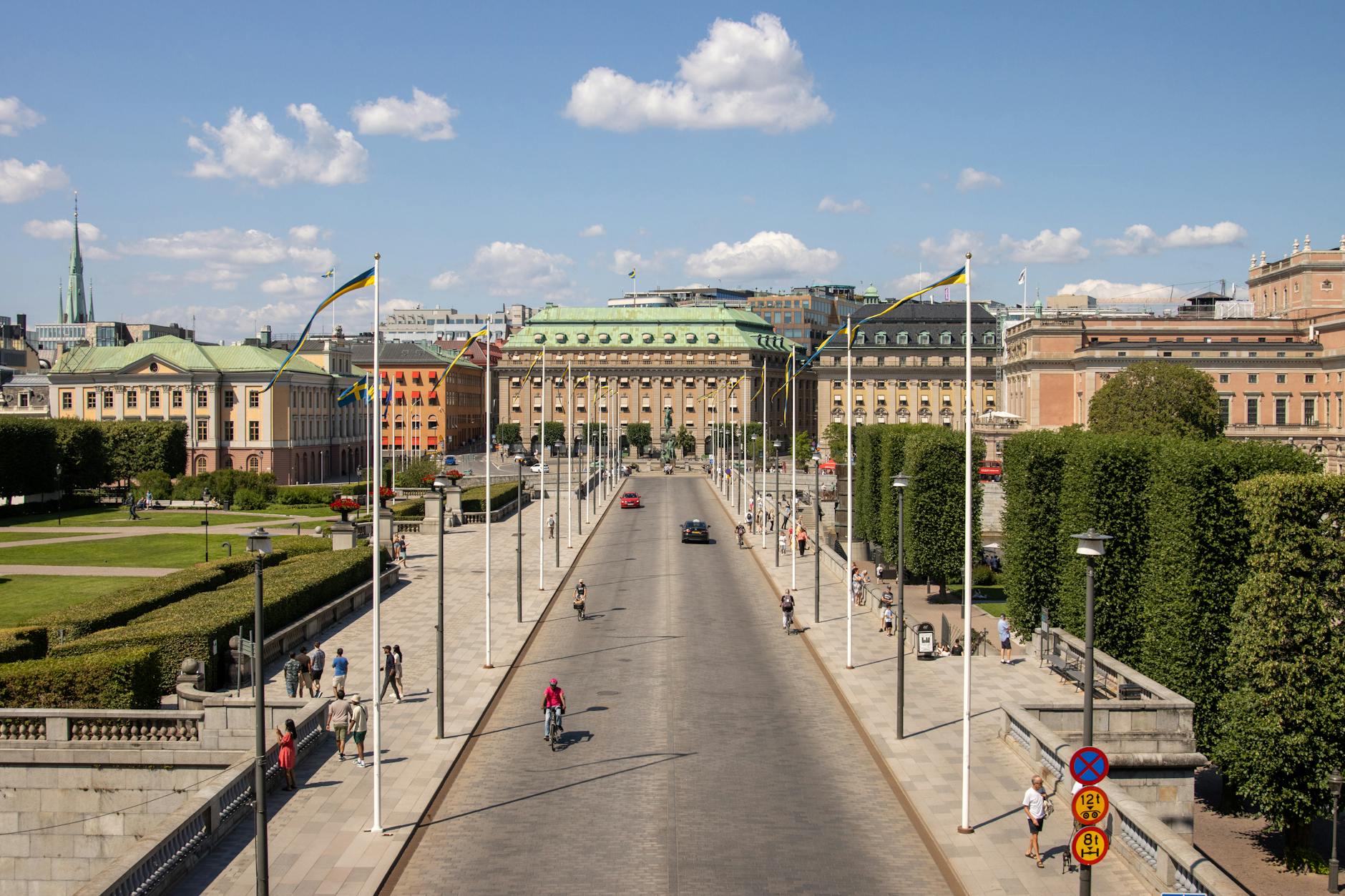
Nybrogatan is the best of them — running north from Nybroplan past Östermalmstorg, lined with interiors shops, delicatessens, tailors and long-established independents. It is where the neighbourhood actually shops.
Sibyllegatan and Grev Turegatan are quieter still: antiques, art, and small specialists. Neither takes long, and both are more rewarding than an equivalent half-hour on Drottninggatan.
Karlavägen and Strandvägen are boulevards rather than shopping streets — walk them for the buildings and the water, not the retail. The Östermalm guide covers the district properly.
Gamla Stan — Västerlånggatan and the alternative
Västerlånggatan is the old town’s main lane and it is almost entirely souvenir shops: Viking helmets, Dala horses of variable authenticity, fridge magnets, and moose-themed everything. It is the most-walked street in Stockholm and the least rewarding one on this list.
The alternative is one street over. Österlånggatan and the lanes around Stora Nygatan hold the old town’s actual shops — Swedish handicraft, genuine Dala horses from proper makers, design, antiquarian books and a handful of galleries. Same medieval streets, a fraction of the crowd, considerably better stock.
If you want a souvenir worth carrying home, this is where to buy it rather than on the main drag. The Gamla Stan guide maps the quarter.
What you cannot shop right now
Sturekvarteret, the block behind Stureplan containing the Sturegallerian arcade, has been a construction site since 2022. The ~SEK 2 billion, 48,000-square-metre rebuild completes in the fourth quarter of 2026, and will add a market-hall-style Sturehallen on the ground floor, restaurants, offices, flats and a new entrance to Östermalmstorg metro station. Until then it is hoardings. Any guide still recommending an afternoon in Sturegallerian has not visited recently.
Slussen, at the southern end of Götgatan, is likewise unfinished — the full transport hub completes in 2027. Götgatan’s shopping starts properly a couple of hundred metres uphill, so this affects the approach rather than the street itself.
Opening hours, and the Saturday problem
Swedish retail hours are shorter than most visitors expect, and Sunday is not the day off you might assume.
| Type of shop | Mon–Fri | Saturday | Sunday |
|---|---|---|---|
| Chain stores, Drottninggatan | 10:00–19:00 | 10:00–18:00 | 11:00–17:00 |
| NK and Åhléns City | 10:00–20:00 | 10:00–18:00 | 11:00–17:00 |
| Independent shops, SoFo | 11:00–18:00 | 11:00–17:00 | Often closed |
| Systembolaget (alcohol) | 10:00–19:00/20:00 | 10:00–15:00 | Closed |
The Systembolaget row is the one that catches people out. The state alcohol monopoly is the only place to buy anything above 3.5% ABV, it shuts at three on Saturday, and it does not open on Sunday. If a bottle of aquavit is on your shopping list, buy it on a weekday.
The other quirk: many small Södermalm shops close on Mondays, and some do not open until noon. A Monday morning shopping plan for SoFo will not work.
Tax-free shopping, properly explained

Swedish VAT is 25% on most goods, which makes the refund worth having if you are eligible.
- Who qualifies: residents of countries outside the EU. EU residents who have lived outside the EU for at least twelve months also qualify.
- Minimum spend: SEK 200 including VAT, per shop.
- How it works: ask for the tax-free form at the till and show your passport. Keep the goods unused and the receipts. Get the form stamped at customs when you leave the EU, then claim the refund.
- What you actually get back: not the full 25%. The refund operator takes a fee, so expect somewhere between 12% and 19% of the purchase price depending on the amount and the operator.
- Where to claim: refund desks operate at Arlanda; allow extra time, because the queue at peak departure hours is real.
The practical upshot: it is worth doing for a single significant purchase and rarely worth the paperwork for a handful of small ones. Payment itself is simple — Sweden is effectively cashless, cards work everywhere, and the currency guide covers the details.
A one-day shopping route
This covers all three clusters without backtracking, and it works on a Thursday or Friday.
- 10:00 — Biblioteksgatan. Start at the expensive end while you still have energy and the street is empty. Twenty minutes to walk it, longer if Acne detains you.
- 11:00 — Hamngatan. NK first for the building and the design floors, then Åhléns City for anything you actually intend to buy.
- 13:00 — Drottninggatan, walking south. The Swedish chains, in flagship form, in one straight line. Lunch anywhere off it rather than on it.
- 15:00 — metro to Slussen or Medborgarplatsen. Cross to Södermalm and walk Götgatan, then turn east into SoFo.
- 17:00 — SoFo. Vintage and independents until the shops shut at six. This is the part you will remember.
- 18:00 — stay put. You are already in the best area for dinner and a drink, which the nightlife areas guide covers.
Total walking: about five kilometres, one metro ride. If you only have half a day, do steps four and five and skip the centre entirely.
What to skip
- Västerlånggatan. The old town’s main lane sells the same eight souvenirs at four times what Österlånggatan charges for better versions.
- Sergelgatan and the area right by the station. Chains you have at home, at Stockholm prices, in the worst crowds in the city.
- A day trip to Mall of Scandinavia if you only have two days. It is a large mall in Solna with mostly international brands — worth it for a specific errand, not for a first visit.
- Anything advertised as “authentic Viking”. It is not, and the genuinely good Swedish handicraft is two streets away and half the price.
- Shopping on a Sunday in SoFo. Much of it will be shut. Go to the centre instead, or go to a museum.
Seasonal notes
January is the biggest sale month — Swedish labels discount properly from the first week, and Biblioteksgatan is the street where that matters most.
Late June and July bring the summer sales, but also the annual exodus: Stockholmers leave for the archipelago, some independent shops close for weeks, and SoFo in particular thins out. The centre stays open throughout.
November and December are the busiest and the prettiest. Drottninggatan’s Christmas lights go up in late November, NK’s window displays are a genuine local tradition, and the Christmas markets run alongside — all covered in the December guide.
Spring is unremarkable for shopping and excellent for walking the streets themselves, which after a Swedish winter is not nothing.
Frequently asked questions
What is the main shopping street in Stockholm?
Drottninggatan — a kilometre of pedestrianised street running north from the central station, lined with the Swedish high-street chains including H&M, COS, Weekday, Monki and & Other Stories. It is the busiest and the best value, though not the most interesting.
Where is the luxury shopping in Stockholm?
Biblioteksgatan, two pedestrianised blocks between Hamngatan and Stureplan. Acne Studios has its flagship there alongside Filippa K, Tiger of Sweden and J.Lindeberg, plus Burberry, Hermès, Louis Vuitton and Prada. NK on Hamngatan is the luxury department store.
Which street is best for vintage shopping in Stockholm?
The SoFo grid on Södermalm — Skånegatan, Bondegatan, Nytorgsgatan and Åsögatan, east of Götgatan. Sweden’s circular-fashion culture keeps the stock genuinely good. Many shops close at 18:00 and some do not open on Mondays.
What time do shops open and close in Stockholm?
Standard hours are Monday to Friday 10:00–19:00, Saturday 10:00–17:00 or 18:00, and Sunday 11:00 or 12:00–17:00. NK and Åhléns City both run to 20:00 on weekdays. Systembolaget, the state alcohol monopoly, closes at 15:00 on Saturdays and does not open on Sundays.
How does tax-free shopping work in Sweden?
Swedish VAT is 25%. Non-EU residents, and EU residents who have lived outside the EU for twelve months or more, can claim a refund on purchases of at least SEK 200 including VAT per shop. Ask for the form at the till, get it stamped at customs on departure, and expect to receive 12–19% back after the operator’s fee.
Is Sturegallerian open?
Not yet. The Sturekvarteret rebuild began in 2022 and completes in the fourth quarter of 2026, adding a market-hall-style Sturehallen, restaurants, offices, flats and a new entrance to Östermalmstorg metro. Until then the block is hoardings.
Is shopping in Stockholm expensive?
More expensive than southern Europe, roughly level with London, Paris and Copenhagen. The exceptions are the Swedish-owned high-street chains, which are 10–20% cheaper here than abroad, and Södermalm vintage, where Stockholm beats most European cities on both quality and price.
Can you pay with cash in Stockholm shops?
Often not. Sweden is effectively cashless and many shops, cafés and museums refuse notes outright. Bring a card; there is no need to change money before you arrive.
Which shopping street is best for Swedish design?
Biblioteksgatan for fashion flagships, NK’s design floors on Hamngatan for homeware, and Götgatan on Södermalm for smaller independent studios selling their own work. Nybrogatan in Östermalm is the quiet option for interiors.
How long do you need for shopping in Stockholm?
One full day covers all three clusters on foot with a single metro ride. If you have half a day, skip the centre and spend it on Götgatan and in SoFo — it is the shopping you cannot replicate at home.
Design shopping cuts across the street map rather than following it — Strandvägen has one shop worth the walk, Sibyllegatan has half a dozen, and Götgatan has the textile and craft end at a third of the price. Our guide to the best Swedish design stores in Stockholm reorders the city by what is inside the shops rather than where they stand.
Hamngatan’s two department stores deserve more than the hour this page gives them, and NK in particular is worth going into whether or not you intend to buy — the glazed atrium is the best free interior in central Stockholm. Our NK Stockholm department store guide goes floor by floor, flags which departments are genuinely good value, and explains the in-store tax refund desk.
Every so often a street simply is not the answer — a Sunday evening, a downpour, or one specific item you need within the hour. That is when the out-of-town option makes sense, and our Mall of Scandinavia shopping guide sets out how it compares with Drottninggatan on hours, brands, prices and the length of the journey.
More Stockholm guides
- Stockholm Shopping — the full guide to what to buy and where.
- Södermalm Guide — the island with the best independent shops.
- Östermalm Guide — Biblioteksgatan, Nybrogatan and the expensive end.
- Norrmalm Guide — Drottninggatan, Hamngatan and the department stores.
- Gamla Stan Guide — where to buy a souvenir that is worth carrying home.
- Stockholm Food Markets — the market halls, including Östermalmshallen.
- Stockholm Currency and Payment — cards, cash and the tax-free refund.
- Stockholm When It Rains — the covered options on a bad day.
Photo credits
Drottninggatan: Drottninggatan, Stockholm 2024 by Ssu, CC BY-SA 4.0, via Wikimedia Commons.
Biblioteksgatan: Biblioteksgatan 2008a by Holger.Ellgaard, CC BY-SA 4.0, via Wikimedia Commons.