Best Swedish Design Stores in Stockholm
Svenskt Tenn, Designtorget, Konsthantverkarna, Tiogruppen and the Östermalm galleries — where to buy real Swedish design and handicraft, what it costs, and what actually fits in a suitcase.
There is a version of Swedish design stores Stockholm sells to visitors — moose-print tea towels, a Dala horse carved in a factory five thousand kilometres from Dalarna — and a version it keeps for itself. The second one is far more interesting, considerably older than IKEA, and mostly concentrated in about six streets. This guide is about the second one.
Below: the institutions worth an hour of your trip, the accessible shops where a good object costs under SEK 500, where to find genuine Swedish handicraft rather than its souvenir imitation, what to do about shipping a chair home, and a route that links them. Prices were checked in September 2026 and are in Swedish kronor.
The institution: Svenskt Tenn, Strandvägen 5 — founded 1924, and still the best shop in Sweden.
The affordable one: Designtorget, Kungsgatan 52 and Götgatan 31 — new Swedish designers, small prices.
The craft one: Konsthantverkarna, Södermalmstorg 4 — Sweden’s oldest craft cooperative, founded 1951.
The furniture one: Nordiska Galleriet, Nybrogatan 11 — several floors in a 1912 building.
Typical spend: SEK 150–500 for a good small object; SEK 900+ once you reach the famous names.
Design week: 8–14 February 2027, with the Furniture Fair on 9–12 February.
One thing to know: Marimekko and Iittala are Finnish. Orrefors and Kosta Boda are the Swedish glass.

What “Swedish design” actually means
It helps to know what you are looking at, because the phrase covers three fairly different things and the shops rarely explain which one they are selling.
The first is functionalism — the 1930s idea, exported successfully enough that most of the world now thinks of it as simply “modern”. Clean lines, honest materials, nothing decorative that is not also doing a job. This is the strand IKEA industrialised and the one visitors recognise instantly.
The second is the Svenskt Tenn counter-tradition: pattern, colour, brass, printed linen and a great deal of it at once. Estrid Ericson founded the shop in 1924 and from 1934 worked with the Austrian architect Josef Frank, whose botanical prints are still in production and still look nothing like the pale-wood cliché. If your mental image of Swedish design is beige, this is the corrective.
The third is hemslöjd, the handicraft tradition — woven textiles, turned wood, forged iron, hand-painted horses. It predates both of the others by centuries and is the strand most likely to be faked for the souvenir market.
Knowing which you want narrows the shopping enormously. The broader picture of what to buy in the city is in the Stockholm shopping guide, and the streets themselves are mapped in our guide to the best shopping streets in Stockholm.
The institutions
Svenskt Tenn — Strandvägen 5, Östermalm
If you visit one design shop in Stockholm, visit this one, and visit it even if you intend to buy nothing. Founded in 1924, still on Strandvägen, still selling Josef Frank’s furniture and prints alongside brass, glass and textiles that have been in continuous production for eighty years.
It works as a museum you are allowed to touch. The upstairs rooms are arranged as interiors rather than as retail, there is a tea room, and the staff will let you wander for an hour without once asking whether you need help — which is itself a very Swedish piece of design.
What to actually buy: the printed linen by the metre is the classic, and a cushion cover in a Frank print runs SEK 900–1,400 — expensive, but flat, light and unmistakably from here. The small brass objects start considerably lower. Furniture is a different conversation and they will ship.
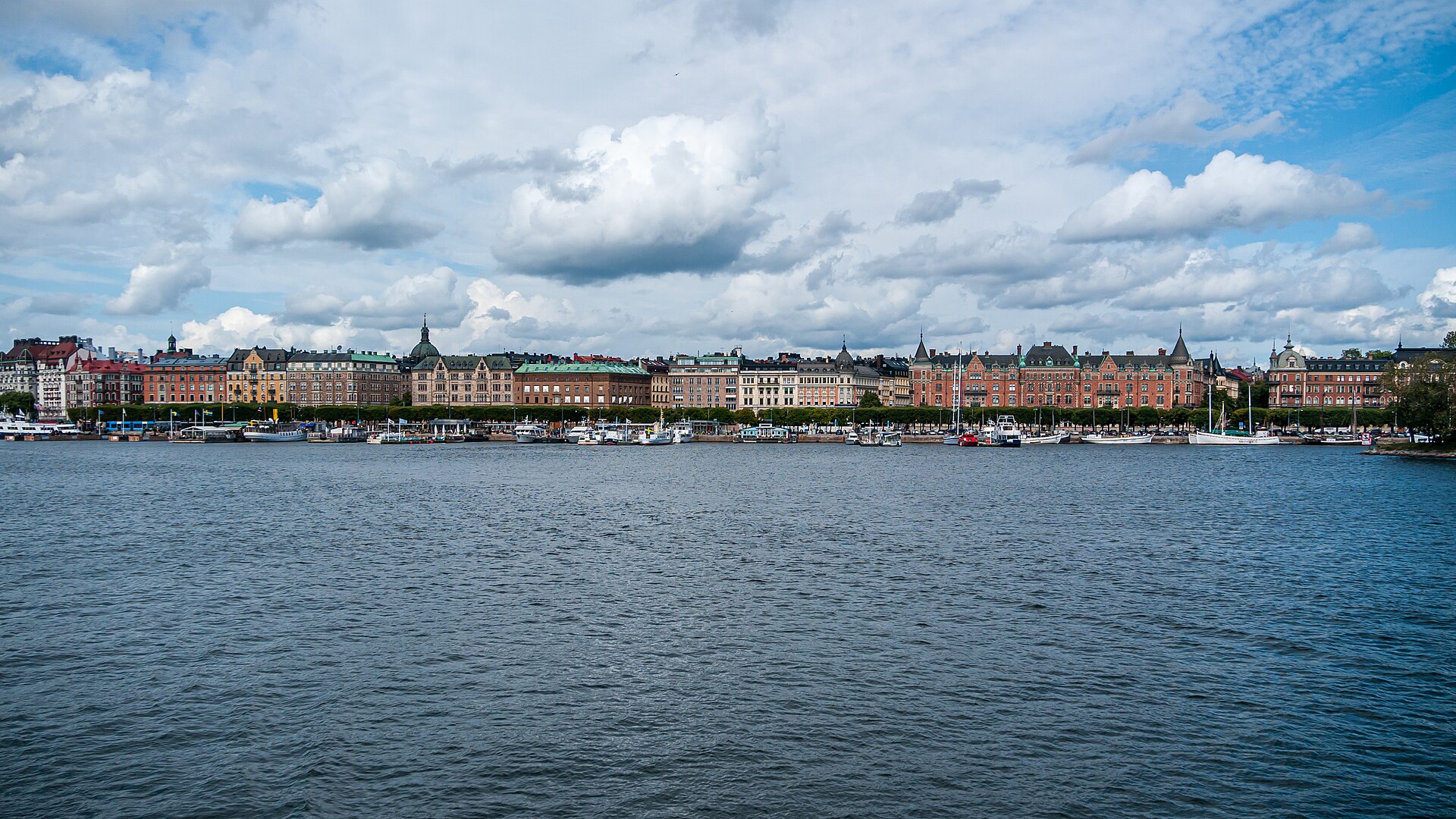
Strandvägen itself is worth the walk regardless: a boulevard of 1890s apartment buildings facing the water, with boats moored along the whole frontage.
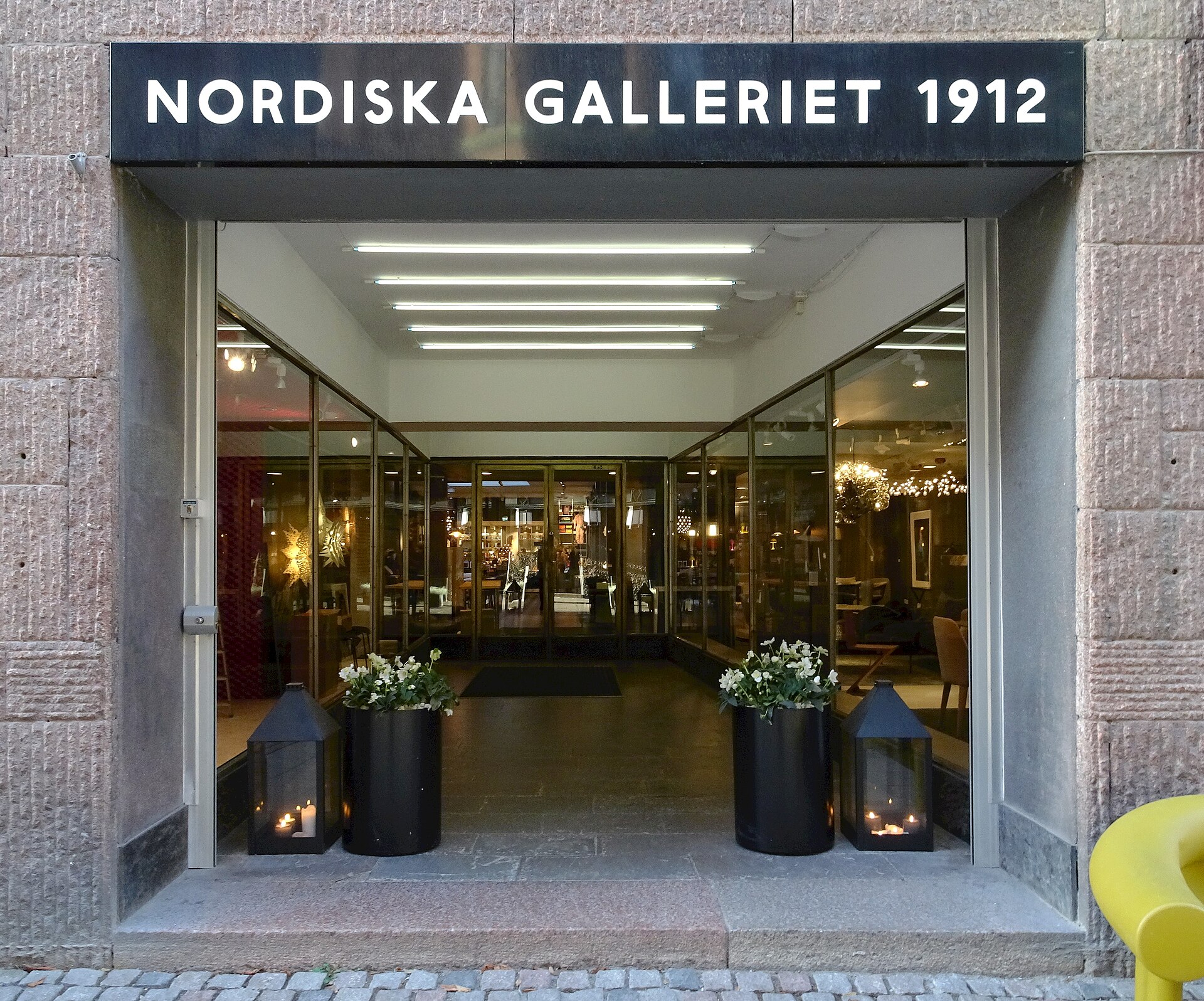
Nordiska Galleriet — Nybrogatan 11, Östermalm
On the corner of Riddargatan, in a 1912 building, several floors of Scandinavian and international furniture and lighting. This is the serious furniture shop — Fritz Hansen, the Danish and Swedish classics, contemporary Nordic names — and it functions as a free exhibition of the last century of northern European furniture design.
Realistically you are not flying home with a lounge chair. Go anyway: an hour here teaches you more about what distinguishes Swedish from Danish design than any amount of reading, and the lighting and small-objects sections have things that do fit in a suitcase.
Asplund — Sibyllegatan 31, Östermalm
Smaller, more curated, and the most enjoyable of the Östermalm trio if you are browsing rather than furnishing. Asplund produces its own furniture line and carries Swedish and international designers alongside a genuinely good selection of smaller accessories — the section worth your attention if you have limited luggage.
The design floors at NK
NK on Hamngatan devotes serious space to Swedish glass, ceramics and homeware, which makes it the efficient option if you want Orrefors and Kosta Boda in one place and do not want to cross town. It is not cheaper than the specialists, but it is open until 20:00 on weekdays and it takes the tax-free paperwork off your hands at a single desk.
Where a good object costs under SEK 500
The famous shops are expensive. These are not, and the objects are no less Swedish.
Designtorget — Kungsgatan 52, Götgatan 31 and elsewhere
The best-value design shopping in the city, and the one most visitors walk past. Designtorget exists to sell work by new and independent Swedish designers, which means the stock rotates constantly and a good deal of it sits between SEK 150 and SEK 500 — ceramics, kitchen tools, textiles, lighting, stationery, jewellery.
It is also where you find the things that are genuinely hard to buy outside Sweden, because the designers are small enough not to export. If you want one souvenir that will get asked about at home, start here rather than on Västerlånggatan.
Granit and Lagerhaus
Two Swedish homeware chains doing the accessible end of functionalism: storage, kitchen, bath, stationery. Granit in particular is the shop Stockholmers actually use, all grey and white and sensible, and the prices are ordinary. Neither is exciting. Both are useful, and both are reliably better value than the airport.
Handicraft, and how to avoid the fakes
Konsthantverkarna — Södermalmstorg 4
Sweden’s oldest and largest handicraft cooperative, founded in 1951 and run by the makers themselves. Pottery, glass, wood, silver, ironwork and textiles, all by Swedish craftspeople, often with the maker’s name on the piece. Prices span an enormous range, from small ceramics at SEK 200 to gallery pieces in the thousands.
This is the honest alternative to a souvenir shop. Everything in it was made by a person whose name you can read, which is more than can be said for most of Gamla Stan.
Svensk Hemslöjd and Iris Hantverk
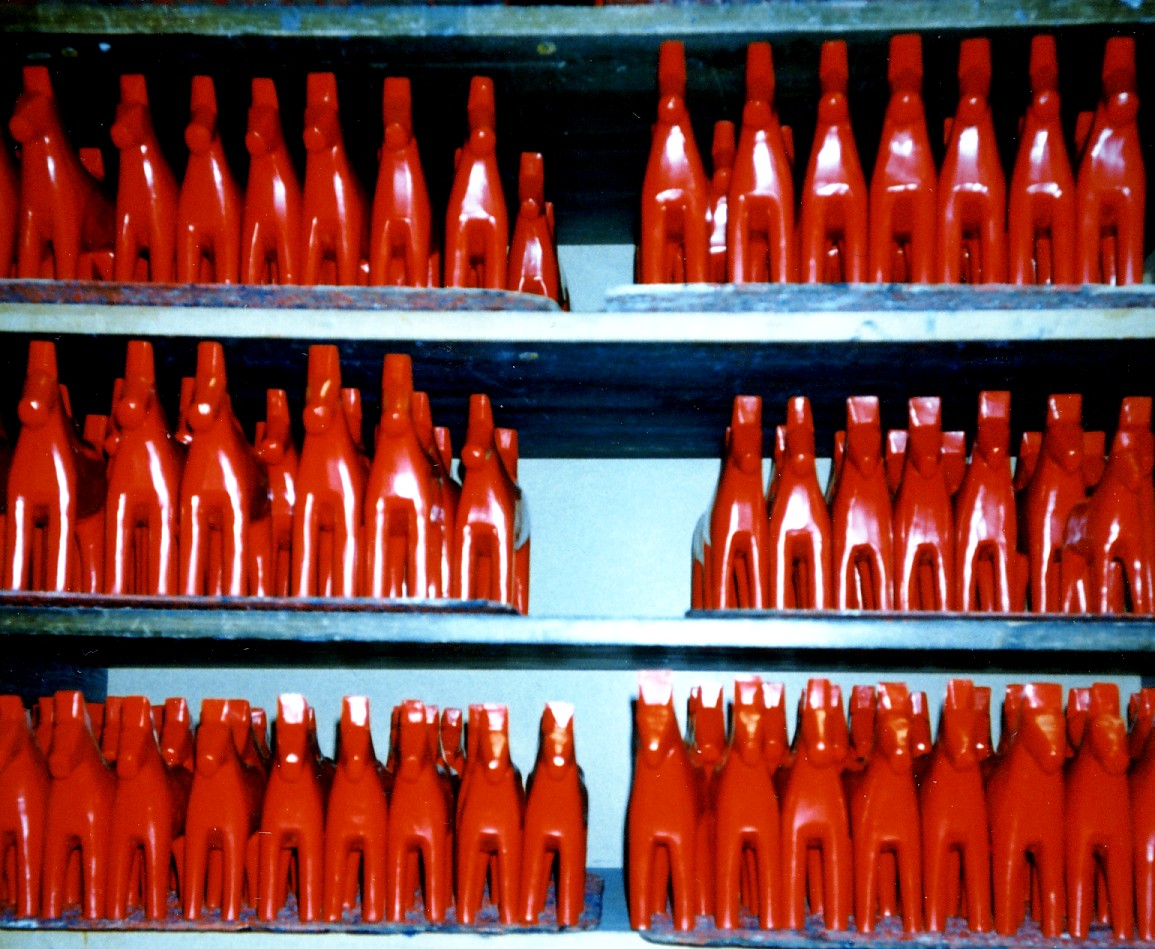
Two more worth knowing. Svensk Hemslöjd carries traditional Swedish handicraft including properly made Dala horses from Dalarna — the real ones, carved and hand-painted, at real-thing prices. Iris Hantverk sells handmade brushes produced by visually impaired craftspeople, a Swedish institution dating to the nineteenth century, and a dish brush from there is the most quietly satisfying SEK 150 you will spend on this trip.
Tiogruppen — Götgatan 25, Södermalm
In 1970, ten young textile designers who were tired of having their best patterns rejected by the big mills formed a group to control the whole process themselves, from sketch to finished fabric on the shop floor. Tiogruppen still does exactly that. The prints are bold, graphic and instantly recognisable, and fabric by the metre or a printed bag is about as portable a piece of Swedish design as exists.
Vintage and mid-century
Stockholm is one of the better cities in Europe for twentieth-century Scandinavian design, partly because so much of it was made here and partly because Swedes replace furniture less often than the marketing suggests.
Sibyllegatan in Östermalm is the dealers’ street — several specialists in mid-century Scandinavian furniture, glass and lighting within a few doors of each other. Prices are serious and the stock is properly vetted.
Södermalm is the other end: vintage shops in the SoFo grid carrying 1950s–1970s Swedish glass and ceramics at a fraction of the Östermalm price, alongside a great deal that is simply old. You need an eye, and you will occasionally find something extraordinary.
The auction houses are the serious route. Stockholm’s auction market is active and open to the public, and viewing days are free. If you are genuinely in the market for a piece, this is where Swedes buy.
Glass and ceramics, correctly attributed
One thing worth clearing up, because a lot of guides get it wrong.
| Name | Country | What it is |
|---|---|---|
| Orrefors | Sweden | Crystal and art glass, from Småland |
| Kosta Boda | Sweden | Colourful art glass, Sweden’s oldest glassworks |
| Gustavsberg | Sweden | Ceramics, from Värmdö east of the city |
| Rörstrand | Sweden | Porcelain, founded 1726 |
| Iittala | Finland | Excellent, but not Swedish |
| Marimekko | Finland | Also excellent, also not Swedish |
| Arabia | Finland | Ceramics, Helsinki |
Nothing wrong with buying the Finnish ones — Stockholm sells them everywhere and they are superb. Just know what you are carrying home, particularly if it is a gift with a story attached.
IKEA, honestly
The original IKEA sits at Kungens Kurva, southwest of the city, and it is the largest in the world. Whether it is worth half a day of a short trip depends entirely on why you came.
If you are a design tourist who wants to see where the democratic-design idea was industrialised, it is genuinely interesting, and the Swedish food market at the exit sells things you cannot easily get at home. If you simply want to buy IKEA products, there is one in your country and the range is nearly identical. It is a long way out for a shelving unit.
The shopping pillar covers the practicalities of getting there.
What actually fits in a suitcase
The single most common mistake here is falling in love with furniture on day one of a four-day trip. These are the things that travel.
- Printed textiles by the metre. Flat, light, and the most characteristically Swedish thing you can buy. Svenskt Tenn for Josef Frank, Tiogruppen for the graphic version.
- A hand-painted Dala horse from a proper maker. Small sizes are cheap and pack well; the difference between a real one and a Västerlånggatan one is visible at arm’s length.
- Iris Hantverk brushes. Light, useful, and unimprovable.
- Small glass. A single Kosta Boda or Orrefors piece, properly wrapped, survives hold luggage. A set does not.
- Ceramics from Konsthantverkarna or Designtorget. One maker, one piece, signed.
- Stationery and kitchen tools. The least glamorous category and the one where Swedish design is most obviously better than the alternative.
For anything larger, the established shops all ship, and the good ones handle the export paperwork as part of it. Ask before you buy rather than after.
Tax-free and shipping
Swedish VAT is 25%, and design shopping is the category where reclaiming it is most likely to be worth the paperwork.
- Eligibility: non-EU residents, plus EU residents who have lived outside the EU for at least twelve months.
- Minimum: SEK 200 including VAT, per shop.
- Process: ask at the till, show your passport, keep the goods unused, have the form stamped at customs when you leave the EU.
- Realistic return: 12–19% after the refund operator’s fee, not the full 25%.
- Shipping: the large shops ship worldwide and will usually export furniture VAT-free directly, which is simpler than reclaiming and often cheaper than excess baggage.
Payment is straightforward — Sweden is effectively cashless and every shop here takes cards. The currency and payment guide has the detail.
Design shopping by neighbourhood
| Area | What it has | Price level | Time needed |
|---|---|---|---|
| Östermalm (Strandvägen, Nybrogatan, Sibyllegatan) | The institutions, furniture, mid-century dealers | High | 2–3 hours |
| Norrmalm (Kungsgatan, Hamngatan) | Designtorget, NK’s design floors, chains | Mixed | 1–2 hours |
| Södermalm (Götgatan, Södermalmstorg, SoFo) | Craft, textiles, independents, vintage | Low to mid | 2–3 hours |
| Gamla Stan (Österlånggatan, not the main lane) | Handicraft, real Dala horses | Mid | 1 hour |
A design day that works
- 10:00 — Strandvägen. Svenskt Tenn first, while you are fresh and it is quiet. Allow an hour; you will use it.
- 11:30 — Nybrogatan and Sibyllegatan. Nordiska Galleriet, then Asplund, then the mid-century dealers. Lunch around Östermalmstorg.
- 14:00 — Kungsgatan. Designtorget for the things you will actually buy, at the prices you will actually pay.
- 15:30 — metro to Slussen. Konsthantverkarna on Södermalmstorg, then up Götgatan to Tiogruppen.
- 17:00 — SoFo. Vintage and independent studios until the shops shut. Shops here close at six and some do not open on Mondays.
Roughly four kilometres of walking and one metro ride. If you only have half a day, do Svenskt Tenn and then go straight to Södermalm — the two ends of the spectrum, and the two you cannot replicate at home.
Design Week, and why 2026 is quiet
Stockholm’s design calendar runs on a February peak, and it has just changed shape.
The Stockholm Furniture Fair skipped 2026 entirely and relaunches in 2027 as a biennial event, shortened to four days with the Saturday removed and a sharper focus on trade rather than public visitors. It runs 9–12 February 2027 at Stockholmsmässan in Älvsjö.
Stockholm Design Week wraps around it, citywide, from 8 to 14 February 2027 — open showrooms, talks, exhibitions and parties across the city, most of it free and much of it in the shops listed above. If you are planning a trip specifically around design, that week is the one, and hotels price accordingly.
Outside February, the shops are simply shops, which for most visitors is the better experience anyway. The best time to visit guide covers what else the calendar holds.
What to skip
- Dala horses on Västerlånggatan. Most are not made in Dalarna and several are not made in Sweden. Buy from Svensk Hemslöjd or Konsthantverkarna instead — the difference in price is smaller than the difference in object.
- Airport design shops. A curated selection at a tax-free price that is usually no better than the city price after a refund, with none of the range.
- Buying Finnish design as a Swedish souvenir. Nothing wrong with Iittala. It is just not from here.
- Furniture you have not measured. It happens constantly. Shipping a chair from Stockholm is straightforward; getting it through your front door is your problem.
- A trip to IKEA on a two-day visit. It is a long way out for something you can buy at home.
Frequently asked questions
What is the best design store in Stockholm?
Svenskt Tenn at Strandvägen 5. Founded in 1924 and still selling Josef Frank’s furniture and prints, it functions as much as a free museum of Swedish interiors as a shop. For affordable design by new Swedish makers, Designtorget on Kungsgatan and Götgatan is the better answer.
Where can I buy authentic Swedish handicraft in Stockholm?
Konsthantverkarna at Södermalmstorg 4, Sweden’s oldest and largest handicraft cooperative, founded in 1951 and run by the makers. Svensk Hemslöjd is the other reliable option, and it carries genuine hand-painted Dala horses from Dalarna rather than the factory versions sold on Västerlånggatan.
Is Swedish design cheaper in Stockholm?
The Swedish-owned brands are, particularly once you add a tax-free refund — Swedish VAT is 25% and non-EU visitors get 12–19% back on purchases over SEK 200 per shop. Independent makers sold through Designtorget and Konsthantverkarna are often unavailable abroad at any price.
Are Marimekko and Iittala Swedish?
No, both are Finnish, as is Arabia. The Swedish equivalents are Orrefors and Kosta Boda for glass, and Gustavsberg and Rörstrand for ceramics. Stockholm sells all of them, so check the label if the provenance matters to you.
What Swedish design is easy to take home?
Printed textiles by the metre from Svenskt Tenn or Tiogruppen, a small hand-painted Dala horse, Iris Hantverk brushes, a single piece of Kosta Boda or Orrefors glass, and ceramics from Konsthantverkarna or Designtorget. Furniture needs shipping, which the established shops all arrange.
Which street has the best design shops in Stockholm?
Nybrogatan and Sibyllegatan in Östermalm for furniture, mid-century dealers and the serious galleries. Götgatan on Södermalm for textiles, craft and independent studios at much lower prices. Strandvägen has one shop, Svenskt Tenn, and it is worth the walk on its own.
When is Stockholm Design Week?
Stockholm Design Week runs 8–14 February 2027 across the city, with the Stockholm Furniture Fair at Stockholmsmässan on 9–12 February. The fair skipped 2026 entirely and returns in 2027 as a shorter, biennial, more trade-focused event.
Is the original IKEA in Stockholm worth visiting?
Only if the history interests you. The Kungens Kurva store southwest of the city is the largest in the world, but the range is close to what you can buy at home. On a short trip the half-day is better spent in Östermalm and on Södermalm.
Can design shops in Stockholm ship internationally?
Yes. Svenskt Tenn, Nordiska Galleriet, Asplund and the other established shops all ship worldwide and will usually export furniture VAT-free directly, which is simpler than reclaiming the tax and often cheaper than excess baggage. Ask before buying.
What is Josef Frank and why does it matter?
Josef Frank was an Austrian architect who worked with Svenskt Tenn from 1934, producing botanical printed textiles and furniture that run directly against the pale, minimal stereotype of Swedish design. His prints are still in production at Strandvägen 5 and are the single most recognisable thing in Swedish interiors.
The same instincts that produced Svenskt Tenn and Designtorget also produced a startling amount of clothing — Acne Studios, Totême, Our Legacy and Filippa K all work within a few streets of each other, and the whole H&M empire is headquartered here. Our guide to the best Swedish fashion brands to shop in Stockholm is the wardrobe half of the same story.
If your time is short, NK’s upper floors put Orrefors, Kosta Boda, Swedish ceramics and homeware in one place — the range you would otherwise walk four shops to assemble, and packed properly for hold luggage. Our NK Stockholm department store guide covers what is worth buying there and what is priced exactly as it is at home.
If you are in the old town rather than Östermalm, the craft is still there — it is simply not on the street everyone walks. Our guide to the best souvenir shops in Gamla Stan covers the handmade brushes on Västerlånggatan, the Dala horses carved in store, and the polkagris workshop where the sugar is still pulled by hand over a hook.
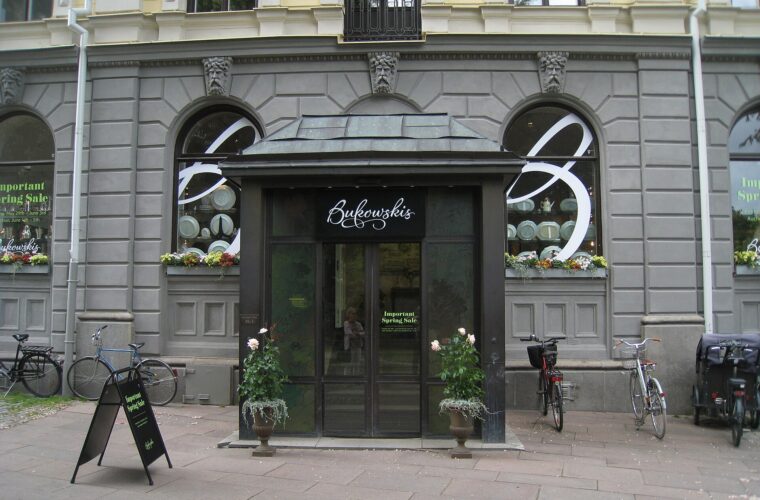
If you would rather buy the classics second time round, the auction rooms are ten minutes’ walk from Strandvägen. Bukowskis and Stockholms Auktionsverk both hold free public viewings where Josef Frank cabinets, Orrefors glass and Gustavian chairs sit side by side with their estimates. Our guide to antique shops and auction houses in Stockholm explains how to use them as a visitor.
More Stockholm guides
- Stockholm Shopping — the full guide to what to buy in the city.
- Best Shopping Streets in Stockholm — the retail geography, street by street.
- Östermalm Guide — Strandvägen, Nybrogatan and the design institutions.
- Södermalm Guide — craft, textiles and independent studios.
- Stockholm Currency and Payment — cards, VAT and the tax-free refund.
- Stockholm Museums — where the design collections live.
- Best Time to Visit Stockholm — including the February design calendar.
- Gamla Stan Guide — where to buy handicraft in the old town.
Photo credits
Strandvägen: Strandvaegen, Stockholm ( 1090738) by Matti Blume, CC BY-SA 4.0, via Wikimedia Commons.
Dala horses drying: Dalahast 4 by Holger Ellgaard, CC BY-SA 3.0, via Wikimedia Commons.
Nordiska Galleriet entrance on Nybrogatan: Nordiska Galleriet, 2017 by Holger.Ellgaard, CC BY-SA 4.0, via Wikimedia Commons.