Best Souvenir Shops in Gamla Stan
Where to buy a Swedish souvenir in Stockholm's old town that is actually Swedish — the shops worth entering, how to spot a fake Dala horse, and why Västerlånggatan is the wrong street.
Most visitors buy their souvenirs Stockholm offers on Västerlånggatan, the old town’s main lane, and most of what they carry home was made in a factory several thousand kilometres from Sweden. The frustrating part is that the real thing — hand-carved, hand-painted, hand-pulled, made by someone whose name is on it — is sold one street away, often for less money.
This guide covers where to buy a Swedish souvenir in Gamla Stan that is actually Swedish: the shops worth going into, how to tell a genuine Dala horse from its imitation at a glance, what things cost on the main lane versus one street back, and the handful of famous “Viking” souvenirs that are historically nonsense. Prices were checked in September 2026 and are in Swedish kronor.
The rule: one street back from Västerlånggatan is better and usually cheaper.
The best single shop in the quarter: Iris Hantverk, Västerlånggatan 24 — handmade brushes since the 1800s.
For a real Dala horse: Dala Shop in Gamla Stan, which carves and paints on site.
For something edible: a polkagris workshop on Stora Nygatan, pulled by hand in front of you.
Typical spend: SEK 150–400 for a good small object; SEK 400–900 for a proper hand-painted horse.
Alcohol warning: aquavit comes from Systembolaget only, which shuts at 15:00 on Saturday and all day Sunday.
Never buy: a horned Viking helmet. Vikings did not wear them. It is a 19th-century opera costume.
The Västerlånggatan problem
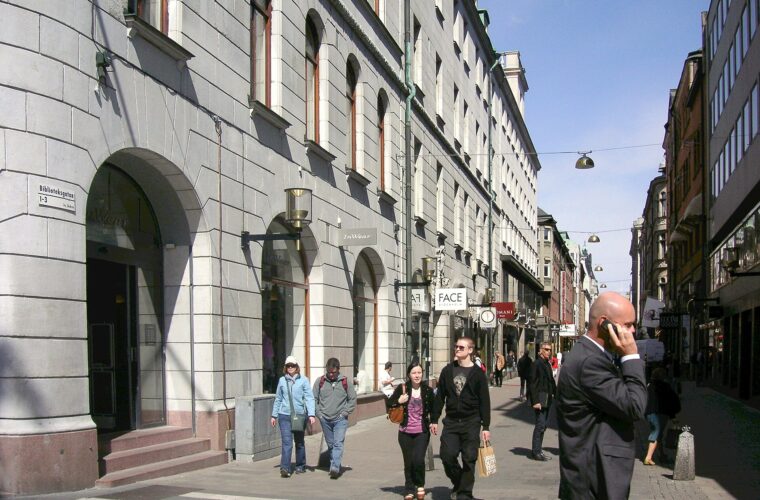
Västerlånggatan runs the length of the old town, south from Mynttorget to Järntorget, and it is the most-walked street in Stockholm. It is also, commercially, the least interesting: a dense run of shops selling the same eight objects — fridge magnets, moose-print everything, plastic Viking helmets, mass-produced trolls, “I ♥ Stockholm” textiles and Dala horses of uncertain parentage.
None of this is a scandal. Every old town in Europe has one of these streets, and the shops are meeting a demand that exists. The problem is purely that most visitors never leave it, because the medieval lane is beautiful and the alternatives are not signposted.
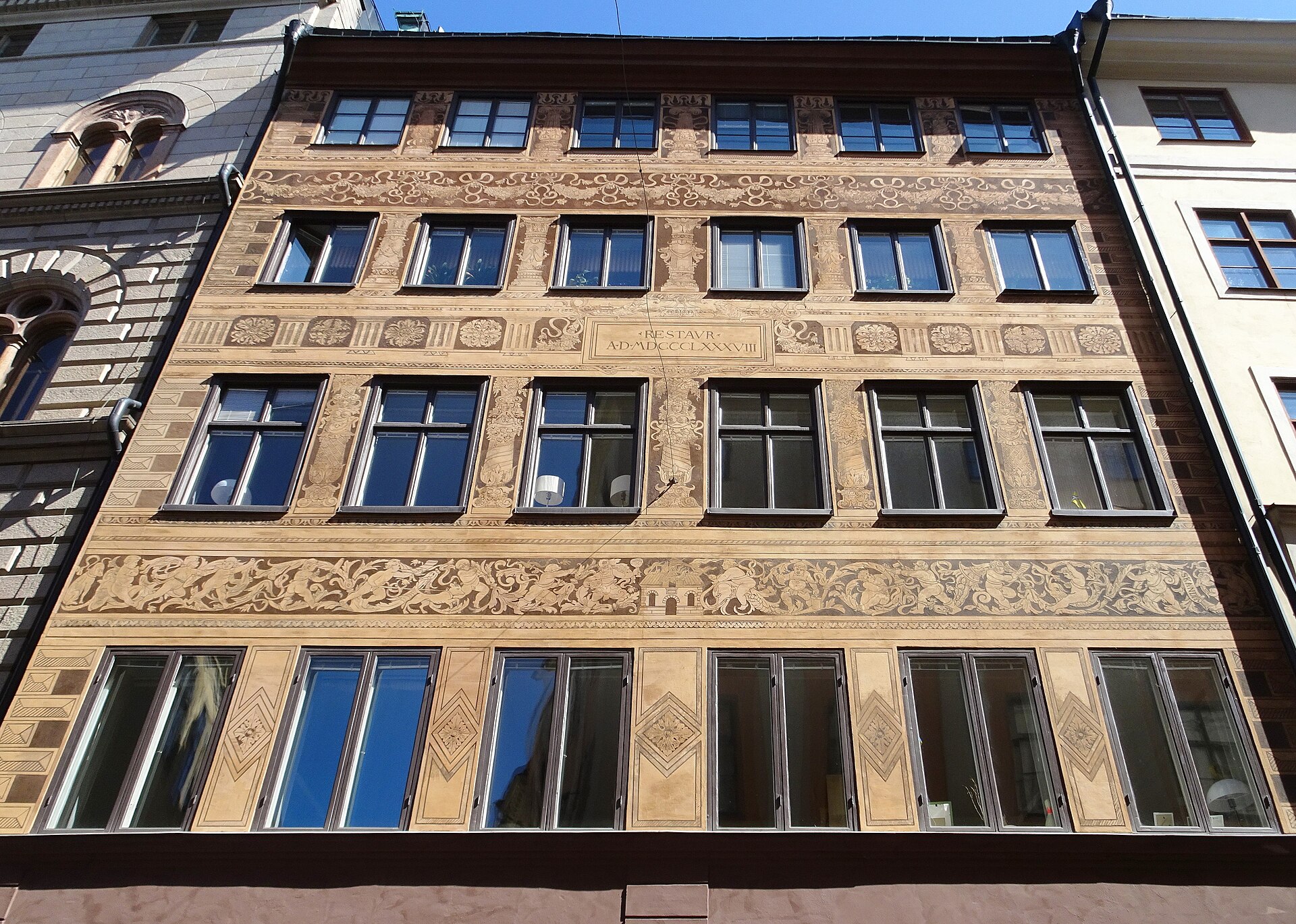
So walk it — it is genuinely lovely, and the buildings above shop-sign height are extraordinary — and then turn off it to spend your money. The rest of the quarter is thirty seconds away in any direction, and the Gamla Stan guide maps the lanes properly.
The shops worth going into
Iris Hantverk — Västerlånggatan 24
The exception on the main lane, and the best souvenir shop in the quarter. Iris Hantverk grew out of a Stockholm brush workshop founded at the end of the nineteenth century, and its brushes are still made by hand by visually impaired craftspeople — a tradition that began as employment for blind artisans and has become one of the more quietly admirable things in Swedish manufacturing.
What to buy: a dish brush, a bath brush, a clothes brush. They cost SEK 150–450, they last for years, they weigh nothing, and they are the rare souvenir that gets used every day rather than put on a shelf. There is a second branch on Kungsgatan if you are in Norrmalm instead.
Dala Shop — Gamla Stan
Hand-carved and hand-painted Dala horses from established workshops in Dalarna, plus horses carved and painted in the shop itself. The staff will explain the difference between what they sell and what is sold three doors down, and the explanation is worth hearing even if you buy nothing.
A genuine small horse starts around SEK 300–400 and the larger ones climb quickly. That is three or four times a Västerlånggatan price, and the object is entirely different.
A polkagris workshop on Stora Nygatan
Polkagrisar — the red-and-white peppermint sticks — have been made in Sweden since the 1850s, and in Gamla Stan you can watch a batch being pulled by hand over a hook, folded, rolled and cut in front of you.
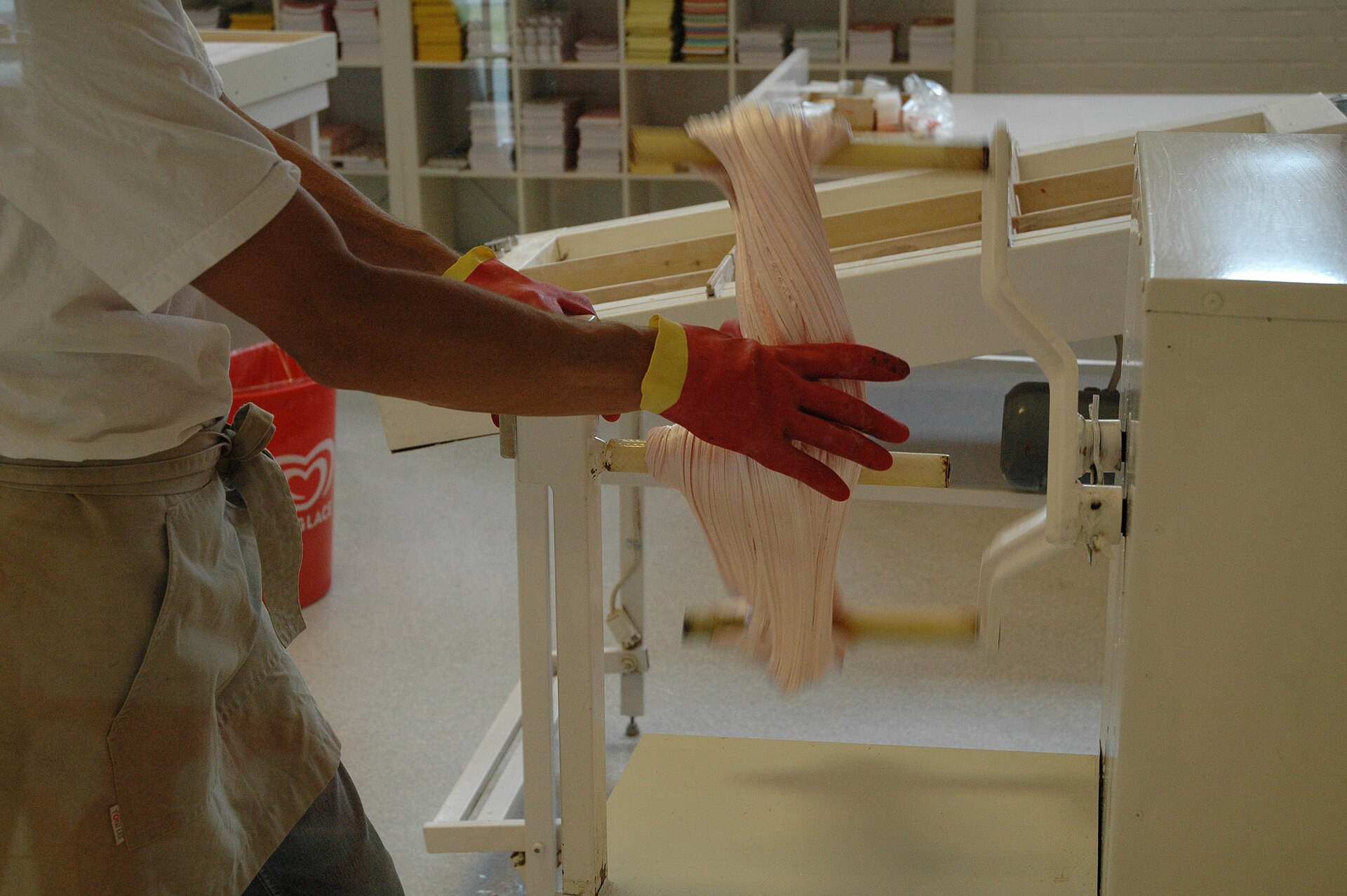
It is the best souvenir for children, the best thing to take back to an office, and the only one on this page that costs under SEK 100. It also travels badly in a hot suitcase, so buy it on the last day.
Made in Stockholm
Exactly what the name says: goods made in Sweden, by Swedish makers, gathered in one Gamla Stan shop. Useful as a first stop because it shows you the range — textiles, ceramics, wood, prints — before you decide what you are actually after.
One street back: Österlånggatan and Stora Nygatan
Gamla Stan is an island and it is small. The two streets running parallel to Västerlånggatan — Österlånggatan to the east and Stora Nygatan to the west — carry most of the quarter’s genuine shops and almost none of its crowds.
Österlånggatan is the older of the two, following the line of the medieval shoreline, and holds craft shops, small galleries and the sort of businesses that have been there for decades. Stora Nygatan runs to art galleries, craft workshops and rotating exhibitions of work by Swedish makers — the kind of place where the person behind the counter made what is in the window.
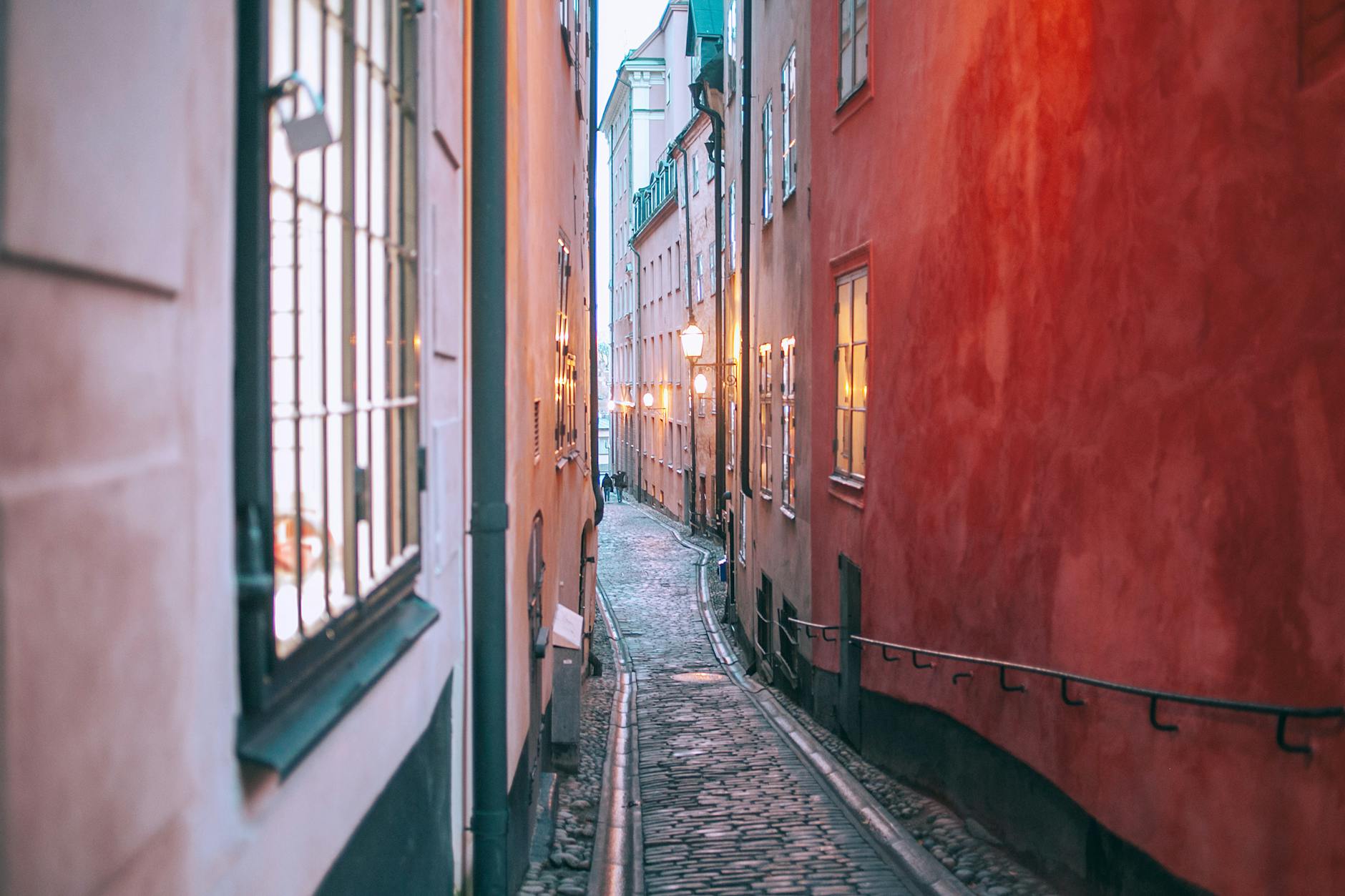
Between them run the cross-lanes and the gränder — the narrow alleys, of which Mårten Trotzigs Gränd, ninety centimetres across at its narrowest, is the famous one. Wander. It is a ten-minute island and you cannot get lost on it for long.
What a Swedish souvenir actually is
Five categories cover almost everything worth buying, and none of them involve a moose.
| Object | What it is | Price (SEK) | Packs? |
|---|---|---|---|
| Dala horse, hand-painted | Carved pine from Dalarna, kurbits pattern painted by hand | 300–900+ | Yes, small sizes |
| Iris Hantverk brush | Handmade, visually impaired craftspeople | 150–450 | Perfectly |
| Lovikka mittens | Thick brushed wool, a named Swedish tradition | 400–800 | Yes |
| Swedish glass | Orrefors or Kosta Boda, from Småland | 400–2,000 | With care |
| Polkagrisar | Hand-pulled peppermint sticks | 40–90 | Yes, but keep cool |
| Printed textiles | Swedish design by the metre or as a bag | 200–1,400 | Flat and light |
| Vacuum-packed gravlax | From a saluhall food hall | 150–300 | Hold luggage only |
How to spot a fake Dala horse
This is the single most useful skill on this page, because the Dala horse is Sweden’s signature souvenir and the market is full of imitations.
- Turn it over. A genuine horse is carved from pine and the grain shows. A cast resin horse has a seam and a uniform surface, and it is lighter than it should be.
- Look at the kurbits. The painted harness pattern on a real horse is applied freehand, so the strokes vary in width and no two horses match exactly. A printed or transferred pattern is perfectly regular.
- Check for tool marks. Hand-carved horses show slight facets from the knife, particularly around the legs and muzzle. Machine-carved ones are too smooth.
- Look for the workshop mark. The established Dalarna makers mark their horses on the base.
- Check the price. A hand-carved, hand-painted horse cannot be made for SEK 80. If it costs that, it was not.
None of this makes the cheap version morally wrong — if you want a SEK 80 horse, buy a SEK 80 horse. But know which one you are buying, and know that the real thing is an object someone spent an hour on.
What not to buy
- Horned Viking helmets. Vikings never wore them. The horned helmet is an invention of nineteenth-century Romanticism, popularised by the costume designs for Wagner’s Ring cycle in 1876. Every archaeological Viking helmet found is plain. Buying one is buying a German opera prop.
- Anything with a moose on it, unless you genuinely like moose. The moose is not a Swedish national symbol so much as a souvenir industry decision.
- Mass-produced trolls. Troll carving is a real Nordic folk tradition, and almost nothing sold on Västerlånggatan is part of it.
- “Viking” drinking horns, axes and jewellery of the sort sold by weight. Sweden has genuine Viking-age history and excellent museums about it — buy the book instead.
- Fridge magnets, at Gamla Stan prices. If you want one, the museum shops sell better ones for the same money.
Edible and drinkable souvenirs
Food is the most reliably good souvenir out of Sweden, and almost none of it is sold in Gamla Stan.
The best edible things — vacuum-packed gravlax, cloudberry and lingonberry preserves, proper Swedish chocolate, knäckebröd, cheese — come from the food halls. NK Saluhall on Hamngatan and Östermalms Saluhall are both ten minutes away, and both are covered in the food markets guide. A supermarket will do at a pinch and costs half as much.
Alcohol is the trap. Anything above 3.5% ABV in Sweden is sold only by Systembolaget, the state monopoly. Its hours are the thing to plan around: roughly 10:00–19:00 on weekdays, 10:00–15:00 on Saturdays, and closed on Sundays. If you want a bottle of aquavit or a Swedish gin to take home, you cannot buy it in a shop on Västerlånggatan and you cannot buy it on a Sunday. Buy it midweek, or buy it at the airport after security.
Prices: the main lane versus one street back
| Item | Västerlånggatan | One street back / specialist |
|---|---|---|
| Small Dala horse | SEK 80–150 (usually imported) | SEK 300–400 (carved and painted in Sweden) |
| Wool mittens | SEK 250–350 (machine-knit, mixed fibre) | SEK 400–800 (Lovikka, pure wool) |
| Wooden object | SEK 100–250 | SEK 200–500, signed by the maker |
| Printed tea towel | SEK 120–180 | SEK 150–250, Swedish design house |
| Brush | Not sold | SEK 150–450, handmade |
The pattern is consistent: the specialist is more expensive on the cheapest items and roughly comparable on everything else, because the main-lane version of a good object is priced for its location rather than its cost.
Beyond Gamla Stan
The old town is convenient but it is not where Stockholm’s best craft is sold. Three short trips are worth making if souvenirs matter to you.
- Konsthantverkarna, Södermalmstorg 4 — Sweden’s oldest and largest handicraft cooperative, founded 1951 and run by the makers. Five minutes’ walk over the bridge from Gamla Stan and a completely different level of object.
- Svensk Hemslöjd, Norrlandsgatan 10 — traditional Swedish handicraft including genuine Lovikka mittens and proper Dala horses. In Norrmalm, not the old town, which is why most visitors miss it.
- Designtorget, on Kungsgatan and Götgatan — contemporary work by new Swedish designers, much of it between SEK 150 and SEK 500, and none of it available abroad.
All three, plus the wider design scene, are in our guide to Swedish design stores in Stockholm.
Practical notes
- Opening hours are short. Most Gamla Stan shops run roughly 10:00 or 11:00 to 18:00, with shorter Saturdays and Sunday openings from around noon. Several independents close on Mondays out of season.
- Cards only, essentially. Sweden is effectively cashless and many shops refuse notes outright — see the currency guide.
- Tax-free applies. Non-EU residents can reclaim on purchases from SEK 200 per shop, which a real Dala horse or a set of brushes will clear. Expect 12–19% back after fees, not the full 25% VAT.
- Glass needs packing. Ask the shop to wrap it properly and put it in hold luggage.
- Knives go in the hold. Sámi-style knives are a genuine craft object and will be confiscated from cabin baggage.
- Summer is crowded. Gamla Stan in July is shoulder to shoulder. The shops are far more pleasant between October and April.
A ninety-minute souvenir route
- Start at Järntorget, the southern square, rather than at the Mynttorget end where the crowds enter.
- Walk north up Österlånggatan. Craft shops and galleries, almost no crowd. Twenty minutes.
- Cut across to Västerlånggatan for Iris Hantverk at number 24. Buy the brushes. Look up at the façades while you are on the lane.
- Cross to Stora Nygatan. The polkagris workshop, more galleries, and the quietest of the three long streets.
- Finish at Stortorget, the painted square at the centre, which has a museum shop worth ten minutes and cafés worth longer.
- If you have another half hour, walk south over the bridge to Konsthantverkarna at Södermalmstorg. It is the best shop within a kilometre.
The whole loop is under two kilometres and Gamla Stan is walkable in any weather — see walking in Stockholm for the wider routes.
Frequently asked questions
What should I buy as a souvenir in Stockholm?
A hand-painted Dala horse from a Dalarna workshop, a handmade brush from Iris Hantverk, Lovikka wool mittens, Swedish glass from Orrefors or Kosta Boda, hand-pulled polkagrisar, or vacuum-packed gravlax from a food hall. Avoid horned Viking helmets, moose-print goods and mass-produced trolls.
Where can I buy an authentic Dala horse in Stockholm?
Dala Shop in Gamla Stan sells hand-carved, hand-painted horses from Dalarna workshops and carves in store. Svensk Hemslöjd at Norrlandsgatan 10 in Norrmalm is the other reliable source. A genuine small horse costs SEK 300–400; anything at SEK 80 is imported and cast.
Is Västerlånggatan a tourist trap?
For shopping, largely yes — it is the most-walked street in Stockholm and sells the same mass-produced goods at location prices. It is still worth walking for the medieval architecture above shop-sign height. Buy one street back, on Österlånggatan or Stora Nygatan.
How do you tell if a Dala horse is real?
Turn it over: a genuine horse is carved pine with visible grain, slight knife facets and a workshop mark on the base. The kurbits harness pattern is painted freehand, so the strokes vary. Cast resin horses have a seam, a uniform surface and a perfectly regular pattern, and they are too light.
Did Vikings wear horned helmets?
No. Every Viking-age helmet found by archaeologists is plain. The horned helmet is a nineteenth-century Romantic invention, popularised by the costume designs for Wagner’s Ring cycle in 1876. The souvenir version is an opera prop, not a historical object.
Can you buy alcohol as a souvenir in Gamla Stan?
Not in ordinary shops. Anything above 3.5% ABV is sold only by Systembolaget, the state monopoly, which closes at 15:00 on Saturdays and does not open on Sundays. Buy midweek, or buy at the airport after security.
What are the opening hours of Gamla Stan shops?
Roughly 10:00 or 11:00 to 18:00 on weekdays, shorter on Saturdays, and from about noon on Sundays. Several independent shops close on Mondays out of season. Plan around it, particularly if you are leaving on a Sunday.
Can I claim tax-free on souvenirs?
Yes, if you live outside the EU and spend at least SEK 200 in a single shop. Ask for the form at the till with your passport and have it stamped at customs when you leave the EU. Expect 12–19% back rather than the full 25% VAT.
What is a polkagris?
A red-and-white peppermint stick, made in Sweden since the 1850s and still pulled by hand in a Gamla Stan workshop on Stora Nygatan. They cost SEK 40–90, make excellent gifts, and are worth buying on your last day because they soften in a warm suitcase.
Where is the best craft shop near Gamla Stan?
Konsthantverkarna at Södermalmstorg 4, five minutes over the bridge on Södermalm. Founded in 1951, it is Sweden’s oldest and largest handicraft cooperative and is run by the makers themselves, with pottery, glass, wood, silver, ironwork and textiles.
More Stockholm guides
- Stockholm Shopping — the full guide to buying things in the city.
- Gamla Stan Guide — the old town beyond its main lane.
- Best Swedish Design Stores in Stockholm — where the serious craft is sold.
- Best Shopping Streets in Stockholm — the rest of the retail map.
- Stockholm Food Markets — edible souvenirs, done properly.
- NK Stockholm Department Store Guide — Swedish glass and a food hall in one building.
- Stockholm Currency and Payment — cards, VAT and tax-free refunds.
- Things to Do in Stockholm — what to do between the shops.
Photo credits
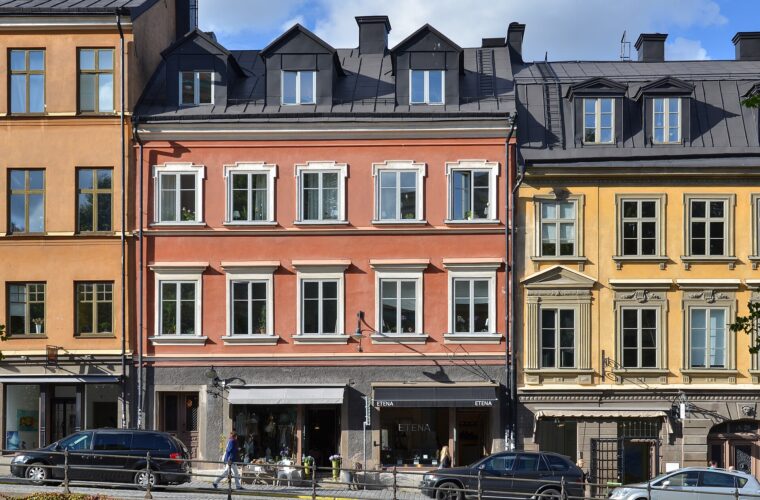
Västerlånggatan façade: Västerlånggatan 7, aug 2020a by Holger.Ellgaard, CC BY-SA 4.0, via Wikimedia Commons.
Making polkagrisar: Making polkagrisar by Niklas Morberg, CC BY-SA 2.0, via Wikimedia Commons.