Best Swedish Fashion Brands to Shop in Stockholm
Acne Studios, Totême, Our Legacy, Filippa K, Fjällräven and the whole H&M empire — which Swedish labels are worth buying in Stockholm, where their flagships are, and what they cost.
For a country of ten million people, Sweden exports an absurd amount of clothing. The Swedish fashion brands you already own something from — H&M, COS, Weekday, Arket, Acne Studios, Fjällräven — are all headquartered within an hour of central Stockholm, and most of them are cheaper to buy here than anywhere else, with a bigger range and a tax refund on top if you live outside the EU.
This guide covers which Swedish labels are actually worth shopping in Stockholm rather than at home, where their flagship stores are, what things cost, which famous “Scandi” names are not Swedish at all, and how the city’s unusually strong secondhand scene fits in. Prices were checked in September 2026 and are in Swedish kronor.
The flagship worth the detour: Acne Studios, Norrmalmstorg 2 — in the bank that gave the world “Stockholm syndrome”.
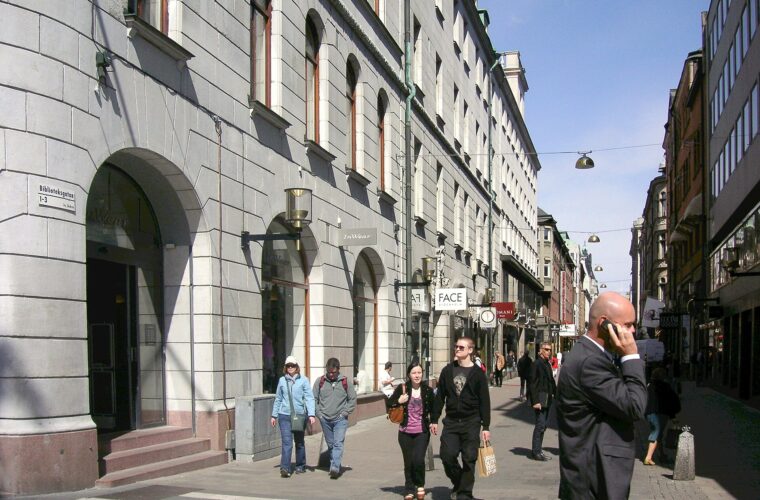
The quiet-luxury one: Totême, Biblioteksgatan 5.
The one with a free repair counter: Nudie Jeans, Skånegatan 75 — free repairs on any pair, forever.
The high street: Drottninggatan, where H&M, COS, Arket, Weekday and Monki all sit within 500 metres.
Sale months: January and late June, and they are genuine.
Not Swedish: Ganni and Stine Goya are Danish; Marimekko is Finnish.
Tax-free: 25% VAT, SEK 200 minimum per shop, 12–19% back for non-EU residents.
Why Sweden makes so many clothes
The short version: one enormous company and a long tail of small ones that learned from it.
The H&M group — H&M itself plus COS, Weekday, Monki, & Other Stories and Arket — is headquartered in Stockholm and is one of the largest clothing retailers on earth. That concentration created something unusual: a city full of people who have worked in fashion, understand production, and can start a label without leaving. Acne Studios, Our Legacy, Totême, Eytys and most of the rest emerged from that ecosystem.
The second factor is the aesthetic itself. Swedish fashion exports well because it is deliberately unspecific — clean lines, restrained colour, clothes that read as expensive without announcing a brand. It is the wardrobe equivalent of the design tradition covered in our guide to Swedish design stores in Stockholm, and it travels for the same reasons.
The third is, genuinely, the weather. Sweden produces world-class outerwear because Swedes need world-class outerwear, and a Stockholm winter is an unusually honest testing ground.
The designer labels
Acne Studios — Norrmalmstorg 2
The one everyone has heard of, and the flagship is worth visiting even if you buy nothing. Acne took over the former Kreditbanken building on Norrmalmstorg in 2020 — the bank where a 1973 hostage siege produced the phrase “Stockholm syndrome” — and turned the banking hall into a shop without pretending the history away.
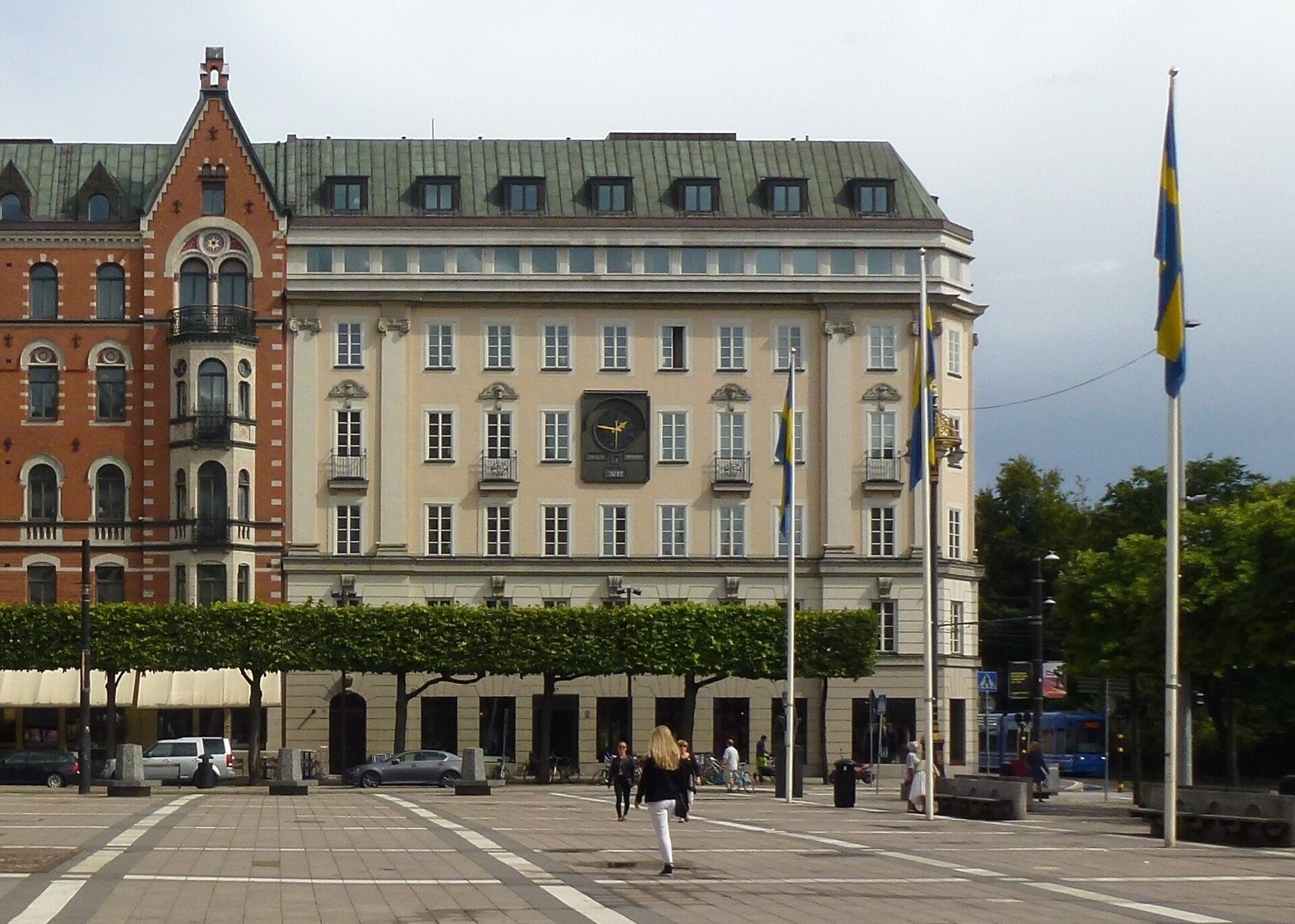
The stock is the full international range plus pieces that do not reach the overseas stockists, and the denim line is the reason most people come. Open Monday to Friday 10:00–19:00, Saturday 10:00–17:00, Sunday 12:00–17:00. There is a second, smaller store on Biblioteksgatan if the flagship is heaving.
What things cost: a knit runs SEK 3,000–6,000, a scarf SEK 1,800–3,500, denim SEK 2,500–4,000. Not cheap anywhere, but noticeably below the London or New York price once tax-free is applied.
Totême — Biblioteksgatan 5
Founded by Elin Kling and Karl Lindman, Totême is the brand that defined the last decade of “quiet luxury” before the phrase existed: coats, tailoring, knitwear, almost no logos. The townhouse-style Stockholm store opened first, in 2019, before the brand added New York in 2022, London in 2023 and Los Angeles in 2024 — which makes this the original and still the fullest.
It is the most expensive shop on this list and the one where the clothes most obviously justify it. A coat is a four-figure decision.
Our Legacy — Work Shop, Rödabergsgatan 6
Founded in 2005 and menswear-only until 2019, Our Legacy does something no other Swedish label does: its Work Shop in Vasastan is a working atelier as well as a store, opened in 2016 as an upcycling and creative space. Deadstock fabric, reworked garments, one-off pieces.
Go for the concept as much as the clothes. It is a genuine answer to the question of what a fashion brand does about waste, rather than a marketing paragraph about it, and there is nothing comparable in most European capitals.
Filippa K, Tiger of Sweden and J.Lindeberg
The established middle tier, all with stores on or around Biblioteksgatan.
Filippa K, founded in 1993 by Filippa Knutsson and Patrik Kihlborg, is the Swedish wardrobe staple — restrained, well-cut, wearable, and roughly a third of Acne’s prices. If you want one thing that says “bought in Stockholm” without saying it loudly, this is usually it.
Tiger of Sweden does tailoring with a slimmer cut than most British or Italian equivalents, and J.Lindeberg came out of golf and still shows it in the technical pieces. Both are solid rather than thrilling, and both discount properly in January.
The smaller labels worth finding
- Eytys — chunky footwear and eyewear, Stockholm, the most obviously fashion-forward thing on this list.
- Hope — androgynous tailoring and outerwear, sized and cut to work across genders long before that was a category.
- Rodebjer — Carin Rodebjer’s womenswear; colour and drape, which is rare in this city.
- Stutterheim — rubberised raincoats founded in Stockholm in 2010, based on the founder’s grandfather’s coat, and unironically described by the brand as “Swedish melancholy at its driest”.
- Sandqvist — bags and rucksacks; the practical, city version of the Fjällräven idea.
- CDLP and Asket — the minimal-basics end. Asket sells a permanent collection with no seasons and publishes the full cost breakdown of each garment, which is either admirable or exhausting depending on your mood.
The high street, and why it is cheaper here
The H&M group’s brands are all within a few hundred metres of each other on and around Drottninggatan, and buying them in Stockholm is genuinely better value — typically 10–20% below the UK or German price, more once a tax refund is applied.
| Brand | What it is | Typical top (SEK) |
|---|---|---|
| H&M | The original, founded 1947. Fast fashion, enormous | 150–400 |
| COS | Minimal, architectural, the grown-up one | 600–1,200 |
| Arket | Nordic basics, good knitwear, a café in the bigger stores | 500–1,000 |
| Weekday | Denim and youth-oriented; good jeans, low prices | 350–700 |
| Monki | Colourful, young, cheap | 200–450 |
| & Other Stories | Womenswear, Paris-designed, prettier than COS | 500–1,100 |
Two things worth knowing. The Stockholm flagships carry a fuller range than the overseas branches, particularly COS and Arket, so a size or colour that has been unavailable at home for months is often sitting on the rail here. And the Swedish stores get the sale a few days before the international ones.
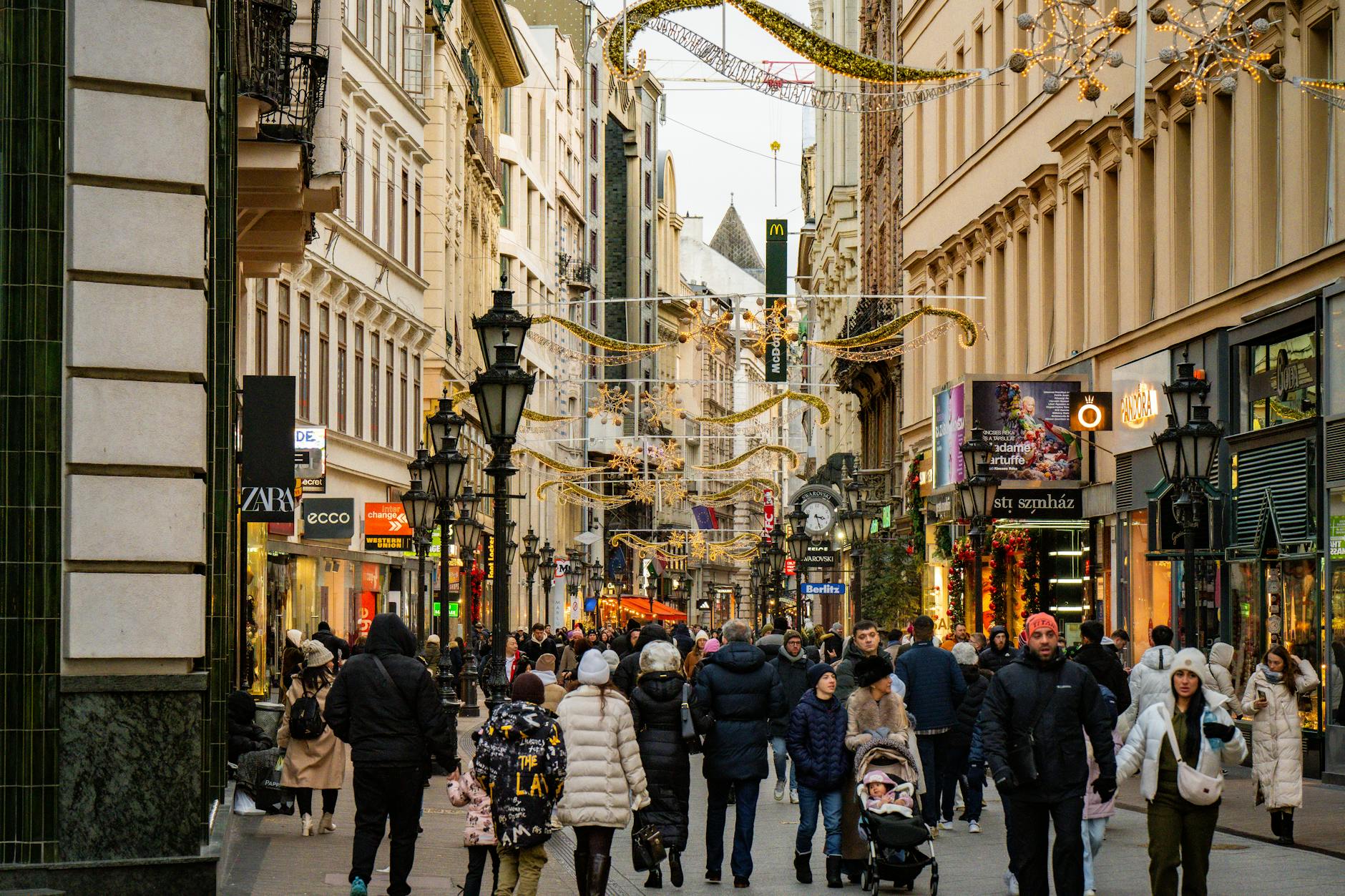
Where they are is covered street by street in our guide to the best shopping streets in Stockholm.
Outerwear and the heritage brands
This is the category where Sweden is not merely fashionable but actually better than the competition, and the category where buying in Stockholm makes the most difference.
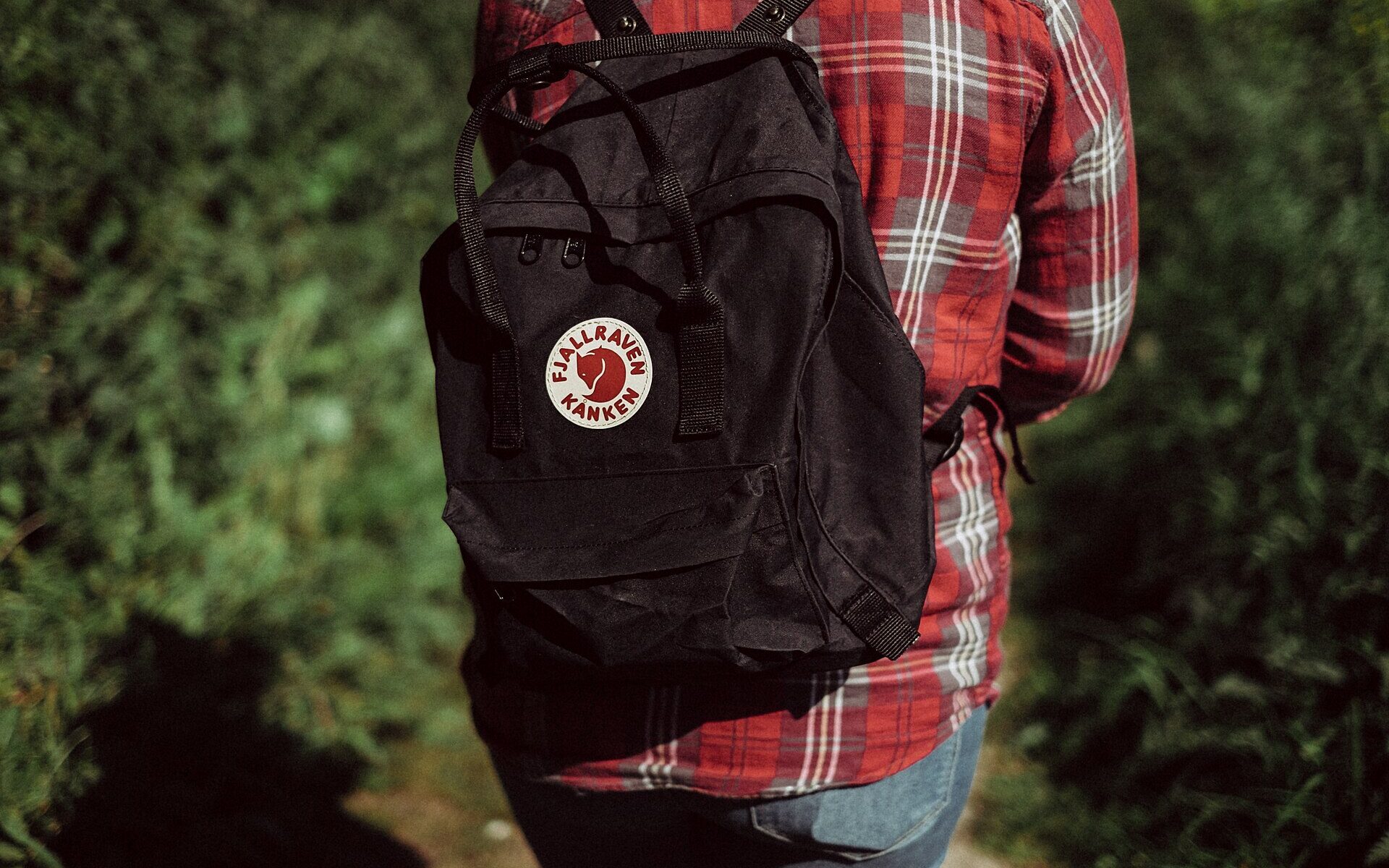
Fjällräven is the famous one. Founded in 1960 in Örnsköldsvik, it makes serious mountain gear and also the Kånken, the squared-off rucksack that launched in 1978 for Swedish schoolchildren with back problems and has since become a global object. A Kånken in Stockholm runs around SEK 900–1,200 and there are colours here that never leave the country.
Haglöfs (founded 1914) and Peak Performance (founded 1986 in Åre) are the technical end — proper shells, proper insulation, and prices that look reasonable next to the equivalent from an American brand. Didriksons makes the rain gear Swedish children actually wear, which is the highest possible recommendation for rain gear.
If you are visiting between October and April, this is the shopping to prioritise. A Swedish winter coat bought in Stockholm is better value and better suited to the climate than anything you will find at home, and you can wear it out of the shop.
Denim, repairs and the circular thing
Sweden takes clothing waste unusually seriously, and two of the most interesting shops in the city are built around it.
Nudie Jeans runs a Repair Shop at Skånegatan 75 in SoFo, and the policy is exactly what it says: free repairs on every pair of Nudie Jeans, no matter when or where you bought them. Bring a ten-year-old pair from another continent and they will patch them while you wait. There is a second branch on Jakobsbergsgatan. Whether or not you own any, it is worth seeing what a repair counter inside a clothing shop looks like when it is not a stunt.
Our Legacy’s Work Shop, covered above, does the same idea from the design end.
And the wider secondhand scene is genuinely one of the best in Europe:
- Myrorna — the charity chain, branches across the city, cheap and enormous and completely unfiltered. Patience required, rewards real.
- Stadsmissionen — the other charity chain, usually better sorted than Myrorna.
- Arkivet and Beyond Retro — curated vintage, mostly on Södermalm, priced accordingly.
- The SoFo grid — small independent secondhand shops where the owner chose every item. The best of the lot, and covered in the Södermalm guide.
Swedish secondhand is unusually good because Swedes buy well and discard early, and because the culture around wearing used clothes carries no stigma whatsoever.
Brands that are not Swedish
“Scandi” is a marketing category, not a nationality, and several of the most-searched names belong to the neighbours.
| Brand | Actually from |
|---|---|
| Ganni | Denmark |
| Stine Goya | Denmark |
| Samsøe Samsøe | Denmark |
| Marimekko | Finland |
| Norrøna | Norway |
| Helly Hansen | Norway |
All are sold in Stockholm and all are good. They are simply not souvenirs of Sweden, which matters if you are buying a gift with a story attached.
What Stockholmers actually wear
Worth knowing before you shop, because the local wardrobe is narrower and more considered than most visitors expect, and it explains why the shops stock what they stock.
The base is monochrome. Black, navy, grey, off-white, and a lot of it. Colour appears in one deliberate place — a bag, a knit, a coat lining — rather than across an outfit. This is not a stereotype; walk Götgatan at half past eight on a Tuesday morning and count.
Outerwear is the investment. Swedes spend disproportionately on the coat and comparatively little on what goes under it, which is entirely rational in a climate where the coat is the only thing anyone sees for five months. If you buy one Swedish garment, follow the local logic and make it that.
Footwear is serious and unglamorous. From November to March the pavements alternate between ice, slush and grit, and nobody in this city wears anything that cannot handle it. Visitors turning up in smooth-soled leather in February are immediately identifiable and frequently horizontal.
Summer is the exception. The city loosens considerably between June and August — linen, colour, bare legs, and an almost theatrical commitment to being outdoors — because the season is short enough that nobody wastes it looking severe.
Children’s clothing, which Sweden is unusually good at
Polarn O. Pyret, founded in 1976, is the one to know: striped, durable, gender-neutral by design decades before that became a marketing position, and built to be handed down through several children. Swedish parents buy it second-hand and resell it, which tells you what the quality is like.
Didriksons makes the rain and snow gear that Swedish nurseries effectively require, and it is a revelation if you have been buying children’s waterproofs that are not actually waterproof. Both brands are stocked at Åhléns City and in their own stores, and both are considerably cheaper here than through international resellers.
Note that Reima, which sits next to them on the same rails, is Finnish. Excellent, but not Swedish. Family-specific shopping is covered further in the Stockholm with kids guide.
Sizing, fit and practical notes
- Sizing runs European. Swedish labels use EU numbers, and the cut is generally slimmer and longer than American equivalents — sleeves and trouser legs in particular.
- Unisex is normal here. Several labels size across genders rather than splitting, which is worth knowing before you dismiss a rail.
- Try things on. Returns are straightforward domestically and a nuisance internationally.
- Shop hours are short. Most stores run Monday to Friday 10:00–19:00, Saturday to 17:00 or 18:00 and Sunday 11:00 or 12:00–17:00. Independent shops on Södermalm often close at 18:00 and some do not open Mondays.
- Cards only. Sweden is effectively cashless; the currency guide covers it.
The sales calendar
January is the big one — mellandagsrea, the between-days sale, starts immediately after Christmas and runs through the month. Discounts on Swedish labels are genuine, not the fake-markdown variety, and Biblioteksgatan is where it matters most.
Late June and July bring the summer sale, which coincides with Stockholmers leaving for the archipelago. The centre stays fully open; some independents on Södermalm close for weeks.
Black Friday has arrived in Sweden and is largely a high-street event. The designer labels mostly ignore it.
Outside those windows, prices are prices. Swedish retail does not haggle and does not run permanent “sales”.
Where to find them: a street index
| Street | Brands | Level |
|---|---|---|
| Norrmalmstorg | Acne Studios flagship | High |
| Biblioteksgatan | Totême, Filippa K, Tiger of Sweden, J.Lindeberg, Acne | High |
| Drottninggatan | H&M, COS, Arket, Weekday, Monki, & Other Stories | Mid to low |
| Hamngatan | NK and Åhléns City — most Swedish labels under one roof | Mixed |
| Götgatan, Södermalm | Independents, streetwear, secondhand | Low to mid |
| Skånegatan, SoFo | Nudie Jeans Repair Shop, vintage | Low to mid |
| Rödabergsgatan, Vasastan | Our Legacy Work Shop | Mid to high |
A fashion day in Stockholm
- 10:00 — Norrmalmstorg. Acne Studios first, while it is quiet. Ten minutes to Biblioteksgatan afterwards.
- 11:00 — Biblioteksgatan. Totême, Filippa K and the rest in two short blocks.
- 12:30 — Drottninggatan. The H&M group flagships, in a straight line, with lunch off the street rather than on it.
- 15:00 — metro to Medborgarplatsen. Götgatan’s independents, then east into SoFo.
- 16:30 — Skånegatan. Nudie’s repair counter, then the vintage shops until they shut at six.
Our Legacy’s Work Shop in Vasastan is the one outlier — a separate trip, and worth it if the upcycling side interests you. Total walking about five kilometres.
Tax-free, briefly
Swedish VAT is 25%. Non-EU residents, and EU residents who have lived outside the EU for twelve months or more, can reclaim on purchases from SEK 200 per shop. Ask for the form at the till with your passport, keep the goods unused, get it stamped at customs on departure, and expect 12–19% back rather than the full quarter.
For clothing it is usually worth it on one significant purchase — a coat, a piece of Acne — and rarely worth the paperwork on a handful of T-shirts.
What to skip
- Buying H&M at home first. Obvious once said, routinely forgotten. The range here is larger and the price lower.
- Airport fashion shops. A thin selection at a price that is no better than the city plus a refund.
- Anything sold as a “Swedish sweater” on Västerlånggatan. It is a souvenir, not a garment, and the knitwear two streets away is both cheaper and real.
- Danish and Finnish brands, if you specifically want a Swedish one. See the table above.
- Paying full price in mid-December. Wait ten days. The January sale starts on 27 December.
Frequently asked questions
What are the best Swedish fashion brands?
Acne Studios, Totême, Our Legacy and Filippa K at the designer end; H&M, COS, Arket, Weekday, Monki and & Other Stories on the high street, all owned by the Stockholm-based H&M group; Fjällräven, Haglöfs and Peak Performance for outerwear; and Nudie Jeans for denim.
Is it cheaper to buy Swedish brands in Stockholm?
Yes, typically 10–20% below UK or German prices, and more once a tax-free refund is applied for non-EU residents. The Stockholm flagships also carry a fuller range than the overseas branches, particularly COS and Arket.
Where is the Acne Studios flagship in Stockholm?
Norrmalmstorg 2, in the former Kreditbanken building where the 1973 hostage siege that coined “Stockholm syndrome” took place. It opened there in 2020 and runs Monday to Friday 10:00–19:00, Saturday 10:00–17:00 and Sunday 12:00–17:00. There is a second store on Biblioteksgatan.
Is Ganni Swedish?
No, Ganni is Danish, as are Stine Goya and Samsøe Samsøe. Marimekko is Finnish, and Norrøna and Helly Hansen are Norwegian. All are widely sold in Stockholm but none is a Swedish brand.
Where do you buy Fjällräven in Stockholm?
Fjällräven has its own stores in the centre and is stocked by the outdoor retailers and department stores. A Kånken runs roughly SEK 900–1,200, and Swedish stores carry colours that are never exported.
What is the best Swedish brand for winter clothing?
Fjällräven for everyday and mountain wear, Haglöfs and Peak Performance for technical shells and insulation, and Didriksons for rain gear. Buying a winter coat in Stockholm between October and April is one of the few genuinely good-value purchases in an expensive city.
When are the sales in Stockholm?
The main sale, mellandagsrea, starts on 27 December and runs through January. The summer sale falls in late June and July. Discounts on Swedish labels are genuine, and Biblioteksgatan is where the January sale matters most.
Can you get jeans repaired for free in Stockholm?
Yes, at the Nudie Jeans Repair Shop on Skånegatan 75 in SoFo, which repairs any pair of Nudie Jeans free of charge regardless of when or where they were bought. There is a second branch on Jakobsbergsgatan.
Is secondhand shopping good in Stockholm?
Very. Myrorna and Stadsmissionen are the large charity chains, Arkivet and Beyond Retro are the curated vintage options, and the small independents in the SoFo grid on Södermalm are the best of the lot. Swedes buy well and discard early, and there is no stigma attached to wearing used clothes.
What size system does Sweden use?
European sizing. Swedish cuts tend to run slimmer and longer than American equivalents, particularly in sleeves and trouser legs, and several labels size across genders rather than splitting menswear and womenswear. Try things on rather than buying to your usual number.
If the new prices are out of reach, the same labels turn up second hand. Acne Studios, Filippa K and Our Legacy are regulars on the rails of Stockholm’s curated vintage shops and, now and then, the charity chains. Our guide to vintage and second-hand shopping in Stockholm explains where to look and what a fair price is.
Visitors from outside the EU can take some of the 25% Swedish VAT back on anything bought here and exported unused. On an Acne Studios coat or a Totême bag the refund is worth the paperwork. Our guide to tax free shopping in Stockholm covers the SEK 200 minimum, the three-month deadline and the checked-luggage mistake that costs people their refund.
More Stockholm guides
- Stockholm Shopping — the full guide to what to buy in the city.
- Best Shopping Streets in Stockholm — where each brand actually is.
- Best Swedish Design Stores in Stockholm — the homeware equivalent.
- Södermalm Guide — independents, streetwear and the vintage grid.
- Östermalm Guide — Biblioteksgatan and the designer flagships.
- Stockholm Packing List — what to bring, and what to buy instead.
- Stockholm Currency and Payment — cards, VAT and the tax-free refund.
- Stockholm in January — the month the sales make the trip pay.
Photo credits
Fjällräven Kånken: Fjallraven Kanken backpack (Unsplash) by Mitchell Orr, CC0, via Wikimedia Commons.
Norrmalmstorg: Kreditbanken Norrmalmstorg 2012a by Holger.Ellgaard, CC BY-SA 3.0, via Wikimedia Commons.