Best Speakeasy Bars in Stockholm
Stockholm has four genuine hidden bars and a long list of imitators. Where the real unmarked doors are, how to get through them, what a drink costs, and which places are trading on the word.
Search speakeasy Stockholm and you will be told the city is full of them. It is not. Stockholm has perhaps four bars that genuinely earn the word — an unmarked door, no sign, no listing on the window, and a room you would walk past a hundred times without knowing it was there — plus a much longer list of ordinary basement bars that have put “speakeasy” in their Instagram bio and hoped for the best. This guide separates the two.
Below you will find the real hidden bars, where their doors actually are, what it takes to get in, what a drink costs, and which places are trading on the word without doing the work. Prices were checked in September 2026 and are in Swedish kronor; treat them as the right order of magnitude rather than a menu you can hold anyone to.
The genuine article: Lucy’s Flower Shop, Birger Jarlsgatan 20 — through a disused florist, then a hidden door.
The locals’ one: Corner Club, Odengatan, Vasastan — 24 seats, no sign, no reservations.
The easy one: A Bar Called Gemma, Brunkebergstorg — discreet, not difficult.
Typical price: SEK 155–195 a cocktail, roughly the same as any good Stockholm bar.
Best odds of getting in: Tuesday to Thursday, before 21:00.
What to wear: smart-casual. These are small rooms, not clubs — nobody is checking your shoes.
The honest warning: “speakeasy” on a website usually means a basement with a candle.
Why Stockholm has speakeasies at all
Sweden never had Prohibition in the American sense — there was a referendum on it in 1922 and the drys narrowly lost — so the speakeasy has no local history to draw on. The aesthetic here is imported, and most bars using the word are borrowing a New York idea wholesale.
What Sweden had instead was stranger and lasted far longer. Under the Bratt system, from 1919 until it was scrapped on 1 October 1955, every adult was issued a motbok: a ration book that recorded how much spirits you were permitted to buy, with the allowance set by your sex, income, marital status and general standing in the eyes of the local board. Married men got the most. Unmarried women often got nothing at all. You queued, you presented your book, the purchase was stamped, and if you had used your quota you went home empty-handed.
That is the real Swedish drinking history, and it explains something that surprises visitors: alcohol here is still treated as a thing to be managed rather than assumed. Systembolaget, the state monopoly, remains the only retailer of anything above 3.5% ABV, shuts at 15:00 on Saturdays and does not open on Sundays. A culture that spent thirty-six years being told exactly how much it could drink developed a lasting taste for doing it quietly, well, and behind a door.
Which, whatever the label on the tin, is more or less what these bars are actually selling.
The real hidden bars in Stockholm
Lucy’s Flower Shop — Birger Jarlsgatan 20, Stureplan
This is the one. You find a flower shop that has clearly not sold flowers in years, you go in anyway, and somewhere behind the dusty display there is a door that does not look like a door. Through it: a low purple room, velvet, dim light, a short menu, and drinks presented with their component ingredients so you can see what went in.
Lucy’s took the Gulddraken award for best bar in Stockholm in 2020 and has been named the best bar in the Nordic countries by Difford’s Guide, so the secret is not especially well kept any more. What has survived is the discipline. The cocktail list is short because everything on it has been worked on; the room is small because the format only works small; the staff will build you something off-menu if you tell them honestly what you like.
Getting in is the interesting part. There is no queue system you can see from the street, capacity is genuinely limited, and on a Friday you may simply be turned away. Two people on a Wednesday at 20:00 is the reliable version of this plan. Six people on a Saturday at 23:00 is not a plan at all.
Corner Club — Odengatan, Vasastan
No sign, a frosted glass door, and twenty-four seats. Corner Club is the one Stockholmers name when they want to prove they know something, and it is the purest example of the format in the city: you cannot book, you cannot be certain of getting in, and if it is full you walk away. The menu changes roughly every ten weeks. Cocktails run SEK 155–195.
It has none of Lucy’s theatre — no false façade, no reveal, just a door that tells you nothing. What it has instead is consistency and a room small enough that the bartender is talking to you rather than at a crowd. If you only have the appetite for one hidden bar on your trip and you would rather drink than be entertained, make it this one.
Go early. First come, first seated is a rule with teeth when there are twenty-four chairs. Vasastan generally rewards the early-evening approach — it is a residential district that fills with people who live there, not people who travelled for it.
A Bar Called Gemma — Brunkebergstorg, Norrmalm
Gemma sits under Hotel At Six and is marked by a small wooden sign, which by the standards of this list counts as shouting. Inside: dark walls, a neon monkey, leather sofas, and a menu built by Johan Evers that wanders between Asian and American references without losing its footing.
Call it a speakeasy with the difficulty setting turned down. You can find it, you can usually get in, you can bring four people. That makes it the sensible first stop of a hidden-bar evening rather than the prize at the end — and it is a minute from two of the best bars in the city on the same square, which is covered in more detail in our guide to Stockholm’s best cocktail bars.
Apropos — Sankt Eriksplan 5, Vasastan
Two floors, a small green awning, and very little else to go on from the pavement. Apropos is the quietest of the four and the most likely to have room on a weeknight — a proper neighbourhood bar that happens to be difficult to spot rather than one built around being difficult to spot. The distinction matters: nothing here is performing secrecy at you.
The honourable mentions
Two more places deserve a line, without quite belonging on the list.
Röda Huset on Malmskillnadsgatan is not a speakeasy and does not claim to be, but it is unmarked enough that people walk past it, and it is currently ranked No. 31 in the world. If your interest in hidden bars is really an interest in excellent drinks, go there first and worry about the concept later.
Tjoget in Hornstull hides bars inside a bar rather than behind a street door — a wine bodega and a beer café tucked off the main room, each with its own character. It is the opposite philosophy and worth experiencing for the contrast.
The ones calling themselves speakeasies that aren’t
This is the part most guides skip, so here it is plainly.
A basement is not a speakeasy. A candle is not a speakeasy. A password published on a public Instagram account is emphatically not a speakeasy — if ten thousand people have the password, what you have is a queue with an extra step. Stockholm has a growing number of venues that hit one of these notes and call the job done, usually charging SEK 20–30 more per drink for the privilege.
The tests that actually work:
- Is it on the street sign? If the bar’s name is visible from the pavement, it is a bar with a dark interior.
- Can you book a table of eight? Real hidden bars are small and mostly cannot accommodate you. A venue that takes large group bookings is running a normal business.
- Is the menu long? A forty-drink list means volume. The genuine rooms here run six to twelve drinks and change them seasonally.
- Is there a photographer? A house photographer working the room is a marketing department, not a secret.
- Does the staff explain the concept? The good ones assume you worked it out. The imitations tell you about it at length.
None of this means the imitators are bad bars. Several are perfectly good places to drink. It means you should not cross the city or pay a premium for a concept that is not being delivered.
What it costs
The useful news: hidden bars in Stockholm are not meaningfully more expensive than good visible ones. You are paying for a small room and a short menu, not for a secret.
| Item | Typical price (SEK) | Notes |
|---|---|---|
| Signature cocktail | 155–195 | Corner Club sits squarely in this band |
| Classic cocktail | 145–185 | Often the better value on a short list |
| Non-alcoholic build | 95–140 | Taken seriously at all four |
| Bar snacks | 85–165 | Small; do not plan dinner around them |
| Coat check | 30–50 | Usually compulsory in winter |
| Cover charge | none | If someone asks for one, you are in a club |
Two drinks each for two people lands around SEK 650–800. The wider picture of what an evening costs in this city is in the Stockholm trip cost guide.
How to actually get in
Hidden bars fail visitors for predictable reasons, and all of them are avoidable.
- Go in twos. Two people fit into almost any gap. Four is workable. Six will be split up or turned away, every time.
- Go early and go midweek. Tuesday to Thursday before 21:00 is the window where these rooms have space. Friday and Saturday after 22:00 they do not.
- Book where booking exists. Some of these rooms take reservations and some are strictly walk-in. Check on the night, not from another country a month out.
- Be quiet at the door. A group announcing itself on the pavement is the one thing that reliably gets a no. These bars have neighbours and licences.
- Have a fallback within walking distance. This is the single most useful rule. Lucy’s has the whole of Stureplan around it; Corner Club and Apropos have the rest of Vasastan; Gemma has Brunkebergstorg. Never build an evening on getting into one specific door.
- Bring ID and a card. Age limits are often 20 or higher, and almost nowhere in Stockholm takes cash.
Hidden bars by neighbourhood
Stureplan and Östermalm
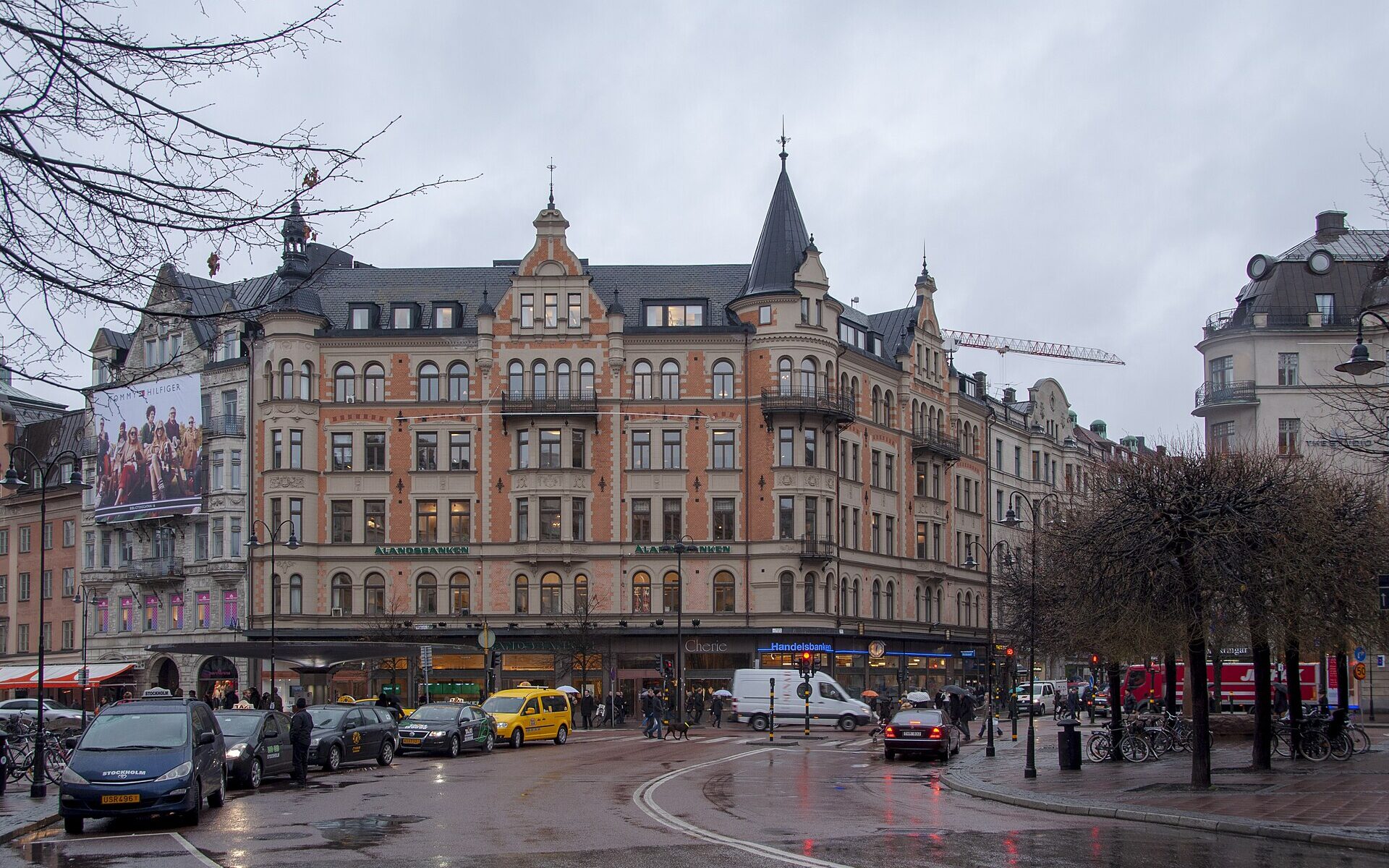
Lucy’s Flower Shop is the anchor, and the surrounding district is the most expensive drinking in Stockholm. At street level Stureplan is a wet, grey crossroads of banks and taxis for much of the year — which is rather the point. Nothing about the pavement suggests what is behind it.
If Lucy’s is full, the rest of Östermalm is a mixed bag: some excellent classic bars, a lot of overpriced ones, and doors that get stricter as the night goes on. The nightclubs guide covers the louder end of this district.
Vasastan
The genuine centre of gravity. Corner Club and Apropos are a fifteen-minute walk apart, with a dozen small bars in between that nobody has branded as anything. Vasastan is where Stockholm drinks when it is not being looked at, and if one door is closed the next one is rarely far.
Norrmalm and Brunkebergstorg
Gemma, Röda Huset and a rooftop within a ninety-second radius. This is the most efficient square in Stockholm for a short evening — see the Norrmalm guide for what else is nearby, and the rooftop bars guide for the view above it.
Södermalm
Söder has the densest bar scene in the city and almost nothing that qualifies as hidden — the island’s culture is informal rather than secretive, and its good bars simply open a door and put a name on it. Come here for volume and value rather than for doors, as the Södermalm guide sets out.
A hidden-bar evening that works
Built around the two districts that actually have the doors, with a fallback at every step.
- 19:30 — Brunkebergstorg. Start at Gemma, which you can find and get into. One drink, low stakes, and you are warmed up.
- 20:45 — Stureplan. Ten minutes on foot to Birger Jarlsgatan and Lucy’s Flower Shop. Early enough that two of you have a real chance.
- 22:00 — Vasastan. Metro or a twenty-minute walk north. Corner Club if there is a seat, Apropos if there is not. Do not stand outside either one deliberating.
- Late. Vasastan’s ordinary bars run on past midnight and are pleasant places to end up. If the night still has energy, Södermalm is where it should go.
All of this is walkable or one metro ride; nothing here needs a taxi. The Stockholm metro guide covers the all-night weekend service, which removes the usual reason to cut an evening short.

Etiquette inside
These are quiet rooms and they have rules, none of which anyone will tell you.
Do not photograph other customers, and be sparing about photographing anything at all — part of what people are paying for is not being in someone’s content. Do not order “something surprising” without giving the bartender information to work with; say what spirits you like and how sweet you want it, and you will get something far better. Do not treat a twenty-four seat room as a place to hold a conference call or a reunion. And if the bar is full and someone leaves, do not assume the seat is yours — ask.
Tipping is not expected in Sweden and staff are paid properly. Rounding up, or leaving ten percent if the bartender has genuinely spent time on you, is generous rather than obligatory.
When to go
Autumn and winter are the season. These rooms are dark, warm and small, which is exactly right from October to March and slightly perverse in July when there is daylight until half past ten. If you are visiting in summer, the terraces and rooftops are the better use of an evening — Stockholm’s warm weather is too short to spend underground.
January and February are the easiest months to get in. The city is quiet, tourists are scarce, and the bartenders have time to talk to you. The January in Stockholm guide covers what else works in the dark months.
December is the hardest. Every company in Stockholm holds its julbord season in the first three weeks of the month and the small rooms are full of parties. Plan around it, or accept that you are queueing.
What to skip
- Any bar that markets a password. If it is published, it is not a password; it is a marketing funnel with a velvet rope.
- Hidden-bar “tours”. A group of fifteen being walked to an unmarked door is a contradiction in terms, and the bars themselves are rarely pleased to see it.
- Turning up in a big group. Worth repeating because it is the most common way visitors waste an evening here.
- Anything described as a speakeasy on Västerlånggatan. Gamla Stan’s main tourist street has no hidden bars, only expensive visible ones — see the Gamla Stan guide for what the old town is genuinely good for.
- Building the whole night around one door. Said three times in this article, because it is the difference between a great evening and standing on a cold pavement at 22:00.
How this fits the rest of a Stockholm night
Hidden bars are a first-half activity. They close earlier than clubs, they do not do loud, and two drinks in one is usually the right dose before moving on. The full shape of an evening — dinner times, club hours, how to get home — is in the Stockholm Nightlife pillar.
If what appeals here is the small-room, high-craft end of drinking rather than the secrecy, the best bars in Stockholm and the craft beer bars both cover places you can simply walk into. And for the parts of the city that come alive after dark without a drink involved, there is Stockholm at night.
Frequently asked questions
Does Stockholm have real speakeasies?
Yes, but only a handful. Lucy’s Flower Shop on Birger Jarlsgatan 20, Corner Club on Odengatan in Vasastan, A Bar Called Gemma at Brunkebergstorg and Apropos at Sankt Eriksplan 5 are the four that genuinely qualify. Most other bars using the word are ordinary basement venues.
What is the best speakeasy in Stockholm?
Lucy’s Flower Shop, entered through a disused florist on Birger Jarlsgatan. It won the Gulddraken award for best bar in Stockholm in 2020 and has been named the best bar in the Nordic countries by Difford’s Guide. Corner Club in Vasastan is the better choice if you care more about the drink than the entrance.
Do you need a password to get into Stockholm’s hidden bars?
No. None of the genuine ones use a password. You find the door, you go in, and you hope there is space. Any bar advertising a password is using it as marketing.
How much does a cocktail cost at a Stockholm speakeasy?
SEK 155–195 for a signature drink, which is the same as any good Stockholm cocktail bar. Hidden bars here do not charge a premium for the concept, and there are no cover charges. Prices checked September 2026.
Can you book a table at a Stockholm speakeasy?
It varies. Corner Club takes no reservations at all — first come, first seated across twenty-four seats. Others take limited bookings. Check on the night rather than assuming, and always have a second bar within walking distance.
What is the dress code for hidden bars in Stockholm?
Smart-casual and nothing stricter. These are small drinking rooms rather than clubs, and clean trainers are fine. The strict doors in Stockholm are at the Stureplan nightclubs, not the speakeasies.
Did Sweden have Prohibition?
No. A 1922 referendum on prohibition was narrowly defeated. Instead Sweden rationed spirits through the Bratt system, issuing every adult a motbok that recorded their personal allowance, from 1919 until the system was abolished on 1 October 1955.
What is the best night to visit a hidden bar in Stockholm?
Tuesday to Thursday, arriving before 21:00. Friday and Saturday after 22:00 the small rooms are full and groups get turned away. December is the hardest month because of company julbord parties.
Which neighbourhood has the most hidden bars?
Vasastan, with Corner Club and Apropos plus a dense run of small unbranded bars in between. Stureplan has the single most famous one, and Brunkebergstorg in Norrmalm has the most convenient.
Are Stockholm’s speakeasies worth it?
The four genuine ones are, mostly because they are good bars that happen to be hidden rather than hidden bars that happen to serve drinks. The imitators charging extra for a basement and a candle are not.
More Stockholm guides
- Stockholm Nightlife — the full guide to an evening out in the city.
- Best Cocktail Bars in Stockholm — the rooms you can find without hunting.
- Best Bars in Stockholm — the wider scene, neighbourhood by neighbourhood.
- Best Rooftop Bars in Stockholm — the opposite of a hidden bar.
- Vasastan Guide — the district with the most doors worth finding.
- Östermalm Guide — Stureplan and the expensive end of town.
- Quirky Stockholm Experiences — more of the city’s odd corners.
- Stockholm at Night — what else the city does after dark.
Photo credits
Stureplan crossroads: Stureplan 19 by I99pema, CC BY-SA 3.0, via Wikimedia Commons.
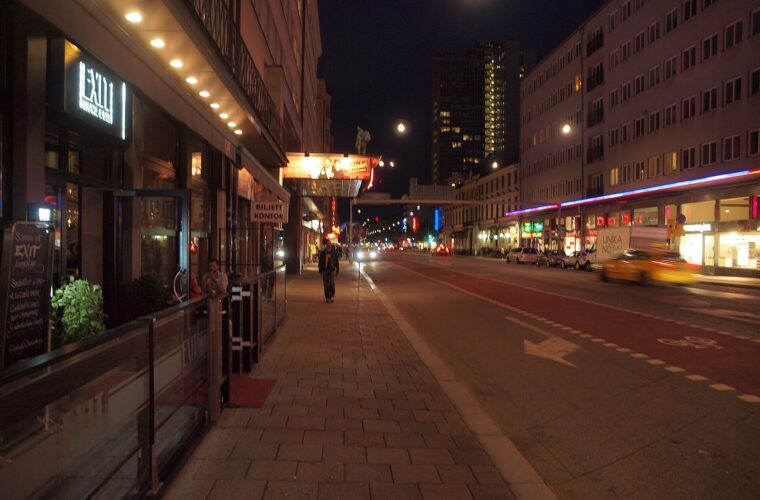
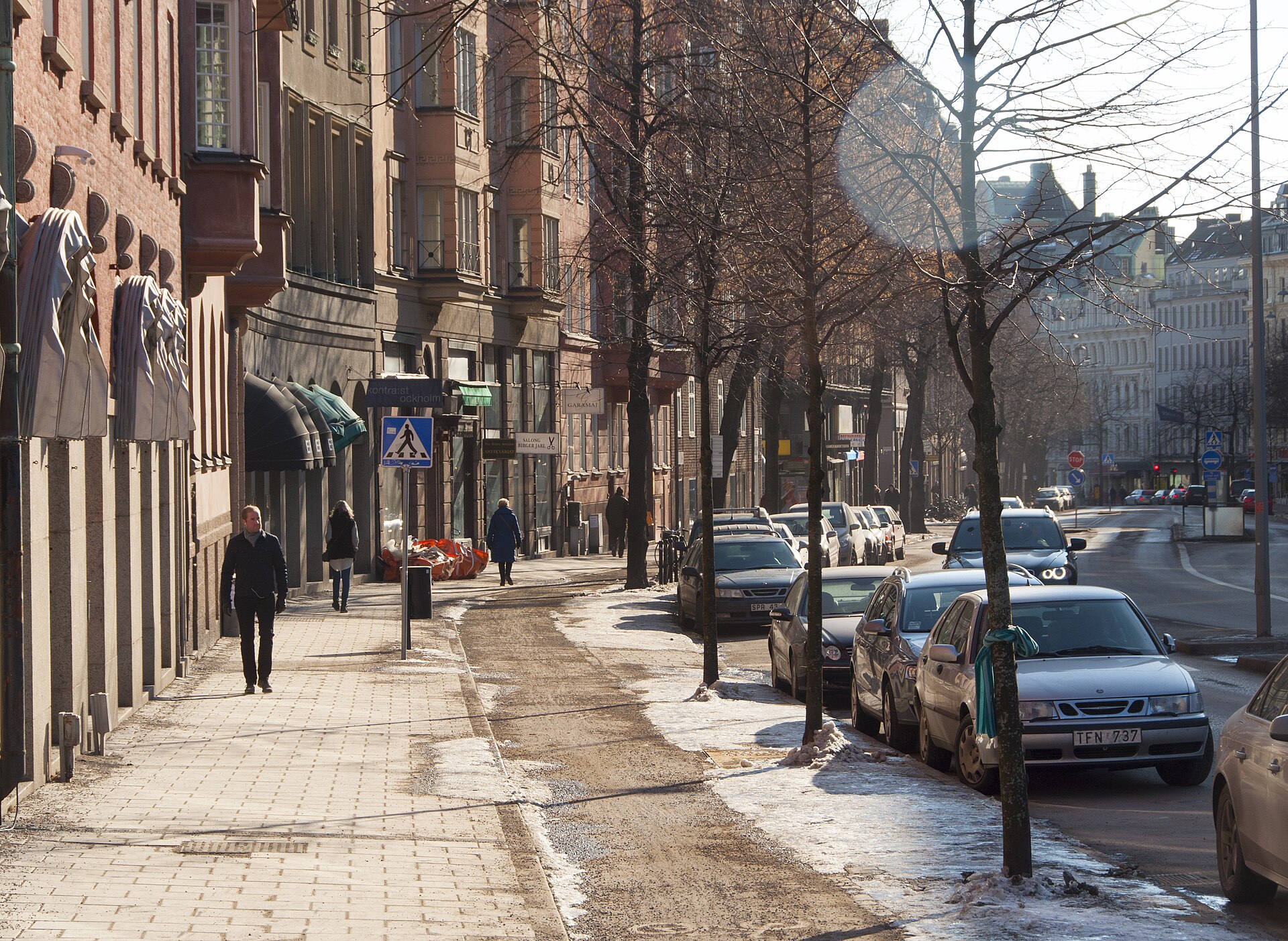
Birger Jarlsgatan pavement: Birger Jarlsgatan, trottoar och cykelbana by I99pema, CC BY-SA 3.0, via Wikimedia Commons.