Swedish Pastries Explained: Kanelbulle, Semla, Prinsesstårta
A field guide to Swedish pastries: the cinnamon and cardamom buns, the semla, the princess cake, the vacuum cleaner and more, with the stories behind them, the seasons, 2026 prices and where to eat them in Stockholm.
Swedish pastries are less a dessert course than a daily habit. They are what goes with the coffee at fika, the mid-morning or mid-afternoon break that Swedes take very seriously indeed, and every bakery and konditori in Stockholm lays out the same well-loved cast: cinnamon and cardamom buns, the green-domed princess cake, the cream-stuffed semla in winter, saffron buns in December and a row of small, very sweet things with names like “vacuum cleaner” and “raspberry cave”. Knowing what they are turns a coffee stop into one of the best-value pleasures in an expensive city.
This guide explains fifteen of the classics: what each one is, where it came from, when to eat it, what it costs in Stockholm and, honestly, which ones are worth your money. Prices come from Swedish price surveys of 2025 and 2026 and were checked in October 2026; treat them as the right order of magnitude, since every bakery sets its own. For where to eat them, see our guides to the best bakeries in Stockholm and to fika, the ritual they belong to.
Start with: a kanelbulle, the cinnamon bun. Around SEK 44 on average in 2025.
Winter essential: the semla, on sale from about New Year, with the traditional peak on Shrove Tuesday (9 February 2027). Around SEK 60 in 2026.
Celebration cake: prinsesstårta, the princess cake, in green marzipan. Buy a single slice or a bakelse, the individual version.
December: saffron buns (lussekatter) and thin ginger biscuits (pepparkakor).
Nostalgic favourites: the dammsugare and the chokladboll.
Key dates: Cinnamon Bun Day on 4 October; Lucia on 13 December; Shrove Tuesday for the semla.
Konditori, bageri and fika: the basics
You will buy Swedish pastries in two kinds of place. A bageri is a bakery, with bread and buns first and pastries second, and often a few tables. A konditori is a pastry café, the traditional home of cakes, tarts and individual pastries called bakelser, usually with a proper sit-down room and, at the old-fashioned ones, a counter of cakes under glass. The line between them has blurred, and the modern sourdough bakeries that have opened all over Stockholm in the past fifteen years do a bit of everything.
What they have in common is fika: coffee with something sweet, taken sitting down, in company, and not in a hurry. At traditional konditorier the filter coffee often comes with a free refill, a påtår, so ask. The etiquette is simple: order at the counter, carry your tray to a table, and clear it when you leave if there is a place to do so.
The buns: kanelbulle and kardemummabulle
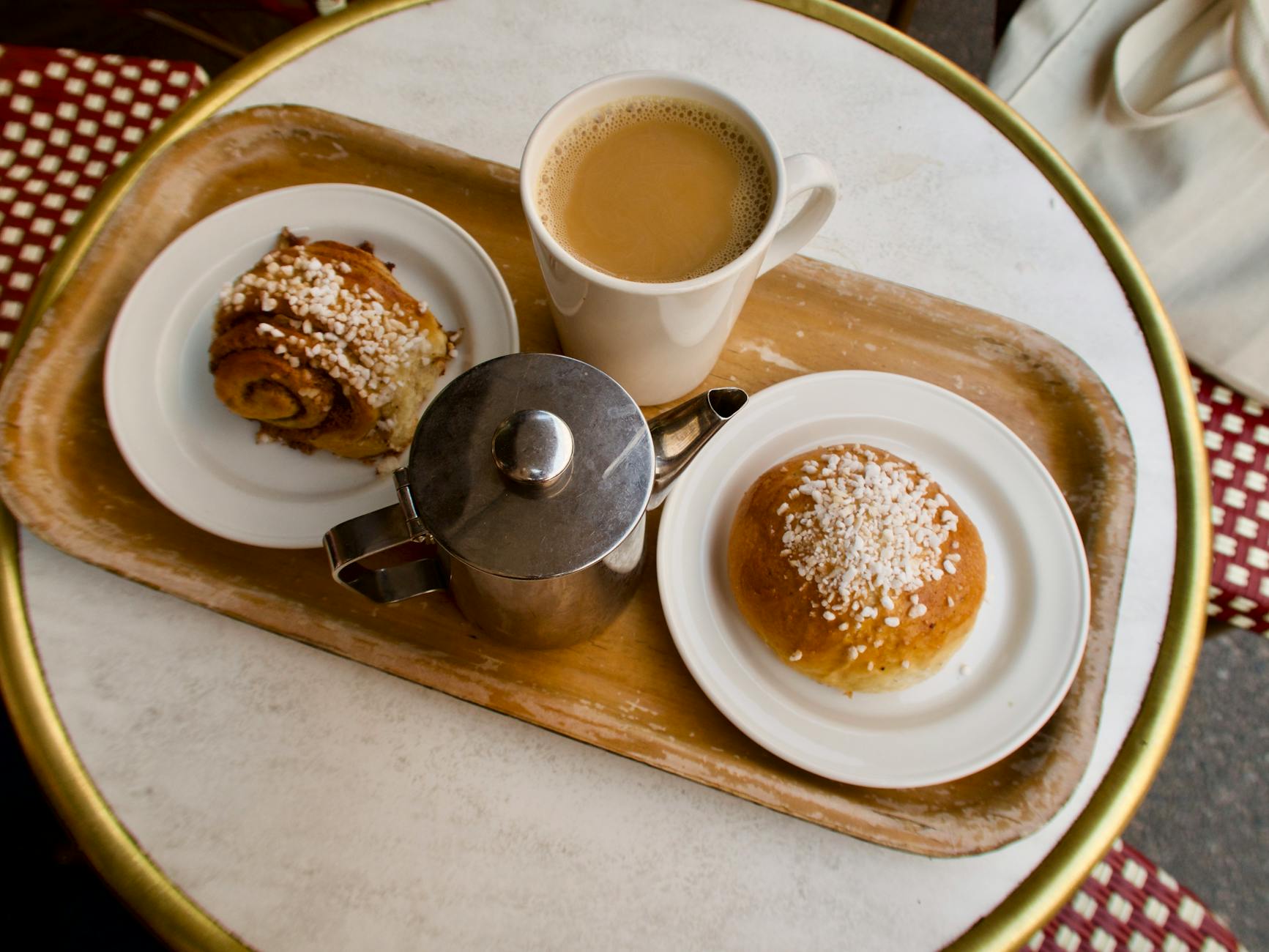
Kanelbulle: the cinnamon bun
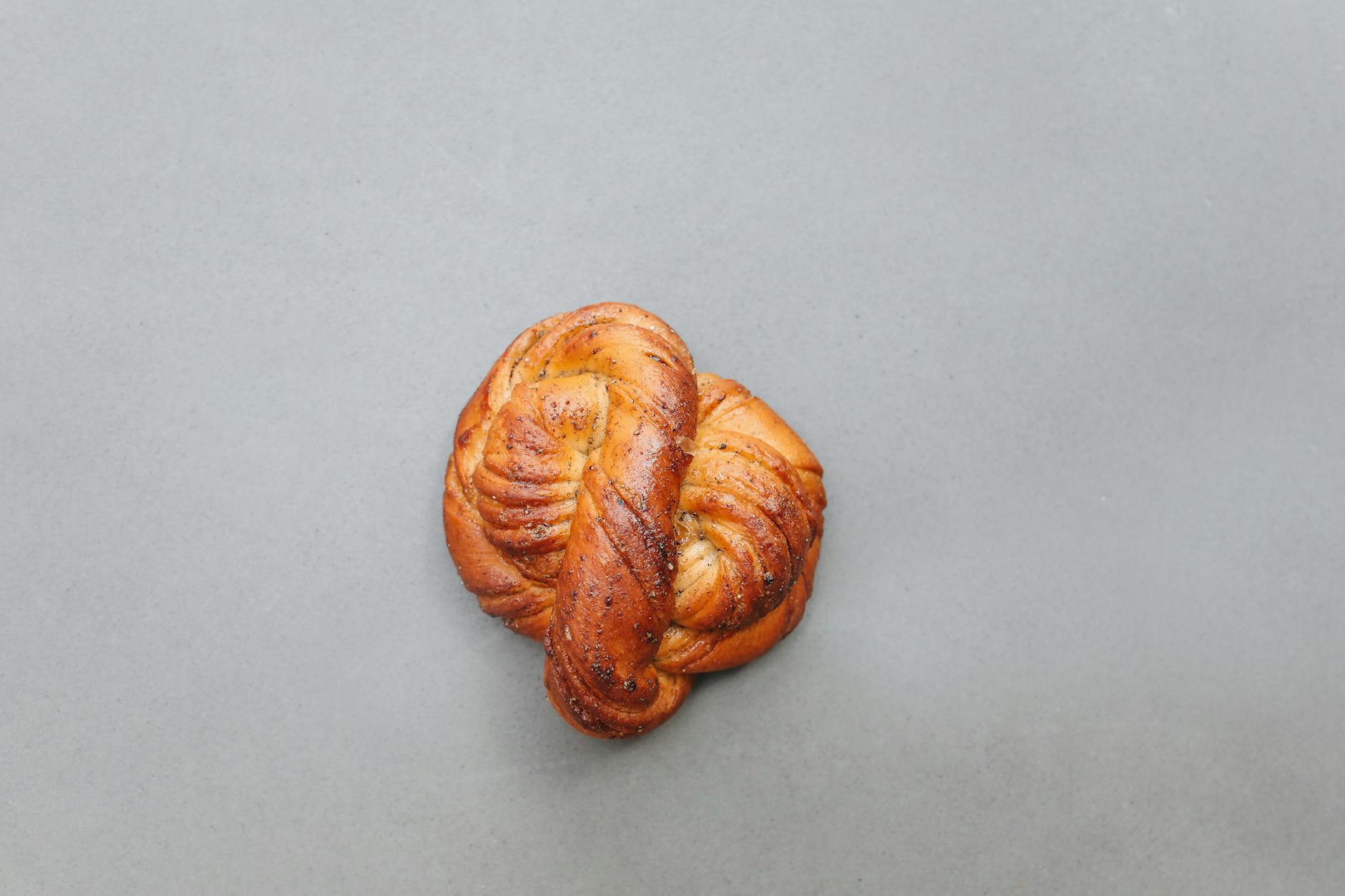
The kanelbulle is the national pastry, and if you only eat one thing in a Stockholm bakery, it should be this. It is not the soft, iced, American-style cinnamon roll. The dough is a lightly sweetened wheat bun flavoured with cardamom, rolled with butter, sugar and cinnamon, twisted or rolled into a snail, glazed and scattered with coarse white pearl sugar (pärlsocker) rather than icing. A good one is buttery, fragrant, a little chewy and not too sweet. A bad one is dry, and you will know within one bite.
The bun is usually said to have appeared in its modern form in the 1920s, and Sweden gives it a national day: Kanelbullens dag, Cinnamon Bun Day, on 4 October, when bakeries sell them by the trayful. In 2025 a Swedish price survey put the average cinnamon bun at about SEK 44, for a bun weighing a little over 100 grams. The giant buns at a few cafés, notably Café Saturnus in Östermalm, cost more and are really for sharing.
Kardemummabulle: the cardamom bun
The cardamom bun is the cinnamon bun’s more fashionable sibling: the same dough, but filled and topped with crushed cardamom instead of cinnamon, often knotted by hand into an elaborate twist. It has been the darling of Stockholm’s sourdough bakeries for the past decade, and many locals now prefer it. If you like spice more than sugar, it is the better bun. Order one of each and decide for yourself.
The semla: Sweden’s winter obsession
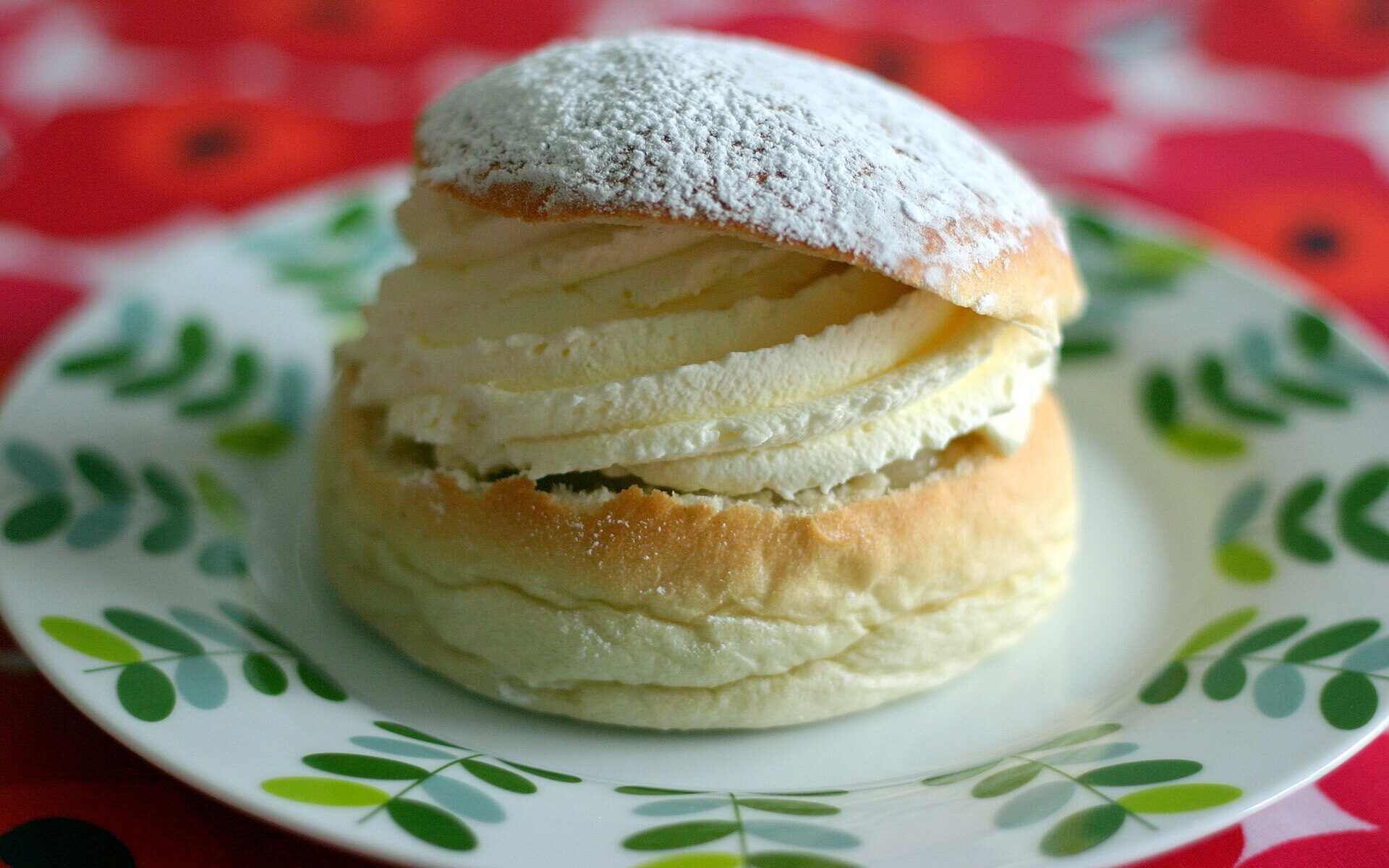
The semla is a cardamom-scented wheat bun with its top cut off and its inside scooped out, mixed with almond paste and milk and put back, then piled high with whipped cream, capped with the lid and dusted with icing sugar. It is rich, messy and, for about two months of the year, the most discussed food in Sweden.
The season. Traditionally the semla belonged to Shrove Tuesday, fettisdagen, the feast before Lent. There is no official start date any more, but since the 1970s and 1980s bakeries have started selling them in early January, and these days some start around New Year, to a certain amount of annual grumbling. The peak is Shrove Tuesday itself, which falls on 9 February in 2027. After that they fade out, although a few places sell them until Easter.
The king who died of semlor, or not. The story goes that King Adolf Fredrik died on Shrove Tuesday, 12 February 1771, after a feast that ended with hetvägg, the old form of the semla, served in a bowl of milk. A courtier’s account blamed indigestion from the hetvägg along with the sauerkraut, meat with turnips, lobster, caviar, smoked herring and champagne that came before it. His doctors thought it was a stroke, and the popular claim that he ate fourteen semlor is a myth. Hetvägg comes from the German heisse Wecken, “hot wedges”, and the semla in hot milk is still served by a few traditional bakeries. In southern Sweden and Finland the bun is also called a fastlagsbulle.
What it costs. The semla has become a small economic indicator. In 2026 the average price at Stockholm’s popular chains and cafés was around SEK 60, and one bank’s “semla index” put the rise since 2020 at about 30 per cent. The same 2026 survey found the best value at Skeppsbro Bageri, where a 201-gram semla cost SEK 61. Every winter also brings its novelties, from semla wraps to semla croissants; they are fun once, and the classic is better.
The verdict. If you are in Stockholm in January or February, eat one, sitting down, with a coffee, preferably on a cold day. It is a genuinely special pastry. Just do not plan anything energetic for the hour afterwards.
Prinsesstårta: the princess cake
The prinsesstårta is the cake for birthdays, name days and any excuse at all: layers of light sponge, raspberry jam and vanilla custard under a high dome of whipped cream, the whole thing covered in a thin sheet of pale green marzipan, dusted with icing sugar and topped with a pink marzipan rose. It is sold whole, by the slice and as a prinsessbakelse, a single-portion version, which is the sensible way for a visitor to try it.
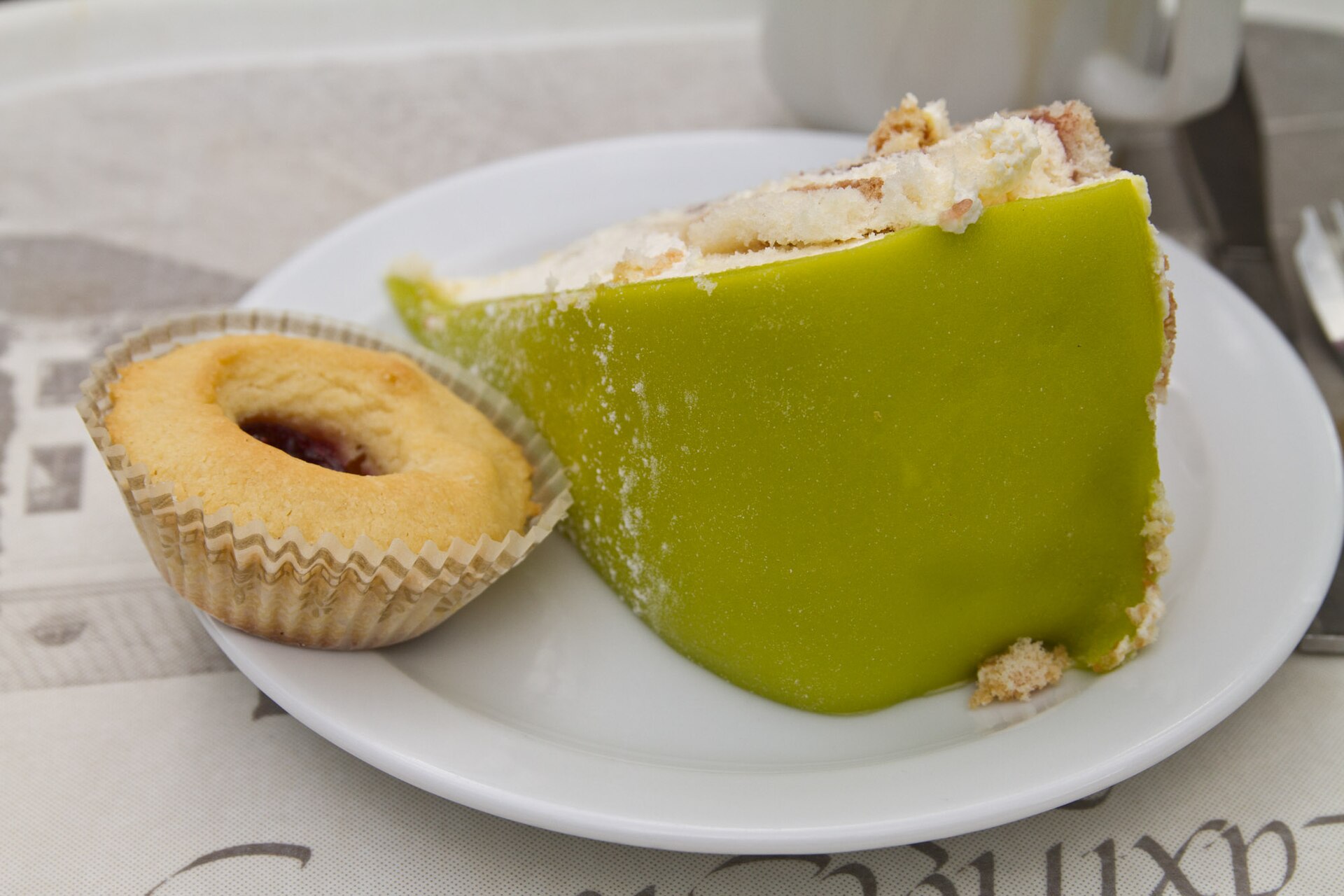
Its story is better than most. It comes from Prinsessornas kokbok, “The Princesses’ Cookbook”, a classic of Swedish cookery first published in 1929 and revised in later editions, by Jenny Åkerström, who ran a domestic science school in Stockholm whose pupils included the princesses Margaretha, Märtha and Astrid, the daughters of Prince Carl. In the book it was simply called “green cake”; it became the princess cake because the princesses were said to love it.
Sweden’s bakers and pastry chefs mark a Princess Cake Week in September. The honest verdict: beautiful, and sweeter than it looks. A slice with strong coffee is perfect; a whole cake needs a crowd.
The Christmas ones: lussekatter and pepparkakor
Lussekatt: the saffron bun
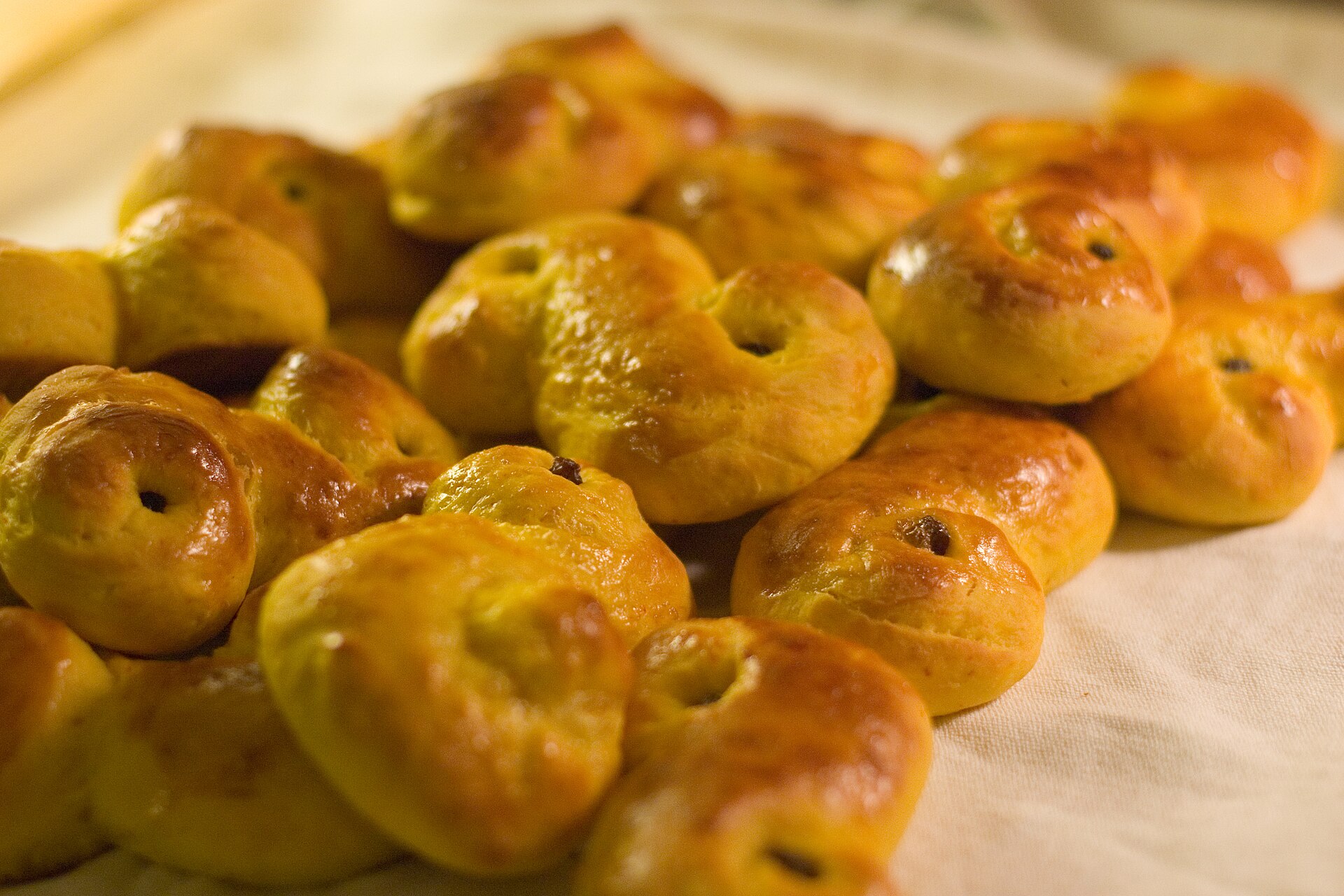
From late November, bakeries fill up with lussekatter, golden saffron buns usually curled into an S-shape with a raisin in each curl. They are eaten all through Advent and above all on 13 December, Lucia, the high point of Stockholm in December, when white-robed processions sing in churches, schools, offices and hotels across the country. Saffron gives them their colour, and a good one is soft, faintly bitter-sweet and best eaten the day it is baked, because they go stale fast. Look out, too, for saffron turning up in other December pastries.
Pepparkakor: ginger thins
Pepparkakor are thin, crisp spiced biscuits, flavoured with ginger, cinnamon and cloves, cut into hearts, stars, pigs and goats, and eaten by the handful from the beginning of Advent. There is a small ritual to go with them: put one in your palm, make a wish, and press the middle with a finger. If it breaks into three pieces, the wish comes true. They are also the easiest Swedish pastry to take home, sold in tins in every supermarket and at the Christmas markets.
For more of the season, see our guides to julbord in Stockholm, where pepparkakor and saffron buns turn up at the end of the meal, and to Stockholm at Christmas.
The cakes and bakelser
Beyond the famous names, every konditori has a cabinet of cakes and individual pastries. These are the ones you will see everywhere.
- Kladdkaka: the “sticky cake”, a flat chocolate cake deliberately underbaked so the middle stays gooey, served with whipped cream. Simple, rich and one of the most-baked cakes in Swedish homes. Order it warm if they offer.
- Mazarin: a small shortcrust tartlet filled with a dense almond cake and topped with a thin layer of white icing. Quietly excellent with coffee.
- Toscakaka: a light sponge under a crunchy topping of almonds cooked in butter, sugar and cream, like a Florentine on a cake. One of the best things in the cabinet.
- Budapestbakelse: a roll of hazelnut meringue filled with whipped cream and fruit, usually mandarin or apricot, dusted with chocolate. Light, crisp and gone in three bites.
- Biskvi: an almond macaroon base topped with a mound of chocolate buttercream and dipped in chocolate. Very sweet, very good.
- Wienerbröd: literally “Viennese bread”, the Swedish name for what the English-speaking world calls a Danish pastry, filled with vanilla custard or jam. Fine, but not what you came to Sweden for.
The nostalgic ones
Dammsugare: the vacuum cleaner
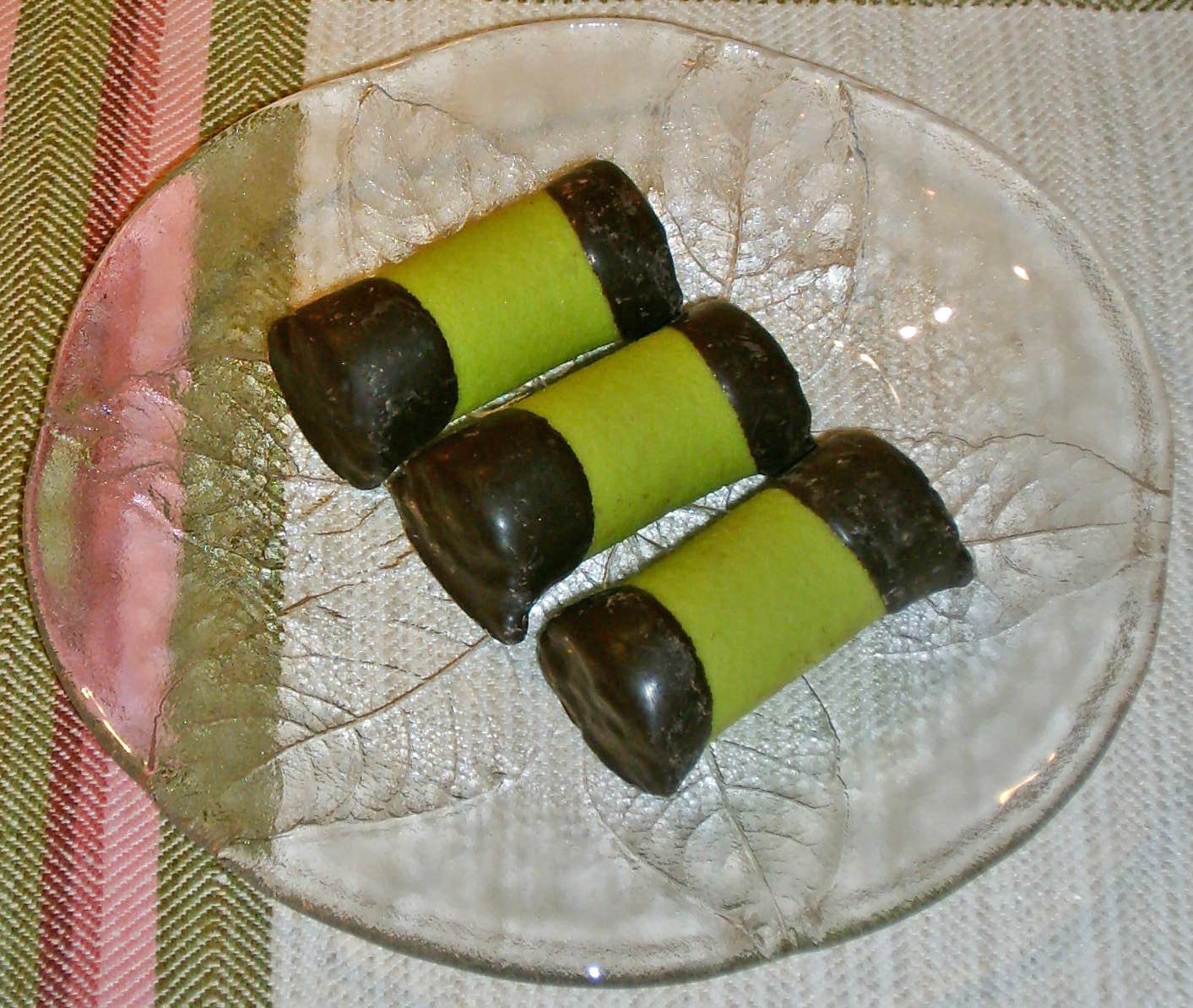
The dammsugare, officially the punschrulle, is a cylinder of cake crumbs, butter, cocoa and punsch liqueur flavouring, wrapped in bright green marzipan with both ends dipped in dark chocolate. The nickname, “vacuum cleaner”, comes from the idea that it was invented to hoover up the bakery’s leftover crumbs, and from its shape. It is intensely sweet and, for many Swedes, pure childhood. Try one for the story; you may not need a second.
Chokladboll: the chocolate ball
The chokladboll is a no-bake ball of oats, sugar, butter, cocoa and a splash of coffee, rolled in pearl sugar or desiccated coconut. Every Swedish child makes them, every café sells them, and they are the cheapest pastry on most counters. Humble, fudgy and addictive.
Småkakor: the seven kinds of cookies
An old rule of Swedish hospitality held that a proper coffee party should offer seven kinds of small biscuits, and Sweden’s best-loved baking book takes its title, Sju sorters kakor, from the idea. The classics include hallongrottor, “raspberry caves”, buttery thumbprint biscuits with a pool of jam in the middle; drömmar, “dreams”, which are light and crumbly; and havreflarn, lacy oat crisps. Bakeries sell them by the piece or the bag, and they are the best thing to take home.
A year of Swedish pastries
| When | What to eat | Why |
|---|---|---|
| January to Shrove Tuesday | Semla | Semla season from after New Year; Shrove Tuesday, the traditional peak, is 9 February in 2027 |
| All year | Kanelbulle, kardemummabulle, kladdkaka, chokladboll | The everyday fika staples |
| September | Prinsesstårta | Princess Cake Week |
| 4 October | Kanelbulle | Cinnamon Bun Day |
| Late November to Christmas | Lussekatter, pepparkakor | Advent, and Lucia on 13 December |
Where to eat them in Stockholm
You will find good pastries all over the city, but a few addresses are worth crossing town for. Our best bakeries in Stockholm guide has the full list and the neighbourhoods; these are the essentials.
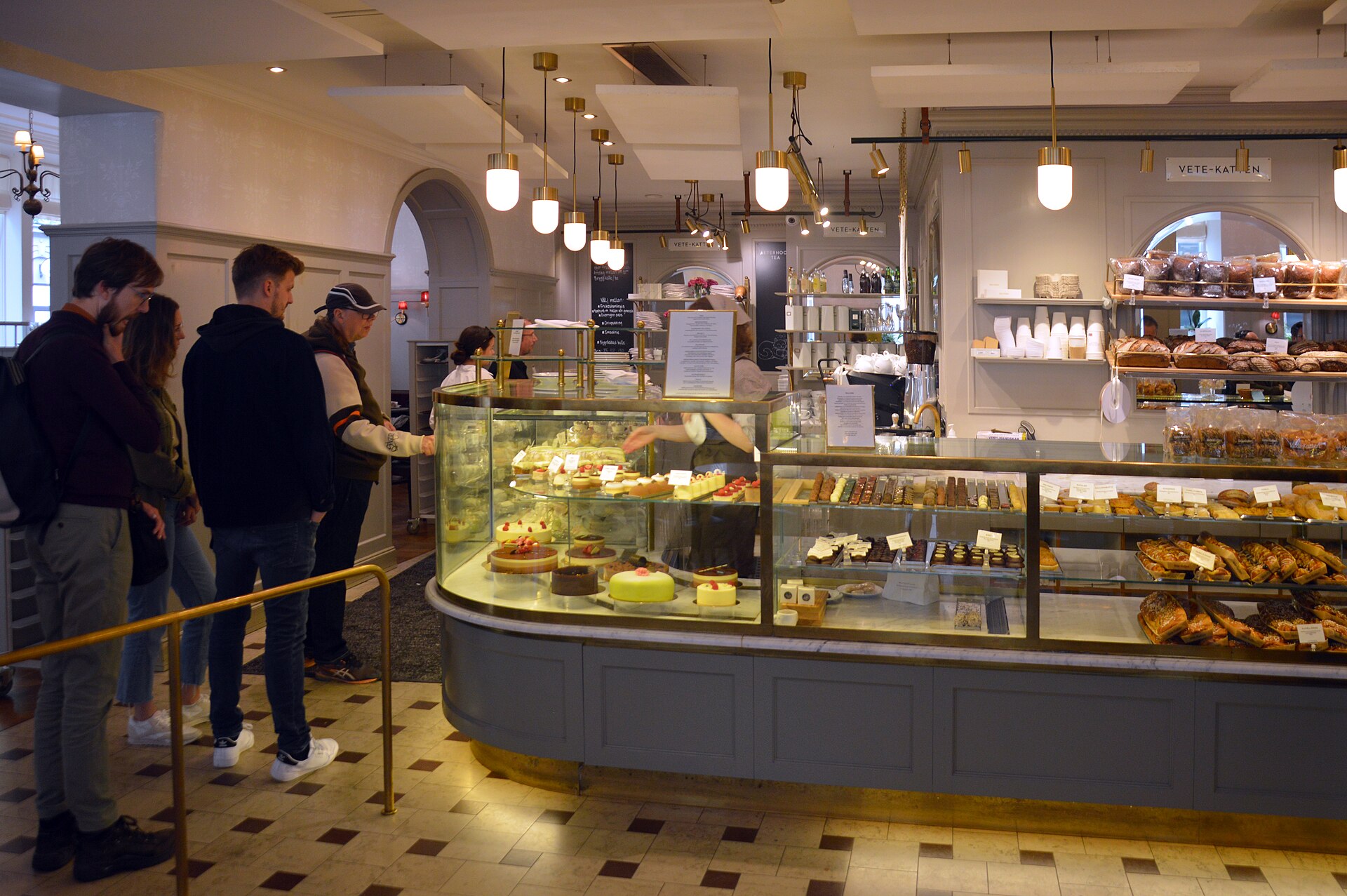
- Vete-Katten, Kungsgatan 55: the grand old konditori, open since 1928, with a warren of rooms and a counter of classic cakes. The place for a first fika.
- Tössebageriet, Karlavägen 77, Östermalm: an institution for semlor, and the bakery credited with starting the semla-wrap craze.
- Café Saturnus, Eriksbergsgatan 6, Östermalm: a café for fika.
- Skeppsbro Bageri: the best-value semla in the 2026 survey, and a good bakery all year.
- Fabrique and Bröd & Salt: dependable sourdough chains with branches all over town, good for cardamom buns on the go.
A tip on location: the cafés on the busiest tourist streets of Gamla Stan tend to charge more for less, so walk a few streets or cross to Södermalm or Östermalm for the real thing. For the cafés themselves, see our guide to the best cafés in Stockholm.
What Swedish pastries cost
Stockholm is expensive, but fika is one of its better deals. The 2025 average for a cinnamon bun was about SEK 44, and the 2026 average for a semla about SEK 60. Filter coffee usually costs a little less than a bun, often with a free refill at traditional places, so a coffee and a pastry typically comes to around SEK 80–110. Cakes and bakelser cost more than buns, and a slice of prinsesstårta sits at the top of the everyday range. Supermarkets and convenience stores sell pre-packed buns for less, and they are fine in an emergency, but the difference between those and a bun from a proper bakery is the whole point.
For the rest of the day’s spending, see our guides to cheap eats in Stockholm and the cost of a Stockholm trip.
Which Swedish pastries are worth it?
If you only have one fika, have a kanelbulle or a kardemummabulle from a good bakery; it is the benchmark, and the one you will measure every future cinnamon roll against. If you are here in January or February, the semla is essential. After that, our honest ranking goes toscakaka, prinsesstårta by the slice, mazarin and kladdkaka, with the dammsugare and the chokladboll as sugary history lessons rather than pastries you will crave. Wienerbröd you can skip; you can have one anywhere.
And do it properly: sit down, take your time, and have a second cup. That, more than any single pastry, is the Swedish part.
To order in Swedish, “en kanelbulle och en kaffe, tack” (a cinnamon bun and a coffee, please) will get you a long way; our list of Swedish phrases for tourists has more. And for the savoury side of the national menu, see traditional Swedish food.
Frequently asked questions
Which Swedish pastry should I try first?
The kanelbulle, the cinnamon bun, filled with butter, sugar and cinnamon. It has its own national day on 4 October.
What is a semla?
A cardamom wheat bun with its top cut off, filled with almond paste mixed with the scooped-out crumb and milk, piled with whipped cream and dusted with icing sugar. It is sold from about New Year, with the peak on Shrove Tuesday, which falls on 9 February in 2027, and some bakeries keep selling it until Easter.
How much does a cinnamon bun cost in Stockholm?
About SEK 44 on average in 2025, according to a Swedish price survey. Giant buns at a few cafés cost more, and supermarket buns less.
How much is a semla in Stockholm?
Around SEK 60 on average in 2026 at the popular chains and cafés, up about 30 per cent since 2020. One 2026 survey found the best value at Skeppsbro Bageri, SEK 61 for a 201-gram semla.
What is prinsesstårta?
The princess cake: layers of sponge, raspberry jam and vanilla custard under a dome of whipped cream, covered in green marzipan. It is named after three Swedish princesses who were pupils of Jenny Åkerström, whose Princesses’ Cookbook made the recipe famous.
When is Cinnamon Bun Day in Sweden?
On 4 October every year. Lucia, the day for saffron buns, falls on 13 December.
What is a dammsugare?
A “vacuum cleaner”: a roll of cake crumbs, butter, cocoa and punsch flavouring, wrapped in green marzipan with both ends dipped in chocolate. Its proper name is punschrulle.
What is the difference between a kanelbulle and a cinnamon roll?
A Swedish kanelbulle is less sweet, with cardamom in the dough, and topped with pearl sugar instead of icing or frosting. It is also usually smaller and chewier than an American cinnamon roll.
Where can I buy Swedish pastries in Stockholm?
At any bakery or konditori. Classic addresses include Vete-Katten on Kungsgatan, Tössebageriet on Karlavägen, Café Saturnus in Östermalm, and the Fabrique and Bröd & Salt chains all over town.
More Stockholm guides
- Best Restaurants in Stockholm: Where to Eat in 2026: the full food guide.
- What Is Fika?: the ritual behind the pastries.
- Best Bakeries in Stockholm: where to buy them.
- Best Cafés in Stockholm: where to sit down with them.
- Traditional Swedish Food: the savoury classics.
- Julbord in Stockholm: the Christmas table, desserts included.
- Stockholm Food Markets: food halls and delis.
- Kid-Friendly Restaurants in Stockholm: eating out with children.
Photo credits
Semla (featured image): SemlaFlickr by Frugan, CC BY 2.0, via Wikimedia Commons.
Princess cake: Besök på Kakslottet, Taxinge by Andreas Ivarsson, CC BY 2.0, via Wikimedia Commons.
Saffron buns: 2005 baking of saffron buns 04 by Tomhe, CC BY 2.0, via Wikimedia Commons.
Dammsugare: Dammsugare (cropped) by Godisgirl, CC0, via Wikimedia Commons.
Vete-Katten: Interior of Vete-Katten on Kungsgatan, Stockholm, 2022 by DimiTalen, CC0, via Wikimedia Commons.