Stockholm Christmas Markets Shopping Guide
Stortorget, Skansen and the rest, honestly assessed — 2026 dates and hours, what each market actually sells, what things cost, and how Stockholm compares with the German markets.
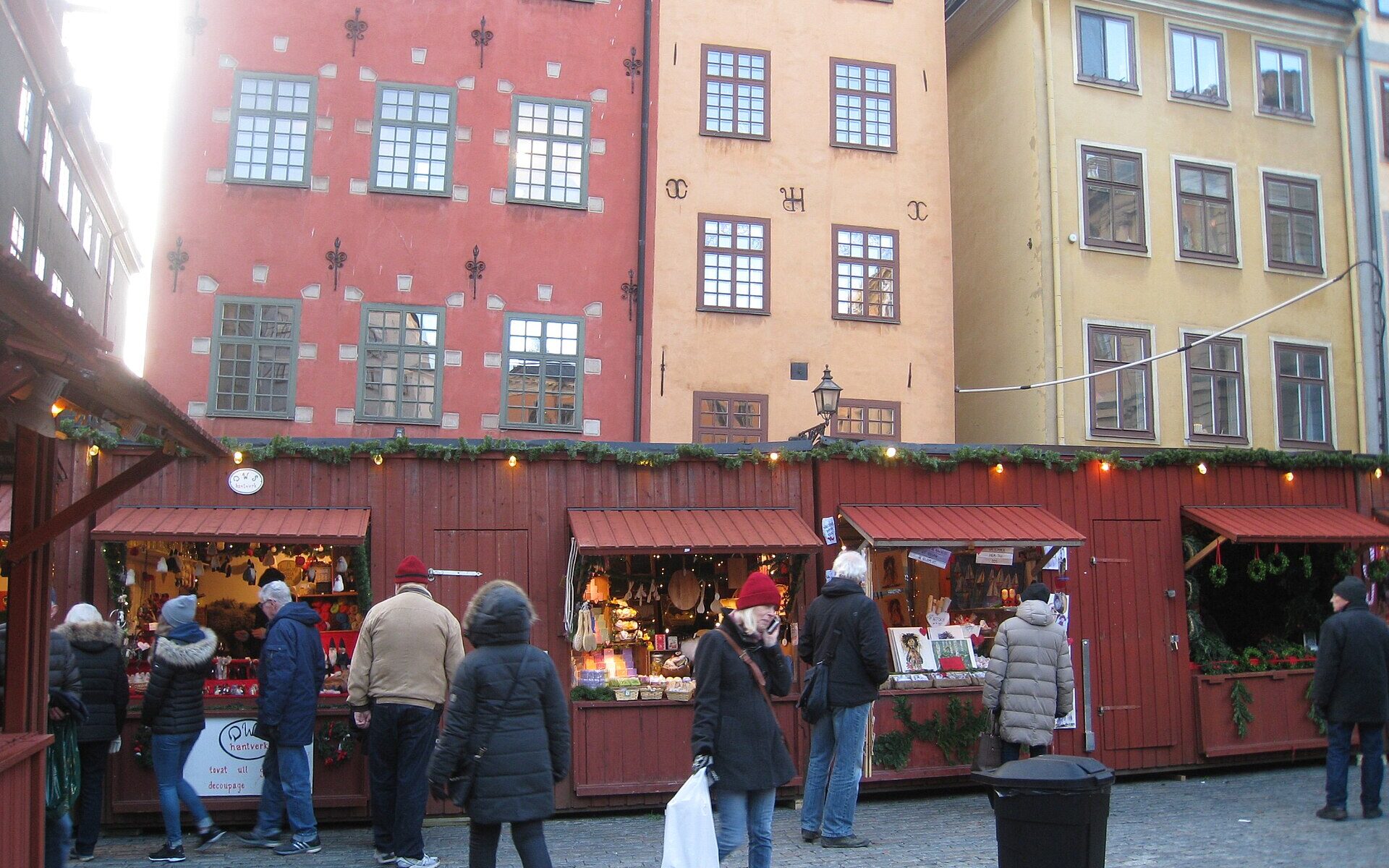
The Stockholm Christmas market everyone photographs is the one on Stortorget in Gamla Stan: red wooden stalls, garlands, lights, and the painted gabled houses behind. It has been running since 1837, it is genuinely lovely, and it is also about forty stalls in one small square — which is worth knowing before you plan a trip around it. The substantial market is somewhere else entirely.
This guide covers all of Stockholm’s Christmas markets honestly: the dates and hours for the 2026 season, what each one actually sells, what things cost, how the city’s December calendar fits around them, and how the whole business compares with the German markets most visitors are measuring it against. Dates were checked in September 2026 — Swedish Christmas markets confirm their dates late, so verify before you book flights.
Stortorget, Gamla Stan: about 21 November – 23 December 2026. Sun–Thu 11:00–18:00, Fri–Sat 11:00–19:00. Free.
Skansen, Djurgården: Fridays to Sundays only, 27 November – 20 December 2026. Fri–Sat 10:00–17:00, Sun to 16:00. Included in museum admission.
Oldest: Stortorget, running since 1837. Skansen’s dates from 1903.
Size: Stortorget has about 41 stalls. It is small. Skansen is the one to allow half a day for.
Typical spend: glögg SEK 40–60, a hot snack SEK 60–100, a handmade gift SEK 150–500.
Daylight in December: roughly 08:45 to 14:50. Plan to see the markets lit.
The alcohol rule: bottled spirits come from Systembolaget only — closed Sundays, shut at 15:00 on Saturdays.
Stortorget, Gamla Stan — the famous one
Stortorget is the oldest square in Stockholm and the most photographed, and from late November it fills with small red timber booths strung with spruce and lights. The market has run here since 1837, which makes it one of the longest continuously operating Christmas markets in Scandinavia.
For 2026 it is expected to run from around 21 November to 23 December, open Sunday to Thursday 11:00–18:00 and Friday to Saturday 11:00–19:00. Entry is free.
What is sold: about 41 stalls, mostly Swedish handicraft and Christmas food — smoked sausage, reindeer and elk products, cheese, mustard, jam, saffron buns, knäck (Swedish toffee), pepparkakor (thin ginger biscuits), candles, wreaths, wool and small wooden things.
The honest verdict: it is beautiful and it is small. Forty-one stalls in one square takes twenty-five minutes to see properly, and if you have arrived with Nuremberg or Vienna in mind you will be briefly baffled. It is a charming half-hour and a perfect photograph, not an afternoon.
What makes it worth the trip anyway is the setting. Gamla Stan in December, lit, with snow on the cobbles and the market glowing in the middle of the square, is one of the genuinely great winter sights in northern Europe — and it is three minutes from everything else in the old town.
Go after dark, which in December means any time after about three in the afternoon. The market at 16:00 on a weekday is the version you came for; the market at noon on a Saturday is a crowd in grey daylight.
Skansen — the one to allow half a day for
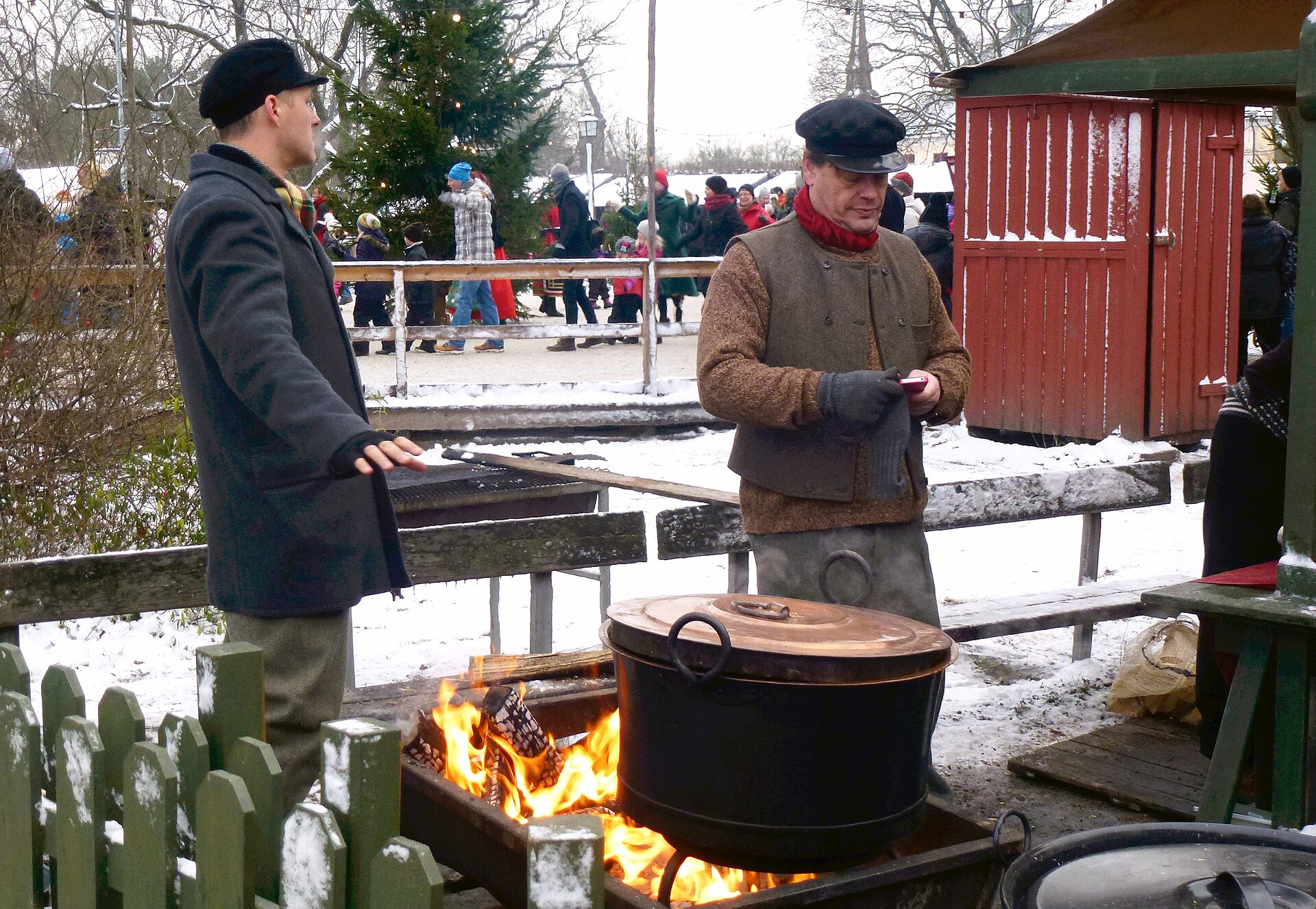
Skansen, the open-air museum on Djurgården, has held a Christmas market since 1903, and it is the substantial one. For 2026 it runs Fridays to Sundays only, from 27 November to 20 December — Friday and Saturday 10:00–17:00, Sunday until 16:00. Crucially, it is included in ordinary Skansen admission, with no separate ticket.
What you get is a Christmas market inside a working open-air museum: stalls selling handicraft, design, sweets, home-made candles and gifts, scattered through the museum’s collection of relocated historic buildings, with costumed staff, open fires, roasted almonds, waffles and glögg. Because Skansen is also a zoo of Nordic animals and a hillside with a view over the whole city, the market is one element of a half-day rather than the whole thing.
This is the answer for anyone travelling with children, anyone who wants more than half an hour of Christmas market, and anyone who would rather see how Swedes actually celebrated Christmas than shop. Check the current admission price before you go — see the Skansen guide for the rest of the museum.
The catch: weekends only, for four weekends. If your trip falls midweek, or falls after 20 December, Skansen’s market is simply not happening while you are there. Plan around this — it is the single most common Stockholm Christmas disappointment.
The other markets
Beyond the two big names, the city runs a scatter of smaller markets, several of which are better shopping than either.
- Rosendals Trädgård, Djurgården. The biodynamic garden’s greenhouse hosts a design market run by students from Beckmans, the Stockholm design school, for one weekend. It is the most interesting shopping of any market on this list — contemporary, well-made, and nothing you will see anywhere else. One weekend only, so check dates early.
- Kungsträdgården. Central, convenient, and ordinary. Worth ten minutes if you are passing, and it has an ice rink alongside.
- Drottningholm Palace. A Christmas market in the grounds of a UNESCO World Heritage royal palace, usually on one weekend. Beautiful, and a proper excursion — see the Drottningholm guide.
- Sigtuna. Sweden’s oldest town, an hour north, with a small-town Christmas market and low wooden buildings along a single main street. The best day trip on this list — details in the Sigtuna day trip guide.
- Stockholms Stadsmission markets. Charity-run, genuinely local, and the least touristic option in the city.
What to buy, and what to leave
Swedish Christmas markets are strongest on food and weakest on gifts — the opposite of the German model, where the gift stalls carry the market.
| Buy | What it is | Price (SEK) |
|---|---|---|
| Knäck | Chewy Christmas toffee, often home-made | 50–100 |
| Pepparkakor | Thin, hard ginger biscuits — a national obsession | 50–90 |
| Smoked sausage and cured meats | Elk, reindeer, wild boar | 90–250 |
| Mustard and jam | Christmas mustard for ham; lingonberry and cloudberry | 60–150 |
| Hand-dipped candles | A real Swedish craft, and genuinely good | 80–250 |
| Wool and mittens | Look for Lovikka, not acrylic | 300–800 |
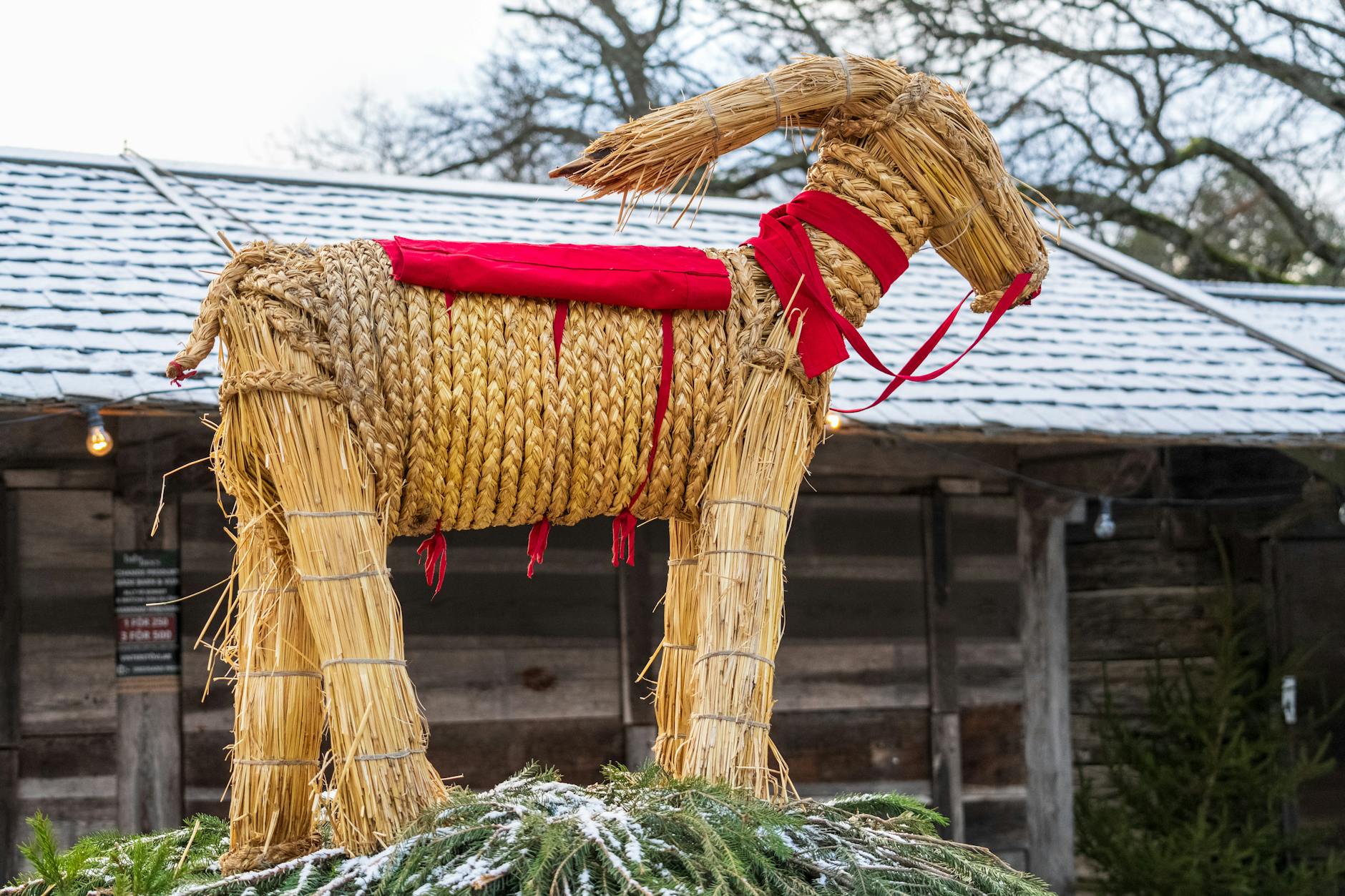
| Straw goats | Julbock — the proper Swedish Christmas ornament | 80–300 |
What to leave: anything mass-produced, anything with a moose on it, and the generic ornaments that appear at every European market from Lisbon to Tallinn. For real Swedish craft the shops are better than the stalls — see our guides to souvenir shops in Gamla Stan and Swedish design stores.
Glögg, explained properly
Glögg is the Swedish version of mulled wine and it differs from the German in two ways that matter.
First, it is served with raisins and blanched almonds in the bottom of the cup, eaten with a small spoon as you drink. This is not optional garnish; it is the point. Second, it is frequently stronger — the home version is often fortified with vodka or aquavit, and the commercial bottled versions vary widely.
Alcohol-free glögg is everywhere and taken entirely seriously, which is useful in a country with a 0.2 g/l drink-driving limit. Expect SEK 40–60 a cup at a market. Several stalls offer free samples of bottled glögg, which is a legitimate and traditional way to work your way around a market.
One rule: you cannot buy bottled alcoholic glögg at the market itself. Anything above 3.5% ABV in Sweden is sold only by Systembolaget, the state monopoly, which closes at 15:00 on Saturdays and all day Sunday. Plan accordingly.
What else to eat
- Lussekatter — saffron buns, shaped in an S with a raisin in each curl, eaten obsessively from late November until Christmas.
- Julmust — the dark, spiced Christmas soft drink that outsells Coca-Cola in Sweden every December. Try it once; opinions divide sharply.
- Grilled korv — sausage, from a market stall, in the cold, is better than it has any right to be.
- Roasted almonds — the smell that defines the whole season.
- Julbord — the full Christmas table, served at restaurants across the city through December and an entirely separate undertaking. Book weeks ahead; the good tables go early. The traditional Swedish food guide explains what is on it.
Stockholm versus the German markets
Worth addressing directly, because it is the source of most disappointment.
| Stockholm | Nuremberg or Vienna | |
|---|---|---|
| Scale | Small — 41 stalls at the biggest central market | Hundreds of stalls, several markets per city |
| Focus | Food and handicraft | Gifts, decorations, food |
| Setting | Exceptional — medieval square, often snow | Also exceptional |
| Daylight | About six hours; markets lit most of the day | Eight to nine hours |
| Mulled wine | Glögg, with raisins and almonds | Glühwein |
| Best single site | Skansen, weekends only | The main square, daily |
The fair summary: Stockholm is not a Christmas market destination in the way Germany and Austria are, and going purely for the markets is a mistake. Stockholm in December is an outstanding destination for other reasons — the dark, the light installations, Lucia, the julbord season, an old town under snow — and the markets are a pleasant part of that rather than the point of it.
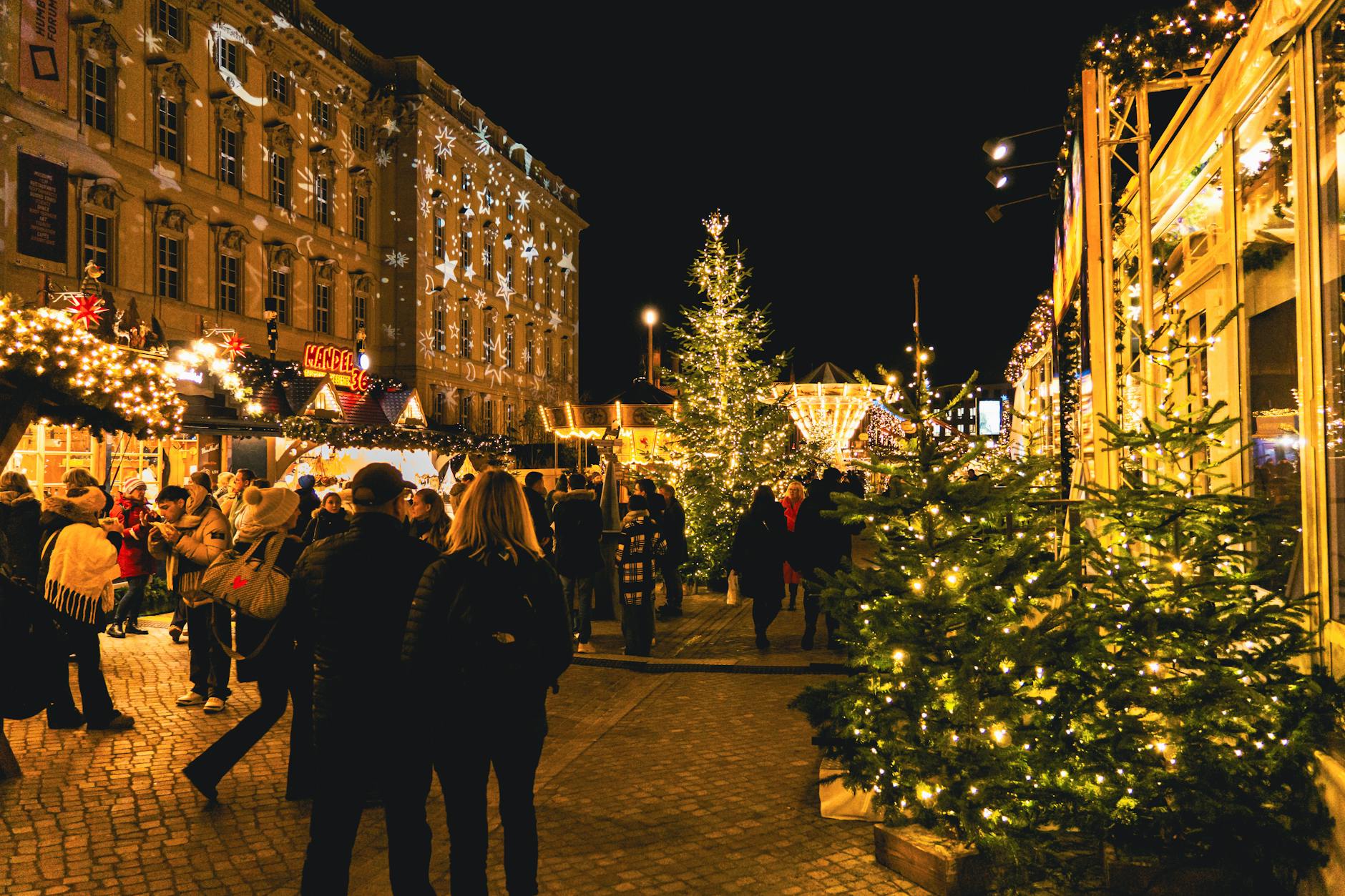
The rest of the December calendar
The markets sit inside a dense month, and the other fixed points are worth planning around.
- Nobel Day, 10 December. The prize ceremony and banquet take place at the Stockholm Concert Hall and the City Hall. Nobel Week Lights runs alongside — free light installations across the city, and one of the best reasons to be here in December at all.
- Lucia, 13 December. Always this date. Choirs in white robes and candle crowns, in churches, museums and workplaces from early morning. Skansen’s Lucia celebration is the big public one. If you can attend a Lucia concert in a church, do.
- Julbord season runs the first three weeks of December and books out early. Established names include the Grand Hôtel, Operakällaren, Ulriksdals Värdshus and Villa Källhagen.
- NK’s Christmas windows on Hamngatan are unveiled in late November and are a family tradition in their own right — see the NK guide.
- Christmas Eve, 24 December, is the main Swedish celebration, not Christmas Day. Essentially everything closes. Plan for it or be caught out.
The December in Stockholm guide covers the whole month, and the weather by month guide covers what to expect from the cold.
Christmas markets as day trips
If the markets matter to you, the best ones are not in the city. Stockholm’s surrounding towns do Christmas considerably better than its squares do, largely because they are small enough for the whole place to take part.
Sigtuna is the pick. Sweden’s oldest town, an hour north, a single low wooden main street along the water, and a market that feels like a town doing Christmas rather than a city hosting an attraction. It is also pleasant in a way central Stockholm in December is not — quiet, walkable and small. The Sigtuna day trip guide has the transport.
Drottningholm runs a market in the grounds of the royal palace on the water, usually for one weekend, and the setting is a UNESCO World Heritage site. Reachable by boat in summer and by metro-plus-bus year round — details in the Drottningholm guide.
Uppsala, forty minutes by train, adds a cathedral, a university town’s Christmas concert calendar and a market of its own. See the Uppsala day trip guide.
Mariefred, beside Gripsholm Castle on Lake Mälaren, is the prettiest of the lot and the smallest — a lakeside village of wooden houses that looks like a Christmas card whether or not a market is on. The Mariefred and Gripsholm guide covers getting there.
All four are day trips from the city on ordinary public transport, and all four are better value for an afternoon than the third Christmas market inside Stockholm. More options in the day trips guide.
With children
Christmas markets are a reliable win with children, provided you get the logistics right in a country where it gets dark at three.
Skansen is the obvious choice and it is not close. The market sits inside an open-air museum with Nordic animals — wolves, lynx, bears, elk — historic farmsteads, a small funicular up the hill, and enough space that nobody has to stand in a queue being cold. Allow half a day and go early, because the light is gone by three and small children flag fast in the cold.
Kungsträdgården has an ice rink alongside its market in the centre, with skate hire, which buys you an hour and is free to watch.
Warmth is the constraint, not interest. Plan a café stop every ninety minutes, bring more layers than you think, and treat any indoor stop as part of the itinerary rather than an interruption. The Stockholm with kids guide has the wet-and-cold-weather options.
Practical notes
- Cards only. Sweden is effectively cashless and this extends to market stalls. Several will not take notes at all. See the currency guide.
- Dress for standing still. Stockholm in December is around −3 to +2°C, damp, and often windy off the water. Walking keeps you warm; queueing for glögg does not. Proper boots with grip matter more than the coat — see the packing list.
- Daylight runs roughly 08:45 to 14:50 in late December. This is less depressing than it sounds and more disorienting than you expect.
- Weekday afternoons are the sweet spot at Stortorget. Saturday afternoons are shoulder to shoulder.
- Skansen is weekends only. Repeated because it catches out more people than anything else on this page.
- Confirm dates before booking. Swedish markets announce late and can shift by a few days year to year.
A Christmas market day that works
- 10:00 — Skansen, if it is a Friday, Saturday or Sunday in the window. Allow three to four hours: the market, the historic buildings, the Nordic animals and the view.
- 14:00 — tram 7 back to the centre. Late lunch somewhere warm.
- 15:30 — Gamla Stan as the light goes. Walk in from Slussen or over Norrbro, arrive at Stortorget as the stalls light up.
- 16:30 — the old town. Glögg, then the shops one street back from Västerlånggatan while they are still open.
- 18:00 — NK’s windows on Hamngatan, fifteen minutes away on foot, then dinner.
If your trip is midweek, swap Skansen for Kungsträdgården and spend the saved hours on the museums, which are at their best when it is dark outside by three.
What to skip
- Planning a trip around the markets alone. They are a good half-day between them, not a reason to fly.
- Stortorget at noon on a Saturday. Grey, crowded, and the worst version of a lovely thing.
- Expecting Skansen midweek. Fridays to Sundays, four weekends only.
- Mass-produced ornaments. The same stock appears at every European market. Buy the food and the candles instead.
- Leaving alcohol shopping to Sunday. Systembolaget is closed. There is no alternative and no exception.
- Arriving on 24 December expecting a market. Stortorget closes on the 23rd, and on Christmas Eve the entire country stops.
Frequently asked questions
When is the Stockholm Christmas market 2026?
The Stortorget market in Gamla Stan is expected to run from about 21 November to 23 December 2026, open Sunday to Thursday 11:00–18:00 and Friday to Saturday 11:00–19:00. Skansen’s market runs Fridays to Sundays only, from 27 November to 20 December 2026. Confirm both before booking, as Swedish markets announce dates late.
Which is the best Christmas market in Stockholm?
Skansen, for substance — it is inside an open-air museum, has costumed staff and open fires, and is included in museum admission, but it only runs at weekends. Stortorget in Gamla Stan is the more beautiful and more famous, but it is small at about 41 stalls and takes under half an hour.
Is the Stockholm Christmas market free?
Stortorget is free to enter. Skansen’s market is included in ordinary Skansen admission, so you pay the museum entry rather than a separate market ticket. The smaller markets at Kungsträdgården and elsewhere are generally free.
How old is the Stortorget Christmas market?
It has run on Stortorget since 1837, making it one of the oldest continuously operating Christmas markets in Scandinavia. Skansen’s market dates from 1903 and is tied to the founding of the open-air museum.
What is glögg?
The Swedish mulled wine, served with raisins and blanched almonds in the bottom of the cup and eaten with a small spoon as you drink. It is often stronger than German Glühwein. Alcohol-free versions are widely available. Expect SEK 40–60 a cup at a market.
Can you buy alcohol at Stockholm Christmas markets?
You can buy a cup of glögg to drink there, but not bottles. Anything above 3.5% ABV in Sweden is sold only through Systembolaget, the state monopoly, which closes at 15:00 on Saturdays and does not open on Sundays.
What should I buy at a Swedish Christmas market?
Food and candles rather than gifts: knäck toffee, pepparkakor ginger biscuits, Christmas mustard, lingonberry and cloudberry jam, smoked and cured meats, hand-dipped candles and a straw julbock. Skip the mass-produced ornaments, which are identical at every European market.
How cold is Stockholm in December?
Roughly −3 to +2°C, often damp and windy off the water, with daylight from about 08:45 to 14:50 in late December. Boots with grip matter more than the coat, because the pavements alternate between ice and slush.
Are Stockholm’s Christmas markets as good as Germany’s?
No, and it is better to know that in advance. Stockholm’s markets are small — the largest central one has about 41 stalls against hundreds in Nuremberg or Vienna. Stockholm in December is outstanding for other reasons: Nobel Week Lights, Lucia on 13 December, the julbord season and the old town in the snow.
What is the best time of day to visit?
After about 15:00, when the sun has gone and the stalls are lit — which in a Stockholm December is most of the afternoon. Weekday afternoons at Stortorget are far more pleasant than Saturdays, when the square is shoulder to shoulder.
The markets are only one part of the season. For the Advent lights, Nobel Week and Lucia, where to eat a julbord, and what’s open (and firmly shut) on Christmas Eve and Christmas Day, see our guide to Stockholm at Christmas.
More Stockholm guides
- Stockholm Shopping — the full guide to buying things in the city.
- Stockholm in December — the whole month, including Lucia and Nobel week.
- Skansen Guide — the open-air museum that hosts the best market.
- Best Souvenir Shops in Gamla Stan — where the real craft is sold.
- Traditional Swedish Food — including what is on a julbord.
- Stockholm Packing List — what December actually demands.
- Sigtuna Day Trip — the small-town market an hour north.
- Stockholm Weather by Month — cold, daylight and what to expect.
Photo credits
Stortorget Christmas market: Julmarknad på Stortorget, Gamla stan, Stockholm, 2017b by Bysmon, CC BY-SA 4.0, via Wikimedia Commons.
Skansen Christmas market: Skansens julmarknad 2013a by Holger.Ellgaard, CC BY-SA 3.0, via Wikimedia Commons.