Antique Shopping in Stockholm
Where Stockholm's antiques trade lives now: the free public viewings at Bukowskis and the world's oldest auction house, the dealers of Östermalm and Vasastan, how to spot a fake Gustavian piece, and the export rules nobody mentions.
If you picture the antique shops Stockholm once had, a whole lane of dusty dealers in the old town with a Gustavian commode in every window, adjust the picture before you arrive. The trade here has shrunk and moved. Much of it now happens in the auction rooms and online, and the shops that remain are spread across three or four neighbourhoods instead of one. What is left is very good, though, and the best part costs nothing. Stockholm’s two great auction houses let anyone walk in off the street during viewing week and handle the lots.
This guide covers where antique shopping in Stockholm happens now: the auction houses first, then the dealers of Östermalm, Vasastan and Gamla Stan, then what is worth buying and how to tell the real thing from the enormous reproduction trade. It also covers the rules on taking old objects out of Sweden. Details were checked in September 2026. Dealers here come and go more than most shops, so confirm opening hours before you make a special trip.
Best single experience: a viewing at Bukowskis or Stockholms Auktionsverk. Both are free, public and better stocked than most museums.
Where the dealers are: Östermalm for the high end, Upplandsgatan in Vasastan, and the lanes of Gamla Stan for curios.
What Sweden does best: Gustavian furniture, Mora clocks, silver, pewter, glass and twentieth-century ceramics.
Biggest risk: “Gustavian style”. Most pale-grey painted furniture on sale is modern reproduction.
Paperwork: older and valuable objects may need an export licence to leave Sweden. Ask the dealer before you pay.
Honest verdict: go for the auction rooms and a few serious dealers, not for a morning of browsing a street of antique shops. That street no longer exists.
How the Stockholm antiques trade works now
Twenty years ago you could spend a day moving from dealer to dealer in Gamla Stan and Östermalm. Many of those shops have closed, for the same reasons as everywhere else. Rents went up, younger buyers moved to mid-century and away from brown furniture, and the whole trade moved online. The Swedish platform Auctionet and the auction houses’ own sites now carry most of the country’s antiques trade. Dealers who stayed open have usually moved up-market or narrowed to a speciality.
For a visitor, that has two consequences. First, you need a plan rather than a street; the sections below give you one. Second, the auction houses have become the best way to see a lot of good Swedish material in one place. They are open to the public, they are central, and nobody expects you to bid.
The auction houses: start here
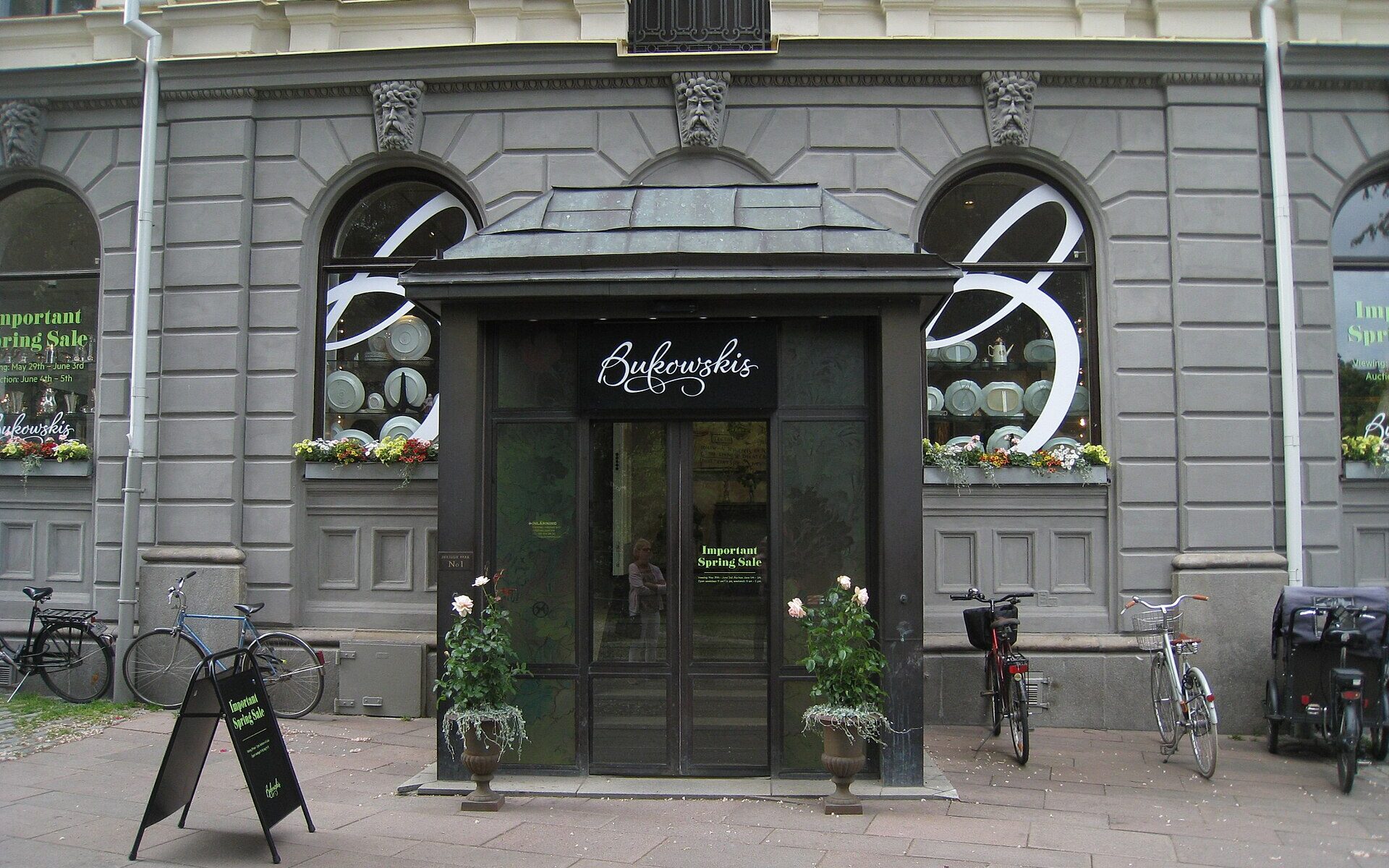
Bukowskis — Arsenalsgatan 4, by Berzelii Park
Bukowskis was founded in 1870 by Henryk Bukowski, a Polish émigré. It has been in its building by Berzelii Park, a few minutes’ walk from Kungsträdgården, since the end of the nineteenth century, and every viewing and live sale takes place there. In 2022 it was bought by Bonhams, the London auction house. The Stockholm operation still runs under its own name and still handles most of the important Scandinavian material that comes to market.
The sales that matter are the big seasonal “Important” sales of fine art, antiques and design, held a few times a year. Before each one there is a public viewing of several days. You walk in, pick up a catalogue, and look at eighteenth-century Swedish furniture, Nordic paintings, silver and modern design at arm’s length, often with a specialist nearby who is happy to talk. Weekly online sales of more modest lots run alongside.
Bukowskis is also the easiest way to calibrate what things cost. The estimate beside each lot tells you, in kronor, what a Gustavian chair, a Mora clock or a Josef Frank cabinet is worth this year. That is exactly the information you need before walking into a dealer’s shop.
Stockholms Auktionsverk — Nybrogatan, Östermalm
Stockholms Auktionsverk was founded in 1674, and it is the oldest auction house in the world still operating. It is older than Sotheby’s by more than seventy years. Its showrooms are on Nybrogatan in Östermalm, where it holds its quality sales several times a year. It sells a large volume online, too, through Auctionet.
The atmosphere is a little less grand than at Bukowskis, and the range is broader: fine furniture and paintings alongside everyday silver, glass, rugs, books and household lots. For a visitor that mix is useful, because you see the ordinary Swedish antique market as well as the headline pieces.

How to use a viewing as a visitor
- Check the calendar. Both houses publish upcoming sales and viewing days on their websites. Big viewings cluster in spring and late autumn, with a lull in high summer.
- Just walk in. Viewings are free and you do not need to register to look.
- Ask. The specialists expect questions and most speak excellent English. Asking how they would tell a period piece from a later copy is the best free lesson in Swedish antiques you will get.
- If you bid, register in advance, read the terms, and remember that the buyer’s premium and any applicable VAT are added to the hammer price. Arrange shipping before you win, not after.
The dealers, by neighbourhood
Östermalm: the top of the market
Östermalm is where Stockholm’s money lives, and where its best antiques pass through. The serious dealers here specialise in period furniture, Swedish silver, fine glass and eighteenth- and nineteenth-century decorative arts. The shops are small, often by appointment or with short hours, and priced for collectors and interior designers, not for browsing tourists.
Smaller specialists are scattered through the side streets. Gamla Lampor deals in old and antique lighting, and À la Carte Antik specialises in porcelain and tableware. Walk the streets between Nybrogatan, Sibyllegatan and Karlavägen and you will find more. The area overlaps with the Swedish design stores on Strandvägen and Nybrogatan, so you can compare a 1930s Josef Frank piece at auction with the same design sold new at Svenskt Tenn.
Vasastan: Upplandsgatan
Upplandsgatan, in the residential grid of Vasastan, has long had a few serious dealers. Bacchus Antik, at Upplandsgatan 46, is one of the city’s best-known dealers in antique furniture, lamps and porcelain. Domino Antik, further down at number 25, covers the period from about the 1850s to the 1970s, and it bridges antiques and the mid-century material that most younger buyers now want. Both have traded here for years. Small dealers can move or close, so check before a special trip.
Vasastan is also where the practical side of the trade happens: framers, restorers and upholsterers work out of the same streets. It is a pleasant, untouristed part of the city to walk, with good cafés and bakeries between the shops.
Gamla Stan: curios, not commodes
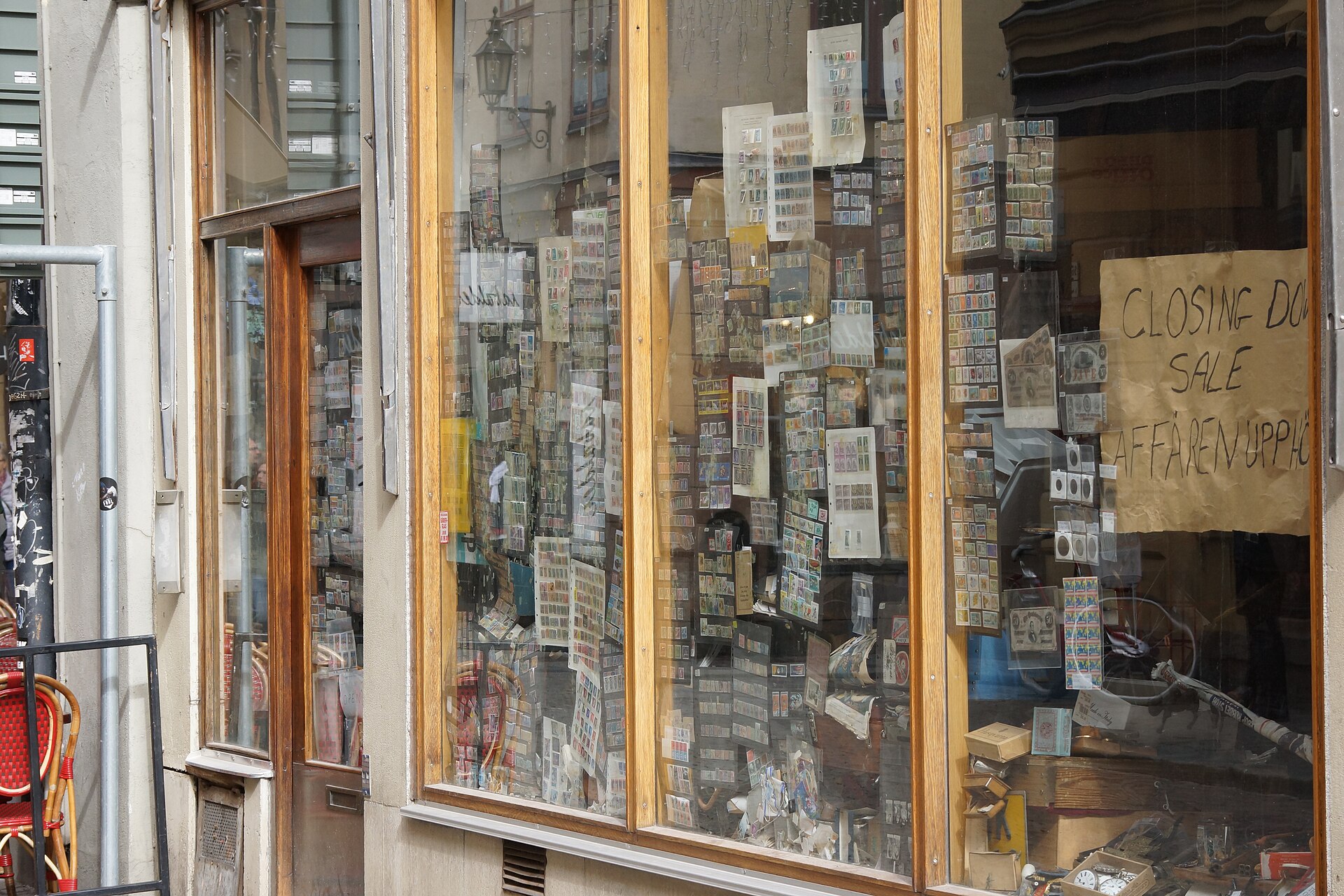
The old town still has antiques and curio shops, especially on Köpmangatan, Stora Nygatan and Österlånggatan. The stock is mostly smaller: prints and maps, silver spoons, coins and stamps, pewter, small pieces of glass, old postcards and the odd icon. Some of it is good and some of it is tourist bric-à-brac with an old-fashioned sign. Treat these shops as places to browse, not as your main source of serious furniture.
The sensible way to do Gamla Stan is to combine it with everything else the old town has to offer. Look in the antiques windows as you pass, go in where something catches your eye, and keep your serious money for Östermalm or the auction rooms.
Södermalm: where antiques meet vintage
Södermalm’s strength is twentieth-century material, not eighteenth. The Hornsgatan strip covered in our guide to vintage and second-hand shops in Stockholm has shops like Brandstationen, which sell mid-century lamps, glass and small furniture beside vintage clothing. If “antique” to you means a 1960s Gustavsberg dish, not a 1780s chair, start there.
Antikvariat: a word to know
In Swedish, an antikvariat is a second-hand or antiquarian bookshop, not an antique shop. The city has a good number of them, and they are worth knowing about if you collect old maps, prints, travel books or anything on Swedish history. The Swedish for an antique dealer is antikhandlare.
What to look for: Sweden’s antique specialities
Gustavian furniture
The style most associated with Swedish antiques is named after King Gustav III, who reigned from 1771 to 1792. Gustav had seen Versailles and brought French neoclassicism home, and Swedish cabinetmakers turned it into something lighter and plainer. Typical features are straight tapering legs, restrained carving and oval-backed chairs. Above all, the furniture was painted in pale greys, off-whites and soft blues, because Swedish pine was cheaper than imported mahogany and paint made rooms brighter through a long winter.
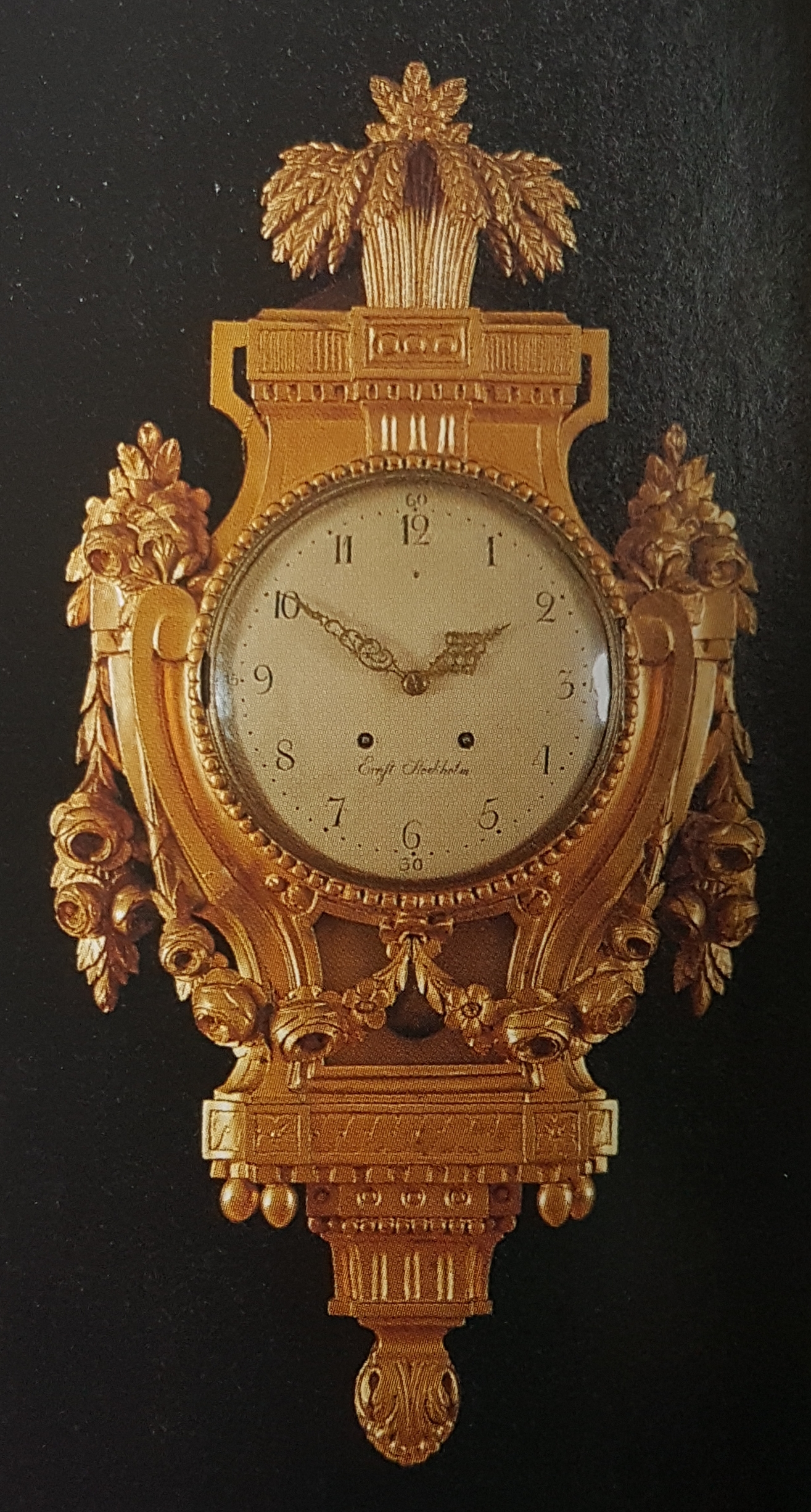
Genuine Gustavian pieces are sold by the serious dealers and at auction, and they are priced accordingly. The problem is that “Gustavian style” became an international interiors trend, and the market is full of new or recently painted furniture sold under the name. A real period piece shows its age where it should: worn paint at the hand-holds and feet, hand-cut joints, old nails or pegs, and a back and underside that have never been painted. If the whole piece is freshly and evenly painted in exactly the right grey, be sceptical.
Mora clocks
Mora clocks are the tall, curvy, painted longcase clocks made in and around Mora in Dalarna from the eighteenth century into the nineteenth. Local farming families made the movements in the long winters, and the cases were built and painted to order, which is why no two are quite alike. They are one of the most distinctive Swedish antiques, and one of the most copied.
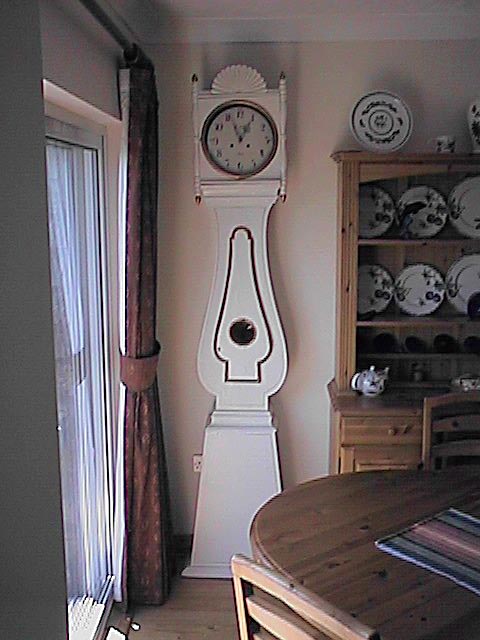
The test is the movement. A genuine clock has a hand-made movement, often with a maker’s mark or the Mora name. A reproduction usually has a modern quartz or factory-made movement in an old-looking case. Genuine ones are big, heavy and fragile, so if you are serious, buy through a dealer who can ship.
Swedish silver
Swedish silver is well marked, which makes it one of the safer things to buy. Look for the maker’s mark, a town mark (Stockholm’s is the crowned head of Saint Erik), a date letter, and from the twentieth century the three crowns that signal Swedish control. A silver-marks guide or app lets you date a piece to the year, often in the shop. Spoons, beakers and small dishes are affordable and pack easily.
Pewter
Swedish pewter, both eighteenth-century and the 1920s–30s Svenskt Tenn era, turns up in every price bracket, from dented tankards to signed pieces. It is heavy but not fragile, which makes it a good buy for travellers.
Glass and ceramics
The Småland glassworks, among them Kosta (founded 1742) and Orrefors, produced some of the finest art glass of the twentieth century. Signed pieces carry an engraved signature on the base. On the ceramics side, look for Rörstrand and Gustavsberg, especially Wilhelm Kåge’s silver-inlaid green Argenta ware from Gustavsberg, which sits right on the line between antique and design classic.
Textiles and prints
Rya rugs, woven wall hangings, embroidered linen and Carl Larsson prints are all worth hunting. Prints and textiles have one great advantage over everything else in this list: they fold or roll, and they fit in a suitcase.
What not to buy (or not yet)
- Anything sold as Gustavian without a clear history, or priced like a reproduction. Either the price or the description is wrong.
- Large furniture without a shipping quote. Freight for a single commode to North America or Australia can match its price. Get the quote first.
- Anything old and expensive without asking about an export licence. See below.
- “Viking” objects. Genuine archaeological finds cannot legally leave Sweden without a permit and should not be on open sale. Anything else labelled Viking is a reproduction.
- Ivory, tortoiseshell and certain tropical hardwoods. Even when antique, these often need CITES paperwork to cross borders, and many countries now ban importing them outright.
Taking antiques out of Sweden
This is the part most guides skip. Sweden controls the export of cultural goods, and some antiques need a licence to leave the country.
There are two layers of rules. EU rules require a licence for cultural goods leaving the EU above set age and value thresholds; for most antiques over a hundred years old, the threshold is EUR 50,000. Swedish national rules sit on top of that and cover objects that have been in Sweden for a long time, usually 75 years or more. Their thresholds vary by category, and some are much lower and stated in kronor. The licensing authorities are Riksantikvarieämbetet (the Swedish National Heritage Board), Nationalmuseum and Nordiska museet, depending on what the object is.
In practice:
- Everyday antiques, such as a silver spoon, a glass bowl or a print, will not come near any threshold.
- Serious period furniture, important silver, paintings and anything archaeological might. Ask the dealer or auction house before you buy. Reputable ones know the rules and handle the application.
- Riksantikvarieämbetet publishes the full list of categories and thresholds, in English, on its website. Applications take time, so leave room in your plans.
Import rules at the other end also apply, including your own country’s customs duty on goods over your allowance. Budget for them.
Train your eye first: the museums
An hour in a museum before you shop will make you a much better buyer. Three are especially useful.
- Hallwylska museet, Hamngatan 4: a private palace from the 1890s, preserved exactly as Countess Wilhelmina von Hallwyl left it, packed with her collection of silver, porcelain, furniture and paintings. It shows a wealthy Stockholm interior of that era, which is exactly what a lot of the antiques on the market came out of.
- Nationalmuseum: Sweden’s museum of art and design, with period rooms and the best collection of Swedish decorative arts and design anywhere. It is the place to see the real Gustavian thing.
- Skansen: the open-air museum’s farmhouses and town houses show how Swedish furniture, textiles and Mora clocks were actually used, not just displayed.
The full list is in our Stockholm museums guide.
Practical notes
Opening hours
Antique dealers keep short and irregular hours. Many open late in the morning, close around 17:00 or 18:00, open briefly on Saturdays and not at all on Sundays, and some work by appointment only. The auction houses keep regular business hours on viewing days. Check all of them before you set out.
Paying and tax-free
Cards are accepted everywhere; Sweden is close to cashless. Non-EU visitors can reclaim VAT on qualifying purchases in shops that take part in the tax-free scheme, but many antiques are sold under a margin scheme that does not show VAT separately. So ask before you assume a refund. At auction, check the house’s terms on VAT and exports.
Shipping
The auction houses and the serious dealers work with specialist art shippers and will give you a quote. For small pieces, pack in hand luggage if you can. Glass and ceramics travel best in the middle of a soft bag, wrapped in clothes.
An antiques day in Stockholm
- 10:00 – Hallwylska museet on Hamngatan, to calibrate your eye.
- 11:30 – Bukowskis at Berzelii Park, a few minutes away. Viewing week if you can time it.
- 12:30 – lunch at Östermalms Saluhall on Östermalmstorg. Our food markets guide covers it.
- 13:30 – Stockholms Auktionsverk on Nybrogatan, then the Östermalm side streets for dealers.
- 15:30 – Upplandsgatan in Vasastan: metro to Odenplan, then walk.
- 17:00 – fika and home, or on to Gamla Stan for the curio shops if you still have legs.
Where antiques fit into Stockholm shopping
Antiques are the most specialised corner of the city’s shopping. The Stockholm shopping guide covers everything else, and the Gamla Stan souvenir shops guide is the place to start if what you want is a genuine Swedish object at a smaller price.
Frequently asked questions
Where are the best antique shops in Stockholm?
The high end is in Östermalm, around Nybrogatan and its side streets. Upplandsgatan in Vasastan has long-established dealers such as Bacchus Antik and Domino Antik. Gamla Stan has smaller curio shops on Köpmangatan, Stora Nygatan and Österlånggatan. The auction houses Bukowskis and Stockholms Auktionsverk are the best single places to see good Swedish antiques.
Can I visit Stockholm auction houses as a tourist?
Yes. Bukowskis, at Arsenalsgatan 4 by Berzelii Park, and Stockholms Auktionsverk, on Nybrogatan, hold free public viewings before their sales. You can walk in, look at the lots and talk to the specialists without registering or bidding.
Is Stockholms Auktionsverk really the oldest auction house in the world?
Yes. It was founded in 1674 and is the oldest auction house still in operation anywhere, more than seventy years older than Sotheby’s.
What are the best Swedish antiques to buy?
Gustavian furniture from the late eighteenth century, painted Mora clocks from Dalarna, well-marked Swedish silver, pewter, Orrefors and Kosta glass, Gustavsberg and Rörstrand ceramics, rya rugs and Carl Larsson prints.
How can I tell if Gustavian furniture is genuine?
Look for age where you would expect wear: worn paint at hand-holds and feet, hand-cut joints, old nails or pegs, and an unpainted back and underside. Freshly and evenly painted pieces sold as “Gustavian style” are usually modern reproductions.
Do I need a licence to take antiques out of Sweden?
Only for older, higher-value objects. EU rules require an export licence for most antiques over a hundred years old worth more than EUR 50,000. Swedish national rules have lower thresholds for some categories that have been in Sweden for 75 years or more. Ask the dealer or auction house, and see Riksantikvarieämbetet’s list of categories.
What does antikvariat mean?
An antikvariat is a second-hand or antiquarian bookshop, not an antique shop. The Swedish word for an antique dealer is antikhandlare.
When are Stockholm antique shops open?
Hours are short and irregular. Many dealers open late morning, close by 17:00 or 18:00, keep brief Saturday hours and close on Sundays. Some work by appointment. Auction-house viewings follow published schedules.
More Stockholm guides
- Stockholm Shopping — the full guide to buying things in the city.
- Best Vintage & Secondhand Shops in Stockholm — the twentieth century, second hand.
- Östermalm Guide — the neighbourhood where the high-end trade lives.
- Vasastan Guide — Upplandsgatan and the quiet streets around it.
- Best Swedish Design Stores in Stockholm — the same classics, sold new.
- Nationalmuseum Guide — the best Swedish decorative arts in one building.
- Gamla Stan Guide — the old town beyond its curio shops.
- Stockholm Museums — where to train your eye before you buy.
Photo credits
Bukowskis at Berzelii Park (featured image): Bukowskis, Berzelii park, Stockholm, 2019a by Bysmon, CC BY-SA 4.0, via Wikimedia Commons.
Antiques shop window on Stora Nygatan: Stora Nygatan Antik och Kuriosa by Alexandar Vujadinovic, CC BY-SA 4.0, via Wikimedia Commons.
Gustavian wall clock by Petter Ernst: Gustaviansk pendel Peter Ernst, Public domain, via Wikimedia Commons.
Mora clock: Mora Clock by G N Frykman at English Wikipedia, Public domain, via Wikimedia Commons.