Stockholm Outdoors, Nature & Wellness: A Year-Round Guide
Stockholm's outdoor life through the year: the world's first national city park, hiking in Tyresta and the Nacka reserve, city swimming spots, lakeside saunas, kayaking, free fishing below the Royal Palace, skating on natural ice and what to pack.
Stockholmers like to say that their city is a third water, a third green space and only a third city, and after a few days you start to believe them. You can swim off the rocks within sight of City Hall, fish for salmon below the Royal Palace, walk through a national park that begins a few minutes from Östermalm, and be deep in old-growth forest within an hour of leaving your hotel. The best outdoor activities in Stockholm aren’t day trips to somewhere else. They’re part of the city itself, and most of them are free.
This is our guide to Stockholm’s outdoor life through the year: the national city park, hiking and nature reserves, where to swim, saunas and cold plunges, paddling and free fishing, cycling, skating and skiing in winter, wildlife, the right of public access and what to pack. Prices and transport details were checked in September 2026; treat prices as the right order of magnitude, and check timetables before you set off.
Nearest wilderness: Nacka nature reserve, about 15 minutes by bus from Slussen.
Real old-growth forest: Tyresta National Park, about 20 km out and 40 minutes by bus.
Swimming: 36 official bathing spots in the city, free, with the water tested every summer.
Sauna with a lake plunge: Hellasgården, roughly SEK 110–150.
Fishing: free with a rod in Mälaren, Strömmen and Saltsjön, right in the city centre.
Winter: outdoor rinks in Kungsträdgården and Vasaparken, and long-distance skating on natural ice in a cold year.
The rules: the right of public access lets you walk almost anywhere. Don’t disturb, don’t destroy.
A city inside a national park
In 1995, Stockholm opened the world’s first national city park. The Royal National City Park (Kungliga nationalstadsparken) covers 27 square kilometres across Stockholm, Solna and Lidingö, a green belt that reaches from Djurgården, a short walk from the city centre, north through Norra Djurgården and Hagaparken to Ulriksdal. It was created to protect the old royal parks and hunting grounds from development, and it still holds four royal palaces, museums, cafés and an amusement park, alongside about 100 species of breeding birds, 800 kinds of flowering plants and 1,200 species of beetle, many of them living in ancient oaks.
For a visitor, the park is the easiest way to feel how green Stockholm is. Walk the shore path around Djurgården, which takes you from the museums past Rosendal’s garden café and the quiet eastern tip at Blockhusudden. Or head north to Hagaparken, an English-style landscape park laid out for Gustav III in the late 18th century, with its lakeside pavilions and the water of Brunnsviken. Lill-Jansskogen, a real forest in the middle of the city, is laced with running trails. All of it is free, and much of it is reachable by bus or on foot.
Getting out there
Almost all of Stockholm’s green spaces are on the public transport network, and an ordinary SL ticket takes you to most of them. This is how to reach the main ones.
| Destination | How to get there | Time from the centre |
|---|---|---|
| Djurgården | Tram 7 from T-Centralen, or walk along Strandvägen | 10–20 minutes |
| Långholmen | Red metro line to Hornstull, then a short walk across the bridge | 15 minutes |
| Hagaparken | Bus from the city centre, or walk from Vasastan | 20–30 minutes |
| Hellasgården and the Nacka reserve | Bus 401 from Slussen | About 15 minutes |
| Judarskogen | Green metro line to Åkeshov, then a short walk | 25 minutes |
| Järvafältet | Blue metro line to Akalla or Rinkeby | 25 minutes |
| Lidingö | Red line to Ropsten, then the Lidingö light railway | 25–35 minutes |
| Tyresta National Park | Bus 807 or 809 from Gullmarsplan, or 834 from Haninge | About 40 minutes from Gullmarsplan |
| Fjäderholmarna | Boat from Strandvägen, in season | About 30 minutes |
Check the timetable for the last bus back, especially from Tyresta at weekends, and remember that some boats only run in summer.
Hiking and nature reserves
Stockholm is ringed by nature reserves, and several are reachable on an ordinary SL ticket. These are the best of them.
Nacka nature reserve
The Nackareservatet starts just beyond the city limits to the south-east: a landscape of pine forest, rocky ridges, lakes and reed beds laced with marked trails. The usual gateway is Hellasgården, on the shore of Källtorpssjön, about 15 minutes by bus 401 from Slussen, where you’ll find a café, a sauna, a swimming jetty and canoe and kayak hire. From there, loops of anything from a couple of kilometres to a full day run through the forest and around the lakes. It’s where Stockholmers go to feel far from the city without going far.
Tyresta National Park
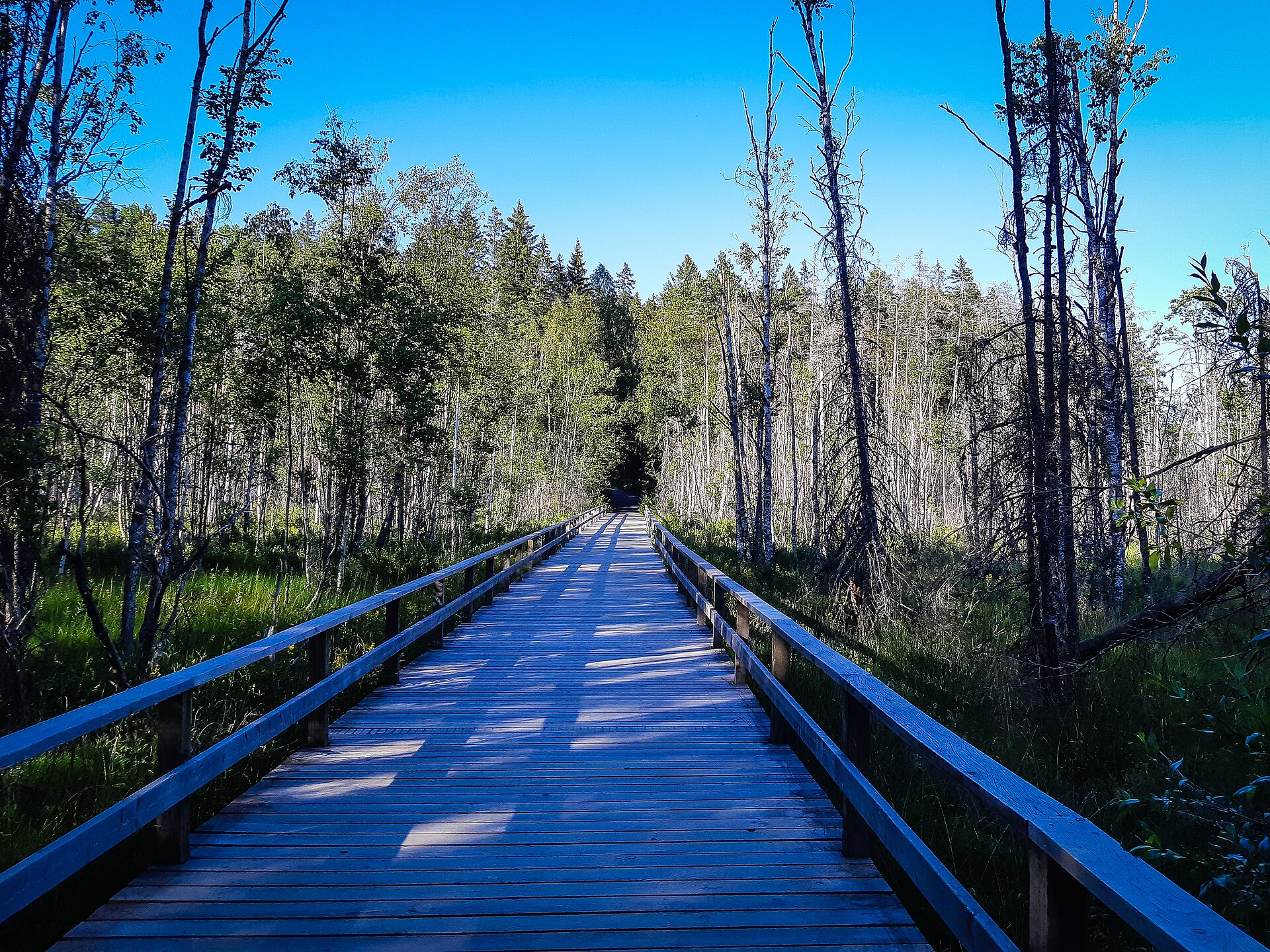
Tyresta is the real thing: one of the largest areas of untouched old-growth forest in southern Sweden, with pines several hundred years old, rock outcrops, bogs and lakes, about 20 km south-east of the city. It has around 55 km of trails. The easy Urskogsstigen, 2 km, takes you into the old forest from the village, and the 5 km Barnvagnsslingan is smooth enough for a buggy. At the other end of the scale, the 22 km Stensjön loop is a proper day’s hike. Get there by bus 807 or 809 from Gullmarsplan, or bus 834 from Haninge, in about 40 minutes. A large forest fire in 1999 burned part of the park, and the burned area has been left to regrow naturally, which makes it fascinating to walk through.
Sörmlandsleden and the long-distance trails
Sörmlandsleden is Sweden’s great southern hiking trail, about 1,000 km long and divided into around 100 sections, beginning on the edge of Stockholm and winding south-west through the province of Södermanland. The first sections run through Nacka to Tyresta, and the 13 km stretch from the Nacka reserve to Tyresta takes about five hours. It’s a satisfying day’s walk that links two of Stockholm’s best nature areas. North of the city, Upplandsleden and Roslagsleden offer similar walking through farmland, forest and along the coast.
Closer to the centre
You don’t need to leave the city to walk in green space. Our guide to walking in Stockholm has the routes, but a few stand out. The loop around Årstaviken, on the south side of Södermalm, takes in the allotment gardens of Tantolunden. Långholmen, a small island with a former prison turned hotel, is almost entirely wooded, with rocky swimming spots. Judarskogen, in Bromma, is a small nature reserve of lake and forest a short walk from Åkeshov on the green metro line. And Järvafältet, in the north-west, is a huge open area of fields, forest and old farmsteads.
Swimming in the city
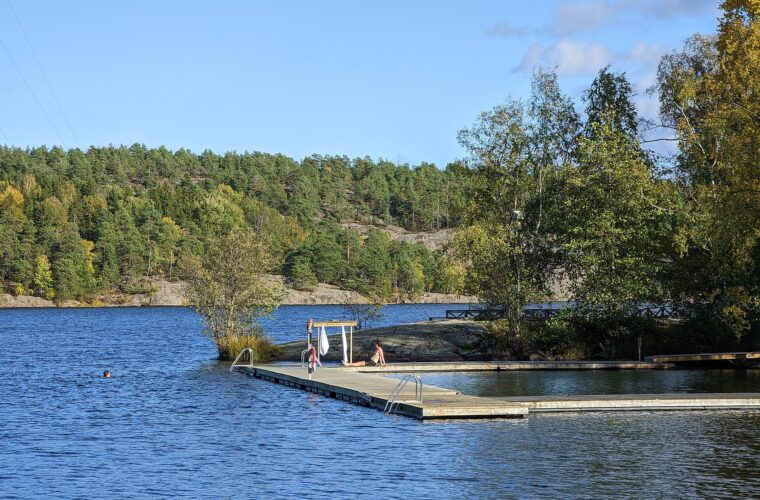
Stockholm’s water is clean enough to swim in the middle of the city, and on a warm day it feels as though the whole population is doing it. The City of Stockholm runs 36 official bathing spots along Lake Mälaren, the Baltic inlet of Saltsjön and the smaller lakes. From early June to mid-August it samples the water at each one for bacteria and publishes the results online. Swimming is free everywhere.
- Långholmen: rocky ledges and a small beach on a wooded island in Mälaren, and one of the city’s cleaner spots in recent years.
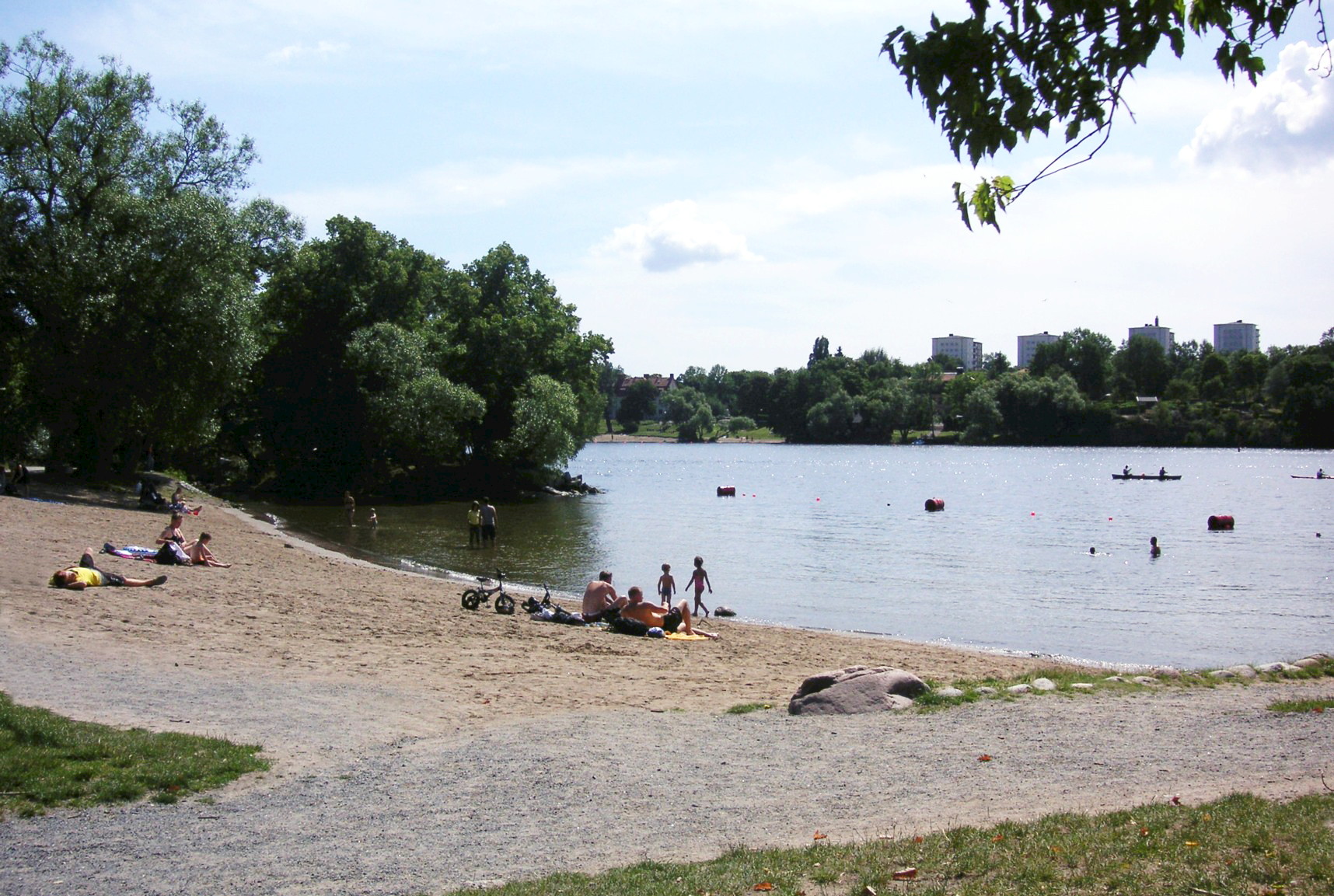
- Smedsuddsbadet: a sandy beach on Kungsholmen, next to Rålambshovsparken, with a jetty, bathing steps and an accessible ramp. Popular with families, but its water quality has been poorer in some recent summers, so check the results first.
- Tanto: the beach at Tantolunden on Årstaviken, handy for Södermalm.
- Hellasgården: a lake swim from the jetty on Källtorpssjön, in the forest of the Nacka reserve.
- Ängbybadet and Flatenbadet: bigger beaches further out, on Mälaren and on a forest lake, for a proper beach day.
In a warm July, the lakes reach the low twenties Celsius; the sea is cooler. Be careful on smooth rocks, which are slippery, and don’t dive where you can’t see the bottom. For island swimming, see our guides to the best archipelago islands and Grinda.
Winter swimming
Stockholmers swim all year. In winter the sea is 2–5 °C, and the ritual is a sauna followed by a quick dip through a hole cut in the ice. Hellasgården keeps one open all winter. It’s exhilarating and safe enough if you’re healthy, you go in slowly and you get out quickly, but it isn’t something to attempt alone or after drinking.
Saunas and cold plunges
Sauna culture in Stockholm has boomed, and the range runs from historic city bathhouses to floating community saunas. At Hellasgården, the lakeside sauna comes with a plunge into Källtorpssjön, for roughly SEK 110–150. Centralbadet, in Norrmalm, is an Art Nouveau bathhouse with pools and saunas, and Sturebadet, in Östermalm, is the luxury version. On Södermalm, the waterfront saunas Tanto bastu, on the shore of Årstaviken, and Hornstullsbastun, at Bergsund Strand, let you cool off by the water between rounds, with guest sessions at Tanto from about SEK 50.
The etiquette is simple: shower first, sit on a towel, keep your voice down, and take your cue from the others on swimwear. Single-sex saunas are usually nude, while mixed ones are usually swimwear-only. Our guide to Swedish etiquette has more, and spa hotels in Stockholm covers the indulgent end.
On the water: paddling, boats and free fishing
Kayaking and paddleboarding
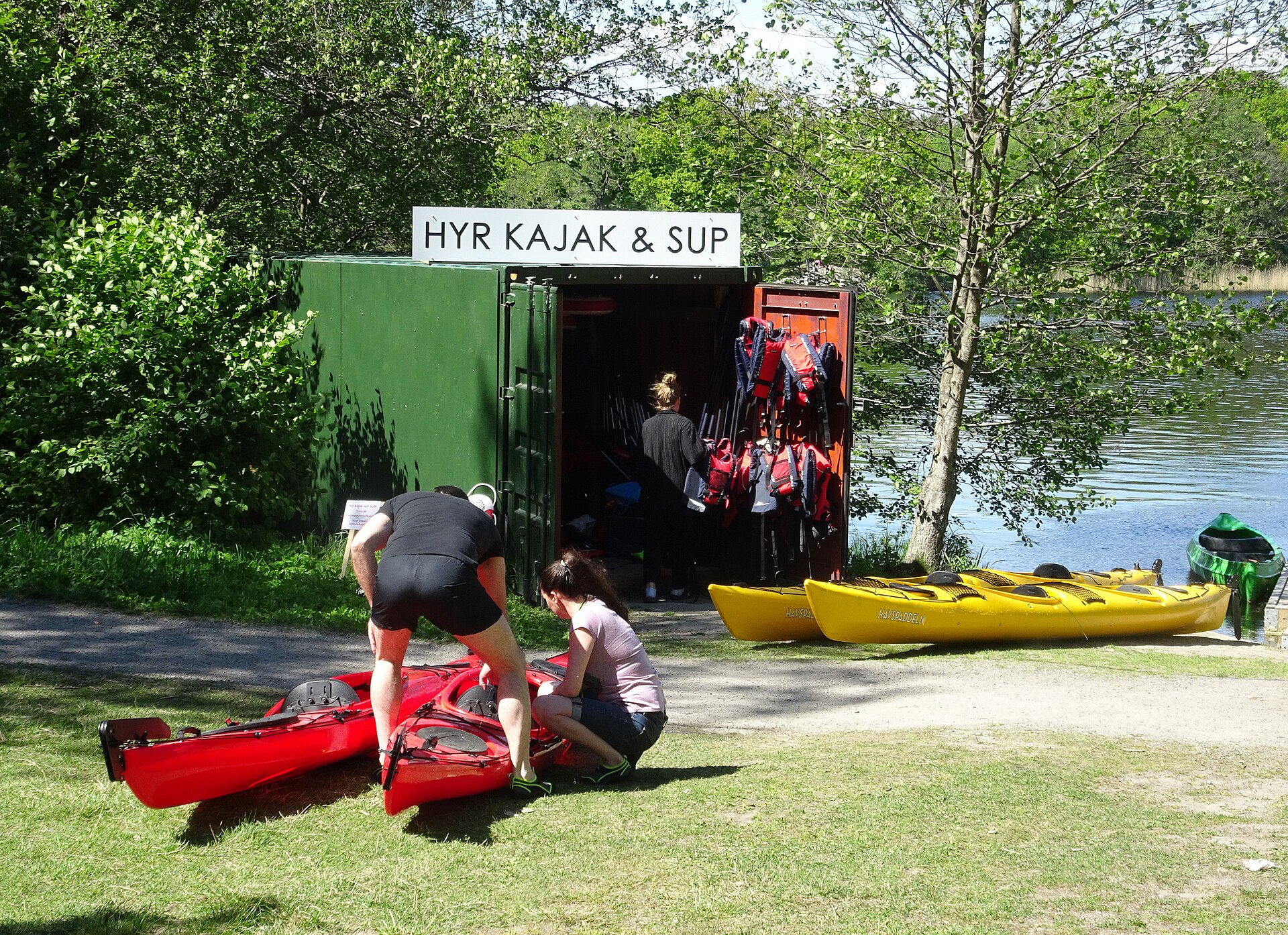
Seeing Stockholm from a kayak is one of the city’s best experiences, paddling past the palaces, under the bridges and out to wooded islands. Rentals are available in the city, and on the lakes of the Nacka reserve, where the water is sheltered and calm. Stand-up paddleboards are widely available in summer too. Our kayaking guide covers routes, rentals and guided tours, including the multi-day trips out into the archipelago.
Boats
You don’t need to paddle to get out on the water. The ferries of the SL network and Waxholmsbolaget’s archipelago boats are the cheapest boat trips in the city, and Stockholm’s sightseeing boats run through the season. See our guides to Stockholm boat tours, Stockholm’s ferries and the Stockholm archipelago.
Fishing in the city centre
Here is something few capitals can offer. In Stockholm you can fish for free, with a rod and line, in Lake Mälaren, in Strömmen, the fast water that runs past the Royal Palace, and in Saltsjön, the sea. Stockholmers have fished Strömmen by tradition since at least 1636, when Queen Kristina granted the townspeople the right, and since 1985 fishing with hand-held tackle has been free in Mälaren and along the coast. Strömparterren, the little park on the water below the palace, is one of the most famous spots. Salmon and sea trout run through the channel, along with perch, pike and pike-perch.
The free right covers hand-held tackle: a rod, an ice-fishing rod or a hand line. Nets, trolling from a boat and other methods need the permission of whoever owns the fishing rights, and in other lakes you’ll usually need a fishing licence (fiskekort). Size limits and protected seasons apply, especially for salmon and sea trout, so check the current rules before you keep anything.
The archipelago: the big outdoors
Stockholm’s archipelago, some 30,000 islands, islets and skerries spread across the Baltic, is the city’s great outdoor playground, and you reach it on a scheduled ferry. In summer, Stockholmers spend weekends swimming off smooth granite rocks, walking island trails, paddling between the islands and eating smoked fish on the quays. Grinda, a wooded island under two hours out by boat, is the easiest island for a day of swimming and walking; Sandhamn, further out, has sandy beaches and sailing; and Vaxholm, an hour away, is the gateway. The full timetables run from midsummer to mid-August, with a reduced service in spring, autumn and winter. Our guides to the Stockholm archipelago, Sandhamn and where to stay in the archipelago will help you plan a night or two out on the islands.
Cycling
Stockholm is a good cycling city in summer, with a large network of separated bike paths. The classic rides are the flat loop around Djurgården, the shore of Lake Mälaren west to Drottningholm, and the route around Brunnsviken through the national city park. Our guides to cycling in Stockholm and bike tours in Stockholm cover rental options, routes and the rules of the road.
Running
Stockholm is a running city, and on any summer evening the waterfronts are busy with joggers. The favourite routes are the loop around Djurgården, the quays along Norr Mälarstrand on Kungsholmen, the circuit of Årstaviken on the south side of Södermalm, and the forest trails of Lill-Jansskogen. Further out, the lakes of the Nacka reserve have marked trails and floodlit loops (elljusspår) that are lit on winter evenings, when it’s dark by mid-afternoon. If you’d like company, the big races, from the Stockholm Marathon in late May or early June to Lidingöloppet’s cross-country course in late September, are listed in our Stockholm events and festivals calendar.
Winter outdoors
A cold Stockholm winter is one of the great outdoor seasons, though it depends on the weather. Some winters bring weeks of snow and thick ice; others bring grey drizzle and temperatures around freezing.
Ice skating
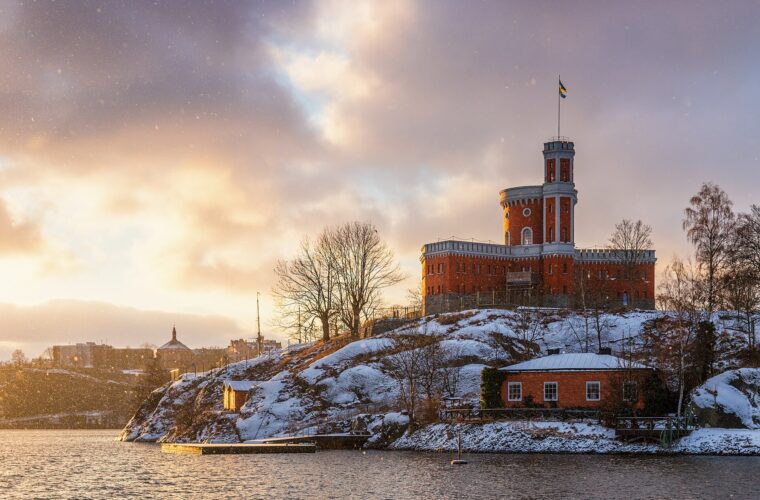
From late autumn, outdoor rinks open in the city centre, including the popular rink in Kungsträdgården and another in Vasaparken, and you can rent skates on the spot. The real prize, in a cold year, is long-distance skating (långfärdsskridsko) on natural ice: on the smaller lakes such as Trekanten, on the lakes of the Nacka reserve, and, when it freezes, on the bays of Mälaren. Stockholmers glide for kilometres across black ice with nordic skates. Long-distance skates can be rented at Hellasgården. Never go onto natural ice alone, carry ice claws, and if you’re new to it, go with a guided tour. Guides check the ice and carry safety gear.
Skiing and sledging
Stockholm isn’t a ski destination, but when snow falls the city makes the most of it. Cross-country tracks are prepared in parks and reserves when there’s enough snow, including at Hellasgården and in the Nacka reserve. The small downhill slope at Hammarbybacken, within the city, runs in season, and every park with a slope fills with children on sledges. For serious downhill skiing, you’d need to travel north. For the winter season as a whole, see Stockholm in January and Stockholm in February.
Winter light
Short days make the outdoors more precious. Midwinter light is low, golden and brief, and snow multiplies it. On clear, dark nights, there’s a small chance of the aurora; our guide to the northern lights near Stockholm is honest about the odds.
Wildlife
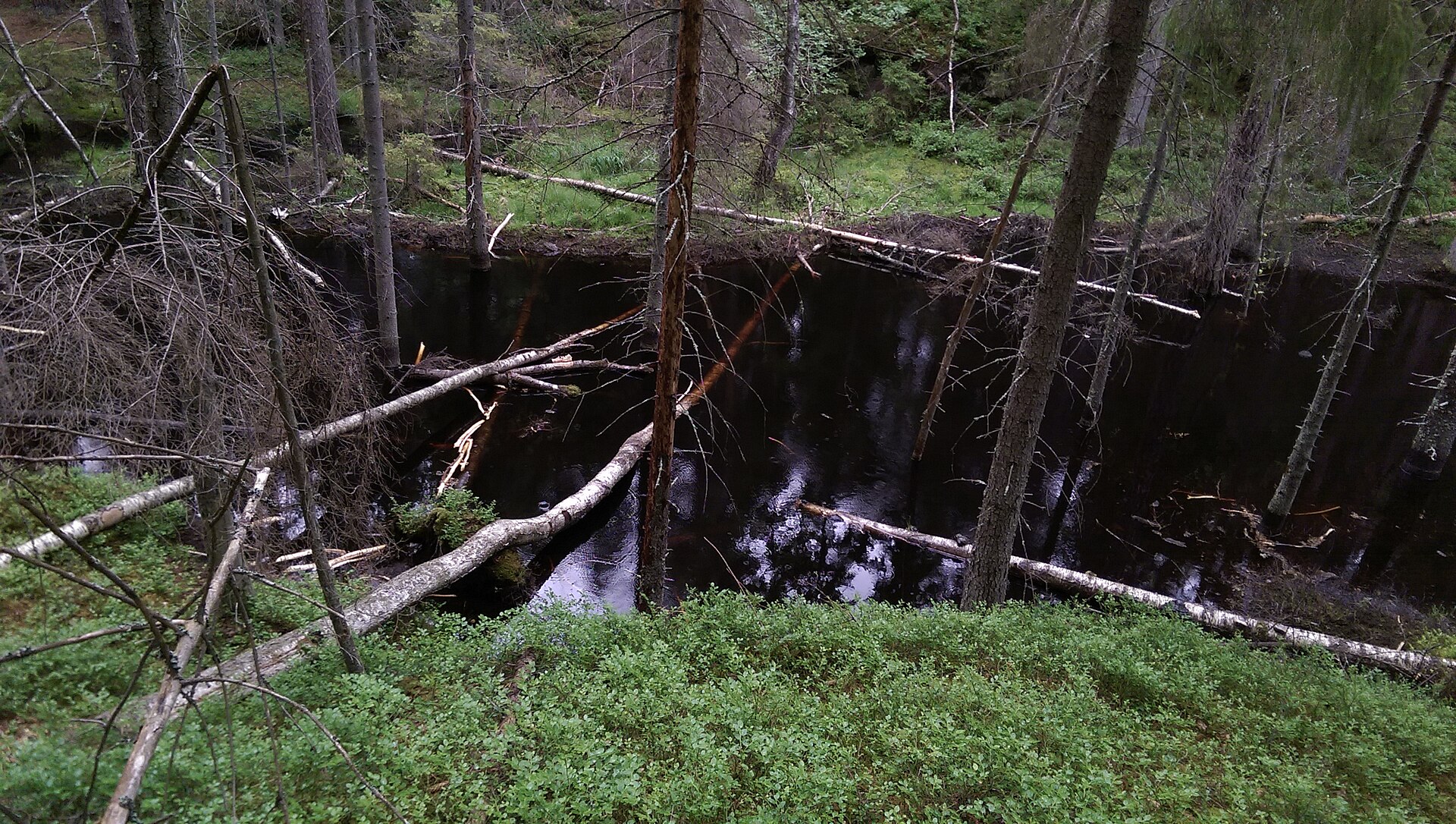
Stockholm’s green spaces are full of life, if you’re quiet. Red squirrels, hares and roe deer are common in the parks; foxes and badgers come out at dusk; and moose live in the forests of Tyresta and the bigger reserves. Beavers have returned to the lakes and streams, and their dams and gnawed trunks are easy to spot on a walk. Herons fish the shores, great crested grebes nest in the reeds, and swans are everywhere. Out in the archipelago, white-tailed eagles circle over the islands, and grey seals haul out on the outer skerries.
The right of public access
Sweden’s right of public access, allemansrätten, is what makes all of this possible. It lets anyone walk, cycle, ski, swim, and pick berries and mushrooms on most land, including private land, and stay a night in a tent away from houses. It comes with a responsibility that Swedes sum up as “don’t disturb, don’t destroy”. Keep a good distance from houses and gardens, close gates, don’t damage living trees, respect fire bans (which are common in dry summers), and take all your rubbish home.
National parks and nature reserves add their own rules, often restricting camping, fires, dogs and drones, and bird-protection areas can be closed entirely in the nesting season. Read the sign at the trailhead. The free app and website Naturkartan maps the trails, reserves and their rules, and it’s the easiest way to plan a walk.
Picnics, barbecues and eating outdoors
Swedes eat outside at every chance they get, and a picnic is the easiest way to join them. On a sunny summer evening the lawns of Rålambshovsparken, Tantolunden and Djurgården fill with blankets, portable speakers and small groups sharing food. Many parks and reserves have fixed barbecue spots (grillplatser) that anyone can use. Bring your own charcoal, leave the spot clean, and check for a fire ban first: in a dry summer, the county can ban all open fires, barbecues included, at short notice.
Two practical points catch visitors out. Wine and beer stronger than 3.5% are sold only at Systembolaget, which closes at 15:00 on Saturdays and all day on Sundays, so buy on Friday. And Stockholm bans drinking alcohol outright in around 20 parks and green spaces, as well as on playgrounds and at bathing places, so look for the signs before you open a bottle. If you’d rather someone else did the cooking, the garden café at Rosendal on Djurgården and the café at Hellasgården are two of the city’s most pleasant places to eat outdoors, and in summer the archipelago’s quayside restaurants serve smoked fish and cold beer straight off the boat.
Gear and guided trips
You don’t need special equipment for most of Stockholm’s outdoors: good walking shoes, layers and a swimsuit cover almost everything from May to September. For anything more ambitious, you can buy or rent. Kayaks, canoes and paddleboards can be hired by the hour in the city and at Hellasgården, bikes are easy to rent across the centre, and skates can be rented at the city’s outdoor rinks and, for long-distance skating, at Hellasgården. Swedish outdoor shops, including the Naturkompaniet chain, stock everything from rain shells to ice claws.
Guided trips are worth considering for the activities where local knowledge matters most. A guided long-distance skating tour is the only sensible way for a newcomer to try natural ice, because guides check the ice and carry rescue gear. A guided kayak tour gets you through the busy city channels safely and out to the islands. A guided hike or mushroom walk in the forests will teach you more in a morning than a month of reading. Book them through the operators directly; our guide to kayaking in Stockholm has names for the paddling side.
Foraging: berries and mushrooms
The right of public access includes picking wild berries and mushrooms, and for many Swedes that’s the whole point of a walk in late summer. Wild strawberries (smultron) appear in early summer; blueberries ripen in the forests from July into August; and lingonberries, the tart red berries served with meatballs, follow in August and September. Chanterelles, the prized golden mushrooms, turn up from July into autumn, and Stockholmers guard their best patches like family secrets.
A serious warning goes with the mushrooms. Sweden has several deadly species, including the destroying angel (vit flugsvamp), which is pure white and easily confused with edible mushrooms, and the deadly webcap (toppig giftspindling), which can be mistaken for funnel chanterelles. Never eat a wild mushroom unless you’re completely certain what it is. If you’re new to foraging, stick to berries, or join a guided mushroom walk. Picking isn’t allowed where a nature reserve’s rules forbid it, and protected plants must be left alone.
Outdoors with children
Stockholm’s outdoors is wonderfully child-friendly. Tyresta’s Barnvagnsslingan is made for buggies; Hellasgården has a beach, a café and easy trails; and the city beaches are shallow, with grass for picnics. In winter, sledging hills and outdoor rinks keep children busy. Skansen, on Djurgården, combines Nordic animals with open space. Our guides to Stockholm with kids and Stockholm’s best playgrounds have more.
Accessible outdoors
A good deal of Stockholm’s outdoors is open to wheelchair users and anyone who can’t walk far. Djurgården’s main paths are well kept and flat, Kungsträdgården and Humlegården have paved walkways, Smedsuddsbadet has an accessible ramp into the water, and Tyresta’s Barnvagnsslingan, built for buggies, works for many wheelchairs too. The tram to Djurgården is low-floor. Our Stockholm accessibility guide covers the terrain and transport in detail.
Three outdoor days from the city
If you want to fit Stockholm’s outdoors into a short trip, these three days show its range. None of them needs a car.
Day one: the green city
Start with a morning walk along the shore of Djurgården, from the museums past the villas to Blockhusudden, and stop for coffee in the greenhouse café at Rosendal’s garden. In the afternoon, cross town to Långholmen for a swim off the rocks in summer, or, in the colder months, book a session at one of the waterfront saunas on Södermalm and cool off by the water between rounds. End the day on the cliff-top path of Monteliusvägen, watching the light fade over Riddarfjärden.
Day two: the Nacka reserve
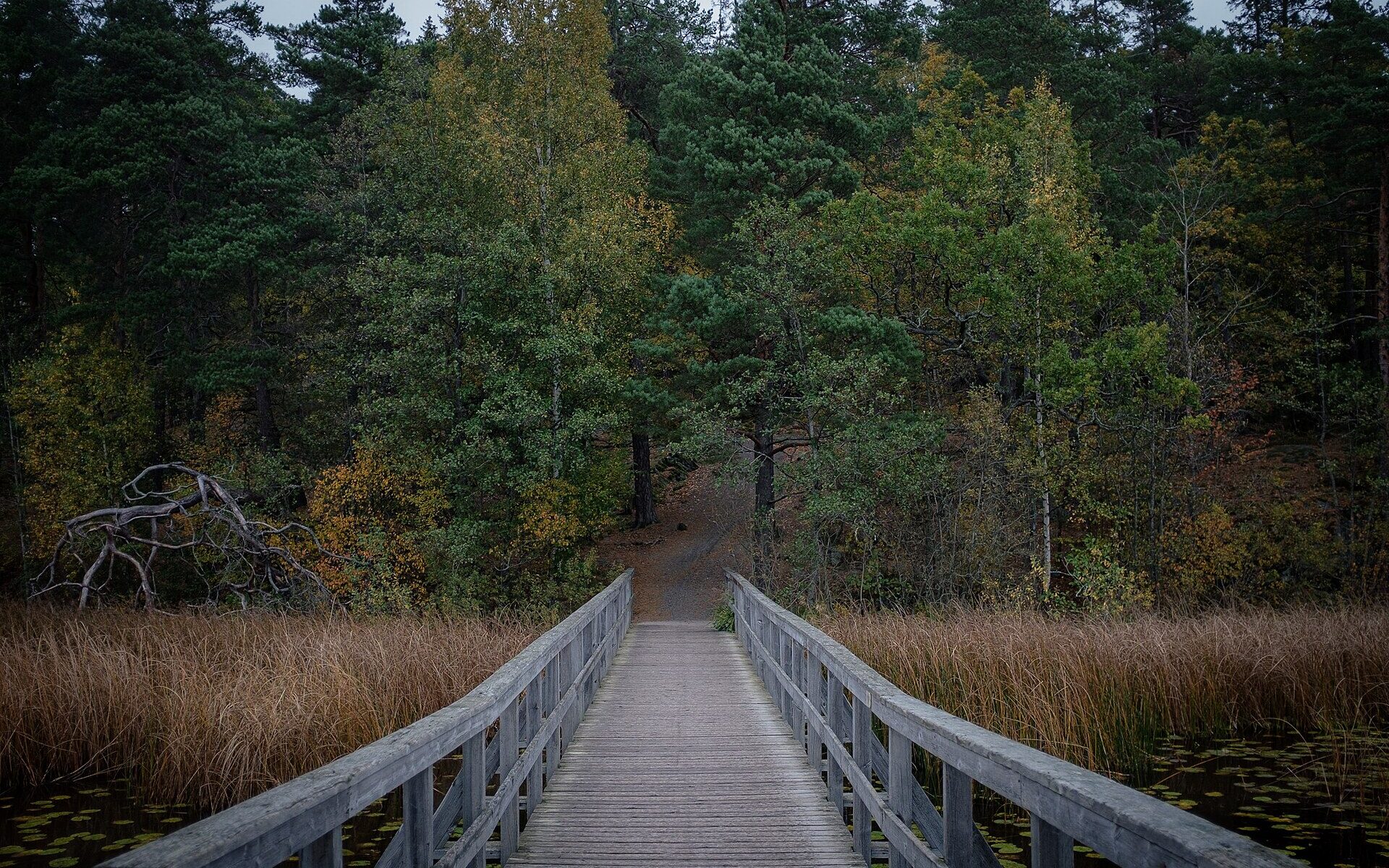
Take bus 401 from Slussen to Hellasgården. Walk a loop through the forest and around the lakes, crossing the wooden bridge on Söderbysjön, and in summer rent a kayak or paddleboard on Källtorpssjön. Finish with the sauna and a plunge into the lake, whatever the season, then a late lunch in the café before the bus back to town.
Day three: wilderness or islands
For wilderness, head to Tyresta National Park. Walk the Urskogsstigen into the old forest, then continue on one of the longer loops past the lakes, bringing a packed lunch; there are few places to buy food once you’re on the trail. For islands, take a Waxholmsbolaget boat to Grinda for a day of forest paths, swimming and a long lunch by the harbour, and catch the evening boat back as the light turns gold. Either way, you’ll understand why Stockholmers rarely feel the need to leave their region for a holiday.
When to go
| Season | What’s good | Watch out for |
|---|---|---|
| Spring (April–May) | Wood anemones carpeting the forests, birdsong, long light, few people on the trails | Cold water; muddy paths after the thaw |
| Summer (June–August) | Swimming, kayaking, the white nights, the archipelago at its best | Mosquitoes in the forests; busy beaches on hot weekends; ticks |
| Autumn (September–October) | Autumn colour, mushrooms and lingonberries, crisp hiking weather, the first saunas and cold plunges | Shortening days; rain |
| Winter (December–March) | Skating, cross-country skiing in a snowy year, saunas and ice swims, low golden light | Short days; unreliable snow; dangerous ice |
For the full weather picture, see our guides to the best time to visit Stockholm and midnight sun in Stockholm.
Practical tips
- Layers win. Even in summer, evenings by the water get cool. A light waterproof shell is worth carrying all year. Our Stockholm packing list has the details.
- Mind the ticks. Ticks are common in long grass and forest around Stockholm and in the archipelago, and they can carry Lyme disease and TBE (tick-borne encephalitis). Check yourself after walks, and if you’ll spend a lot of time in the forest or archipelago, ask your doctor about the TBE vaccine before you travel.
- Bring repellent in early summer. Mosquitoes are at their worst in the forests in June and July.
- Use public transport. An SL ticket gets you to Hellasgården, Tyresta and most of the reserves. Our guide to SL cards and tickets explains which to buy.
- Stay safe on ice and water. Never go onto natural ice alone, carry ice claws, and wear a life jacket in a kayak. In an emergency, call 112.
- Leave no trace. Take rubbish home, and never light a fire when a fire ban is in force.
For a day out further afield, our list of the best day trips from Stockholm includes Birka, Sigtuna and the archipelago towns, and Fjäderholmarna is the quickest island escape of all.
Frequently asked questions
What are the best outdoor activities in Stockholm?
Swimming off the rocks and beaches in summer, kayaking around the islands, hiking in the Nacka reserve and Tyresta National Park, a lakeside sauna with a cold plunge at Hellasgården, free fishing in the city centre, and skating on outdoor rinks and natural ice in winter.
Can you swim in the water in Stockholm?
Yes. The city runs 36 official bathing spots on Lake Mälaren, Saltsjön and smaller lakes, and samples the water through the summer, publishing the results online. Långholmen, Smedsuddsbadet, Tanto and Hellasgården are popular choices. Swimming is free.
How do I get to Tyresta National Park from Stockholm?
Take bus 807 or 809 from Gullmarsplan, or bus 834 from Haninge, to Tyresta; the journey takes about 40 minutes on an ordinary SL ticket. The park has about 55 km of trails, from the easy 2 km Urskogsstigen to the 22 km Stensjön loop.
What is the Royal National City Park?
It’s the world’s first national city park, opened in 1995. It covers 27 square kilometres across Stockholm, Solna and Lidingö, from Djurgården north through Hagaparken to Ulriksdal, and includes royal palaces, parkland, forest and a rich variety of wildlife.
Is fishing free in Stockholm?
Yes, with hand-held tackle such as a rod and line in Lake Mälaren, in Strömmen by the Royal Palace, and in Saltsjön. Other methods, such as nets and trolling, need permission, and most other lakes need a fishing licence. Size limits and protected seasons apply.
Where can I go ice skating in Stockholm?
Outdoor rinks open each winter in Kungsträdgården and Vasaparken, with skate hire. In cold winters, long-distance skating on natural ice is possible on lakes and bays around the city. Go with a guide if you’re new to it, and never skate on natural ice alone.
Can you camp near Stockholm?
Under the right of public access, you can pitch a tent for a night on most land away from houses. National parks and nature reserves often have their own rules on camping and fires, so check the signs at the trailhead.
What is the best nature within an hour of Stockholm?
Tyresta National Park, with old-growth forest about 40 minutes away by bus, and the Nacka nature reserve, about 15 minutes from Slussen. The archipelago, reached by boat, is the other obvious answer.
For the whole cold season, from what the weather is really like month by month to skating, saunas, Christmas markets and what to pack, see our guide to Stockholm in winter.
Our guide to saunas in Stockholm goes into every sauna in detail, from the community saunas of Södermalm and the lake at Hellasgården to the historic bathhouses, spa resorts and floating saunas, with swimwear rules, etiquette and how to do an ice plunge safely.
For a fuller list of walks, our guide Hiking Near Stockholm: 12 Day Hikes You Can Reach by Transit covers everything from the loop round Djurgården and the path round Brunnsviken to Tyresta’s Stensjön loop, the first stage of Sörmlandsleden from Björkhagen metro station, Roslagsleden and island hikes in the archipelago, with how to reach each one.
More Stockholm guides
- Stockholm Archipelago — islands, ferries and day trips.
- Kayaking in Stockholm — routes, rentals and tours.
- Cycling in Stockholm — bikes, routes and rules.
- Day Trips from Stockholm — by train, ferry and car.
- Djurgården Guide — the green heart of the city.
- Stockholm with Kids — the family guide.
- Best Time to Visit Stockholm — season by season.
- Stockholm Events & Festivals — Midsummer, Walpurgis and more.
Photo credits
Bridge over Söderbysjön in the Nacka nature reserve (featured image): Bridge on Söderbysjön in Nacka nature reserve by Michal kk, CC BY-SA 4.0, via Wikimedia Commons.
Boardwalk in Tyresta National Park: Bridge in Tyresta nationalpark 2019 by abdeaitali, CC BY-SA 2.0, via Wikimedia Commons.
Smedsuddsbadet beach: Smedsuddsbadet 2008a by Holger.Ellgaard, CC BY-SA 3.0, via Wikimedia Commons.
Kayak hire at Hellasgården: Hellasgården, Kajakuthyrning, 2020 by Holger.Ellgaard, CC BY-SA 4.0, via Wikimedia Commons.
Beaver pond in Tyresta: Bäverdamm i Tyresta 1 by VulpesVulpes42, CC BY-SA 4.0, via Wikimedia Commons.