Stockholm Tours & Experiences: What Is Actually Worth Booking
An honest verdict on every kind of Stockholm tour, from boat tours and hop-on hop-off buses to free walking tours, food tours, kayak and RIB trips and archipelago cruises, with 2026 prices and the cheaper do-it-yourself alternatives.
Here’s the uncomfortable truth about most Stockholm tours: the city makes a lot of them unnecessary. The centre is compact enough to walk, the public trams and buses reach every major sight, and some of the best boat trips in town are ordinary commuter ferries that cost the price of a metro ticket. Yet search for tours of Stockholm and you’ll be sold hop-on hop-off buses, bundled passes and “skip-the-line” packages for sights that rarely have a line. A few tours are genuinely excellent, and worth every krona. Many more are fine but overpriced for what they give you. And one or two are the travel equivalent of paying someone to walk you round your own kitchen.
This guide rates every kind of Stockholm tour, from boat tours and hop-on hop-off buses to walking and food tours, kayak and RIB trips and archipelago cruises, with 2026 prices, an honest verdict on each, and the cheaper do-it-yourself alternative where one exists. Prices were checked in September 2026 with the operators; treat them as the right order of magnitude, as they change with the season and when you book.
Best value: the SL ferry to Djurgården for the price of a public transport ticket, free walking tours, and the transport museum’s guided metro art tours (SEK 150, May to September).
Worth paying for: the City Hall guided tour (SEK 150), a kayak tour, a long boat tour on your first day, and a RIB ride if you love speed.
Usually skip: the hop-on hop-off bus, in a city this walkable.
Book ahead: summer kayak and RIB tours. The City Hall tower is closed for renovation and expected to reopen in 2029.
Seasonal: many boat tours and the hop-on hop-off bus run mainly in summer. Check before you plan an October trip around one.
The honest verdict, at a glance
| Tour type | Typical 2026 price | Verdict | Cheaper alternative |
|---|---|---|---|
| Hop-on hop-off bus | From about SEK 330 for 24 hours | Usually skip | Walking, tram 7, the city buses |
| Hop-on hop-off bus and boat | From about SEK 410 for 24 hours | The boat is the better half | SL’s public ferries |
| Royal Canal Tour (Djurgården loop, one hour) | About SEK 275 | Pretty but short | The Djurgården ferry |
| Under the Bridges (city highlights, about 2 hours or more) | About SEK 370–385 | Worth it on day one | SL ferries for part of the view |
| Free walking tour | Tip what it was worth | Book it | A self-guided walk |
| Food tour | Roughly the price of a good dinner | Worth it for first-timers | Östermalms Saluhall and a fika |
| Kayak tour | Varies with length | Worth it | Renting a kayak, if you’re experienced |
| RIB speedboat, about 2 hours | Roughly SEK 1,400–1,700 | Worth it for thrill-seekers | None; it’s the speed you’re paying for |
| City Hall guided tour | SEK 150 | Must-do | None; it’s the only way in |
| Guided metro art tour (May–September) | SEK 150 plus an SL ticket | Do it | A self-guided ride |
Hop-on hop-off: the bus and the boat
The bus
The red open-top buses are the most heavily marketed tour in Stockholm. The main route starts on Strömgatan, by the Royal Opera, and loops through the city centre, Östermalm and out to Djurgården, with recorded commentary in many languages. A 24-hour bus ticket costs from about SEK 330 when bought online, and 72-hour and combination tickets cost more. The buses run most frequently in summer, typically every half-hour; in 2026, the listed daily season ran from late May to mid-September, so check the timetable if you’re visiting outside it.
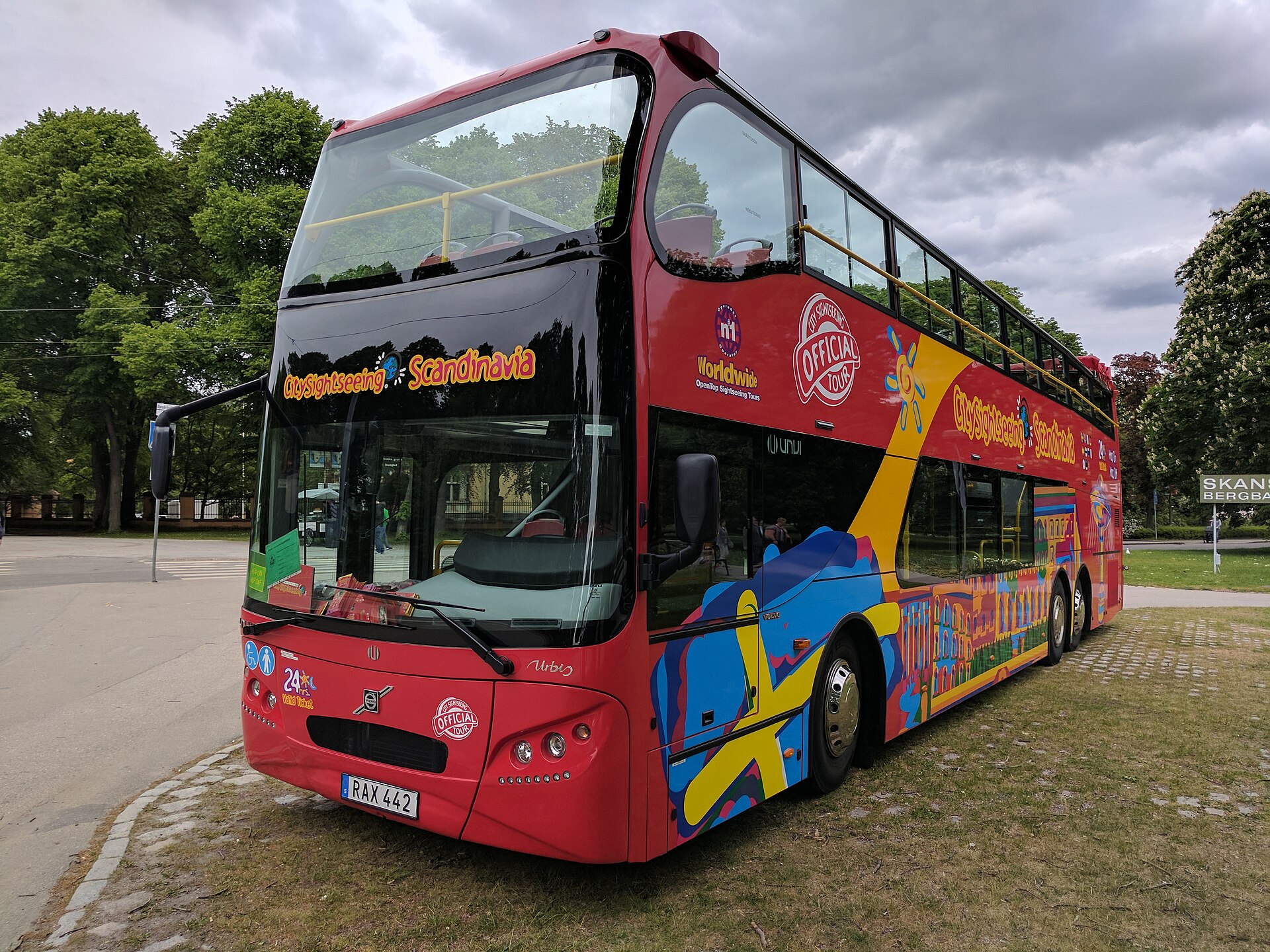
Our verdict: usually skip it. Stockholm’s centre is small, beautiful to walk and built on islands, so much of what you want to see is along the water or down lanes a bus can’t reach. The Djurgården museums, the bus’s biggest draw, are served by tram 7 and bus 69, and an SL travelcard covers them along with the metro and the ferries. The bus also spends a good share of its time in traffic.
There are exceptions. If walking is difficult for you, if you have a single day and want a seated overview with commentary, or if it’s pouring and you have small children, it can make sense. It’s also included in some sightseeing passes; our comparison of the Stockholm Pass and Go City explains when those pay back. Otherwise, spend the money on a boat.
The boat
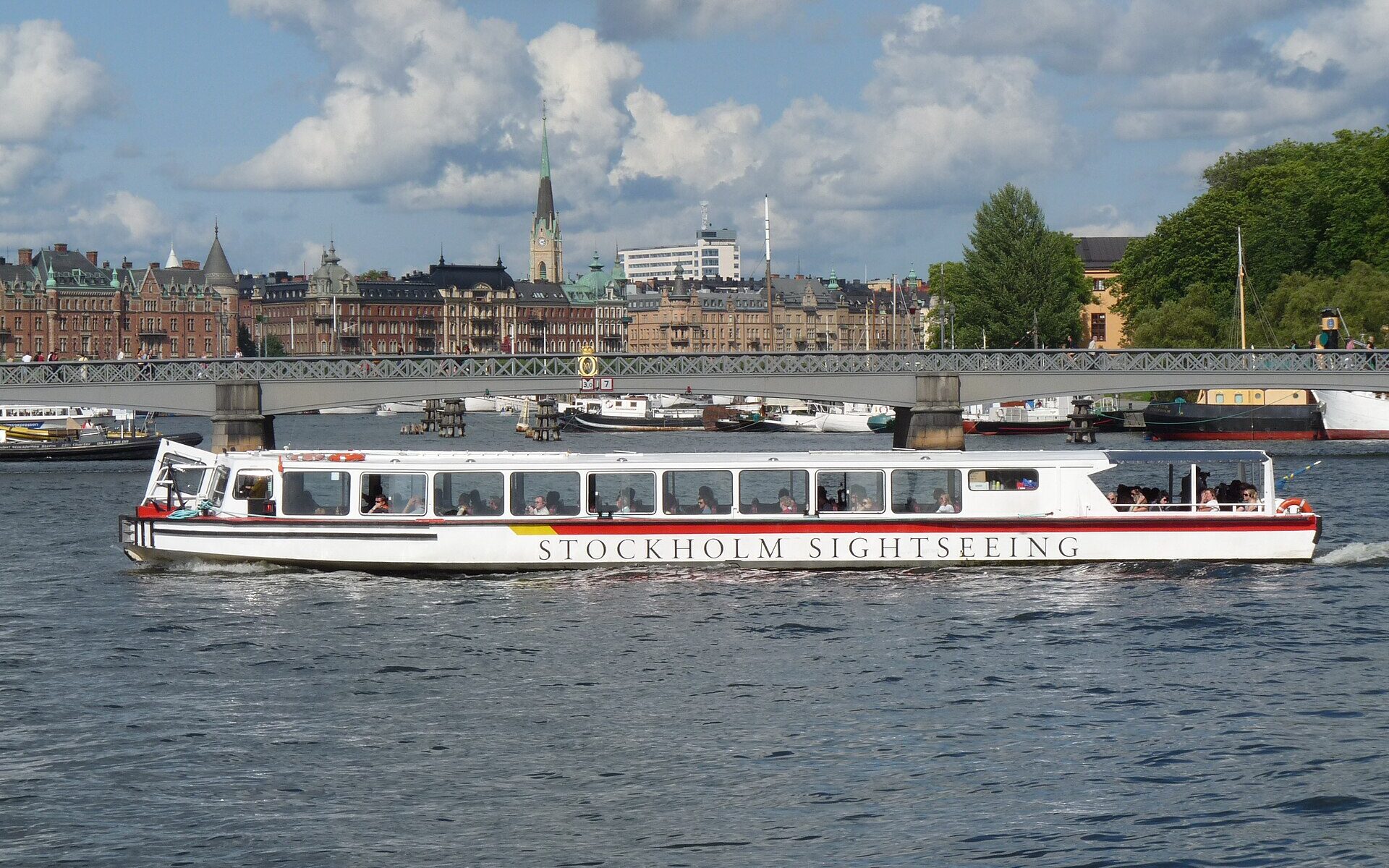
The hop-on hop-off boat is the better half of the product, because Stockholm is a city best seen from the water. The boats loop between stops around the central harbour, including Djurgården, Skeppsholmen and the old town, and a bus-and-boat combination costs from about SEK 410 for 24 hours. Commentary is recorded, and the boats have open decks.
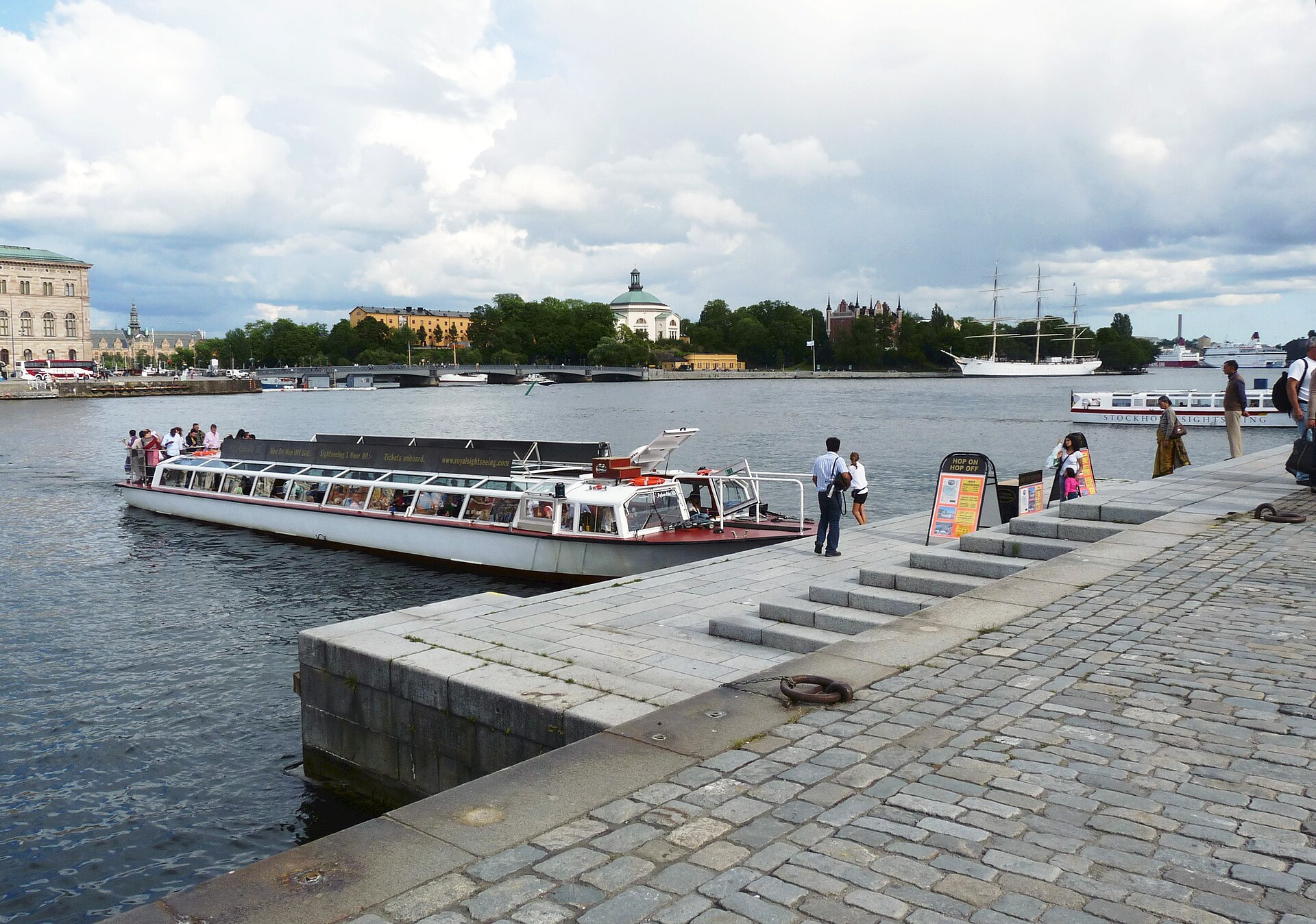
Our verdict: pleasant, but compare it with the public ferries first. If you want to hop between the island sights by water, SL’s own boats do much of the same job for the price of a public transport ticket, as the next section explains. The hop-on boat makes most sense if you’re buying a pass that includes it.
Boat tours: which ones are worth it
A boat tour is the single best tour to take in Stockholm, and there are a lot of them, most run by Strömma, the city’s biggest sightseeing operator. Some are excellent; some are short for the money. Here are the classics.
Under the Bridges of Stockholm
The longest of the classic city tours, now sold by Strömma as its city highlights boat tour, loops around Södermalm and the central islands, passing under a dozen bridges and through Hammarby lock between the Baltic and Lake Mälaren. The route takes in the harbour, the waterfronts of Gamla Stan and Södermalm, the modern quays of Hammarby Sjöstad and the Mälaren side of the city, with commentary all the way. It takes around two hours or more and costs about SEK 370–385.
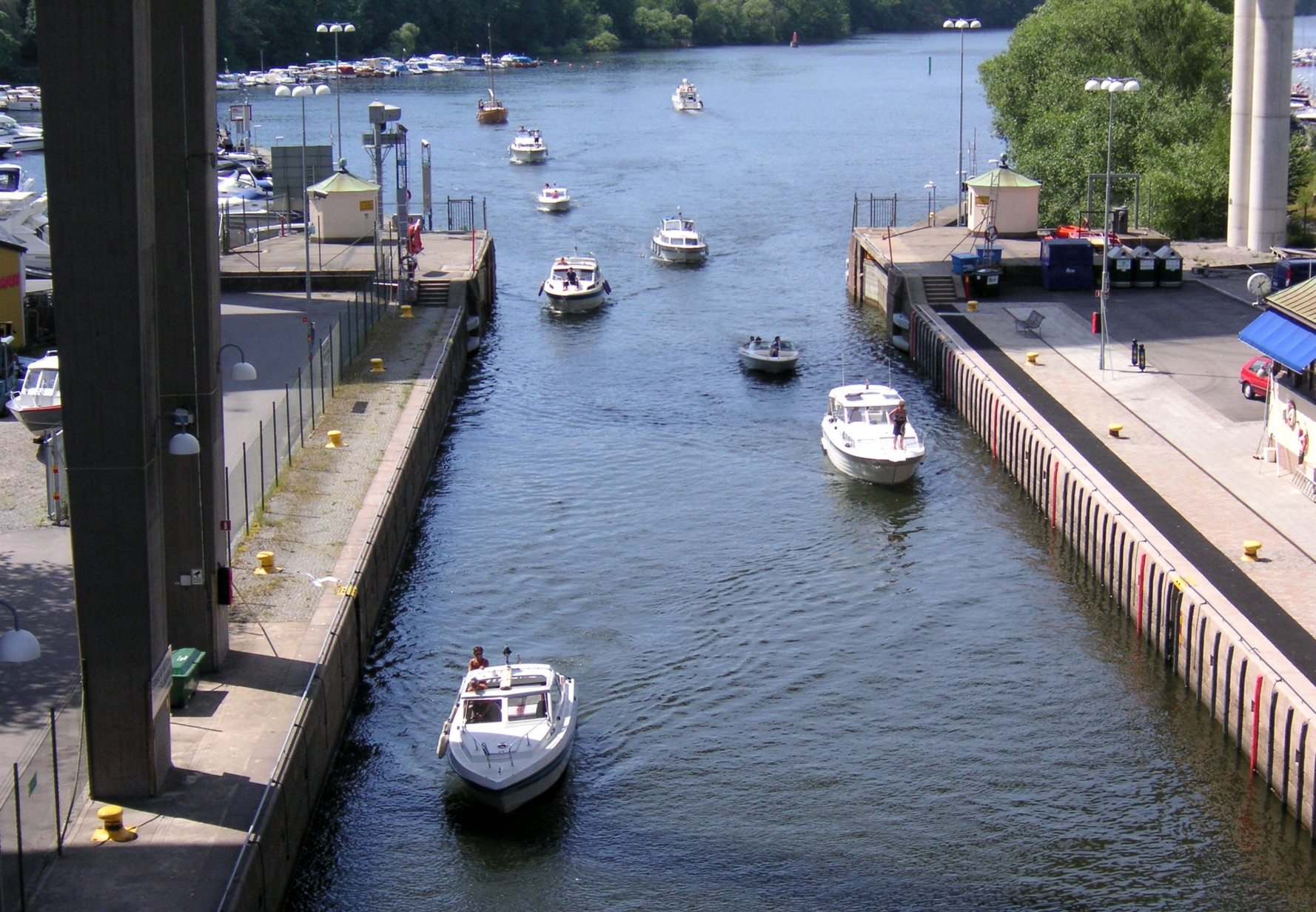
Our verdict: worth it, on your first or second day. It’s long enough to show you how the city fits together, the commentary is informative, and going through the lock is fun. Sit outside if the weather allows, bring a layer even in summer, and don’t book it for your last afternoon, when you’ll be itching to visit the places you’ve just seen.
Royal Canal Tour
The Royal Canal Tour, sold by Strömma as its Royal Djurgården boat tour, takes an hour to circle Djurgården, the royal game park, through the narrow Djurgårdsbrunn canal and past the villas, gardens and embassies along the shore. It costs about SEK 275, a little less online.
Our verdict: pretty, but short for the money. It’s a gentle, attractive trip that suits children, older travellers and anyone short on time. But if you only want the feel of Stockholm from the water, the public Djurgården ferry gives you a short, spectacular crossing for a fraction of the price, and walking or cycling the Djurgården shore path shows you the same villas and gardens at your own pace.
Evening, sunset and dinner cruises
From late spring to early autumn, evening cruises leave the city centre as the light turns gold, and on a warm night they’re one of the loveliest things you can do in Stockholm. Dinner cruises combine a longer trip with a meal. Our verdict: a simple evening cruise is good value on a fine night; with dinner cruises, you’re paying mainly for the setting. If food matters to you, eat well on land and take the cheaper cruise.
The do-it-yourself boat tour
Stockholm’s public ferries are part of the SL network, so an ordinary SL ticket or travelcard covers them. The Djurgården ferry (line 82) crosses from Slussen to Allmänna gränd, by Gröna Lund, calling at Skeppsholmen, with views of the palace, the old town and the harbour. It takes only a few minutes, but it’s one of the best-value trips in the city. Sjövägen (line 80) is a longer commuter boat that runs out from Nybroplan past Djurgården and along the harbour to the eastern suburbs, for a proper boat trip on the same ticket. For longer trips, Waxholmsbolaget’s archipelago boats run to Vaxholm in about 75 minutes for a little over SEK 100 each way.
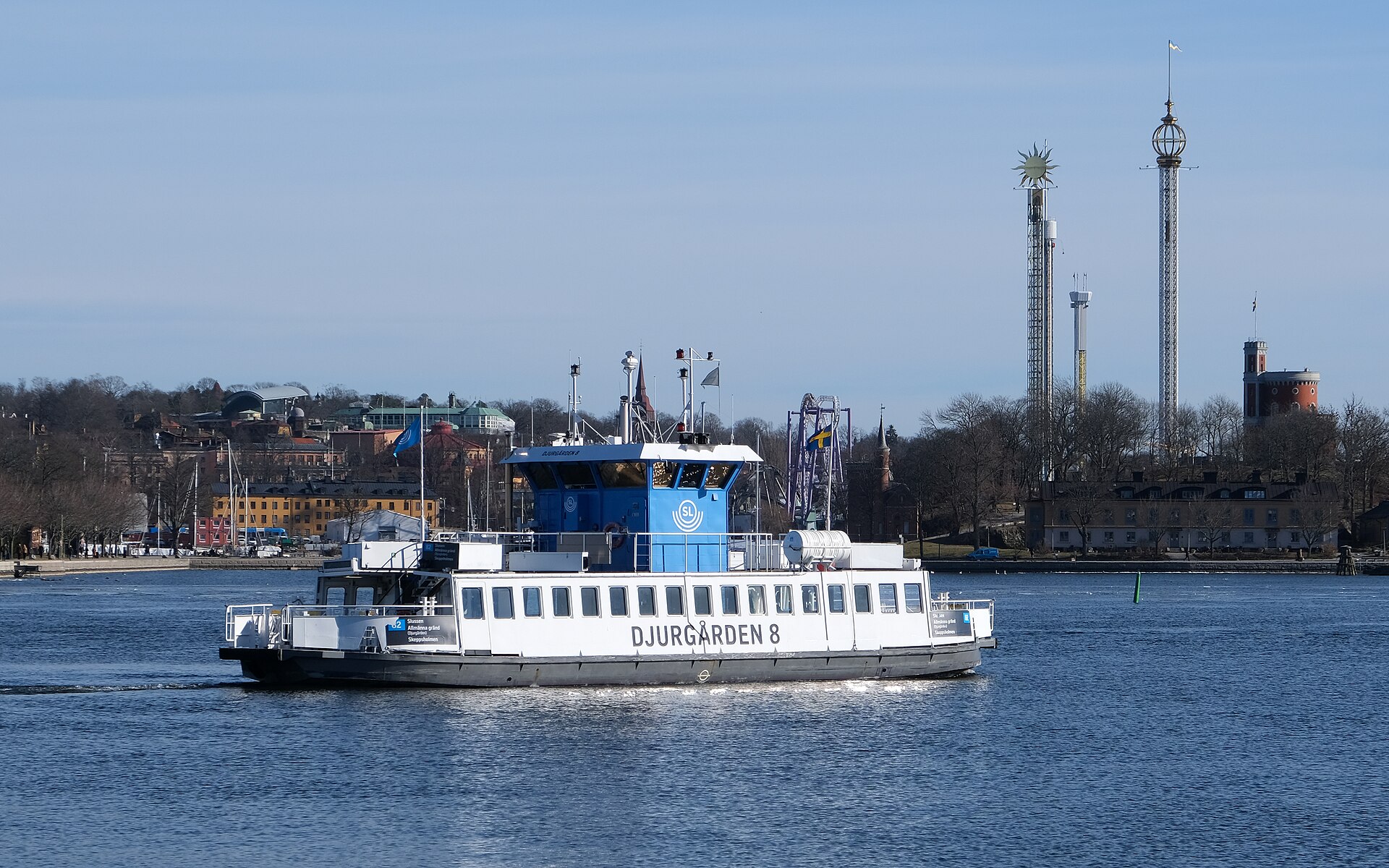
The catch is that there’s no commentary; bring a map or read up in advance. Our guides to Stockholm’s ferries and the Waxholmsbolaget ferry guide explain the routes, and our guide to Stockholm boat tours compares the paid tours in more detail.
Archipelago tours
The archipelago, some 30,000 islands stretching out into the Baltic, is the most beautiful part of the Stockholm region, and there are several ways to see it.
- Organised cruises: day cruises from the city centre, from a few hours to a full day with meals and a guide, are an easy way in. They cost from a few hundred kronor to over a thousand for the longest trips with lunch.
- RIB speedboat tours: rigid inflatable boats that reach around 45 knots take you out to the islands in a spray of water. Most tours last about two hours, and you’re given waterproofs and a life jacket. Expect roughly SEK 1,400–1,700 per person. Our verdict: an exhilarating, expensive treat, and worth it if you love speed. It’s not for anyone with back problems or small children.
- Kayak tours: guided tours paddle out among the inner islands, from a few hours to several days with camping. Our kayaking guide has the options.
- Sauna boats: floating saunas you hire by the boat for a group, cruising the harbour between rounds and a plunge. Fun and pricey; best split among friends.
- Historic boats and day trips: the old steamer to Mariefred and Gripsholm Castle, and the boat to the Viking town of Birka on Lake Mälaren, are day trips as much as tours. See our guides to Mariefred and Gripsholm and the Birka Viking day trip.
The do-it-yourself alternative: Waxholmsbolaget, the public archipelago ferry company, sails to dozens of islands from the city centre at a fraction of the cost of a cruise. Take a boat to Vaxholm, Grinda or Sandhamn, spend the day swimming and walking, and come back on the evening boat. You lose the commentary and gain a real day on an island. Our archipelago boat tours guide compares the options, and the Stockholm archipelago guide helps you choose an island.
Walking tours
Free walking tours
Tip-based “free” walking tours are the best-value tours in Stockholm, and the easiest way to orient yourself on your first morning. Several operators run daily tours of Gamla Stan, typically about two hours, covering the palace, the cathedral, Stortorget and the lanes; the best-established, Free Walking Tour Stockholm, starts right outside Gamla Stan metro station. You book a place for free and pay the guide at the end what you think the tour was worth; SEK 50–150 per person is normal, and more for a great guide.
Our verdict: book one. The guides are usually lively, knowledgeable and funny, because their income depends on it. Groups can be large in summer, so book ahead and arrive early. Our guide to Stockholm walking tours names the operators and compares their routes, and walking in Stockholm has self-guided routes if you’d rather go alone.
Specialist walks
- Metro art tours: from May to September, Spårvägsmuseet, the transport museum, runs guided tours of the art in the metro. In 2026 the English tours ran on the blue line on Thursdays at 15:00, starting at T-Centralen, and on the red line on Saturdays at 15:00, starting at Östermalmstorg. Tickets cost SEK 150, including admission to the museum, and you need a valid SL ticket on top. Book through the museum’s website. Our Stockholm metro art guide has the stations worth seeing on your own.
- Queer Stockholm: the City Museum’s walk through the city’s queer history, about 90 minutes in Östermalm, in English or Swedish. Our LGBTQ+ travel guide has the details.
- Skogskyrkogården: guided tours in English of the Woodland Cemetery, a UNESCO World Heritage site, run in summer, about 90 minutes, once or twice a week.
- Ghost and dark-history walks: evening walks through Gamla Stan’s lanes, telling tales of plague, executions and hauntings. They’re theatrical and fun rather than scholarly, and good with teenagers.
Food tours
Food tours in Stockholm usually last about three hours and visit several stops, typically a market hall, a bakery, a deli and a restaurant or two, with tastings of herring, cheese, meatballs, cinnamon buns and whatever’s in season. They cost roughly what you’d spend on a good dinner.
Our verdict: worth it for first-timers, less so for dedicated foodies. A good food tour gives you context you won’t get on your own: why Swedes pickle everything, what dagens rätt is, where the locals buy their bread. If you’re a keen cook who researches every meal, you can build the same day yourself. Start at Östermalms Saluhall, the 1888 market hall, have a fika at a proper bakery, eat a weekday lunch special, and finish with herring and snaps. Our guides to Stockholm’s food markets, traditional Swedish food and the best meatballs in Stockholm show you where.
Active tours
- Kayaking: the best active tour in Stockholm. Paddling past the palaces and out to the wooded islands is unforgettable, and guided tours suit beginners. See our kayaking guide.
- Cycling: guided bike tours cover more ground than a walking tour, especially on Djurgården and along the waterfronts. See our Stockholm bike tours guide.
- Ice skating: in a cold winter, guided long-distance skating tours on natural ice are an extraordinary experience, and a guide is essential for safety.
- Hiking and nature: guided hikes in Tyresta National Park and the Nacka reserve, and mushroom walks in autumn, show you the wild side of the city. Our guide to Stockholm outdoors has more.
Museum and building tours
Some of the best tours in Stockholm are the ones inside its buildings, and some are the only way in.
- City Hall: the only way to see the Blue Hall, where the Nobel banquet is held, and the Golden Hall’s mosaics is on a guided tour, about 45 minutes, in English. Adults pay SEK 150, seniors and students SEK 130, and ages 7–18 SEK 60. The 106-metre tower is closed for renovation and expected to reopen in 2029, so there is no tower climb for now. Our verdict: a must-do.
- The Vasa Museum: guided tours in English run regularly and are well worth joining for the story of the ship’s sinking and salvage. Check the day’s times at the desk. See our Vasa Museum guide.
- The Royal Palace: guided tours of the Royal Apartments run at set times, especially in summer. See our Royal Palace guide.
- The Riksdag: Sweden’s parliament offers free guided tours of the parliament building at set times; check its website for tours in English.
For the full museum picture, see Best Museums in Stockholm.
Day tours out of the city
Guided day tours run from Stockholm to Uppsala, Sigtuna, Drottningholm, Birka and the archipelago, usually by coach or boat, with a guide and sometimes lunch. They’re convenient, but most of these places are easy to reach on your own, and you’ll often have more time there if you go independently.
- Drottningholm Palace, the royal family’s home and a UNESCO World Heritage site, is reached by a lovely boat trip across Lake Mälaren from the City Hall quay in summer, or by metro and bus all year. The boat is the tour; the palace has its own guided tours. See our Drottningholm Palace guide.
- Uppsala, with its cathedral, university and the ancient royal burial mounds at Gamla Uppsala, is about 40 minutes away by train. A guided tour adds context, but the train is quicker and cheaper than a coach. See our Uppsala day trip guide.
- Sigtuna, Sweden’s oldest town, is small enough to explore alone with a good map. See our Sigtuna day trip guide.
- Birka, the Viking trading town on an island in Lake Mälaren, is the one where a guided trip makes most sense: the boat and the site guide come as a package, and the guide brings the grassy mounds to life.
Our verdict: for most day trips, go independently by train or public boat. For Birka, the organised trip is the way to do it. Our list of the best day trips from Stockholm has transport details for all of them.
Unusual experiences
Some of Stockholm’s most memorable experiences don’t fit neatly into the usual tour categories.
- Rooftop walks: on Riddarholmen, next to Gamla Stan, you can walk across the rooftops of old buildings, harnessed to a safety line, with a guide pointing out the view over the water. It’s a genuinely different angle on the city, and good for anyone with a head for heights.
- Sauna experiences: the city’s floating and lakeside saunas, with a plunge into the water between rounds, are as much an experience as any tour. Our guide to Stockholm outdoors and wellness covers the best of them.
- Night-time Stockholm: a sunset cruise, a walk through the lit-up old town or the summer twilight at midnight in June. See Stockholm at night.
- The quirky side: from the metro art to the city’s odder museums, our guides to quirky Stockholm experiences and unusual things to do in Stockholm have plenty of ideas you won’t find on a tour list.
How to judge a tour before you book
A few questions will tell you most of what you need to know about any tour, in Stockholm or anywhere else.
- How much of the time is the actual experience? On a boat tour, how long are you on the water? On a day tour, how long are you at the destination rather than on the coach?
- Is the commentary live or recorded, and in which language? A live guide who can answer questions is worth a great deal more than a recording.
- How big is the group? A walking tour of 50 people is a different experience from one of 12.
- What’s included? Check whether entry fees, food, drinks and equipment are in the price, or extras on the day.
- What happens if the weather turns? Look for flexible cancellation, especially for outdoor tours.
- Are the reviews recent? Tours change guides, boats and routes. Reviews from this year matter more than a high score built up over a decade.
- Who runs it? Book with the operator directly where you can. Resellers may charge the same or more, and it’s easier to sort out problems with the people who actually run the tour.
Five do-it-yourself alternatives
If you’d rather save the money, or simply prefer your own pace, these five do-it-yourself tours cover much of what the paid ones offer.
- The ferry loop. Take the Djurgården ferry from Slussen to Allmänna gränd, walk the Djurgården shore to the museums, and come back on tram 7. It’s the Royal Canal Tour’s scenery at a fraction of the price, with museum time thrown in.
- The metro art ride. On one ticket, ride the blue line from T-Centralen to Kungsträdgården, then out to Solna Centrum, getting off at each to look around. Our metro guide lists the best stations.
- The old-town walk. Start at the Royal Palace, walk down to Stortorget and the Nobel Prize Museum, then through the lanes to Mårten Trotzigs gränd and out to the Riddarholmen quay for the view over the water. Our Gamla Stan guide fills in the history.
- The cliff-top walk. From Slussen, climb east to Fjällgatan for the view over the harbour, then head back west along the Södermalm heights to Monteliusvägen and Skinnarviksberget for the best free views of the city. See our guide to Stockholm’s viewpoints.
- The island day. Take a Waxholmsbolaget boat to Vaxholm or Grinda, swim, walk and eat on the quay, and come back on the evening boat. It’s an archipelago cruise with a day on an island in the middle, for the price of two ferry tickets.
Private guides
A private guide costs more than a group tour, but for a family, a small group or a special interest, from architecture to Viking history to design, it can be the best money you spend. A guide can tailor the route to your pace, handle children’s attention spans and take you to places the group tours skip. Look for authorised Stockholm guides, and agree the length, the route and the price, including any entry fees, in advance.
Tours in winter
Stockholm’s tour calendar shrinks in winter. The hop-on hop-off bus scales back or stops, and many sightseeing boats are laid up. But there’s plenty left. Some operators run winter boat trips through the ice-free waterways, especially around Christmas, when glögg and gingerbread tend to be part of the deal. Walking tours carry on year-round, with Christmas themes in December. City Hall and the museums run their tours as normal, and winter brings its own experiences: guided skating on natural ice, sauna evenings with a plunge through the ice, and northern lights tours to the far north if you’re travelling on. Check the operators’ winter timetables before you plan around a particular tour.
Booking tips
- Compare prices before booking. Big booking sites often charge the same as the operator, or more. Check the operator’s own site, where there may be online discounts.
- Check the cancellation terms. Stockholm’s weather is changeable, and outdoor tours in particular may be cancelled or miserable in rain and wind. Flexible tickets are worth a little extra.
- Don’t pay for “skip the line” at sights that rarely have one. Most Stockholm museums don’t need it; the Vasa Museum can queue in summer, but arriving at opening solves that for free.
- Book the popular things early. Summer kayak and RIB tours and free walking tours in peak season all fill up.
- Tipping: on paid tours, tipping isn’t expected, though a small tip for an outstanding guide is appreciated. On tip-based tours, pay what it was worth. Our guide to tipping in Stockholm has the local norms.
- Accessibility: boats vary a lot in how accessible they are, so check with the operator before booking. Our Stockholm accessibility guide has more.
Our picks by traveller type
- First-time visitors: a free walking tour on your first morning, the Under the Bridges boat tour on your first afternoon, and City Hall’s guided tour. That’s the city explained in a day and a half.
- Families: the Royal Canal Tour for short attention spans, the Djurgården ferry for the cheapest thrill, and a ghost walk for teenagers. Skansen and things to do with kids fill the rest.
- Couples: a sunset cruise on a summer evening, a kayak tour, and a private guide for a special interest.
- Budget travellers: free walking tours, a self-guided ride past the metro art, the Djurgården ferry and Waxholmsbolaget’s boats to the islands. You can see a great deal of Stockholm with nothing more than a travelcard.
- Active travellers: a kayak tour, a RIB ride, a bike tour, and, in winter, a guided skate on natural ice.
- Short on time: if you only have a day, take a boat tour and see the Vasa Museum and Gamla Stan. Our one-day Stockholm itinerary shows how.
For everything else to do in the city, see 75 Best Things to Do in Stockholm.
Frequently asked questions
What are the best tours in Stockholm?
A long boat tour such as Under the Bridges of Stockholm, a free walking tour of Gamla Stan, the City Hall guided tour and a kayak tour are the best in our view. From May to September, the transport museum’s guided metro art tours (SEK 150) are excellent value.
Is the hop-on hop-off bus worth it in Stockholm?
Usually not. Stockholm’s centre is compact and walkable, many sights are along the water, and tram 7 and the city buses reach the Djurgården museums on an ordinary SL ticket. The bus can make sense if walking is hard for you, or if it’s included in a pass you’ve already bought.
How much does a boat tour cost in Stockholm?
In 2026, the one-hour Royal Canal Tour costs about SEK 275 and the longer Under the Bridges tour about SEK 370–385. The public Djurgården ferry costs only an ordinary SL ticket.
Are there free tours in Stockholm?
Yes. Tip-based walking tours of Gamla Stan run daily, the best-established from right outside Gamla Stan metro station. The metro art tours aren’t free: from May to September the transport museum runs guided tours in English (in 2026, Thursdays and Saturdays at 15:00) for SEK 150 plus a valid SL ticket, or you can ride past the art on your own for the price of a ticket.
What is the cheapest boat trip in Stockholm?
The SL ferry to Djurgården (line 82) from Slussen, covered by an ordinary SL ticket or travelcard. For a longer trip on the same ticket, take the Sjövägen commuter boat (line 80) from Nybroplan.
Do I need to book Stockholm tours in advance?
For popular summer tours, yes: kayak and RIB tours and free walking tours can all fill up. Many boat tours have space on the day outside peak season.
Is a RIB tour in Stockholm worth it?
If you love speed, yes. A two-hour RIB tour of the archipelago costs roughly SEK 1,400–1,700 and reaches around 45 knots, with waterproofs provided. It isn’t suitable for people with back problems or for small children.
Do Stockholm tours run in winter?
Fewer of them. The hop-on hop-off bus and many sightseeing boats scale back or stop outside summer, but walking tours, City Hall and museum tours, winter boat tours and seasonal experiences such as guided skating on natural ice continue.
Should I tip tour guides in Stockholm?
On paid tours, tipping isn’t expected, though a small tip for an outstanding guide is welcome. On tip-based free walking tours, pay what the tour was worth to you; SEK 50–150 per person is normal.
The hop-on hop-off bus now has a page of its own, because it’s the most heavily marketed tour in the city and the one where an honest answer matters most. Hop-On Hop-Off Stockholm: Routes, Prices and Is It Worth It? lists all 15 stops, the 2026 prices and timetable, the travellers the bus genuinely suits, and a do-it-yourself loop on tram 7 and the Djurgården ferry that covers the same ground all year.
The tip-based walking tours have a page of their own too. Our guide to free walking tours in Stockholm covers the operators, the meeting point outside Gamla Stan metro station, what the Old Town route takes in and how much to tip.
Food tours have a page of their own, too. Our guide to Stockholm food tours compares the Nordic Food Walk with the tours on the booking platforms, explains what you’ll taste, from pickled herring to cinnamon buns, and sets out a do-it-yourself tasting route through Östermalms Saluhall, Vete-Katten and Gamla Stan for a fraction of the price.
More Stockholm guides
- Stockholm Boat Tours — every boat trip compared.
- Stockholm Walking Tours — free, paid and self-guided.
- Archipelago Boat Tours — cruises and ferries to the islands.
- Kayaking in Stockholm — the best active tour.
- Stockholm Bike Tours — on two wheels.
- Stockholm Pass vs Go City — when a pass pays back.
- Things to Do in Stockholm — the full list.
- Best Museums in Stockholm — the collections.
Photo credits
Stockholm Sightseeing boat off Strandvägen (featured image): EU-SE-Stockholm-Center 014 by Dmitry G, public domain, via Wikimedia Commons.
Hop-on hop-off bus on Djurgården: City Sightseeing Scandinavia – 1 by AleWi, CC BY-SA 4.0, via Wikimedia Commons.
Hop-on hop-off boat at the quay: EU-SE-Stockholm-Center 019 by Dmitry G, public domain, via Wikimedia Commons.
Hammarby lock: Hammarby sluss 2006 by Holger Ellgaard, CC BY-SA 3.0, via Wikimedia Commons.
The Djurgården ferry: 82 Djurgården ferry by kallerna, CC BY-SA 4.0, via Wikimedia Commons.