Best Vintage & Secondhand Shops in Stockholm
Where Stockholm's second-hand shopping actually happens: the Hornsgatan boutiques, the charity chains with the real bargains, the Sunday flea market at Hötorget, and the Swedish things worth carrying home.
Swedes treat second hand as normal shopping, not a hobby. So the vintage shops Stockholm has are stocked by a whole country that buys well, looks after its things and gives them away when it moves flat. As a result the racks are better than the city’s size suggests. You find Swedish-made wool coats, 1960s Gustavsberg ceramics, barely worn Acne and Filippa K, and the odd teak sideboard that would cost four times as much in London. Almost all of it is in one district, and you can walk it in an afternoon.
This guide covers where that shopping happens. It takes in the Hornsgatan strip that the city now calls the Slow Fashion District, the charity chains where the bargains really are, the Sunday flea market at Hötorget and the bigger one out at Skärholmen. It also covers what to look for, what to leave behind and when to go. Prices and details were checked in September 2026 and are in Swedish kronor. Second-hand prices vary by nature, so treat any figure here as a rough guide, not a tag.
Where: Södermalm, above all Hornsgatan between Slussen and Zinkensdamm, and the streets around Mariatorget.
Cheapest: Stockholms Stadsmission and Myrorna, the two big charity chains.
Best curated: Judits Second Hand and Herr Judit on Hornsgatan.
Best for objects: Brandstationen on Hornsgatan, and the Sunday flea market on Hötorget.
When: Tuesday to Saturday afternoons. Independent shops open late and some close on Sundays and Mondays.
Payment: cards everywhere in shops. Bring a little cash for flea markets, where sellers often want Swish, and visitors cannot use it.
Honest verdict: good but not cheap. The curated boutiques price well-known Scandinavian labels close to new. The charity shops are where the bargains are.
Why Stockholm is good for second hand
Three things make the city’s second-hand market better than you might expect.
The first is quality going in. Sweden spent much of the twentieth century buying fewer, better things. Wool coats were made to last several winters, and kitchenware came from Gustavsberg and Rörstrand, not from a supermarket. A lot of that stock is now on its second or third owner, and it is still in good shape.
The second is habit. Buying second hand here carries no stigma, and it hasn’t for decades. The biggest charity chain, Stockholms Stadsmission, has roughly nineteen shops in the Stockholm area. Myrorna, the Salvation Army’s chain, has been selling donated goods since the end of the 1890s. People of every income give and buy, so the donations include good labels.
The third is the Swedish fashion industry. Stockholm is home to Acne Studios, Filippa K, Tiger of Sweden, Our Legacy and Totême, and the local wardrobes show it. Those labels turn up in the better second-hand shops at a fraction of the Swedish fashion brands’ own prices. Once you know the names, the racks become a lot more interesting.
The catch is price. Stockholm is not Berlin or Budapest, and the city’s vintage boutiques know exactly what a 1970s Swedish sheepskin is worth. If you want cheap, go to the charity shops and the flea markets. If you want someone else to have done the sorting, pay the boutique price and accept that the sorting is what you are paying for.
Södermalm and the Slow Fashion District
Nearly every good vintage shop in the city is on Södermalm, the big island south of Gamla Stan. Visit Stockholm now markets the densest part as the Slow Fashion District. It is a group of about twenty independent shops centred on Hornsgatan and Mariatorget, focused on reuse, repair and more thoughtful production, along a walkable route of about three kilometres from Slussen to Zinkensdamm.
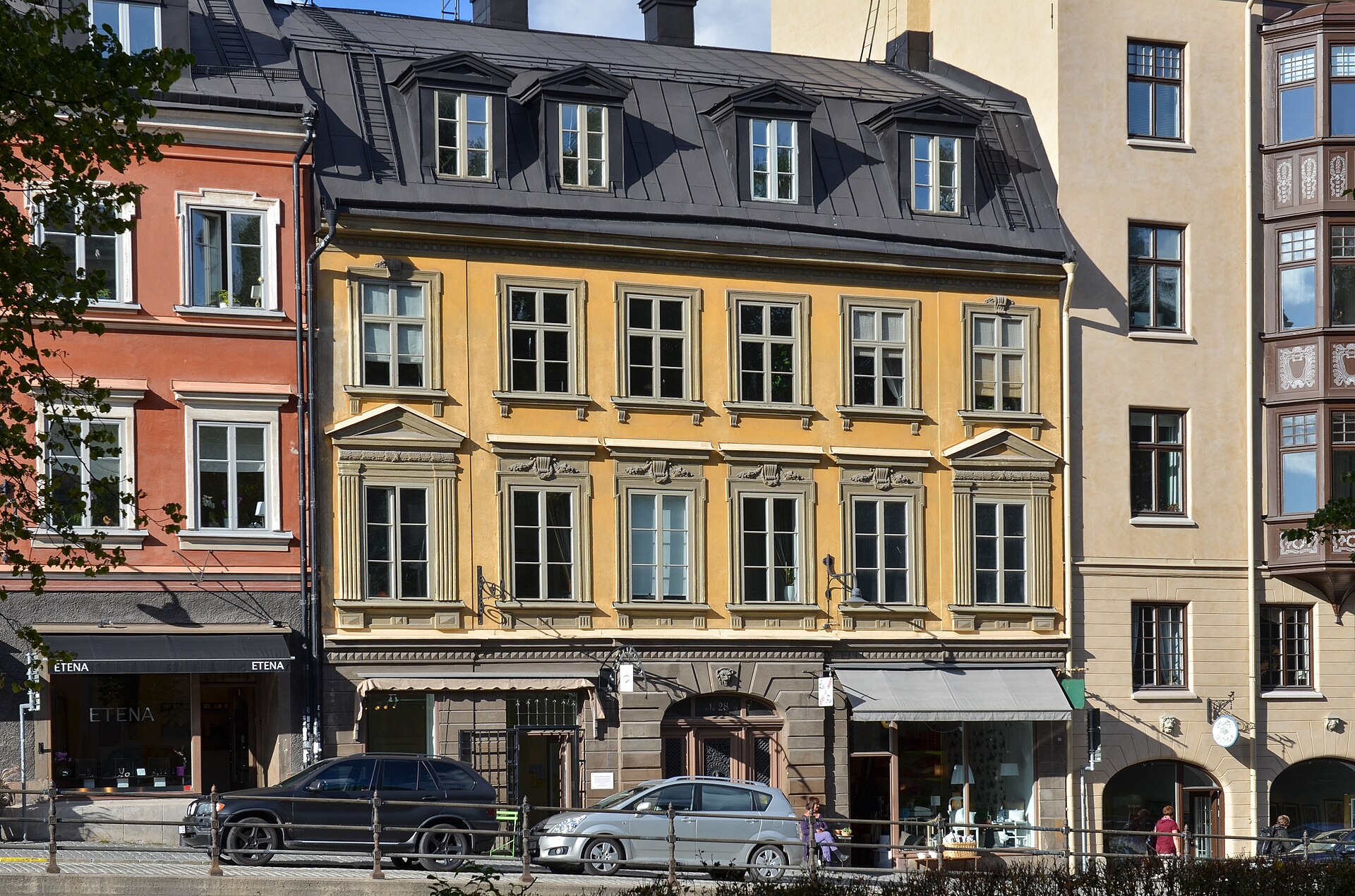
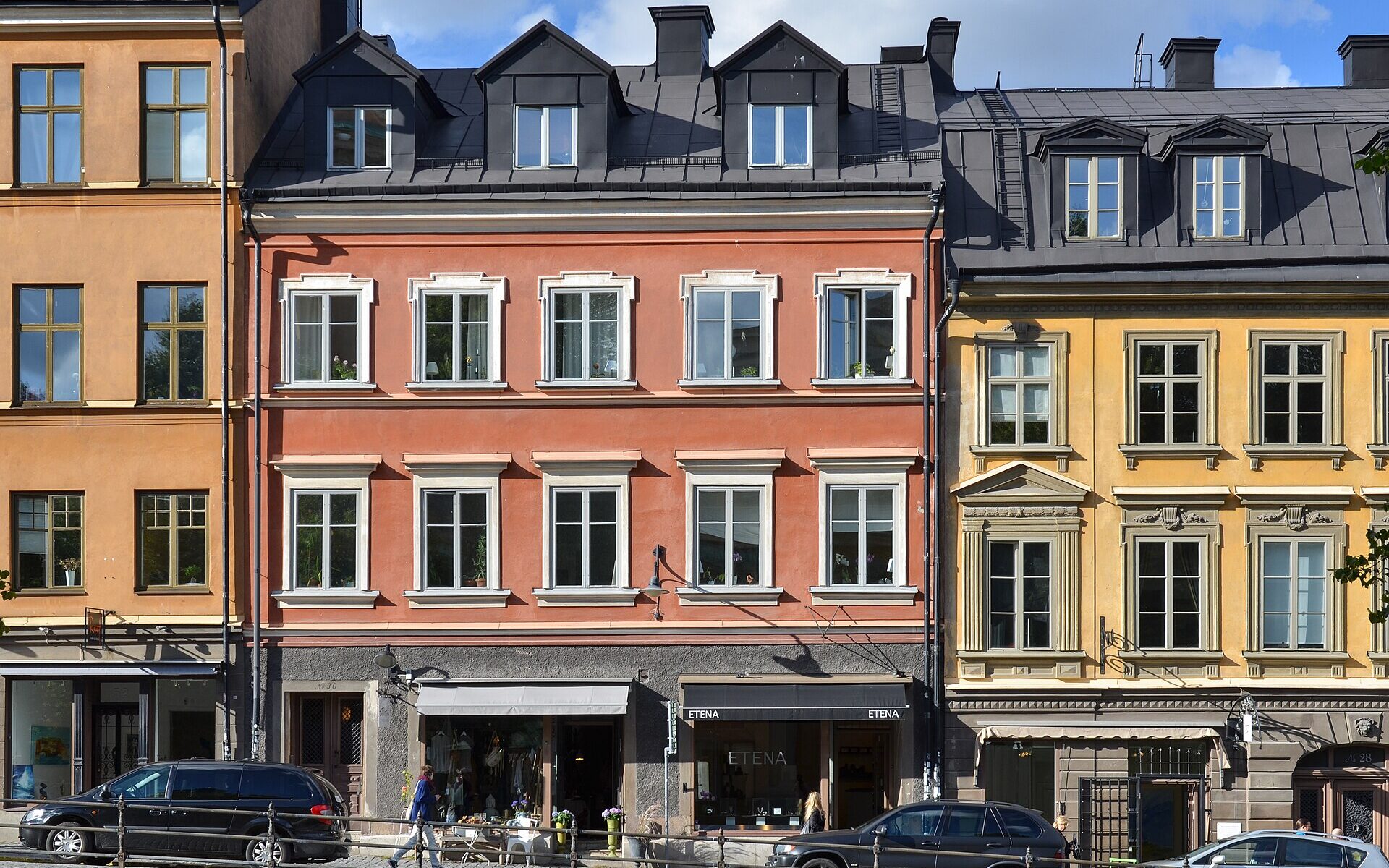
Hornsgatan is an odd street at first sight. It is a wide, busy traffic road, and on its northern side a raised pavement with railings, locally called Puckeln (“the hump”), runs along a row of eighteenth- and nineteenth-century houses. That raised section, from about Mariatorget westwards, is where the galleries, craft studios and second-hand shops cluster. Walk on the hump, not at road level, and look into every door.
Ignore the district branding and the geography is simple. You have one long street with a square in the middle. Start at Slussen metro (red and green lines), walk west along Hornsgatan, cut through Mariatorget for a coffee, keep going to Zinkensdamm, and take the red line back. With stops, it is a three- to four-hour afternoon. Slussen itself is still a building site until 2027, so leave the station by the Södermalm exits and walk uphill, not towards the water.
Judits Second Hand and Herr Judit
If you only have time for one shop, make it Judits. It is the best-known second-hand boutique in the city, it has been on Hornsgatan since the 1990s, and it is properly curated. The women’s stock leans towards the 1950s to 1970s, with designer pieces and good accessories mixed in. Nothing hangs here unless someone chose it, so there is no sorting to do.
Herr Judit is the menswear sister shop a short walk along the same street. It mixes vintage with newer pieces, and it is one of the few places in the city where a man can buy a good second-hand tweed jacket, a leather bag and a pair of resoled brogues in one stop. Both shops charge what the clothes are worth, which is fair but not low.
Brandstationen
Brandstationen takes its name from its first home, a former fire station, and it has since moved to Hornsgatan. It is the shop for objects more than clothes: mid-century lamps, glass, small furniture, pictures, odd curios and a rail or two of vintage clothing. It is the most browsable shop on the street, and the one most likely to sell you something you did not know you wanted. Think about your suitcase before you fall for a lamp.
Siv & Åke
A vintage shop with a twist: much of its stock is sourced in Italy, not Sweden. That means better tailoring, softer leather and more colour than the Scandinavian racks elsewhere on the street. It is a good stop if the rest of Södermalm starts to feel like a sea of navy wool.
Apans Andra Hand
The younger end of the district. Apans Andra Hand does 1990s, Y2K and newer Nordic labels, with a lot of leather and denim. If you were born after 1990 and “vintage” to you means a 2003 jacket, not a 1963 one, start here.
Artikel2
A non-profit second-hand shop with adults’ and children’s clothing plus homewares. Prices sit closer to the charity chains than the boutiques. It is worth a stop if you are travelling with children who have grown out of their shoes halfway through the trip, which happens more often than anyone plans for.
Slow Fashion Hub
A mix of curated vintage, second hand and redesigned pieces. Redesign is the district’s quieter speciality: old garments cut up and remade into something new. It is worth a look even if you buy nothing, because it shows where the city’s fashion students and small labels are heading.
The charity chains: where the bargains are
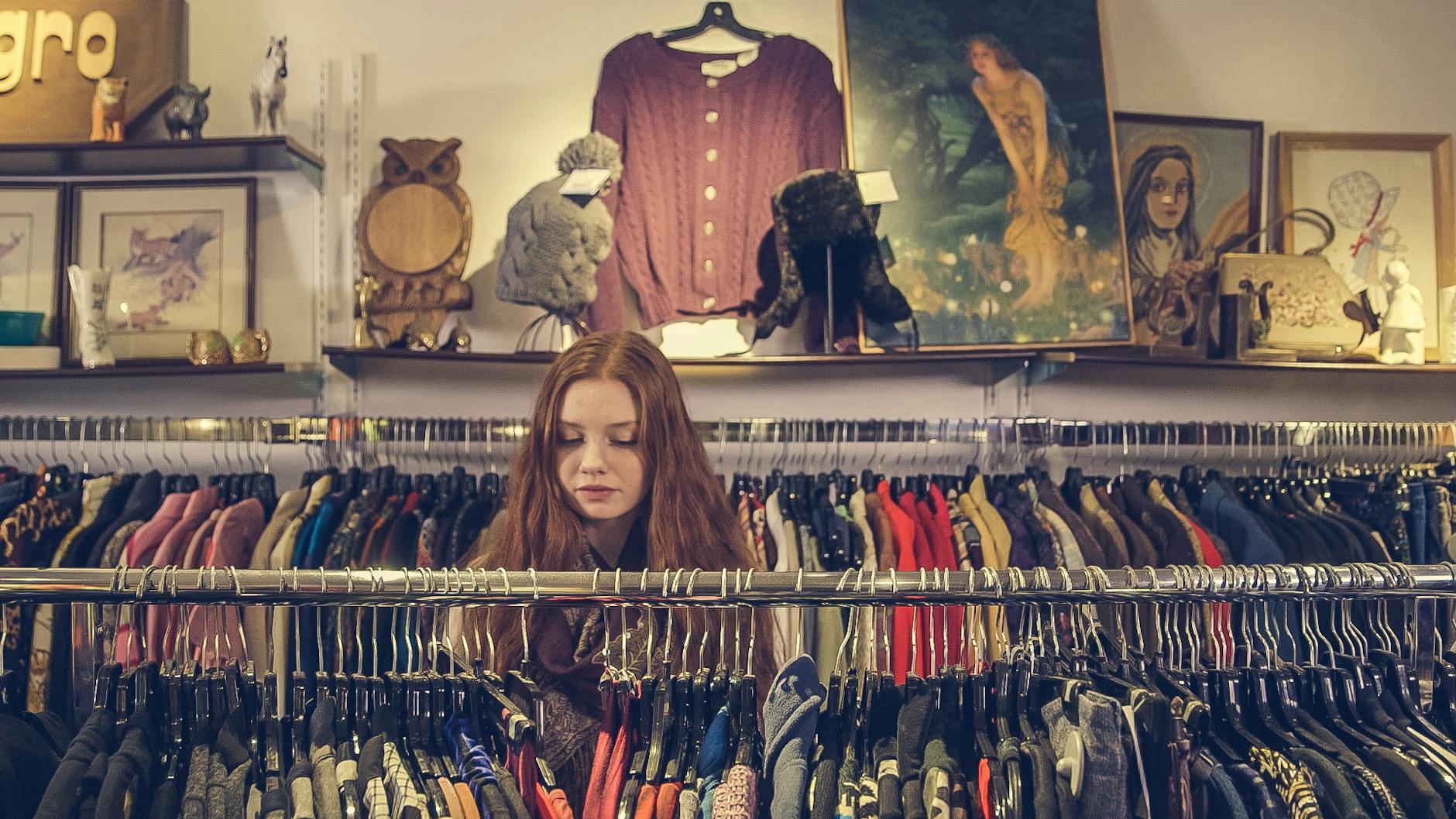
The boutiques are the pleasant part of vintage shopping in Stockholm. The charity shops are the profitable part. They cost less because nobody has picked through the stock first. You will do the sorting yourself, and that is the deal.
Stockholms Stadsmission
Stadsmissionen is a Stockholm charity founded in the 1850s that works with homelessness and social exclusion. It runs the largest second-hand chain in the city, with about nineteen shops across the Stockholm area. The branches vary a lot. The central ones are tidier, more curated and priced to match. The ones further out on the metro are bigger, cheaper and messier, and those are the ones collectors actually visit.
What to look for: Swedish wool knitwear, winter coats (important if you arrived in October with the wrong jacket), children’s clothes, kitchenware and books. Stadsmissionen shops also often keep a small “vintage” or “selected” rail near the tills. That is where the staff put anything they spotted as special, and it is always worth checking first.
Myrorna
Myrorna (“the ants”) is the Salvation Army’s second-hand chain and the oldest in Sweden. Its shops are warehouse-like and bluntly practical, with fixed low prices. They are best for furniture, homewares, crockery and bulk clothing. The larger branches restock through the day, so a second visit later in the afternoon can turn up a completely different set of shelves.
Myrorna is where Stockholm furnishes its first flats. For a visitor, the value is in the kitchen section: Swedish glass, enamelware, the odd piece of Gustavsberg, and linen that has been washed so many times it is softer than anything new.
How charity-shop prices compare
Roughly speaking, a charity-shop jumper or pair of jeans costs a low three-figure sum in kronor. A good coat or a piece of branded outerwear costs a few hundred. Something the staff have tagged as vintage or designer costs more, sometimes a lot more. The boutiques on Hornsgatan start about where the charity shops stop. None of this is fixed, and it is all worth checking on the tag, but the gap between the two tiers is reliably wide.
Beyond Retro and the big-format shops
Beyond Retro, the London vintage chain, has a large branch on Södermalm. It is the easiest vintage shop in the city: big, well lit, sorted by type and decade, with a lot of stock and changing rooms that actually work. It is also expensive for what it is. The stock comes through an international supply chain, so you are paying a curated price for things that were never Swedish in the first place.
Our view: go if you want a denim jacket, a lumberjack shirt or a 1980s ski top in thirty seconds without rummaging. Skip it if you came to Stockholm for Stockholm. The independent shops on Hornsgatan and the charity chains carry things you could only find here. Beyond Retro carries things you could find in Brighton.
Flea markets: Hötorget and Skärholmen
A Swedish flea market is a loppis, short for loppmarknad. The word is everywhere in summer, on hand-lettered signs outside country houses, in church halls and in car parks. In the city there are two to know.
Hötorget on Sundays
Hötorget is the square outside the blue-columned Konserthuset in Norrmalm. From Monday to Saturday it is a fruit and flower market. On Sundays it turns into a flea market. Dealers and house-clearers lay out tables of glass, ceramics, silver, cameras, records, textiles and general bric-à-brac. It is central (Hötorget metro, green line), easy to fit into a day, and busy with serious collectors early on.
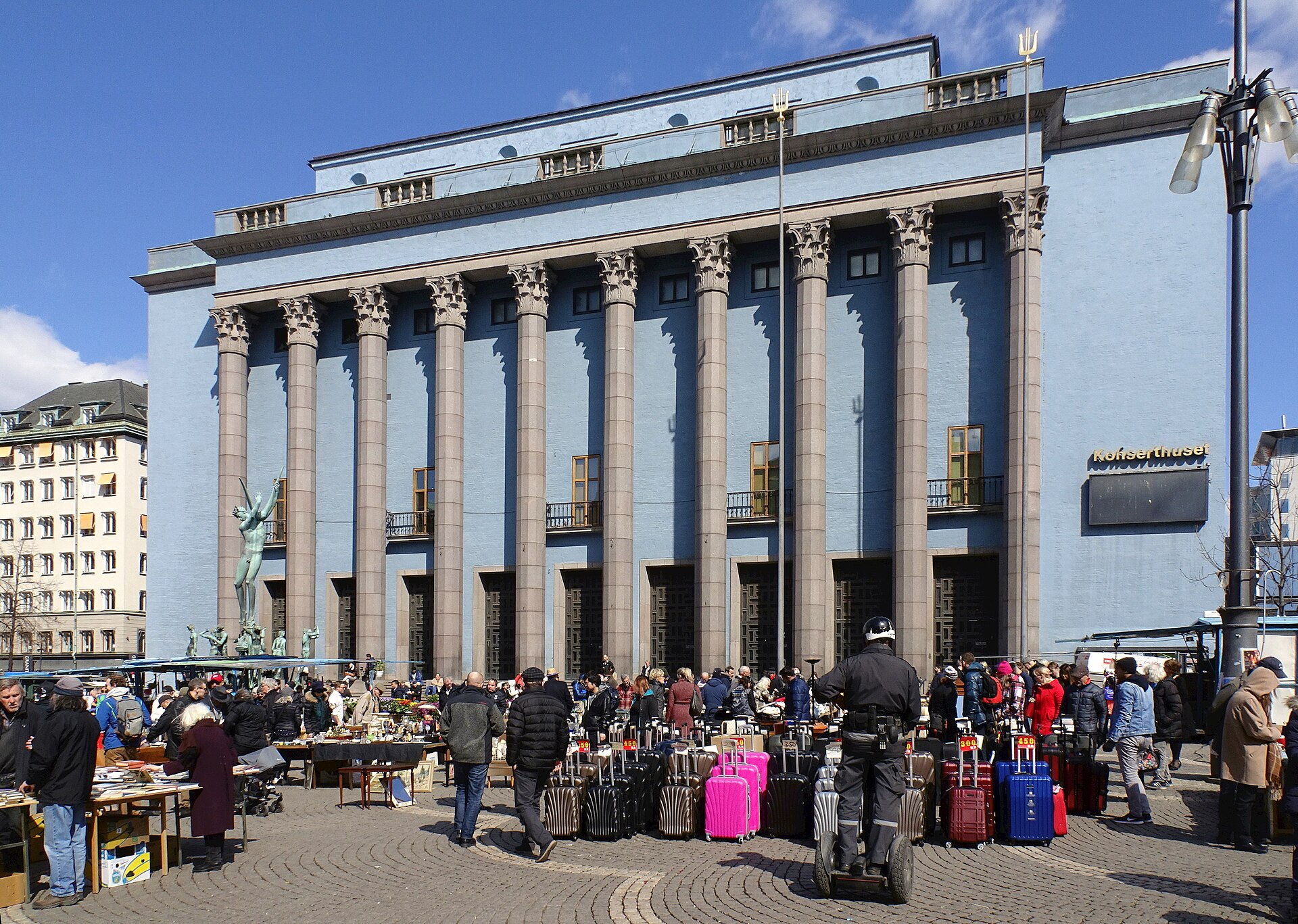
Go early if you are hunting for anything specific. The dealers know what they have, so this is not a place to find a Stig Lindberg dish for SEK 20. It is a place to find one at a fair price, in good condition, from someone who can tell you when it was made. Flea markets like this are seasonal and depend on the weather, so check that it is running before you build a Sunday around it.
Skärholmen
The big one is Skärholmen, in the south-western suburbs at the end of a red-line metro ride. Its weekend flea market, held at the shopping centre, is the largest in the Stockholm area and the most chaotic. It has professional traders, house clearances, families emptying their attics and a lot of unsorted boxes. It is an expedition rather than a stroll. Allow half a day, bring a bag and some cash, and check the current opening times before you go, because they change with the season.
It is worth it if you are a serious collector or you just love the hunt. Skip it if you want curated vintage. You will spend most of your time looking past broken toasters.
What to look for: Swedish things worth carrying home
The point of shopping second hand in Stockholm, rather than at home, is the stock you won’t find anywhere else. These are the things worth learning to spot.
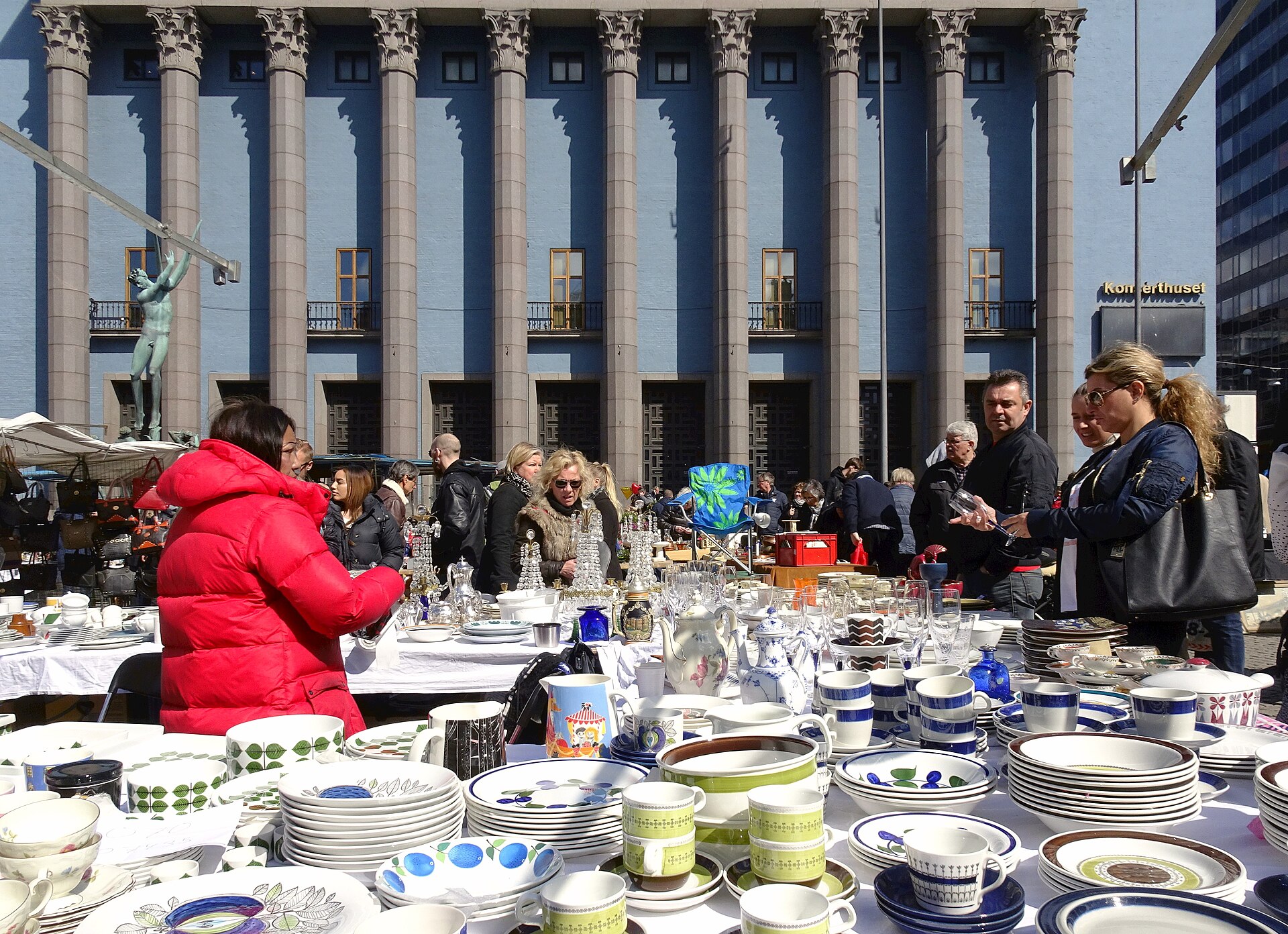
Gustavsberg and Rörstrand ceramics
Gustavsberg, the porcelain factory on the Värmdö peninsula, and Rörstrand, one of the oldest porcelain makers in Europe, supplied most Swedish kitchens in the twentieth century. The designer to know is Stig Lindberg. His green-leaf Bersa pattern and his brown ribbed Spisa Ribb ovenware are the two you will see most often, and both are still used every day in Swedish homes. Check the underside for the maker’s mark, and run a finger around the rim for chips before you pay.
Swedish glass
Orrefors and Kosta Boda are the big names from the Småland “Kingdom of Crystal”. Signed pieces carry an etched signature on the base. Unsigned Swedish glass is still often very good, and it is much cheaper. Pack it inside your clothes in the middle of your suitcase, not at the edges.
Wool and outerwear
A good Swedish wool coat, a hand-knitted jumper, Lovikka mittens or a sheepskin jacket are the clothes Stockholm does best second hand. A winter’s worth of them is donated every spring. If you are visiting between October and March and underpacked, which is common (the Stockholm packing list explains why), a charity-shop coat is both the cheapest fix and the best souvenir.
Scandinavian labels
Acne Studios, Filippa K, Our Legacy, Tiger of Sweden, Hope and Totême all turn up second hand. The boutiques price them at a known discount on the new price. The charity shops sometimes price them like any other jacket. Check the label on anything well cut. This is the one area where a few minutes of rummaging reliably pays off.
Textiles
Printed linen and cotton from Swedish textile houses, hand-woven table runners and embroidered cloths are light, flat and pack into nothing. If you are flying hand-luggage only, textiles are the souvenir to buy. The Swedish design stores sell the new versions, so the old ones are a useful price check.
What to leave on the rack
- Anything described as “Viking”. It is not.
- Large furniture, unless you have a plan. Mid-century teak is tempting and genuinely cheaper here, but shipping a sideboard overseas usually costs more than the sideboard. Small pieces such as stools, side tables and lamps fit in a car. Nothing fits in cabin baggage.
- Electricals without checking the plug. Sweden uses the European two-pin plug and 230 V. A vintage lamp may also need rewiring before anyone should plug it in.
- Fast fashion at vintage prices. Some shops on the busier streets mix new high-street stock into their “vintage” rails. Check the labels.
- Pieces you are buying only because they are Swedish. The best test for any souvenir is whether you would buy it at home.
Practical notes
Opening hours
Standard Stockholm shop hours are roughly 10:00–19:00 on weekdays, a shorter Saturday and a shorter Sunday again. The independent vintage shops often run later and shorter than that. Many open at 11:00 or noon, several close on Mondays, and some keep irregular Sunday hours. Tuesday to Saturday afternoons are the safe window. The charity chains keep more conventional hours.
Paying
Sweden is close to cashless, and every shop in this guide takes cards. The exception is the flea market. Private sellers at a loppis often ask for Swish, the Swedish mobile payment app, which you cannot register without a Swedish ID number and bank account. Bring a small amount of cash for Hötorget and Skärholmen. The Stockholm currency guide covers withdrawing kronor and which cards work best.
Tax-free
Non-EU visitors can reclaim VAT on purchases over SEK 200 in shops that take part in the tax-free scheme. In practice, few second-hand shops do, and charity shops almost never. Ask at the till in the curated boutiques, but do not count on it.
Sizes and fit
Swedish clothing uses European sizing, and Swedish labels often cut long in the arm and body. That suits tall people and frustrates everyone else. Try things on. The changing rooms in the smaller shops are basic but they exist.
Getting around
Everything on Hornsgatan is walkable from Slussen, Mariatorget or Zinkensdamm (all red line). Hötorget is on the green line, and Skärholmen is at the far end of the red line. An SL travel card covers all of it. If it is raining, which is when vintage shopping makes most sense, the rainy-day guide has the rest of your afternoon.
A vintage afternoon on Södermalm
- 13:00 – Slussen. Leave the metro by the Södermalm exits and walk up to Hornsgatan.
- 13:15 – the eastern end of Hornsgatan. Browse along the raised pavement heading west, looking into the small galleries and craft studios as well as the shops.
- 14:00 – Judits Second Hand and Herr Judit. The two most reliable stops. Give them time.
- 15:00 – Mariatorget for fika. Sit on a bench or pick one of the cafés around the square. Fika is not optional.
- 15:30 – Brandstationen, Siv & Åke and the rest of the strip as you continue west towards Zinkensdamm.
- 17:00 – a Stadsmissionen or Myrorna branch for the rummage, if you still have the energy.
- 18:00 – dinner on Södermalm. Hornstull and the streets south of Folkungagatan are close, and the cheap eats guide keeps the evening from undoing the savings.
If you have a Sunday, swap the order. Do Hötorget in the morning, when the dealers’ best pieces are still on the tables, then cross to Södermalm after lunch. Check which Hornsgatan shops are open that day before you set off.
Where vintage fits into Stockholm shopping
Vintage is one layer of a bigger shopping city. The Stockholm shopping guide covers the rest, and the shopping streets guide maps where the new-season flagships sit, from Biblioteksgatan to Drottninggatan. If what you really want is a genuine Swedish object, not a second-hand one, the Gamla Stan souvenir shops guide names the makers worth buying from.
Frequently asked questions
Where is the best area for vintage shopping in Stockholm?
Södermalm, and specifically Hornsgatan between Slussen and Zinkensdamm, with Mariatorget in the middle. Visit Stockholm calls it the Slow Fashion District: about twenty independent second-hand, vintage and repair shops along a walkable three-kilometre route.
Is vintage shopping in Stockholm expensive?
The curated boutiques are. They know the value of Swedish wool, mid-century ceramics and Scandinavian labels, and price accordingly. The charity chains, Stockholms Stadsmission and Myrorna, are much cheaper, but you do the sorting yourself.
What are the best second-hand shops in Stockholm?
For curated clothing, Judits Second Hand and its menswear sister shop Herr Judit on Hornsgatan. For objects and small furniture, Brandstationen. For Italian-sourced vintage, Siv & Åke. For bargains, the Stadsmissionen and Myrorna charity chains.
Is there a flea market in Stockholm?
Yes. Hötorget in Norrmalm becomes a flea market on Sundays, with dealers selling glass, ceramics, silver and records in front of Konserthuset. The largest in the area is at Skärholmen, at the end of the red metro line, on weekends. Both are seasonal and weather-dependent, so check before you go.
Can I pay by card at Stockholm flea markets?
Often not. Private sellers at flea markets frequently want Swish, a Swedish mobile payment app that visitors cannot register for. Bring some cash. Every shop in this guide takes cards.
What Swedish vintage is worth buying?
Gustavsberg and Rörstrand ceramics, especially Stig Lindberg’s Bersa and Spisa Ribb patterns; Orrefors and Kosta Boda glass; Swedish wool coats and knitwear; printed textiles; and second-hand pieces from Swedish labels such as Acne Studios, Filippa K and Our Legacy.
When are vintage shops in Stockholm open?
Many independent shops open around 11:00 or noon, close around 18:00, and keep short or no hours on Sundays and Mondays. Tuesday to Saturday afternoons are the safest window. Check individual shops before a special trip.
Can I claim tax-free on second-hand purchases?
Rarely. Tax-free refunds only apply in shops that take part in the scheme, and few second-hand shops do. Charity shops almost never do. Ask in the curated boutiques if you are spending more than SEK 200.
If your taste runs older than the twentieth century, Hornsgatan is the wrong street. Stockholm’s antiques trade sits in Östermalm, on Upplandsgatan in Vasastan and in the auction rooms, and our guide to antique shopping in Stockholm covers where to go, how to spot a reproduction Gustavian piece and which objects need an export licence.
More Stockholm guides
- Stockholm Shopping — the full guide to buying things in the city.
- Södermalm Guide — the island the vintage shops call home.
- Swedish Fashion Brands — the labels to look for on the racks.
- Best Swedish Design Stores in Stockholm — the new versions of what the flea markets sell old.
- Best Shopping Streets in Stockholm — the rest of the retail map.
- Best Souvenir Shops in Gamla Stan — genuine Swedish objects, bought new.
- Stockholm Currency and Payment — cards, cash and tax-free refunds.
- Free Things to Do in Stockholm — for the budget you just saved.
Photo credits
Hornsgatan, the raised walkway: Hornsgatan 28 September 2012 by Arild Vågen, CC BY-SA 3.0, via Wikimedia Commons.
Hornsgatan shopfronts (featured image): Hornsgatan 30 September 2012 by Arild Vågen, CC BY-SA 3.0, via Wikimedia Commons.
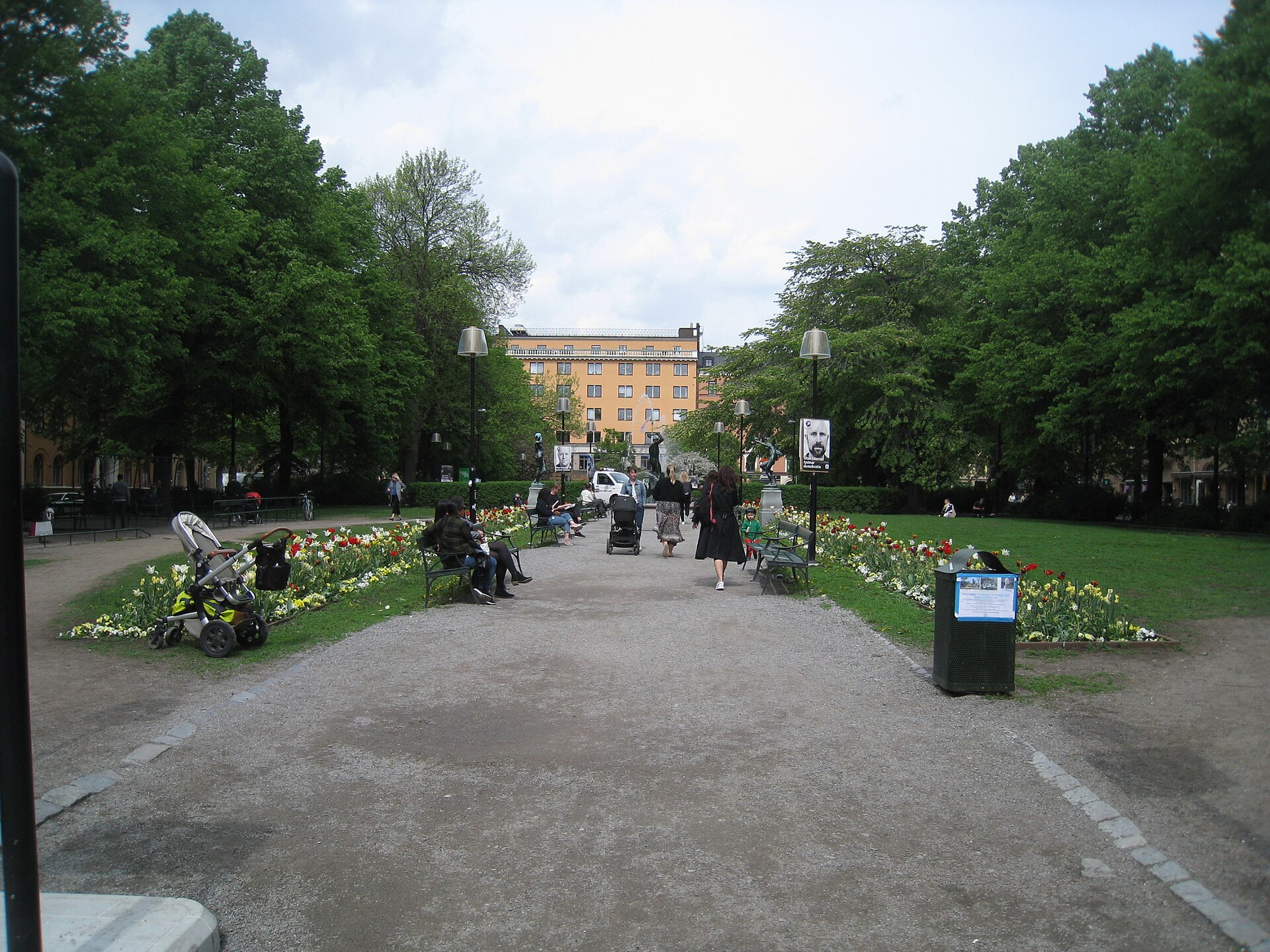
Mariatorget in spring: Mariatorget, vy mot norr, 2019a by Bysmon, CC BY-SA 4.0, via Wikimedia Commons.
Hötorget flea market: Hötorget, loppmarknad, 2017d by Holger.Ellgaard, CC BY-SA 4.0, via Wikimedia Commons.
Swedish ceramics at Hötorget: Hötorget, loppmarknad, 2017b by Holger.Ellgaard, CC BY-SA 4.0, via Wikimedia Commons.