Photography Rules & Permits in Stockholm: Drones, People and Museums
What the law allows when you photograph Stockholm: people in the street, the metro, museums and palaces, protected sites, the strict drone rules and Lantmäteriet's permit, professional shoots, and the best light and spots.
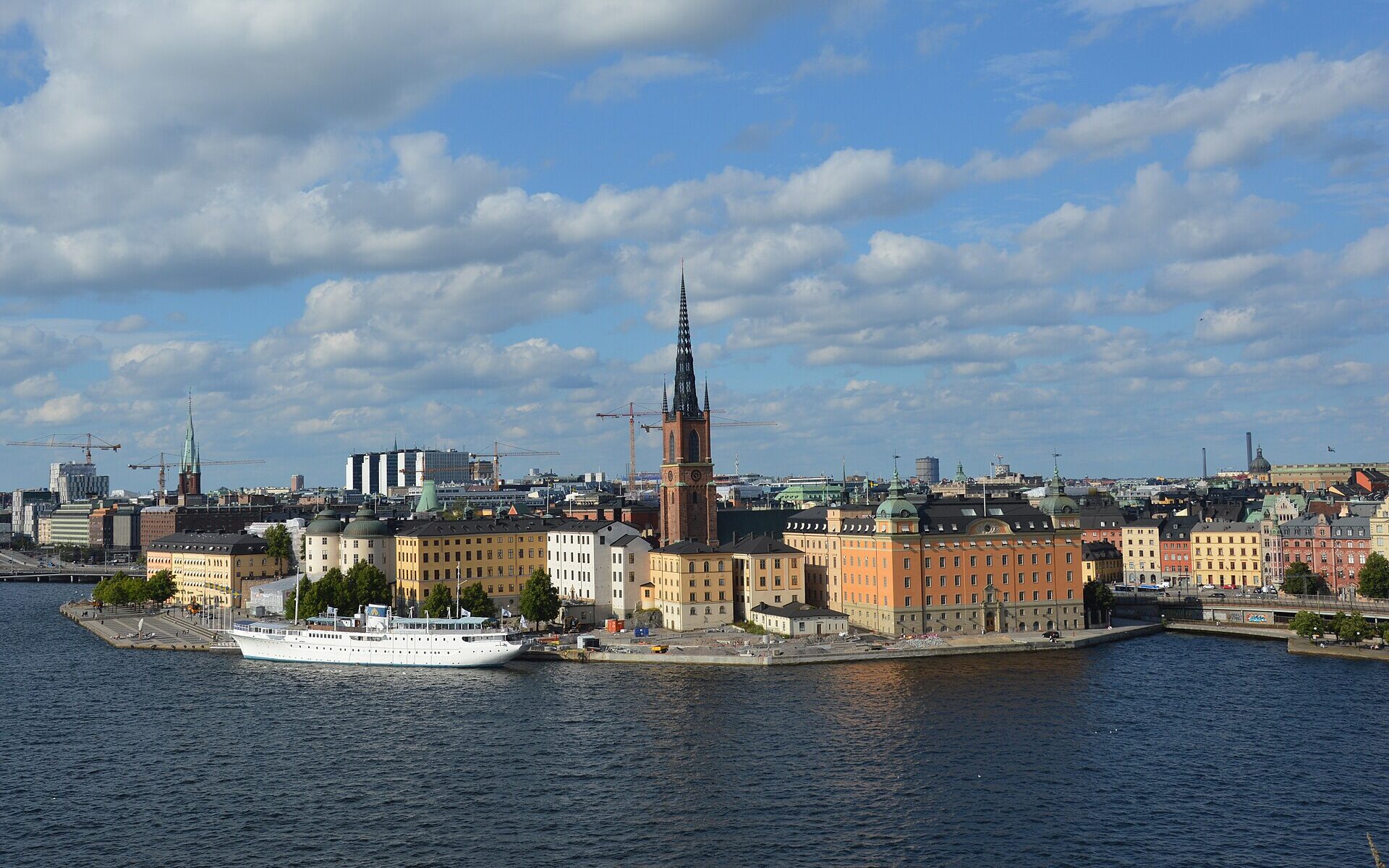
Whatever kind of picture you are after, whether it’s metro art, Gamla Stan at blue hour or the archipelago from a ferry deck, the law on photography in Stockholm is mostly on your side. You can photograph people in the street, buildings, police officers, the palace guard and the underground without asking anyone. Where Sweden does draw lines, it draws them firmly: around privacy indoors, around what you publish, around protected military and state sites, and, above all, around drones, where the rules are strict enough that most visitors should leave theirs at home.
This guide sets out what’s allowed and what isn’t, from street photography and social media to the metro, museums and palaces, protected sites, drones, and professional shoots that need a permit. It ends with the practical side: light through the seasons, where to shoot and how to keep a camera working in the cold. It was checked in September 2026 against the rules published by Lantmäteriet (the Swedish mapping authority), SL, the Swedish Transport Agency and LFV, the air navigation service. It’s a traveller’s summary, not legal advice. If a commercial project depends on it, check with the authority concerned.
People in public places: you can photograph them without permission. There’s no general right to your own image in Swedish law.
Private spaces: secretly photographing someone in a toilet, changing room or home is a crime.
Advertising: using an identifiable person to sell something needs their consent.
Metro: private photos and video need no permission, as long as you don’t disrupt the service. Commercial shoots need SL’s approval.
Museums: usually fine without flash for personal use. Temporary exhibitions are the common exception.
Protected sites: a skyddsobjekt sign means a protected site, and it can ban entry and photography.
Drones: registration is required, most of the city is controlled airspace, and sharing aerial images needs a permit from Lantmäteriet (free, but about 65 working days).
Professional shoots: a police permit is needed if you take over public space with equipment.
Swedish law and your camera: the short version
Sweden takes a liberal view of photography in public, rooted in its long tradition of free expression. There’s no general law against photographing people in a public place, and no French-style “right to one’s image” that lets a stranger object to appearing in your shot. If you can see it from a street, a square, a park or a ferry, you can photograph it. Buildings, including embassies, ministries and the Riksdag, can be photographed from public ground, and so can police officers going about their work.
Where the law draws lines
The limits are specific rather than general, and they’re worth knowing because they’re enforced.
- Offensive photography (kränkande fotografering). Since July 2013 it has been a crime to secretly photograph someone, without permission, who is inside a home, a toilet, a changing room or a similar private space. The penalty runs from a fine to two years in prison. This is the law that covers cameras in saunas, pool changing rooms and hotel bathrooms, and it applies to phones as much as to cameras.
- Unlawful violation of privacy (olaga integritetsintrång). Since January 2018 it has been a crime to spread images of someone’s sexual life, their health, their being a victim of crime, or their being in a very vulnerable situation, where the spreading is likely to do them serious harm. Filming someone having a medical emergency, or someone drunk and incapable, and posting it, falls squarely within this.
- Names and images in advertising. A law dating from 1978 forbids using a person’s name or picture to market something without their consent. A street portrait on your personal Instagram account is fine. The same portrait in a hotel’s paid advertising needs a signed release.
Publishing and social media
Posting holiday pictures to friends and followers falls within the personal-use exemption of the EU’s data protection rules, so you don’t need anyone’s consent to post a street scene with people in it. Sweden’s data protection law also carves out journalistic, artistic and literary work. Where it becomes a grey area is when an account is commercial. A business account posting close, identifiable pictures of people who haven’t agreed can fall under GDPR, which in Sweden is enforced by IMY, the Swedish Authority for Privacy Protection. The practical rule is simple: the closer, more identifiable and more commercial the shot, the more you need consent.
Legal versus polite: photographing people
The law sets the floor, not the standard. Swedes value privacy, avoid scenes and rarely complain to strangers. So the fact that nobody objects doesn’t mean they’re happy. A few habits keep you on the right side of local manners.
- Ask before a close portrait. Får jag ta en bild på dig? (may I take a picture of you?) works, and so does English. Most people say yes, and the picture is always better for it.
- Be careful with children. Photographing other people’s children in a park or at a playground is legal, and it will still make parents uneasy. Ask, or keep them out of the frame.
- Keep the camera away at bathing places. Swimming spots, saunas and changing areas are the one setting where a raised phone reads as a threat. In a sauna, just don’t.
- Stay out of courtyards. Many of Stockholm’s prettiest inner courtyards sit behind coded doors. Don’t slip in behind a resident to get the shot: that courtyard is someone’s front garden.
- Don’t block the lanes. Gamla Stan’s alleys are narrow and busy. A tripod across Västerlånggatan at noon is legal and very unpopular.
For more on how Swedes like to be approached, our Swedish phrases for tourists has the polite basics.
The Royal Guard
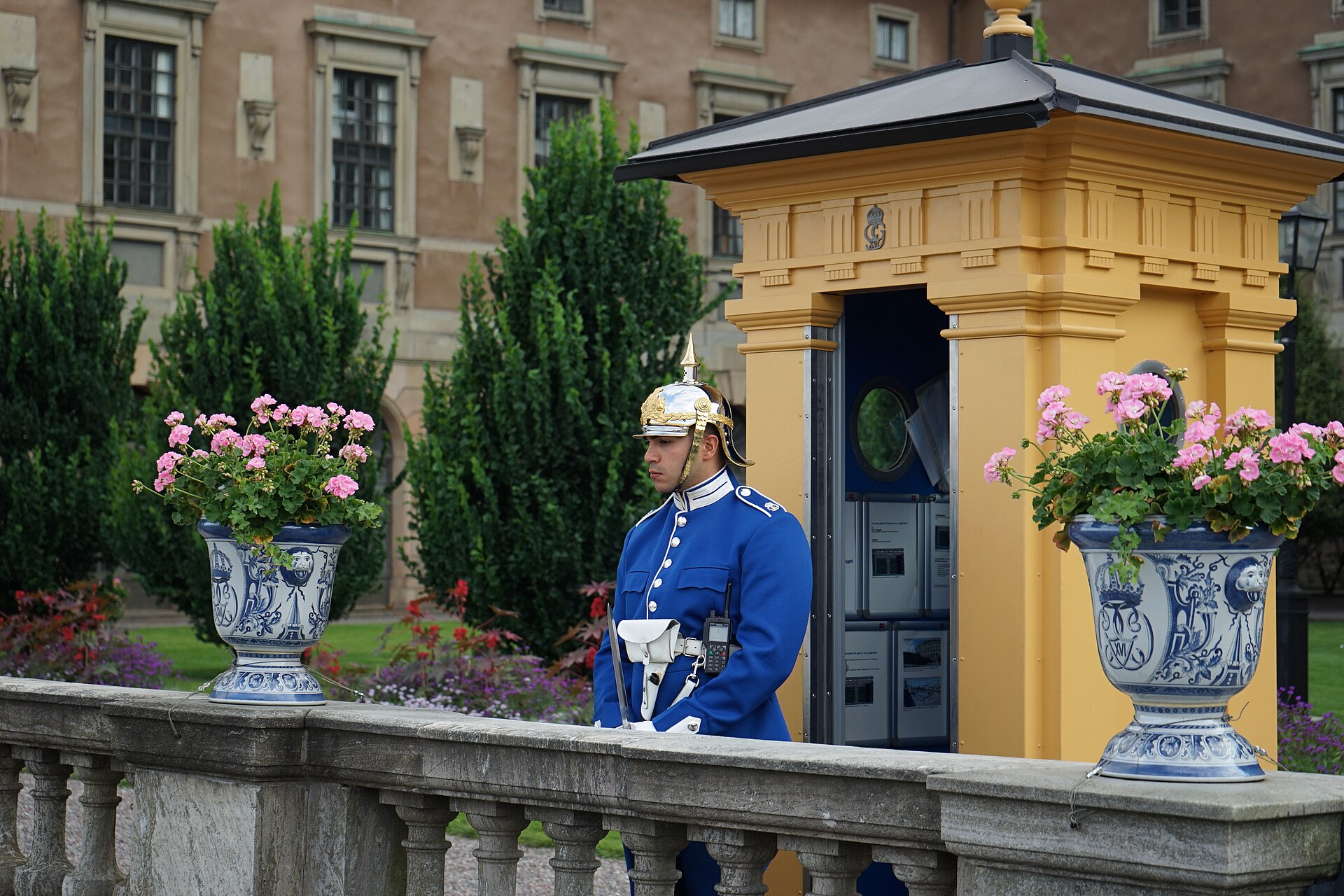
The guards outside the Royal Palace are serving soldiers on duty, and they’re among the most photographed people in the city. Photograph them as much as you like, from a respectful distance. Don’t touch them, don’t stand in their path, and don’t cross barriers to get closer. If a guard tells you to move, move. At the changing of the guard, crowds build early on the outer courtyard, so arrive in good time if you want a clear view.
Photographing in the metro
The Stockholm metro is the city’s great free photo subject: more than 90 of its roughly 100 stations carry artwork, and the blue-line caverns in particular photograph beautifully. SL’s rule is straightforward. You can photograph and film in its stations and vehicles for private use without asking permission, as long as you don’t affect or disrupt the service. Commercial photography and filming need SL’s approval in advance.
In practice, “don’t disrupt” means don’t stand at the foot of an escalator, don’t set up across a busy platform at rush hour, and never point a flash at an arriving train, where it can dazzle the driver. A tripod on a crowded platform is the obvious way to fall foul of that condition, so shoot handheld, raise the ISO and come at a quiet time. Mid-morning and early afternoon on weekdays are much calmer than the rush hours.
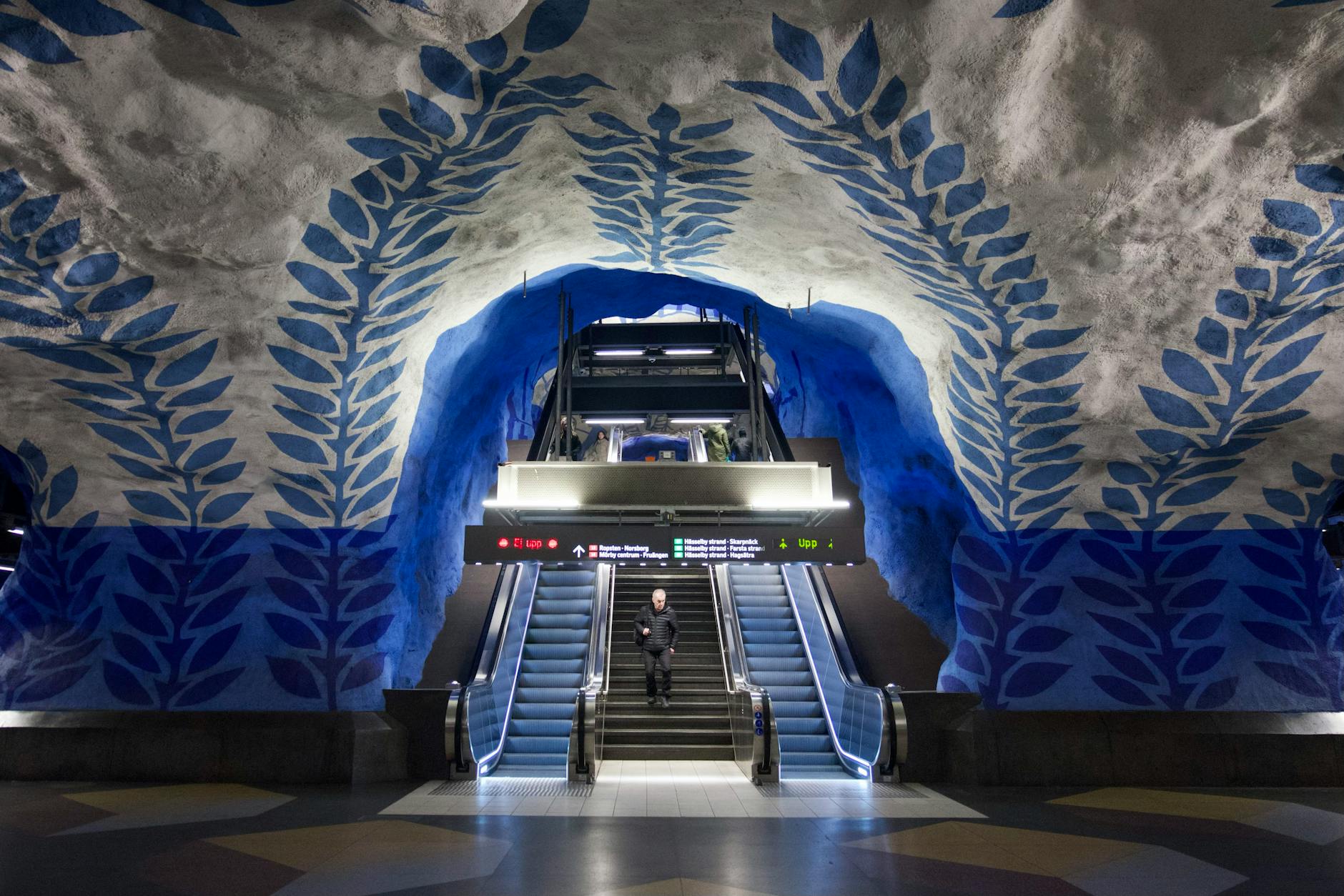
The classic stations are T-Centralen (Per Olof Ultvedt’s blue vines, 1975), Kungsträdgården, Solna Centrum (its red cave and green forest mural), Rådhuset and Stadion (the rainbow). From May to September, Spårvägsmuseet, the transport museum, runs guided art tours in English: in 2026 on the blue line on Thursdays at 15:00 from T-Centralen and on the red line on Saturdays at 15:00 from Östermalmstorg, for SEK 150 including museum admission, plus a valid SL ticket. Our Stockholm metro guide covers the lines and tickets.
Museums, palaces and churches
Each institution sets its own rules, and they change from exhibition to exhibition, so the sign at the entrance of each gallery is the final word. The patterns are consistent, though.
| Setting | What’s usually allowed | Watch out for |
|---|---|---|
| Museum permanent collections | Photography for personal use without flash | Tripods and selfie sticks, which are often banned; commercial use |
| Temporary exhibitions | Varies | Photo bans, often a condition of the loans |
| Palaces | Varies by room and collection | Treasuries and some interiors; ask at the ticket desk |
| Churches | Quiet, flash-free photography outside services | Services, weddings and funerals |
| Shops, malls and stations | Casual snaps are usually tolerated | Private property: staff can ask you to stop |
The Vasa Museum
You can photograph the ship at the Vasa Museum, and nearly everyone does. The hall is kept dim to protect the 17th-century hull, so flash is pointless and a phone’s night mode does better than a pop-up flash. For the whole ship in one frame, shoot from the upper levels at the bow or stern end. For detail, the carvings on the stern reward a longer lens.
City Hall and its tower
City Hall is seen on guided tours, and the grand interiors photograph well if you let the group move on ahead. The real prize is outside: the 106-metre tower, open roughly from May to September, looks straight down on Gamla Stan and Riddarfjärden. The climb is around 365 steps, with a lift covering part of the way, and each time slot holds only 27 people, so get your ticket early in the day. The view is the best high-level shot in the city that doesn’t need a drone.
Palaces
Rules at the Royal Palace and at Drottningholm vary from one part of each palace to the next, so ask at the ticket desk rather than assuming. Photographing the exteriors, the gardens and the guard is fine everywhere. At Drottningholm, remember that the palace is the royal family’s home: parts of the grounds are a protected site, and the signs mean it.
Photography museums
Two institutions are worth a visit if you’re in Stockholm to take pictures. Fotografiska, on the Stadsgården quay, is one of Europe’s leading photography museums, with changing exhibitions and a top-floor restaurant with a view of the harbour. Moderna Museet holds a substantial photography collection. Rules on photographing the exhibits themselves vary by show.
Protected sites, embassies and the military
Sweden designates certain buildings and areas as protected objects (skyddsobjekt) under the Protection Act of 2010. They include military installations, some infrastructure and some state and royal sites. A protected object is marked with signs, usually in several languages, and the decision behind each one sets what’s forbidden: entry without permission, and sometimes photography, filming or even sketching. Read the sign. If it shows a crossed-out camera, the ban is real and applies from outside the fence too.
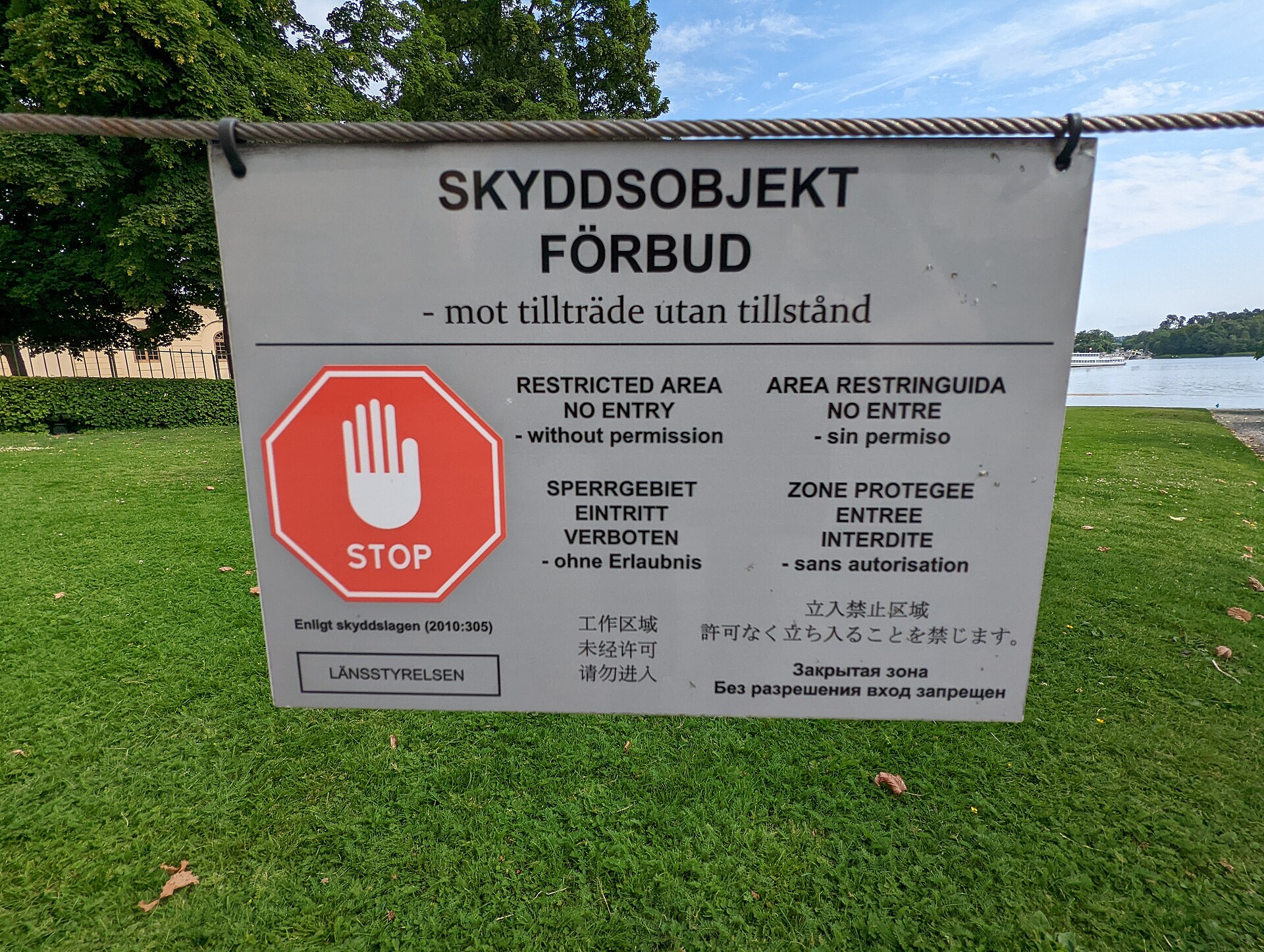
In and around the city, you’re most likely to meet these signs at military sites in the archipelago and at a handful of installations on the mainland. Embassies are a different case. The embassy district, Diplomatstaden, sits by Djurgårdsbrunnsviken, and photographing the buildings from the street is legal. Guards and police may still come over and ask what you’re doing, which is their job. Answer politely, and it’s over in a minute.
Drones: the rules and the reality
This is where most visitors get caught out. Sweden applies the EU’s drone rules in full, Stockholm’s airspace is unusually crowded, and there’s a Swedish extra, the dissemination permit, that affects what you can do with your footage afterwards.
Registration and the basic rules
Under EU rules, you must register as a drone operator if your drone weighs 250 grams or more, or if it carries a camera, unless it’s a toy. That covers almost every camera drone, including the small sub-250-gram models that are often sold as “no registration needed”. EU residents register once, in their home country, and the registration is valid in Sweden. Visitors from outside the EU register in the first EU country where they plan to fly, which for most people reading this means the Swedish Transport Agency, Transportstyrelsen. Allow time, because some steps are set up for people with Swedish electronic ID. Drones of 250 grams or more also need the online competence certificate. Your operator ID must be displayed on the drone.
In the air, the basics are that you keep the drone in sight, stay below 120 metres, and never fly over crowds or in a way that puts other people at risk.
Stockholm’s airspace
Here’s the catch. Stockholm has two airports with controlled airspace around them: Arlanda to the north, and Bromma, whose zone covers a large part of the city itself because the airport sits only a few kilometres from the centre. Flying inside a control zone needs permission from air traffic control. On top of that are restricted areas over sensitive sites. LFV’s drone map, Drönarkartan, shows every zone and explains how to apply for permission in each one. Check it before every flight, not once per trip, because temporary restrictions are added for events and state visits.
The dissemination permit
This is the Swedish peculiarity. To share, publish or sell aerial photographs or film of Sweden’s land areas, whether taken from a drone, plane, helicopter or balloon, you need a dissemination permit (spridningstillstånd) from Lantmäteriet, the mapping authority. The permit exists to protect information that matters to national defence. Applying is free, but in 2026 the stated processing time is about 65 working days, roughly three months. Lantmäteriet warns that sharing aerial images without permission may be a criminal offence. There are some exemptions, and they’re listed on Lantmäteriet’s site, so check them before assuming yours is covered.
In other words, the drone clip of Gamla Stan you’d like to post on the flight home is, strictly, footage you can’t post for three months.
Nature reserves and the archipelago
Outside the city, many nature reserves ban drones in their rules, and bird-protection areas in the archipelago are often closed to all access, drones included, during the nesting season in spring and early summer. National parks such as Tyresta have their own rules. Look for the reserve’s sign at the trailhead, and check the county administrative board’s page for the reserve before you go.
The honest verdict
For most visitors, a drone isn’t worth the trouble in Stockholm. Between registration, the control zones and a three-month wait before you can share anything, the effort outweighs the reward, especially as the city offers so many high vantage points on foot. The City Hall tower, the cliffs of Södermalm and a boat on the water will give you the aerial feel legally and today. Our guide to Stockholm’s best viewpoints lists the lot. If you’re a serious drone photographer, save the flying for the countryside, register properly, and apply for the dissemination permit as soon as you’re home.
Professional shoots, tripods and permits
Commercial work in public space is where permits come in. The rule of thumb that Swedish authorities and film offices use goes like this.
- Small and handheld: a photographer with a camera, perhaps an assistant and a reflector, not blocking anyone, generally needs no permit, even for paid work such as a portrait or engagement session in a park.
- Taking over public space: once you put equipment on the ground in a way that takes up space, such as light stands, a crane, a catering table or cordoned-off areas, or close part of a street, you need a police permit to use a public place (tillstånd att använda offentlig plats). Apply to the Police Authority well in advance, as the city is consulted and it takes time.
- Private property: shopping centres, station buildings, hotels and restaurants are private. Commercial shoots need the owner’s permission, and staff can ask any photographer to stop.
- The metro and buses: commercial shoots need SL’s approval.
- Nature and national parks: commercial filming can need permission from the county administrative board, especially if you want vehicles, groups or structures.
- People in your pictures: for advertising use, get signed releases, as the 1978 law on names and images in advertising requires consent.
A tripod on its own doesn’t need a permit anywhere public. Just keep it out of doorways, paths and narrow lanes, and fold it away when a crowd builds.
Light and seasons
Stockholm sits at 59 degrees north, and the light swings more through the year than photographers from further south expect. That is the main thing to plan around.
| Season | Light | What to shoot |
|---|---|---|
| Midsummer (June) | Sunrise around 03:30, sunset around 22:00, and it never gets fully dark | Late-evening golden light over the water, the white nights, the archipelago |
| Late summer and autumn | Long golden hours, fast-shortening days from September | Autumn colour on Djurgården, mist on the water in the morning |
| Midwinter (December) | Sunrise around 08:45, sunset before 15:00 | A long blue hour in mid-afternoon, Christmas lights, snow |
| Late winter and spring | Days lengthen quickly from February; low, clear light | Ice on the bays, crisp skylines, the first café terraces |
In summer, the late evening is the time to be out: from Monteliusvägen, the sun goes down in the north-west behind City Hall. In winter, the blue hour comes in the middle of the afternoon and lasts longer than it does further south, which makes it easy to catch the city lit up without staying out late. On clear, dark winter nights there’s a small chance of the aurora, but it is a long shot this far south. Our guide to the northern lights near Stockholm is honest about the odds. For the evening city generally, see Stockholm at night.
Where to shoot
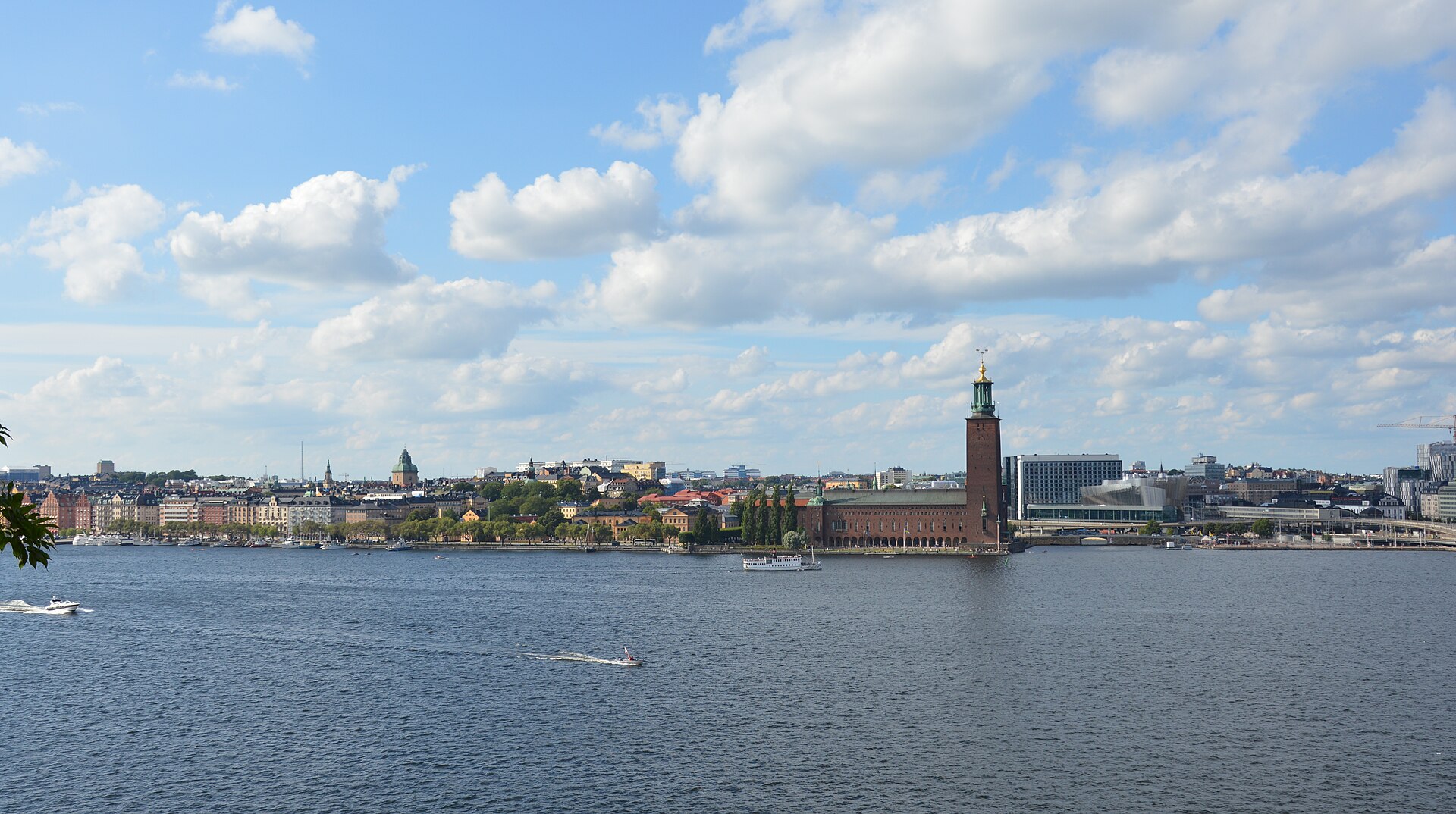
- Monteliusvägen, Södermalm: a cliff-top path looking north over Riddarfjärden to City Hall and Riddarholmen. The classic.
- Skinnarviksberget, Södermalm: the highest natural point in the inner city, with a bare-rock top and a wide view over Riddarfjärden and Kungsholmen.
- Fjällgatan, Södermalm: an old cliff-top lane looking north-east over the harbour to Skeppsholmen and Djurgården.
- Evert Taubes terrass, Riddarholmen: a quiet waterside terrace facing west over Riddarfjärden, with summer sunsets behind the silhouette of City Hall.
- Stortorget, Gamla Stan: the colourful merchant houses. Go early for an empty square.
- Skeppsholmsbron: the bridge to Skeppsholmen with its gilded crown, and the Strandvägen boats beyond.
- The City Hall tower: the best legal “aerial” of Gamla Stan, from May to September.
- The water: any ferry or boat tour gives you the waterfront at its best, and the Djurgården ferry costs no more than a metro ticket. See our guide to Stockholm boat tours, or get lower still in a kayak.
- The metro: T-Centralen, Kungsträdgården, Solna Centrum, Rådhuset and Stadion.
Our list of Instagrammable places in Stockholm goes further, and the Gamla Stan guide and Södermalm guide fill in what surrounds each spot.
Cold, rain and your gear
Winter is hard on cameras. Cold drains batteries fast, so carry spares in an inside pocket, where body heat keeps them working, and swap them out as the one in the camera fades. Condensation is the bigger risk. When you come in from minus five to a warm café, the camera fogs up inside and out. Put it in a closed bag before you go indoors, and let it warm up slowly before you open the bag. Touchscreens don’t respond through ordinary gloves, so bring a pair with conductive fingertips, or thin liners under mittens.
Rain is common in every season, but rarely heavy for long. A simple rain cover or a plastic bag and an elastic band will save a shoot. Wet cobbles in Gamla Stan are slippery and reflect beautifully after dark. The Stockholm packing list has the clothing side, and Stockholm weather by month shows what to expect when.
For the rest of the practical groundwork, see Stockholm Travel Tips: 50 Things to Know Before You Go.
Frequently asked questions
Is it legal to photograph people in public in Stockholm?
Yes. Swedish law allows photography of people in public places without their permission, and there’s no general right to your own image. It’s a crime to secretly photograph someone inside a home, toilet or changing room, and using someone’s picture in advertising needs their consent.
Can I take photos in the Stockholm metro?
Yes, for private use, without asking permission, as long as you don’t disrupt the service. Avoid tripods on busy platforms and never flash at an arriving train. Commercial photography and filming need SL’s approval in advance.
Can I fly a drone in Stockholm?
Only with care and, in much of the city, permission. You must register as an operator if your drone weighs 250 grams or more or carries a camera. Large parts of Stockholm lie in the Bromma and Arlanda control zones, where flying needs air traffic control permission through LFV’s drone map. Sharing aerial images of Sweden also needs a dissemination permit from Lantmäteriet.
Do I need a permit to post drone footage of Sweden?
Generally, yes. Lantmäteriet requires a dissemination permit to share, publish or sell aerial photos or video of Sweden’s land areas. Applying is free, but processing takes about 65 working days, and sharing without a permit may be a criminal offence. Check Lantmäteriet’s list of exemptions first.
Can I take photos inside Stockholm’s museums?
Usually, in the permanent collections, for personal use and without flash. Temporary exhibitions often ban photography, and tripods and selfie sticks are frequently banned. Check the sign at each gallery entrance.
Can I photograph the Royal Guard?
Yes. Photograph the guards and the changing of the guard freely, but keep a respectful distance, don’t touch them or stand in their way, and move if asked.
Do I need a permit for a photo shoot in Stockholm?
Not for a small, handheld shoot that doesn’t block anyone, even a paid one. If you put equipment on the ground or take over part of a street or park, you need a police permit to use a public place. Private property such as malls and stations needs the owner’s permission, and the metro needs SL’s.
What does a skyddsobjekt sign mean?
It marks a protected object under Sweden’s Protection Act, such as a military site or sensitive installation. The sign sets out what’s banned, often entry without permission and sometimes photography. If it shows a crossed-out camera, don’t photograph the site.
More Stockholm guides
- Stockholm’s Best Viewpoints — high places to shoot from, no drone needed.
- Instagrammable Places in Stockholm — the photogenic corners.
- Stockholm Metro Guide — lines, tickets and the art stations.
- Fotografiska Guide — the photography museum on the quay.
- Midnight Sun in Stockholm — summer’s endless light.
- Stockholm at Night — the city after dark.
- Royal Palace Guide — the guard, the rooms and the rules.
- Stockholm Accessibility Guide — terrain, lifts and step-free routes.
- Stockholm Travel Tips — the practical rest.
Photo credits
Riddarholmen seen from Södermalm (featured image): Blick auf Riddarholmen2 by Olaf Meister, CC BY-SA 4.0, via Wikimedia Commons.
Royal Guard sentry at the Royal Palace: Högvakten Stockholm sommar by Lindnerix, CC BY-SA 4.0, via Wikimedia Commons.
Protected-object sign at Drottningholm: Drottningholms slott, den 22 juli 2022 – Skylt för Skyddsobjekt by AleWi, CC BY-SA 4.0, via Wikimedia Commons.
City Hall from Monteliusvägen: Blick vom Monteliusvägen by Olaf Meister, CC BY-SA 4.0, via Wikimedia Commons.