Public Restrooms in Stockholm: Where to Find Them
Stockholm's free street toilets closed over the winter of 2025–26, and the new ones cost SEK 10. Where to find a clean toilet while the network is rebuilt: libraries, museums, department stores, stations and cafés.
Finding public toilets Stockholm could once take for granted is harder in 2026 than it has been for a decade. That is not neglect; it is a contract dispute. For ten years, most of the city’s street toilets were free self-cleaning cabins paid for by an advertising company. That arrangement ended over the winter of 2025–26, every one of those cabins closed, and a new operator is replacing them one site at a time with toilets that cost SEK 10 per visit. If you are visiting this year, the city’s toilet map has more gaps than usual.
This guide explains what has changed and where the reliable toilets are while it settles down: museums, libraries, department stores, stations and cafés. It covers what they cost and how you pay, accessible and baby-changing facilities, and a handful of Swedish words that make the search quicker. The situation was checked in September 2026 against the City of Stockholm’s contract details and local news reports. New street toilets are still opening, so check a live map before relying on any particular square.
City street toilets: SEK 10 per visit, paid by card or phone. The network has been rebuilt since March 2026, and gaps remain.
Most reliable free options: public libraries, Kulturhuset at Sergels torg, Arlanda and museum lobbies.
Department stores: NK, Åhléns City and the big shopping centres all have toilets. Some charge a small fee.
Cafés and restaurants: toilets are for customers. Buy a coffee and you’re in.
Metro stations: most have no public toilets. Plan around the bigger hubs.
Cash: not needed and often not accepted.
Useful words: toalett or toa (toilet), ledig (vacant), upptagen (occupied), RWC (accessible toilet).
What changed in 2026
In 2014, the city signed a deal with the outdoor-advertising company JCDecaux. JCDecaux built and ran about seventy self-cleaning public toilets across Stockholm, free to use, in exchange for advertising space on the city’s streets. Those toilets made up around 70% of Stockholm’s public toilets. The contract ran from 2015 to 2025.
At the end of 2024, the city extended the contract to August 2026 to cover the handover to a new operator. A rival advertising company challenged the extension in court, and the challenge succeeded. The ruling became final in January 2026. The JCDecaux toilets closed over the winter, and for a while much of the city had very few public toilets indeed.
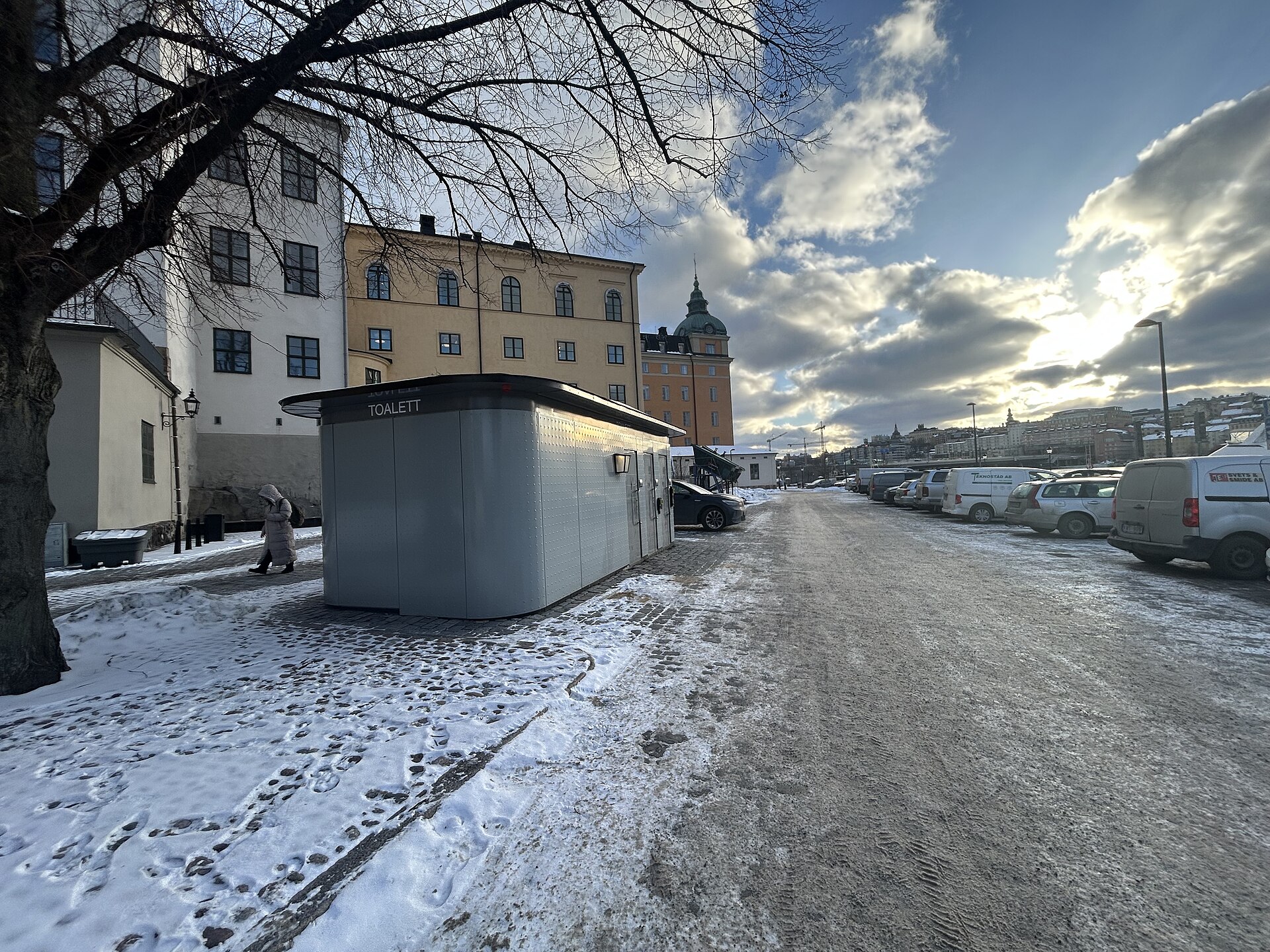
The new contract went to Danfo, a public-toilet operator. It covers 65 toilets to start with and allows up to 100. The first new toilets opened in March 2026, at a pace of roughly two a week. The city chose to charge SEK 10 per visit, partly to fund the service and partly because paid toilets tend to stay cleaner and safer. Most central locations should be covered by the time you read this, but some suburban sites were expected to wait more than a year, and a few old sites will not be replaced at all.
What this means for a visitor: don’t assume there is a street toilet where the old map shows one. Use the fallbacks below, and treat a working street toilet as a bonus.
City street toilets: how they work
- Price: SEK 10 per visit.
- Payment: contactless card or phone at the door. Don’t count on paying with coins. Sweden is almost cashless, and the new toilets are built for cards.
- Self-cleaning: the cabins clean themselves between users. The door won’t open during the cleaning cycle, so a closed door with no one inside usually just means waiting a minute.
- Accessible: the modern cabins are step-free and sized for wheelchairs.
- Finding them: map apps show public toilets, but in 2026 some of that data still points at closed cabins. Check the date of the most recent reviews, and look at the City of Stockholm’s own information if you can.
The reliable fallbacks
Libraries and Kulturhuset
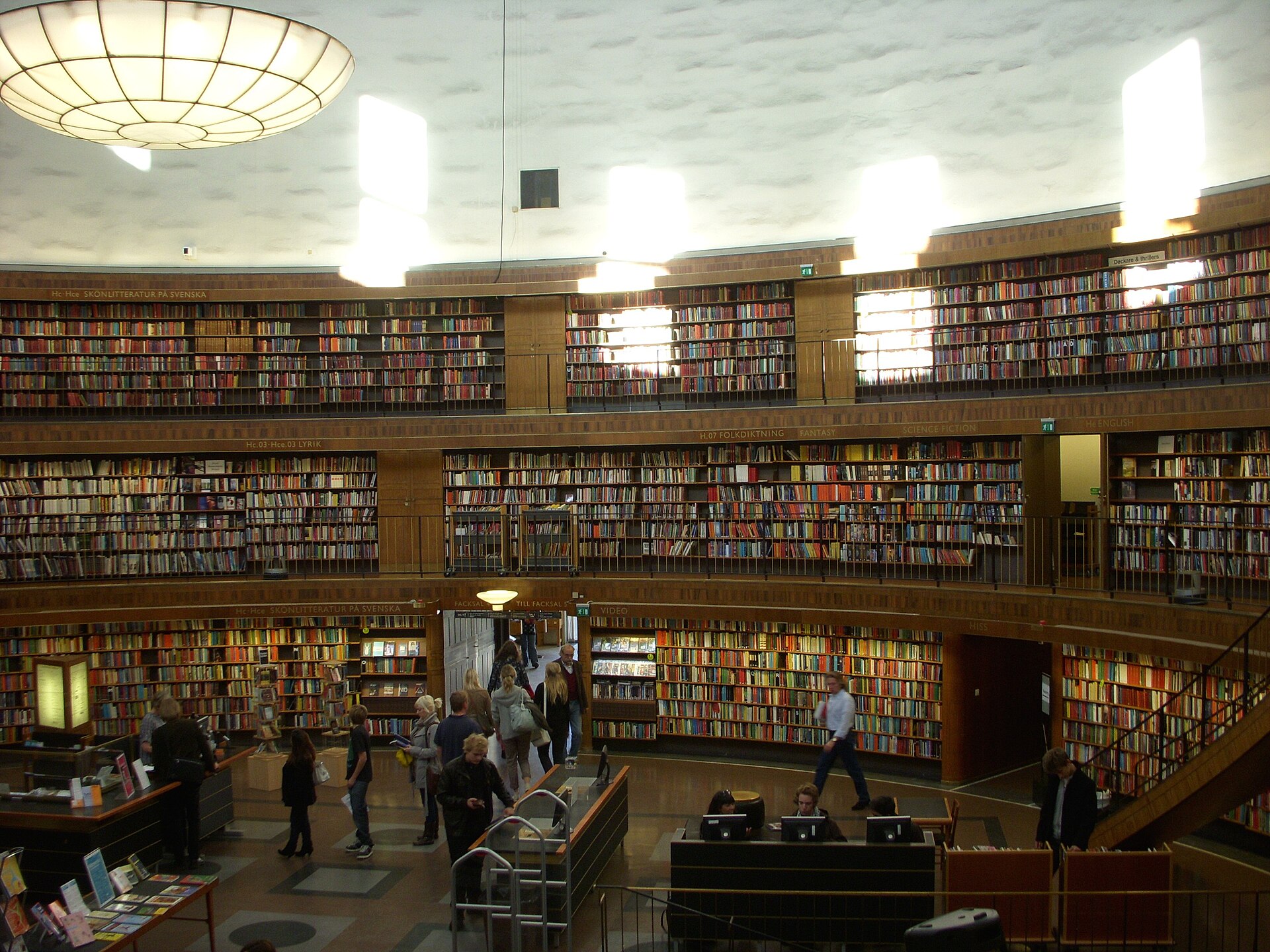
Stockholm’s public libraries are warm, free, open long hours and have toilets for visitors. They are the best-kept toilet secret in the city. The main library, Stadsbiblioteket on Sveavägen, is also one of Stockholm’s great buildings. Gunnar Asplund’s rotunda of books is worth the detour on its own. At Sergels torg, Kulturhuset is the city’s big cultural centre, with its own library, cafés and exhibitions, and it sits right above T-Centralen.
Museums
Every museum has toilets, and in many of them the toilets, cloakroom and café sit in the entrance area before the ticket desk. They are clean, accessible and usually have baby-changing facilities. If you have a museum ticket or a city pass, you are already covered. The free museums are a free and legitimate stop. Our Stockholm museums guide lists them all.
Department stores and shopping centres
NK on Hamngatan, Åhléns City on Klarabergsgatan, Gallerian, Mood and the other central shopping centres all have customer toilets. Some are free and some charge a small fee by card. They are among the most reliable toilets in the city centre, and they keep long opening hours, seven days a week.
Stations and transport
- Stockholm Central Station has toilets for travellers, which you pay for by card.
- Metro stations: most have no public toilets at all. Don’t count on finding one below ground.
- Commuter trains (pendeltåg): most modern units have an accessible toilet on board. Metro trains don’t.
- Arlanda: plenty of free toilets on both sides of security. Our Arlanda to Stockholm guide covers the journey into town.
- Archipelago boats: the larger Waxholmsbolaget boats have toilets on board. Our Waxholmsbolaget guide covers the routes.
Cafés, restaurants and bars
Toilets in cafés and restaurants are for customers, and most Stockholmers treat that as a fair deal. Buy a coffee and a kanelbulle and you have a toilet, a seat and ten minutes of warmth. Our guide to the best cafés in Stockholm means the coffee will be good too. Fast-food chains often lock their toilets with a code printed on your receipt.
Most café and restaurant toilets in Sweden are single, lockable, gender-neutral rooms, with the basin inside. That usually means one short queue, not separate ones for women and men.
Area by area
Gamla Stan
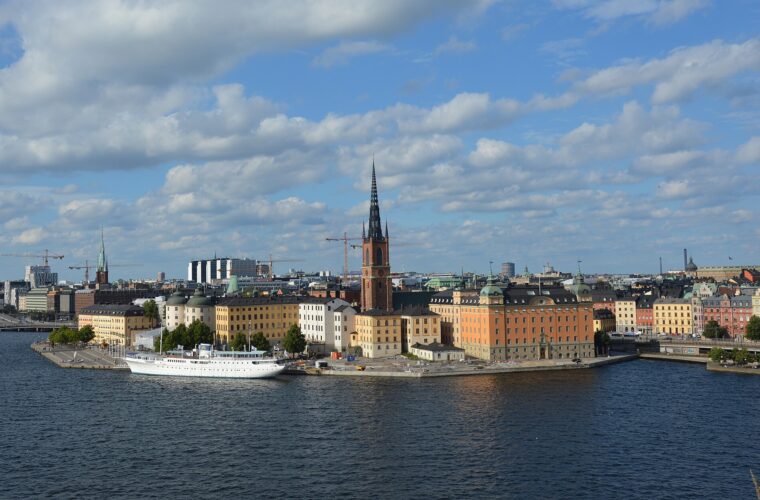
The old town is where visitors most often get caught out: narrow lanes, lots of walking and few obvious public toilets. Plan a café stop, or use the facilities at the museums around Stortorget, the Nobel Prize Museum and the Royal Palace, if you have a ticket. Riddarholmen, across the small bridge, has had a toilet block on its quay, but check whether it is open this year. Our Gamla Stan guide maps the island.
Norrmalm and the shopping streets
The easiest area in the city. Kulturhuset at Sergels torg, the department stores on Hamngatan and Klarabergsgatan, Stockholm Central and the shopping centres are all within a few minutes’ walk of each other.
Djurgården
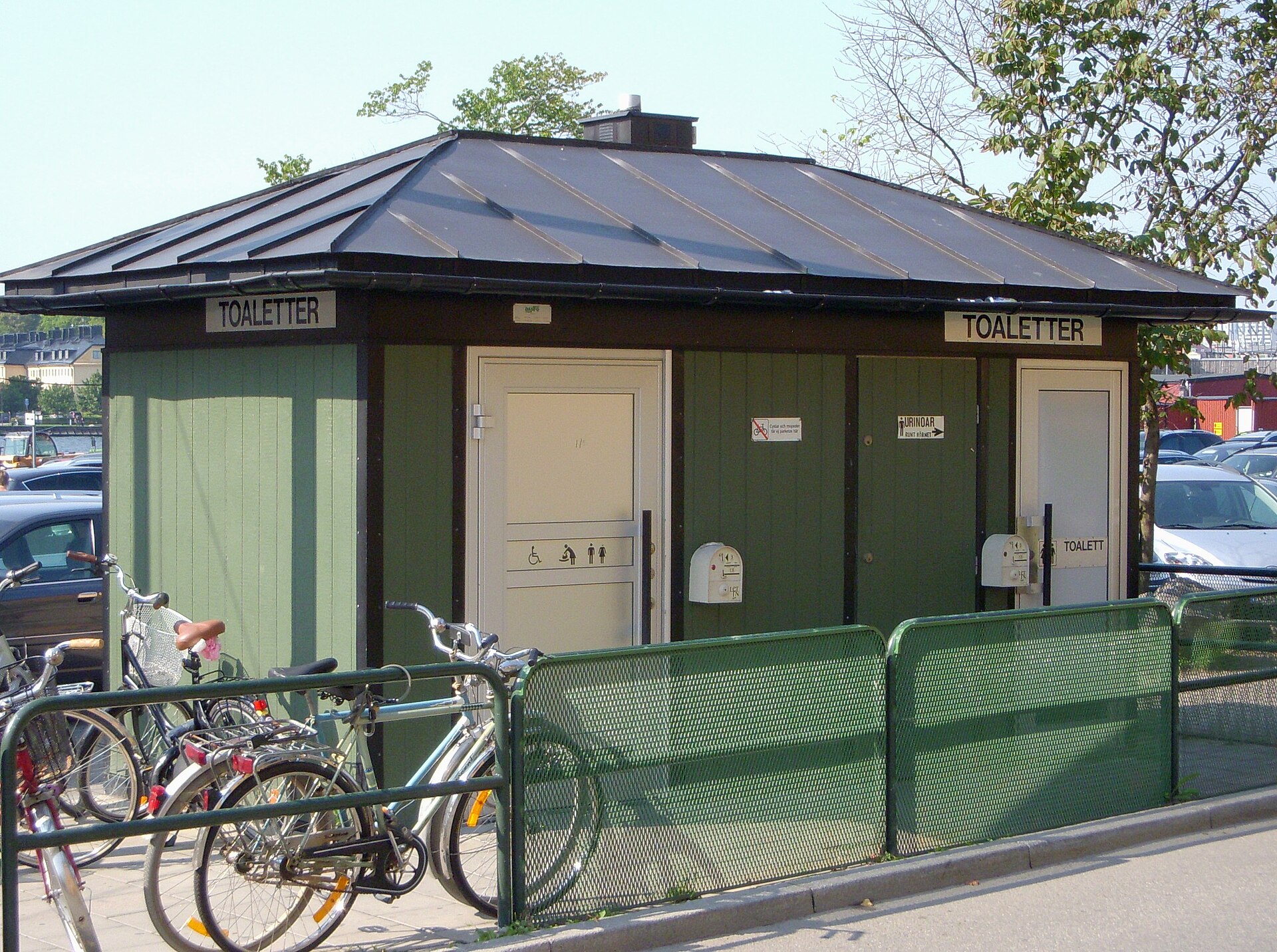
The museum island. The toilets are inside the attractions, such as the Vasa Museum, Skansen, Nordiska museet and the ABBA Museum, and at the island’s cafés and restaurants. Djurgården also has public toilet blocks near its main paths, some of them old wooden buildings that look more like summer cottages than toilets. Our Djurgården guide has the layout.
Södermalm
Plenty of cafés, bars and shops, and the larger squares have had street toilets. Fotografiska and the local library branches both help. The Monteliusvägen viewpoint and the long waterfront walks have fewer options, so go before you set out.
Östermalm
The food hall on Östermalmstorg, the shopping streets and Humlegården, with the Royal Library at its centre, are the main options. Karlaplan and the waterfront along Strandvägen are thinner on toilets.
Kungsholmen and Vasastan
These are residential districts with plenty of cafés and local libraries, and few obvious public toilets. City Hall on Kungsholmen has visitor facilities for ticket holders. The Norr Mälarstrand waterfront walk is lovely and short of options, so start from a café at either end. In Vasastan, Stadsbiblioteket at Odenplan is the landmark answer.
Out of town: day trips and the archipelago
The day-trip towns are easier than the city. Uppsala, Sigtuna and Vaxholm all have toilets at the station or the harbour, and in their museums and cafés. On the islands, the toilets are usually at the harbour, often next to the shop or the ferry waiting room, and they may be seasonal. On the smallest islands out of season, there may be nothing but the boat. Use the toilet on board before you land.
Accessible toilets and baby changing
- RWC on a sign means an accessible toilet, from rullstolsanpassad WC. Museums, libraries, department stores, stations and the new city toilets all have them.
- Baby changing is skötbord or skötrum. In Sweden, changing tables are in men’s and gender-neutral toilets as much as women’s, since fathers change as many nappies as mothers. Museums and department stores are the most reliable. Our Stockholm with a baby guide covers the rest.
- Radar-style keys: Sweden does not use a national accessible-toilet key scheme like the UK’s. Accessible toilets are generally open or paid in the same way as the others.
At the main sights
Every major attraction has good toilets. The question is whether you can reach them without a ticket, and the answer shapes how you plan a day.
| Sight | Toilets | Planning note |
|---|---|---|
| Vasa Museum | Inside, several | Beyond the ticket desk, so use them during your visit. |
| Skansen | Spread across the park | The big site means plenty of them. Check the park map on entry. |
| City Hall | For tour visitors | The tower climb has none. Go before you queue for it. |
| Royal Palace | For ticket holders | Gamla Stan outside is short of options. |
| Fotografiska | Inside, plus the café and restaurant | Late opening makes it a useful evening stop on Södermalm. |
| Drottningholm | At the visitor facilities and café | The gardens are large. Go before you set off round the park. |
At events, parks and beaches
Big events bring their own temporary toilets: Pride, the Culture Festival, Midsummer at Skansen, the marathon and outdoor concerts. They are usually free, and they have queues. In summer, the city puts seasonal toilets at many popular swimming spots and parks. They come down again in autumn. From October to April, assume the parks are toilet-free and plan your walk around a café.
Useful Swedish
| Swedish | English |
|---|---|
| Toalett, toa, WC | Toilet |
| Var är toaletten? | Where is the toilet? |
| Damer / Herrar | Women / Men |
| Ledig / Upptagen | Vacant / Occupied |
| RWC | Accessible toilet |
| Skötbord | Baby-changing table |
| Endast för gäster | Customers only |
| Ur funktion | Out of order |
More in our Swedish phrases for tourists, though anyone you ask will answer in English.
Practical tips
- Go when you can. A museum, a library or a department store is the moment to use the toilet, not the moment to wait for something better.
- Have a card or phone with contactless payment. Street and station toilets are paid electronically.
- Plan day trips. On a walk around Djurgården’s outer paths, a hike in a nature reserve or a day on a small archipelago island, check the toilets at the start and plan around the café stops.
- Carry a pack of tissues and hand gel. Temporary event toilets run out.
- With children, use every museum toilet, even if nobody needs it. Our Stockholm with kids guide has the full survival kit.
At night
After the museums, libraries and shops close, the options shrink to bars, restaurants, late cafés, the stations and whatever street toilets are open nearby. Stockholm Central and the bigger commuter stations stay open late. Bars expect you to be a customer, and in winter many charge a cloakroom fee on the way in, so plan your evening around where you are spending it. Our Stockholm at night guide covers the late-evening city.
Swedish toilet habits worth knowing
- Single rooms, not rows of cubicles. Many Swedish toilets are individual lockable rooms with the basin inside, and many are gender-neutral. The queue moves faster than it looks.
- Toilet paper goes in the bowl. Swedish plumbing handles it. Sanitary products go in the small bin provided, which is standard in every toilet.
- Two flush buttons. A small one and a large one, for a half and a full flush.
- The door sign. A green or white indicator means ledig (vacant), red means upptagen (occupied). Knock anyway. Swedes do.
- Clean as standard. Public and café toilets in Stockholm are, as a rule, spotless. If one isn’t, tell the staff; they will want to know.
The honest bottom line
Stockholm in 2026 has fewer free street toilets than it did a few years ago, and the new ones charge. In practice, very few visitors will notice more than an occasional detour. The city is full of clean, warm, accessible toilets in museums, libraries, shops and cafés, and it is small enough that one is never more than a few minutes away. What catches people out is assuming there is a public toilet on a square because a map says so. Plan with the fallbacks, and you won’t be caught.
Frequently asked questions
Are public toilets free in Stockholm?
Not any more. The city’s new street toilets, which have been opening since March 2026, cost SEK 10 per visit, paid by card or phone. Libraries, Kulturhuset, museum lobbies and Arlanda have free toilets. Some department stores and stations charge a small fee.
Why are so many public toilets closed in Stockholm?
The free, advertising-funded toilets run by JCDecaux, about 70% of the city’s public toilets, closed over the winter of 2025–26 when their contract ended after a court ruling. A new operator, Danfo, has been installing replacements at around two a week since March 2026.
Can I use cash to pay for toilets in Stockholm?
Don’t count on it. Paid toilets in Stockholm are designed for contactless card or phone payments, and Sweden is almost cashless.
Do Stockholm metro stations have toilets?
Most do not. Stockholm Central Station has paid toilets, and the modern commuter trains have toilets on board, but ordinary metro stations and metro trains don’t.
Where are the best free toilets in central Stockholm?
Kulturhuset at Sergels torg, the public libraries (including Stadsbiblioteket on Sveavägen) and museum entrance areas. Department stores such as NK and Åhléns City are reliable too, though some charge a small fee.
Can I use a café toilet without buying anything?
Café and restaurant toilets are for customers. Buying a coffee is the accepted deal, and staff rarely refuse a paying customer.
What does RWC mean in Sweden?
RWC marks an accessible toilet, short for rullstolsanpassad WC (wheelchair-adapted WC).
Where can I change a baby in Stockholm?
Look for skötbord or skötrum signs. Museums, libraries, department stores and stations have changing tables, and they are found in men’s and gender-neutral toilets as well as women’s.
For a wheelchair-accessible toilet, look for RWC in Swedish listings; museums, department stores and the big stations are the dependable options. Our Stockholm accessibility guide covers the rest of the city for visitors with access needs, from step-free transport to which sights are fully accessible.
More Stockholm guides
- Stockholm Travel Tips — the rest of the practical advice in one place.
- Stockholm with Kids — planning a family day around the essentials.
- Stockholm with a Baby — changing tables, prams and lifts.
- Free Museums in Stockholm — warm, free and with facilities.
- Walking in Stockholm — planning a long day on foot.
- Stockholm Currency and Payment — why you’ll pay with a card.
- Best Cafés in Stockholm — the most pleasant way to find a toilet.
- Djurgården Guide — the museum island, facilities included.
Photo credits
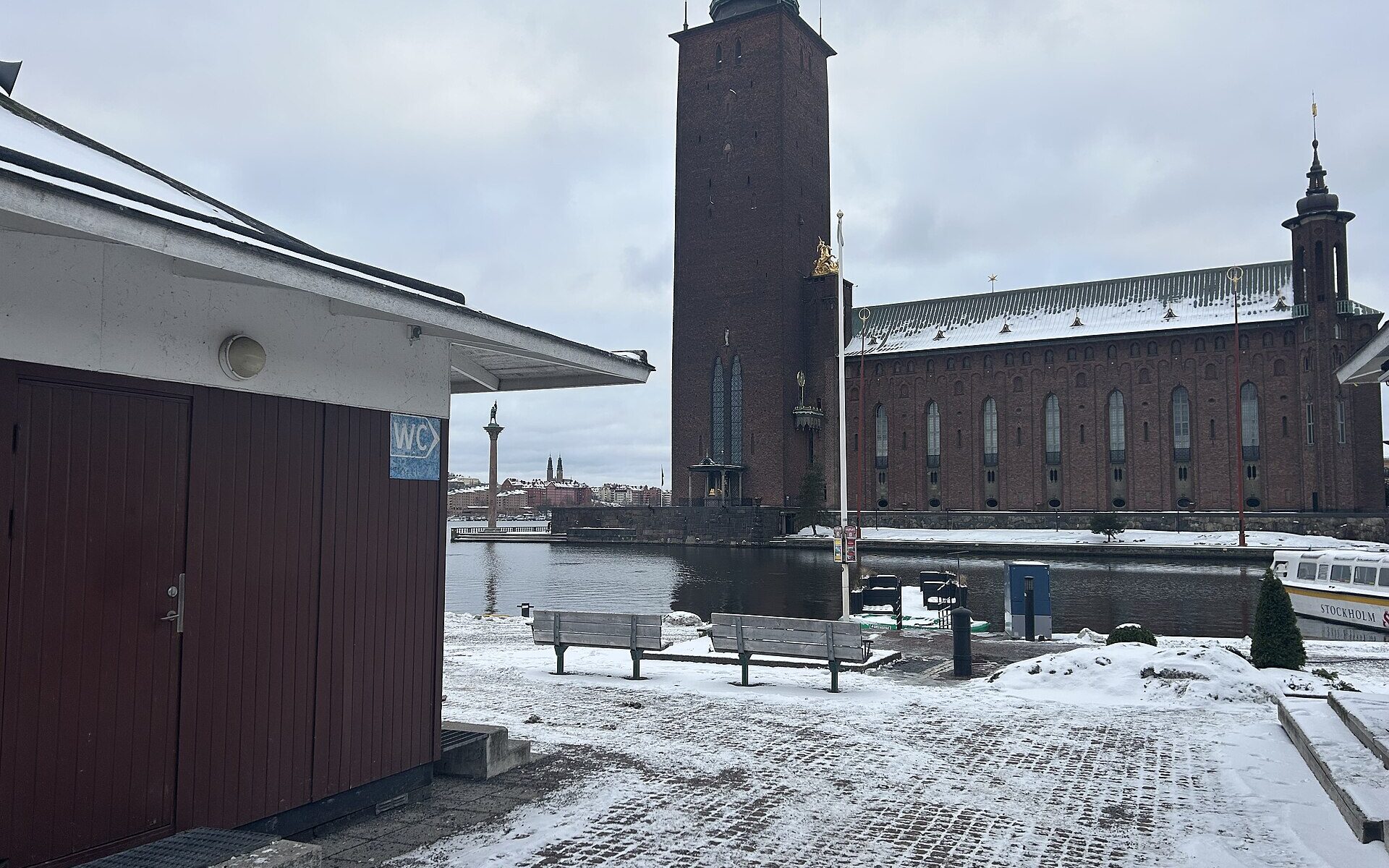
Public toilet at Klara Mälarstrand with City Hall (featured image): Stockholms stads offentlig toalett Klara Mälarstrand 2026 jan 01 by Salgo60, CC0, via Wikimedia Commons.
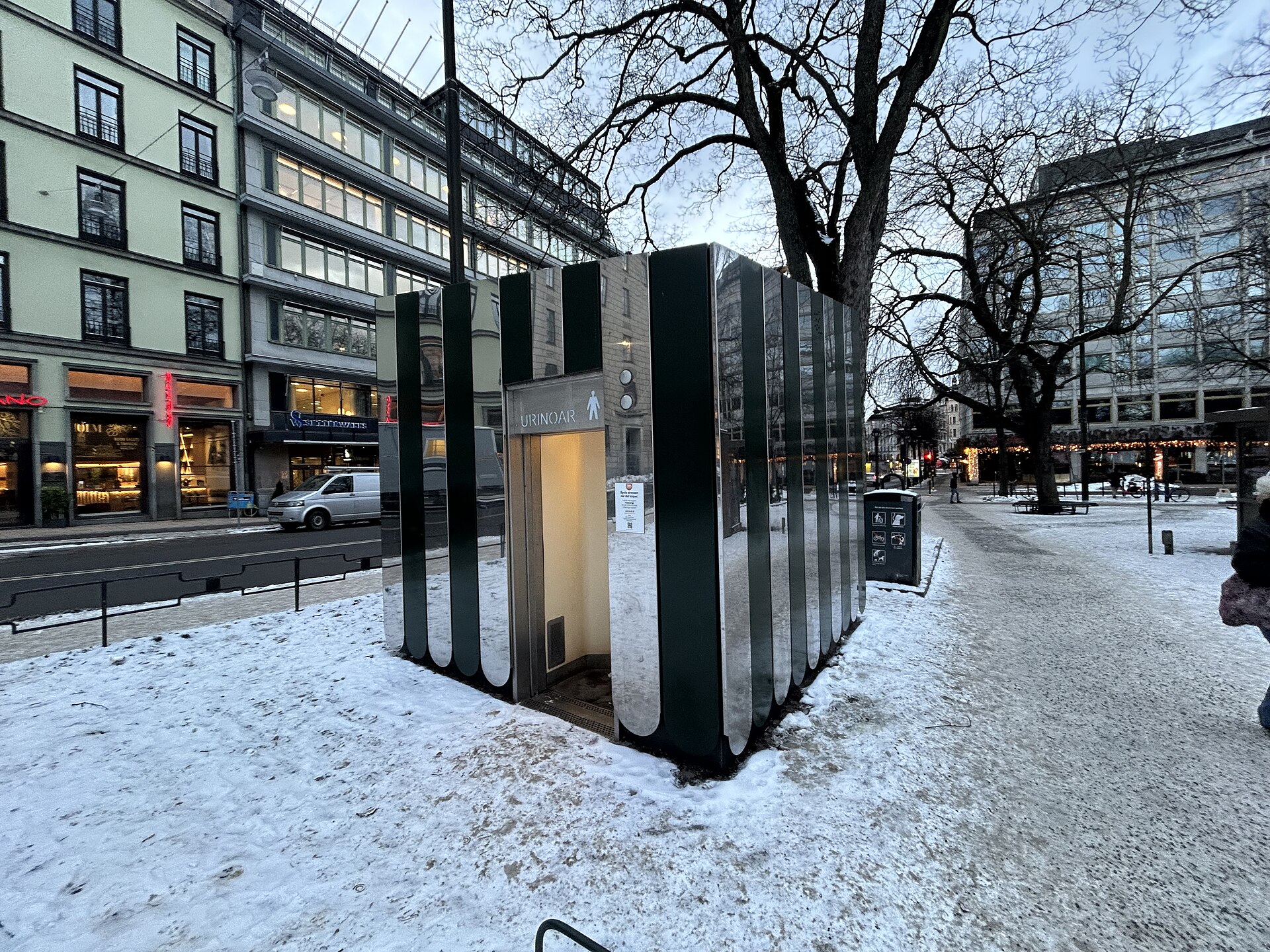
Self-cleaning toilet by Humlegården: Stockholm offentliga toalett Sturegatan 12 – Humlegården 2026 jan 02 by Salgo60, CC0, via Wikimedia Commons.
Toilet block at Södra Riddarholmshamnen: Stockholm offentliga toalett Södra Riddarholmshamnen 01 by Salgo60, CC0, via Wikimedia Commons.
Stadsbiblioteket rotunda: Stadsbiblioteket 2008e by Holger.Ellgaard, CC BY-SA 3.0, via Wikimedia Commons.
Public toilet on Djurgården: Offentlig toalett Djurgården 2011 by Holger.Ellgaard, CC BY-SA 3.0, via Wikimedia Commons.