Tipping in Stockholm: Who, When & How Much
Do you tip in Stockholm? Rarely, and never because you have to. What Swedes actually do in restaurants, bars, taxis and hotels, and how to answer the card machine's tip screen without a second thought.
The short answer on tipping in Stockholm is that you don’t have to, and nobody will think less of you if you don’t. The longer answer is where visitors trip up. Card machines across the city now ask for a tip on almost every payment, the percentages on the screen look American, and it is genuinely hard to tell whether the question is a formality or a hint. This guide sorts that out, case by case.
It covers what Swedes actually do in restaurants, bars, cafés, taxis, hotels and on tours; how to answer the card-machine prompt without awkwardness; why the Swedish system works the way it does; and a few situations where a tip really is the right thing. Norms were checked in September 2026 against Visit Sweden’s own guidance and the current practice in Stockholm restaurants. Prices mentioned are in Swedish kronor.
The rule: tipping is never required and always welcome.
Sit-down restaurant, good service: round up, or add 5–10%. Around 10% is becoming more usual in central Stockholm.
Café, counter service, lunch deal: nothing.
Bar: nothing per drink. Round up at a cocktail bar or after table service if you like.
Taxi: round up if you want. Nothing is expected.
Hotel: nothing is expected for housekeeping or porters.
Free walking tour: tip. It is how the guide is paid.
The card machine asks: pressing 0% or “no tip” is completely normal and gets no reaction.
Why Swedes don’t tip much
In the United States, a tip is part of a server’s wage. In Sweden it isn’t. Most restaurant and hotel staff are employed under collective agreements between the unions and the employers, with set minimum pay, paid holiday, pension contributions and sick pay. The price on the menu already pays the people who bring you the food. A tip goes on top, as a thank-you.
That has two consequences. Nobody is out of pocket if you don’t tip, so there is no moral pressure. And staff don’t give you worse service in the hope of a bigger tip, or better service for fear of a small one, which is part of why Swedish service can feel straightforward and unfussy to American visitors.
Tips have not disappeared, though. Rounding up has always been normal, and in Stockholm’s busier restaurants a tip of around 10% for a good dinner has become more common in the last decade. It is worth knowing both halves of that: nothing is owed, but a good meal can earn a gesture.
The card-machine question
This is where most visitors wobble. Sweden is almost cashless, so nearly every payment goes through a card reader, and most modern readers now show a tip screen before the payment goes through. You will see it at a restaurant table, at a bar and sometimes at a café till.
The screen usually offers something like 0% / 5% / 10% / 15%, sometimes with a custom amount. Some readers ask you to type in the total you want to pay, including any tip, not the tip itself. The Swedish wording is usually some version of Dricks? (tip?) or Vill du lägga till dricks? (would you like to add a tip?). Ingen dricks means no tip.
How to answer it
- At a café, bakery, food hall, bar counter or takeaway: press 0% or “no tip”. This is what most Swedes do, and the person behind the counter will not notice.
- After a sit-down meal with good service: 5% or 10% is generous, or round the total up by typing a round figure.
- After something exceptional, such as a long tasting menu, a waiter who rescued a birthday or a sommelier who found the perfect bottle: 10–15% is a real compliment.
- If the terminal asks for a total, type the bill or a rounded-up figure. Check the total on the screen before pressing OK. It is easy to type the tip into the total field by mistake.
One small courtesy: if the server hands you the machine and stays, they are not watching what you press. It is a practical habit, not pressure.
Restaurants
Dinner with table service
This is the one situation where a tip is most in keeping with local habit. Swedes usually round up. A bill of SEK 1,260 becomes SEK 1,300, and a bill of SEK 2,850 becomes SEK 3,000. In central Stockholm, around 10% for good service at dinner is increasingly common, especially in busier and more international restaurants.
Nothing needs to be added for average service. If the service was poor, pay the bill and leave, which is exactly what a Swede would do.
Fine dining
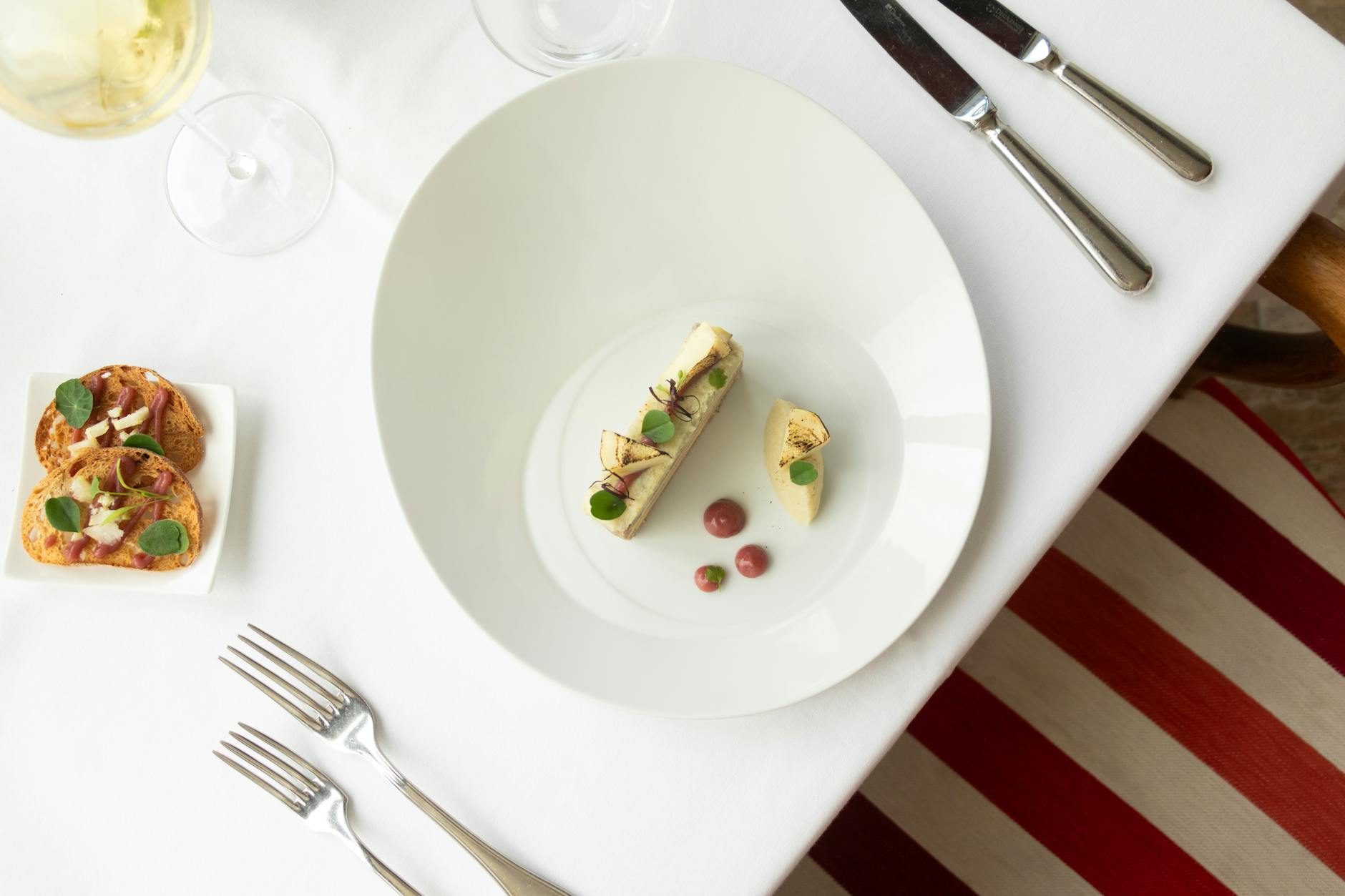
At the tasting-menu end, among the city’s Michelin-starred restaurants, service is professional and priced into a large bill. A tip is still optional. Diners who add something usually go for 5–10%, not the American 20%. On a bill that can run to several thousand kronor per person, even a small percentage is a real gesture.
Lunch and dagens rätt
The weekday set lunch, dagens rätt, is the best-value meal in the city: a main, salad, bread, water and often coffee for a fixed price. It is usually ordered and paid for at the counter, and nobody tips on it. Our cheap eats guide has where to find the good ones.
Service charges
Swedish restaurants rarely add a service charge. If one has been added, which occasionally happens for large groups, it will be clearly shown on the bill, and you do not tip on top of it. Check the bill for the words serviceavgift or “service charge”.
Cafés and fika
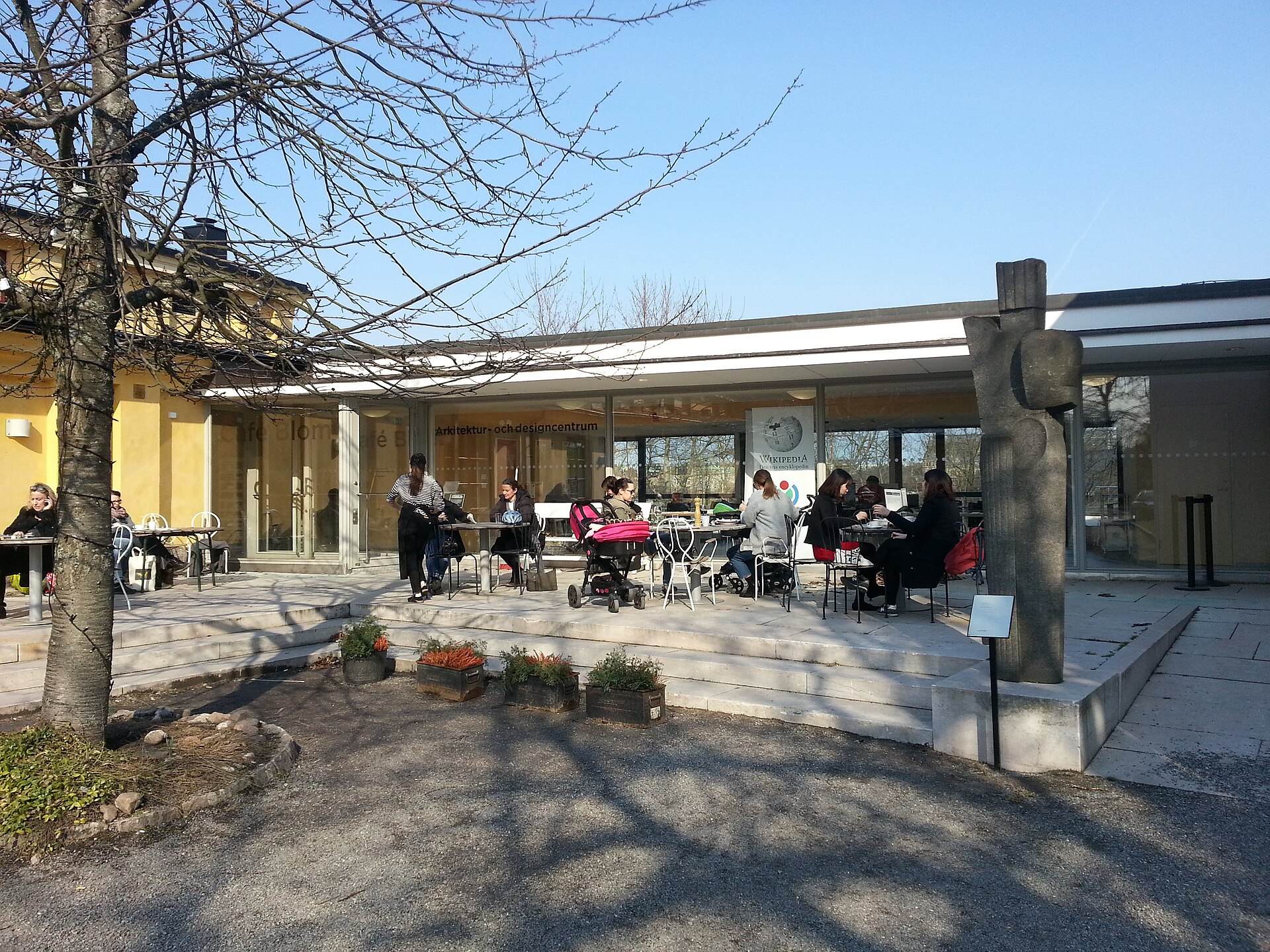
Nothing. Fika is counter service: you order, pay and carry your coffee and cinnamon bun to the table yourself. Some cafés keep a tip jar by the till. Dropping a coin in is kind, but hardly anyone does it, and in a cashless city most people have no coins to drop.
Bars and nightlife
There is no custom of tipping per drink in a Swedish bar. You order at the bar, you pay, and that’s it. At a cocktail bar, where drinks commonly cost SEK 145–195 and a bartender has spent five minutes on each one, rounding up a round or pressing 5% at the end of the night is a nice gesture but not an expectation. If a waiter serves you at your table all evening, treat it like a restaurant.
Many clubs and bigger bars charge for the cloakroom (garderob). That is a fixed fee posted at the counter, not a tip, and in winter it is usually compulsory. Our Stockholm nightlife guide covers the rest of how a night out works here.
Taxis and ride-hailing
Nothing is expected. Swedish taxis set their own prices, which must be displayed on a yellow price label in the window. Rounding up to the nearest ten or twenty kronor is common, and more for help with heavy bags is a nice touch. Uber and Bolt show an optional tip in the app after the ride. Most Swedes skip it. Our Uber and taxi guide explains the price label and how to avoid the few cowboy operators.
Hotels
Swedish hotels do not have a culture of tipping. Nobody expects a tip for carrying bags, housekeeping or the front desk, and many hotels have no porters at all. A concierge who gets you into a fully booked restaurant might receive SEK 50–100 from a grateful guest, but it is still a choice, not an expectation. If you want to leave something for housekeeping at the end of a long stay, leave it with a note so it is clear it is for them.
Tours and guides
Free walking tours
The one real exception. “Free” walking tours are free to join, but the guide is paid by what the group gives at the end. That is the whole business model. SEK 100–200 per person is a fair amount for a two-hour tour in Stockholm, and more if it was excellent. Since hardly anyone carries cash, most operators take cards or a mobile-payment link. Visitors cannot use Swish, the Swedish mobile payment app, so ask how to pay before the tour starts.
Paid tours
On a paid tour, such as a guided museum visit, a boat tour, a bike tour or a private guide, the price already covers the guide. Tipping is optional. For a private guide who has spent a whole day with your family, something in the SEK 100–300 range, or a written review, is a generous thank-you. On a big group boat with a recorded commentary, nothing is expected. Our walking tours guide compares the options.
Everything else
- Hairdressers and barbers: nothing expected. Round up if you are delighted.
- Spas and massage: nothing expected.
- Food delivery apps (Foodora, Wolt, Uber Eats): an optional tip for the courier in the app. Couriers are among the lowest-paid workers in the city, so this is one place where a small tip does real good.
- Musicians and street performers: a tip is the whole point, as anywhere. Many now show a card-payment QR code.
- Cloakrooms and toilets: fixed fees, not tips.
- Petrol stations, supermarkets, Systembolaget: never.
The awkward cases
A big group dinner
With eight people and one bill, the easiest thing is to agree a round figure before the machine arrives and let one person pay. Swedish restaurants are happy to split bills between cards, but splitting eight ways and tipping eight times takes a long time at the table. If the restaurant has added a service charge for the group, which is rare but it happens, that is the tip.
The service was poor
Don’t tip. Nobody will ask you to explain. If something went badly wrong, say so politely while you are still at the table. Swedish restaurants take a complaint seriously and would rather fix it on the spot than read about it online later.
Summer restaurants and the archipelago
Waterside summer restaurants, the seasonal cafés on Djurgården and the inns out on the islands are often staffed by students on summer jobs. The same rules apply: rounding up is normal and nothing is owed. But a crew that has carried plates down a jetty in a sea breeze all afternoon will appreciate it if you round up a bit more generously.
Julbord and set-price feasts
The Christmas buffet, julbord, and other set-price feasts are charged per head and are mostly self-service. Nothing is expected beyond rounding up the drinks bill. If a waiter has kept your glasses full all evening, treat it like a normal dinner.
You are used to tipping 20%
Visitors from North America sometimes tip 20% out of habit, and there is no harm in it. The server will be surprised and pleased. But it is not the local custom, and it is not a sign of gratitude that a Swede would recognise. If you want your thanks to land, a tip of around 10% plus a sincere word to the staff (or a short online review naming them) is more in keeping with local habit.
Leaving the tip in cash on a card payment
Perfectly fine if you have kronor. Pay the bill by card with no tip and leave the note on the table. Staff can split it however they share tips. Just don’t leave euros or dollars: exchanging small amounts of foreign cash in Sweden costs more in fees than the note is worth.
Quick reference
| Situation | Expected? | If you want to |
|---|---|---|
| Dinner, table service | No | Round up, or 5–10% |
| Fine dining | No | 5–10% |
| Weekday lunch (dagens rätt) | No | Nothing |
| Café, bakery, food hall | No | Nothing, or the tip jar |
| Bar, ordering at the counter | No | Nothing, or round up |
| Bar, table service | No | As for a restaurant |
| Taxi, Uber, Bolt | No | Round up |
| Hotel staff | No | A note for housekeeping |
| Free walking tour | Yes | SEK 100–200 per person |
| Private guide | No | SEK 100–300, or a review |
| Food delivery | No | A small tip in the app |
Cash tips in a cashless city
Sweden runs almost entirely on cards, and plenty of cafés and bars no longer take cash at all. So tipping in cash is unusual. If you do have kronor, a note left on the table after dinner is still welcome, but most tipping now goes through the card terminal. Tips added on a card are paid out through the payroll, taxed as income like the rest of the staff’s pay, and usually shared among the team. Our Stockholm currency guide covers whether you need any cash at all. For most visitors, you don’t.
If you have a choice, tip in kronor rather than in your home currency. And whenever a card terminal offers to charge you in your own currency, choose kronor. That conversion is where the real hidden charge lies, and it is much bigger than any tip.
What it adds to your budget
Not much. On a typical mid-range trip with, say, four sit-down dinners, rounding up or adding 5–10% comes to a few hundred kronor across the whole stay. That is less than one museum ticket. The Stockholm trip cost guide builds the full budget, and Stockholm is, usefully, the cheapest of the Scandinavian capitals to eat out in.
Compared with the neighbours
Denmark and Norway work much the same way: service is included, rounding up is the habit, and tips are appreciated but not owed. Finland is, if anything, even more tip-averse. If you are on a Nordic trip, the same rule covers all four countries. Our Stockholm vs Copenhagen vs Oslo comparison covers the bigger differences.
Three useful phrases
- Kan vi få notan? — Can we have the bill? Swedish waiters do not bring it until you ask, which is courtesy, not neglect.
- Det var jättegott, tack. — That was delicious, thank you. Worth more than 5% to many chefs.
- Ingen dricks, tack. — No tip, thanks. You will rarely need to say it, but it is fine if you do.
More in our Swedish phrases for tourists. Everyone in Stockholm’s restaurants speaks English, but a tack goes a long way.
Frequently asked questions
Do you tip in Stockholm restaurants?
It is not required, because staff are paid under collective agreements and service is included in menu prices. After a good sit-down meal, rounding up or adding 5–10% is appreciated. Around 10% has become more common in central Stockholm.
Is it rude not to tip in Sweden?
No. Not tipping is completely normal, including when the card machine asks. Pressing 0% causes no reaction.
How much should I tip in Stockholm?
Round up the bill, or add 5–10% for good table service at dinner. Tip nothing at cafés, counters or for set lunches. Give SEK 100–200 per person at the end of a free walking tour.
Why does the card machine ask for a tip in Sweden?
Most modern card readers show a tip screen by default. It is an option, not a hint. Swedes regularly press 0% at cafés and bars, and add a tip mainly after a sit-down meal.
Do you tip taxi drivers in Stockholm?
Not necessarily. Rounding up to the nearest ten or twenty kronor is common but not expected. Uber and Bolt offer an optional in-app tip that most Swedes skip.
Do you tip hotel staff in Sweden?
No. There is no tipping culture in Swedish hotels. A small tip for a concierge who went out of their way, or a note left for housekeeping after a long stay, is a personal choice.
Do you tip bartenders in Stockholm?
Not per drink. Rounding up at a cocktail bar, or tipping at the end of an evening of table service, is a nice gesture but not expected.
Should I tip on a free walking tour?
Yes. The guide’s income comes from tips. SEK 100–200 per person is fair for a two-hour tour. Ask in advance how to pay, since visitors cannot use Swish.
Tipping is only one of the small customs that trip visitors up. Taking a queue ticket, eating earlier than you might at home and saying tack för maten after a meal all matter more. Our guide to Swedish etiquette covers them all.
For free walking tours in particular, where the tip is the guide’s pay, our guide to free walking tours in Stockholm suggests an amount, explains why a no-show costs the guide money, and covers how to pay when you have no cash and can’t use Swish.
More Stockholm guides
- Stockholm Travel Tips — the rest of the practical advice in one place.
- Stockholm Currency and Payment — cards, cash and why to always pay in kronor.
- Best Restaurants in Stockholm — where the tip is most likely to be earned.
- Cheap Eats in Stockholm — the counter-service end, where nobody tips.
- Stockholm Trip Cost — building the whole budget.
- Uber and Taxis in Stockholm — prices, apps and the yellow label.
- Swedish Phrases for Tourists — how to ask for the bill.
- Traditional Swedish Food — what to order before the bill arrives.
Photo credits
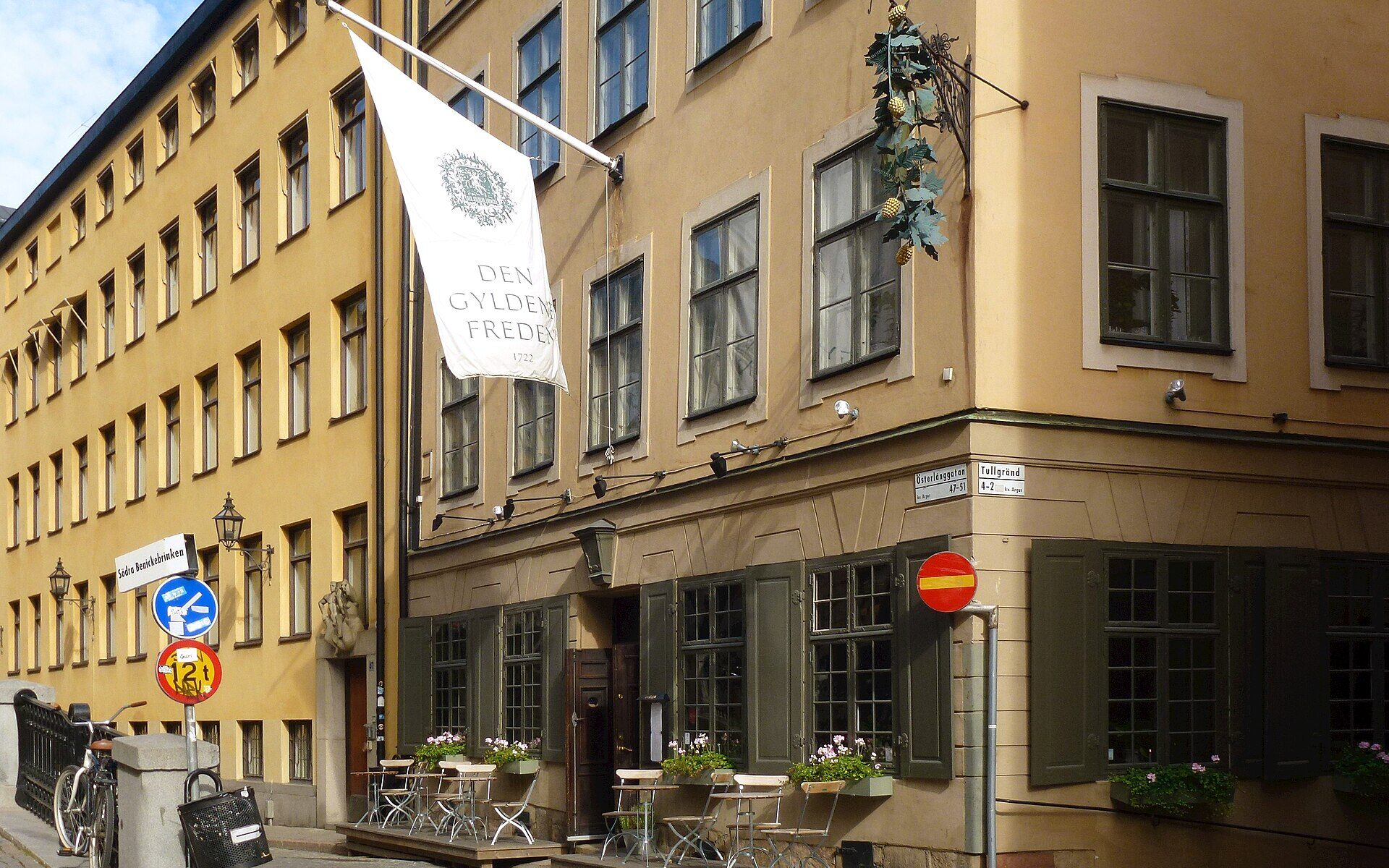
Den Gyldene Freden (featured image): Den Gyldene Freden 2013a by Holger.Ellgaard, CC BY-SA 3.0, via Wikimedia Commons.
Den Gyldene Freden sign: Den Gyllene Freden skylt by Holger.Ellgaard, CC BY-SA 3.0, via Wikimedia Commons.
ArkDes café terrace: Arkitektur- och designcentrum, uteservering 2014 by Axel Pettersson, CC BY-SA 3.0, via Wikimedia Commons.
Frisör sign: Strockholmsskyltar Frisör by Holger.Ellgaard, CC BY-SA 3.0, via Wikimedia Commons.