Stockholm Central Station: Layout, Left Luggage, Food and Transfers
How Stockholm Central actually works: the halls and platforms, why commuter trains leave from Stockholm City, 2026 locker prices, food and toilets, and how to reach the airports, ferries and sights.
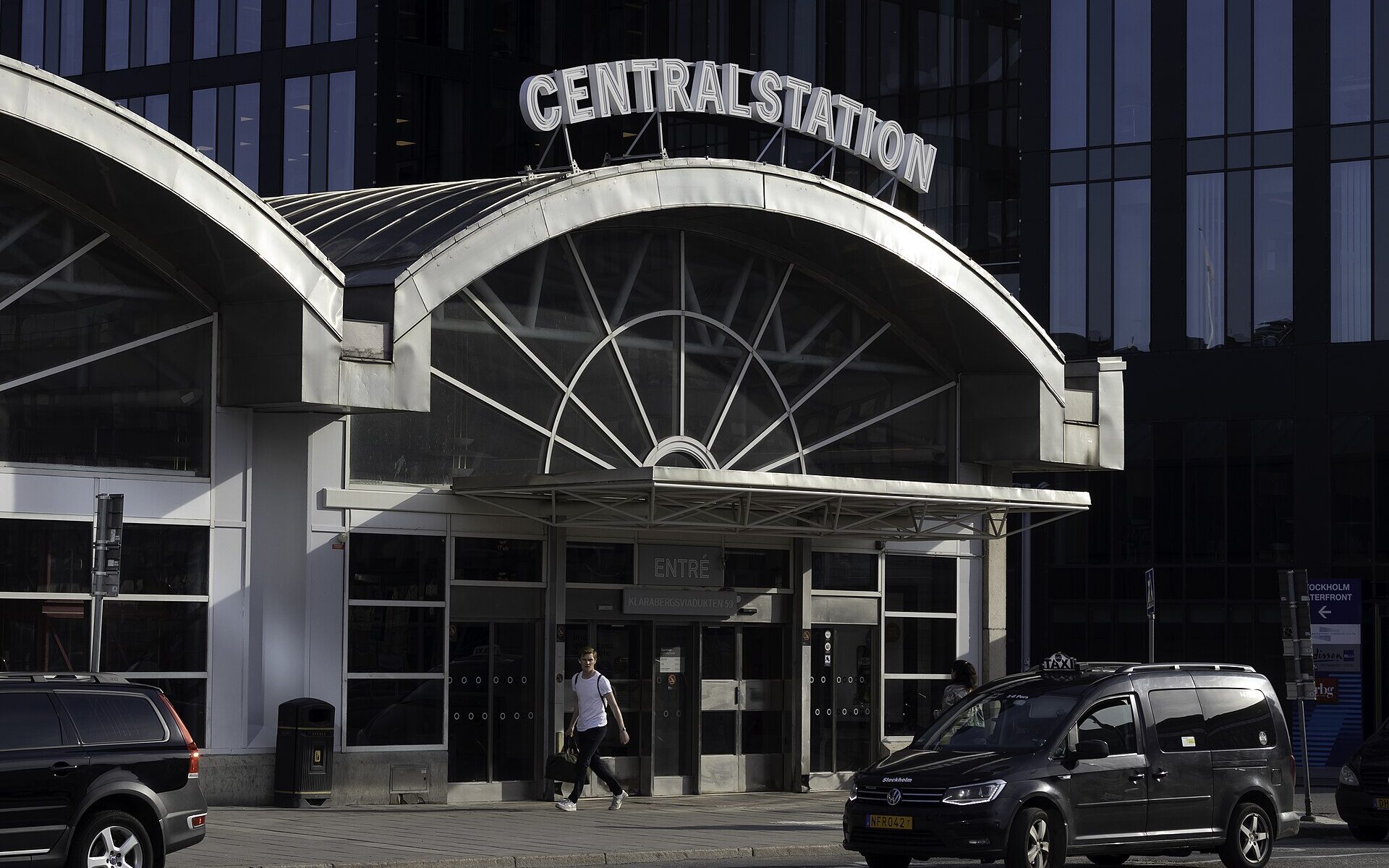
Stockholm Central Station is where almost every journey through the city eventually passes: the Arlanda Express, the long-distance trains to Gothenburg, Malmö and Oslo, the metro, the airport coaches and a good share of the city’s buses all meet in and around one sprawling building on Vasagatan. It is Sweden’s busiest railway station, and it is well run and well signed. It is also genuinely confusing the first time, because what looks like one station is really four, spread over two levels and a walkway, and some of the trains you would expect to find there left for a new underground station years ago.
This guide explains how it all fits together: the halls and platforms, where each kind of train and bus actually leaves from, the luggage lockers and what they now cost, food, toilets and other practicalities, and how to get from the station to the airports, the ferries and the sights. Details were checked in October 2026. Locker prices are quoted from the station operator, Jernhusen; everything else that costs money is in Swedish kronor and worth confirming on the day.
What it is: Sweden’s main railway station, opened in 1871, on Vasagatan in Norrmalm. Called Stockholm C on tickets and departure boards.
Metro: T-Centralen, where all three metro lines meet, is connected underground.
Commuter trains: leave from Stockholm City, the underground station beneath T-Centralen.
Arlanda Express: leaves from its own platforms in the main station, 18 minutes to the airport.
Airport and long-distance coaches: Cityterminalen, the bus terminal next door, reached by a covered walkway.
Lockers: SEK 49 (small) or SEK 79 (large) per started hour, capped at SEK 299 and SEK 399 per 24 hours.
Opening hours: the station is not open all night. The lockers can only be reached while it is open.
How the station fits together
The simplest way to understand Stockholm Central is as four connected places: the main station itself, with its upper and lower halls and the platforms for long-distance and regional trains; Stockholm City, the separate underground station for commuter trains; T-Centralen, the metro hub; and Cityterminalen, the bus terminal next door. You can walk between all four without going outside, and the signs, in Swedish and English, are good. The trick is knowing which of the four you need before you start walking.
The main hall
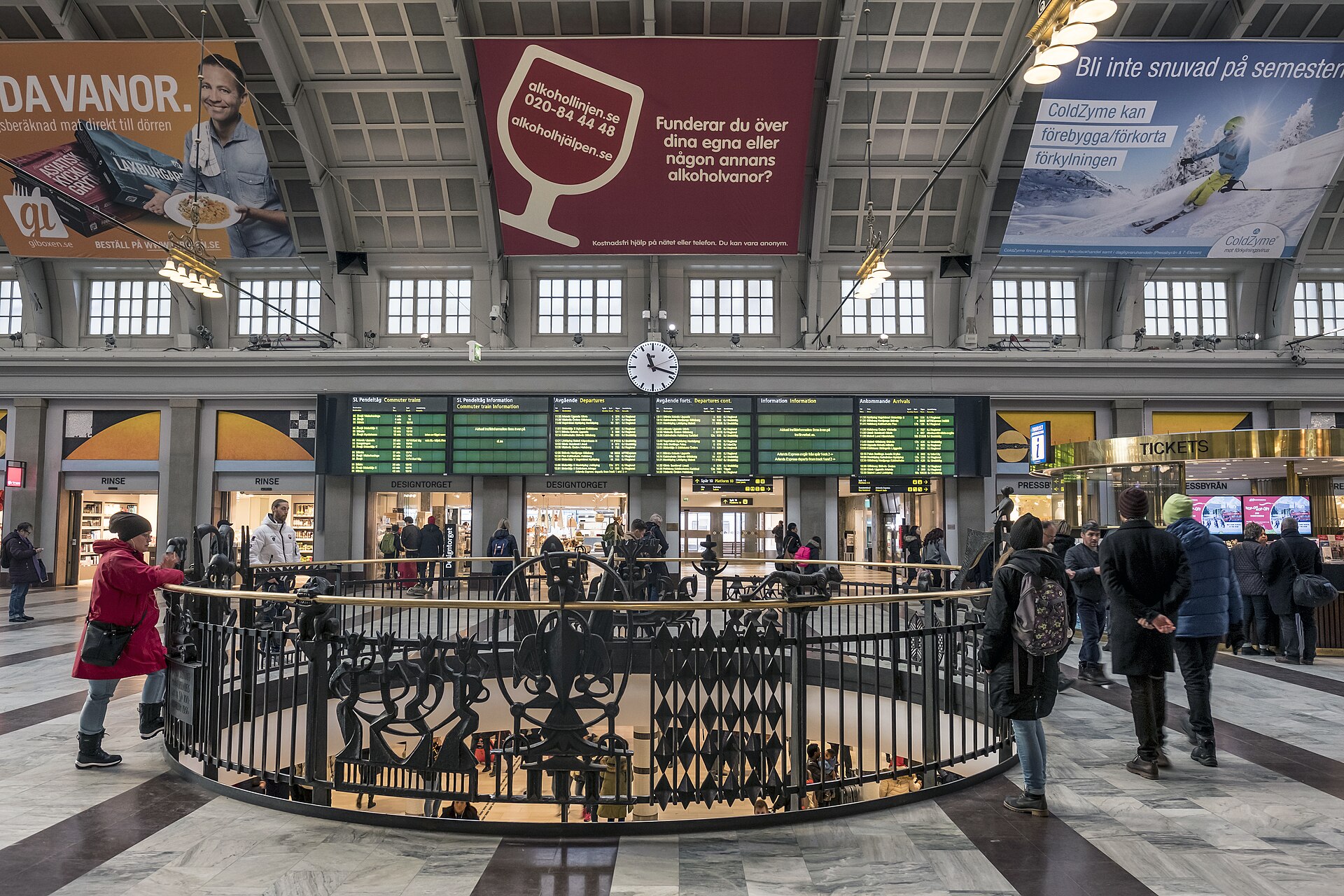
Come in from Vasagatan or Centralplan, the square in front of the station, and you are in the main hall: a big, high-ceilinged room with the departure boards, ticket machines, cafés and the entrances to the platforms. This is the station most people picture, and for the long-distance trains, the Arlanda Express and the regional trains it is where you need to be. The platforms lead off it, each numbered and signed, with lifts as well as stairs.
The lower hall
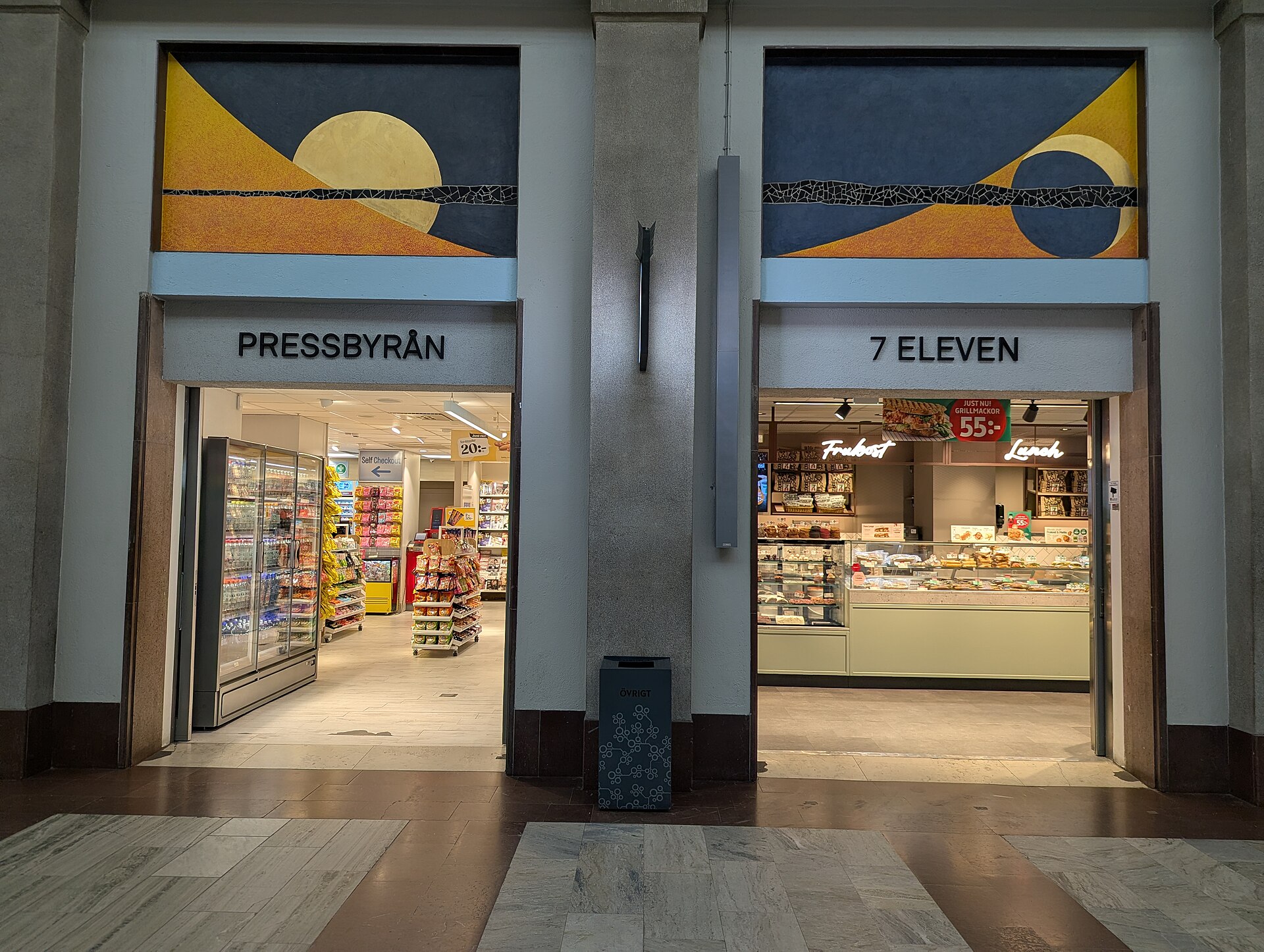
Below the main hall is the lower hall, a busy concourse with shops, food and services, and the underground connections: passages to T-Centralen for the metro and to Stockholm City for the commuter trains. SL, Stockholm’s public transport company, has its customer centre down here, which is the place to ask about tickets, travelcards and routes. Many of the luggage lockers are here too.
The platforms
The platforms of the main station serve the SJ long-distance trains, the regional trains around Lake Mälaren and up to Uppsala, the night trains north and the Arlanda Express. Departure boards in both halls show the platform, which is called spår (track) in Swedish. Some long platforms are split into sections with a letter, such as 16b, so check exactly which one your train uses, and where your carriage will stop, before you set off down it with luggage.
Stockholm City: where the commuter trains went
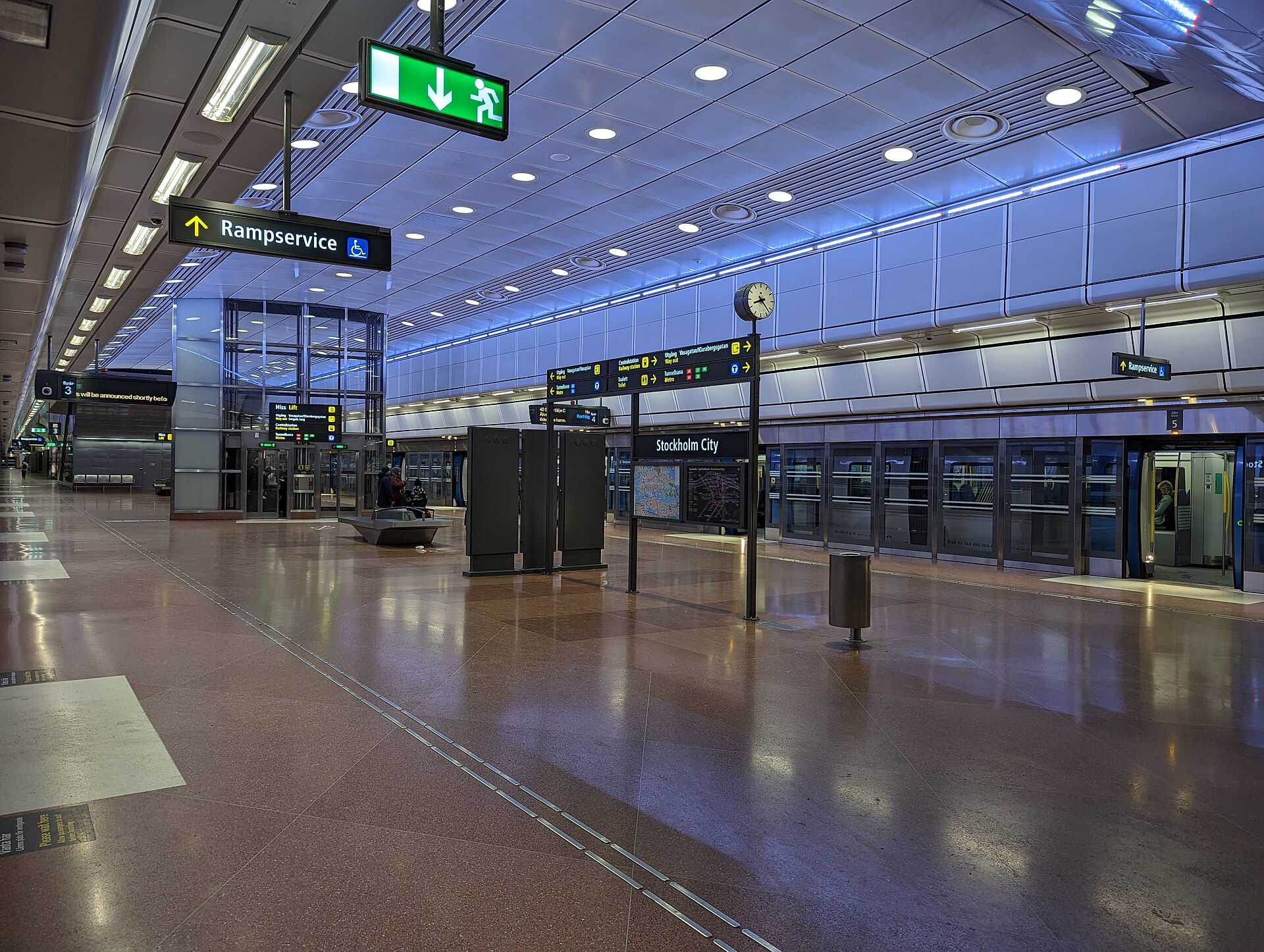
This is the part that catches people out. Since 2017, the SL commuter trains (pendeltåg) run through Citybanan, a tunnel deep under the city centre, and stop at Stockholm City, a separate underground station beneath T-Centralen. That includes the commuter trains to Arlanda, Uppsala, Södertälje and Nynäshamn. If your journey is on an SL commuter train, follow the signs for Stockholm City, and allow a few minutes for the long escalators down.
T-Centralen
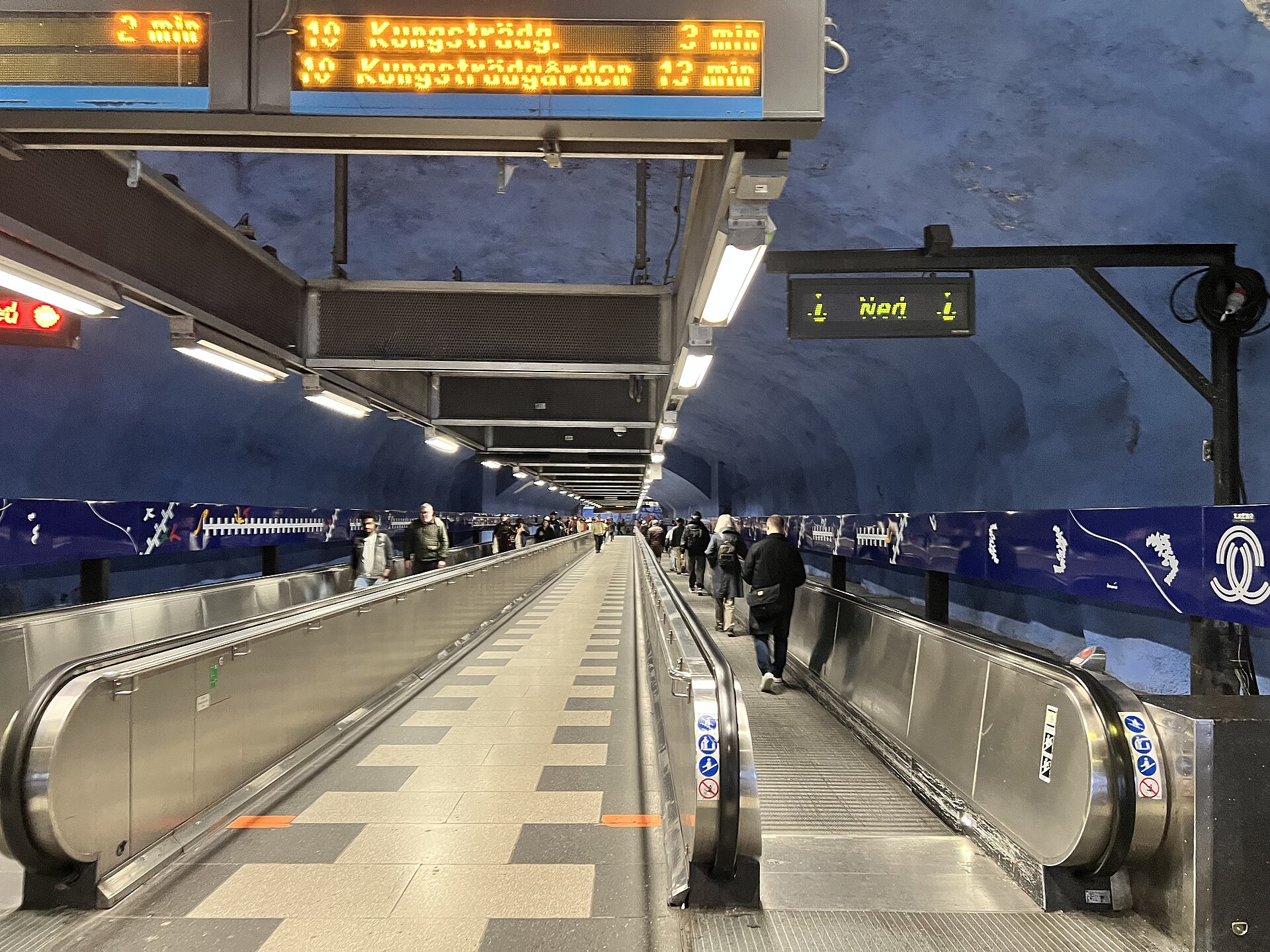
T-Centralen is the heart of the metro, the tunnelbana, and the only station where all three lines meet: green, red and blue. It is joined to the lower hall of Central Station by underground passages, and it is also one of the city’s great sights. The platforms of the blue line are painted as a deep blue cave with climbing vines, the work of Per Olof Ultvedt in 1975, and the passage between the lines is not much less striking. Take a minute to look up.
Cityterminalen
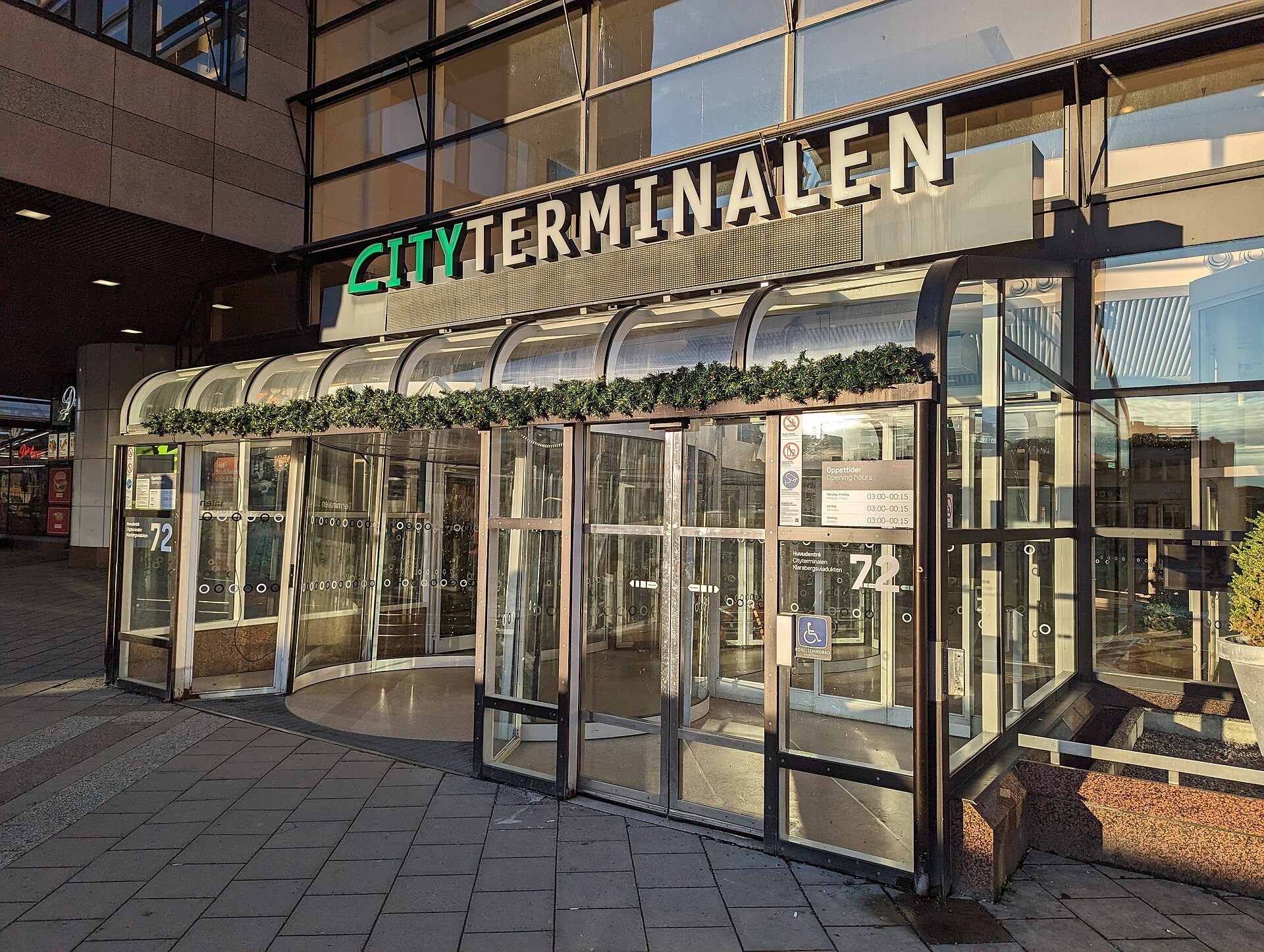
Cityterminalen is the bus terminal next to the station, connected to it by a covered walkway. The Flygbussarna airport coaches leave from here for Arlanda, Bromma, Skavsta and Västerås, as do the long-distance coaches to other Swedish cities and abroad. It has its own ticket machines, cafés, toilets and a second bank of luggage lockers, including larger boxes for skis and golf bags.
| If you want | Go to |
|---|---|
| A long-distance or regional train (SJ, Mälartåg, night trains) | Main station platforms, from the main hall |
| The Arlanda Express | Its own platforms in the main station, signed from the main hall |
| An SL commuter train (pendeltåg) | Stockholm City, down through the lower hall |
| The metro | T-Centralen, through the lower hall |
| Airport coaches and long-distance buses | Cityterminalen, via the covered walkway |
| Tram 7 to Djurgården | The tram stop by T-Centralen and Sergels torg |
| SL tickets and travel advice | The SL customer centre in the lower hall |
Left luggage: the lockers, and cheaper alternatives
The station’s lockers are run by Jernhusen, the company that owns the station, and there are plenty of them: in both the upper and lower halls of Central Station and on two floors of Cityterminalen. They come in two sizes and are charged per started hour, up to a maximum price per 24 hours, which makes them convenient for a few hours and expensive for a whole day.
| Locker | Inside dimensions | Price | Maximum per 24 hours |
|---|---|---|---|
| Small | 36 × 44 × 60 cm | SEK 49 per started hour | SEK 299 |
| Large | 46 × 60 × 85 cm | SEK 79 per started hour | SEK 399 |
A small locker fits a cabin-size bag or a daypack; a large one takes a big suitcase. Cityterminalen’s second floor has longer boxes for skis and golf bags, and for anything that fits nowhere, a staffed luggage desk in the lower hall takes oversized items from 09:00 to 18:30 every day. You can rent a box for up to seven days, but remember that you can only get to your bags while the station is open, and it closes overnight. If you have a very early train or a late-night arrival, check the opening times before you lock anything away.
The honest verdict on the lockers: for two or three hours between a hotel checkout and a train, they are perfect. For a full day of sightseeing, SEK 299–399 is a lot for a box. The alternatives are your hotel, which may hold your bags on the day you leave if you ask, or one of the online bag storage services that use shops and hotels around the station. Compare the full price, fees included, for your dates, book online and check the opening hours of the location you choose against your plans.
Tickets and information
- Train tickets. SJ, the main operator, sells tickets through its app and website and from ticket machines in the halls. SJ’s prices depend on supply and demand, so the earlier you book, the better your chance of finding a cheap ticket. Other operators on some routes sell through their own apps.
- SL tickets. For the metro, buses, commuter trains, trams and the city’s ferries, buy tickets in the SL app or from the machines, or ask at the SL customer centre in the lower hall. Our SL card guide explains which ticket or travelcard makes sense for your stay.
- Arlanda Express tickets. Buy them in the Arlanda Express app, on its website or from its own machines on the platform. SL tickets are not valid on it.
- Coach tickets. Flygbussarna and the long-distance coach companies sell online and in their apps, and there are machines in Cityterminalen.
Food and drink
The station is well stocked for eating on the move: cafés and bakeries for a coffee and a cinnamon bun, sandwich and salad bars, burger and noodle counters, and the convenience stores for drinks and snacks. It is fine for grabbing something before a train, and nobody’s idea of a destination.
For a proper meal, walk five or ten minutes. On weekdays, the streets between the station and Hötorget are full of lunch restaurants serving dagens rätt, the set lunch with salad, bread and coffee included, which is the best-value meal in Stockholm. Hötorgshallen, the covered food hall under the Hötorget cinema complex, is ten minutes away and much more interesting than anything in the station; our guide to Stockholm’s food markets has the details, and our cheap eats guide covers the rest.
If you are catching a long-distance train, it is worth buying food before you board. SJ’s high-speed trains have a café carriage, but the choice is limited and the prices are what you would expect.
Toilets, pharmacy, money and SIM cards
- Toilets. The station has toilets in the halls, and like most public toilets in Stockholm they charge a small fee, paid by card or phone. Cityterminalen has its own. Our guide to public toilets in Stockholm explains the city’s system, which is changing through 2026.
- Pharmacy. Apoteket C.W. Scheele, at Klarabergsgatan 64, a few minutes’ walk from the station, is open 24 hours a day, every day.
- Money. You do not need Swedish cash. Cards and phone payments work everywhere in the station, and many places in Stockholm no longer take cash at all. See our Stockholm currency guide.
- SIM cards. Pressbyrån and 7-Eleven in the station are the places to ask about prepaid starter packs. All Swedish prepaid SIMs must be registered to a named owner, which visitors can do online with a passport; our guide to Wi-Fi and SIM cards in Stockholm explains how.
Getting from Stockholm Central to everywhere else
The station is the best-connected point in the city, and almost everything a visitor needs is either a short walk or a single ride away.
| Destination | How | Time | From |
|---|---|---|---|
| Arlanda Airport | Arlanda Express, about SEK 340 adult single | 18 min | Main station platforms |
| Arlanda Airport | SL commuter train, about SEK 200 including the airport fee | About 38 min | Stockholm City |
| Arlanda Airport | Flygbussarna coach, about SEK 129 online | About 40 min | Cityterminalen |
| Bromma Airport | Flygbussarna coach | A short ride | Cityterminalen |
| Skavsta Airport | Flygbussarna coach | About 1 h 20 min | Cityterminalen |
| Västerås Airport | Flygbussarna coach | Check Flygbussarna’s timetable | Cityterminalen |
| Gamla Stan | Metro, red or green line, one stop; or walk | A short ride or walk; check SL’s journey planner | T-Centralen |
| Djurgården museums | Tram 7 | About 15–20 min | T-Centralen / Sergels torg |
| City Hall | Walk | A short walk | Main hall exit to Vasagatan |
For every airport option in detail, see our guides to getting from Arlanda to Stockholm and the Arlanda Express vs the bus. For the ferries to Helsinki, Tallinn and the archipelago, which leave from terminals away from the station, see Stockholm to Helsinki by ferry, Stockholm to Tallinn by ferry and our guide to Stockholm’s ferries. And for the full picture of arriving in the city by air, rail, road and sea, see Getting to Stockholm: Airports, Ports & Long-Distance Travel.
Where the trains go
From the main platforms, SJ’s high-speed trains run to Gothenburg, Malmö and on to Copenhagen, and there are trains to Oslo as well. Regional trains serve Uppsala and the towns around Lake Mälaren, such as Västerås and Eskilstuna, and in the evening the night trains leave for the far north of Sweden, to Swedish Lapland and on to Narvik in Norway. Many of the best day trips from Stockholm start on one of these platforms; see our guide to day trips from Stockholm by train, including Uppsala.
Book long-distance tickets in advance where you can. Swedish rail fares work like airline fares: the cheapest tickets go first, and a Friday afternoon train to Gothenburg bought on the day can cost several times the fare booked a few weeks ahead.
Safety and scams
Stockholm Central is a safe place, but like every big station it attracts pickpockets, particularly in the crowds of the lower hall, at T-Centralen and around Sergels torg. Keep your phone out of your back pocket, zip your bag, and be wary of anyone who presses too close on an escalator or offers to “help” at a ticket machine you are managing perfectly well on your own. If you need a taxi, take one from the official rank rather than accepting a ride from a driver who approaches you inside. Our guides to Stockholm tourist scams and whether Stockholm is safe go into more detail.
Accessibility
The station has lifts to the platforms and between the levels. The underground connections to T-Centralen and Stockholm City are long, with escalators and lifts, so allow extra time. For journey advice and to book assistance, call SL’s accessibility line on +46 20 120 20 22, which is open around the clock. On long-distance trains, book assistance through the train operator at least 24 hours ahead, as EU rail rules allow. Our Stockholm accessibility guide covers the rest of the city.
Staying near the station
The hotels around Central Station are the most convenient in Stockholm for an early train or the Arlanda Express, and there are dozens of them, from budget chains to big international names. The trade-off is atmosphere: this is a transport hub rather than a neighbourhood, and it empties out in the evening. If you want character as well as convenience, stay a few metro stops away in Södermalm, Vasastan or Gamla Stan and come back for your train. Our guides to hotels near Stockholm Central and where to stay in Stockholm weigh up the options.
Is Stockholm Central a good place to start?
Yes. For a first-time visitor, the station is the natural front door to the city: step out of the main hall and you are a short walk from the City Hall and Gamla Stan and one metro stop from almost anywhere. The things to get right are few and simple. Know whether your train leaves from the main station or from Stockholm City. Use the lockers for hours rather than days. Eat around the corner rather than in the halls. And look up when you pass through T-Centralen. Our guide to your first time in Stockholm picks up from there.
Frequently asked questions
Is Stockholm Central the same as T-Centralen?
They are connected but not the same. Stockholm Central is the railway station for long-distance and regional trains and the Arlanda Express. T-Centralen is the metro station beneath it, where all three metro lines meet. You can walk between them underground.
Where do the commuter trains leave from?
From Stockholm City, a separate underground station beneath T-Centralen, reached through the lower hall of Central Station. Since 2017 the SL commuter trains have run through the Citybanan tunnel, stopping at Stockholm City.
How much are the luggage lockers at Stockholm Central?
SEK 49 per started hour for a small locker and SEK 79 for a large one, capped at SEK 299 and SEK 399 per 24 hours. Lockers can be rented for up to seven days but can only be reached while the station is open.
Where are the lockers?
In both the upper and lower halls of Stockholm Central, and on the first and second floors of Cityterminalen, the bus terminal next door, which also has larger boxes for skis and golf bags. A staffed desk in the lower hall takes oversized luggage from 09:00 to 18:30.
Is Stockholm Central open 24 hours?
No. The station closes for part of the night, and the lockers can only be reached while it is open. Check the opening times if you have a very early train or a late arrival.
Where does the Arlanda Express leave from?
From its own platforms in the main station, clearly signed from the main hall. The journey to the airport takes 18 minutes, and an adult single costs about SEK 340.
Where do the airport buses leave from?
From Cityterminalen, the bus terminal next to the station, connected by a covered walkway. Flygbussarna runs coaches from there to Arlanda, Bromma, Skavsta and Västerås.
How do I get from Stockholm Central to Gamla Stan?
Take the red or green metro line one stop from T-Centralen to Gamla stan, or walk south along the water or down Drottninggatan and across the bridges.
Is there somewhere good to eat at Stockholm Central?
The station has plenty of cafés and quick food for eating on the move. For a proper meal, walk five or ten minutes towards Hötorget, where weekday set lunches and the Hötorgshallen food hall are better value and better food.
More Stockholm guides
- Getting to Stockholm: Airports, Ports & Long-Distance Travel: every way into the city.
- Arlanda Airport Guide: terminals, lounges and hotels at the other end of the Arlanda Express.
- Stockholm Public Transport: the metro, buses, trams and ferries.
- Stockholm Metro Guide: lines, tickets and the stations worth seeing.
- Hotels Near Stockholm Central: for early trains and late arrivals.
- Norrmalm Guide: the district around the station.
- Stockholm Layover Itinerary: a few hours in the city between trains or flights.
- Stockholm Weekend Itinerary: two days, starting from the station.
Photo credits
Stockholm Central entrance (featured image): Centralstation, Estocolmo by Bene Riobó, CC BY-SA 4.0, via Wikimedia Commons.
Stockholm Central main hall: 170301 Stockholm Central 01 by Johan Wessman / News Øresund, CC BY 2.0, via Wikimedia Commons.
Pressbyrån and 7-Eleven at Stockholm Central: 7-Eleven, Pressbyrån, Stockholms Central – 20260321 – 10 by AleWi, CC BY-SA 4.0, via Wikimedia Commons.
Stockholm City station: SL X60, Stockholm City, 20230312, 04 by AleWi, CC BY-SA 4.0, via Wikimedia Commons.
T-Centralen passage: Inter-platform passage at T-Centralen by HartOve, CC BY-SA 4.0, via Wikimedia Commons.
Cityterminalen: Cityterminalen 20230101 by AleWi, CC BY-SA 4.0, via Wikimedia Commons.